Poetic Statement

By: Remi Recchia

Cast of Characters:

REMI #1, 22, male, an alcoholic writer. REMI #1 should not be wearing shoes.

REMI #2, 22, male, an alcoholic writer. REMI #2 should wear a ridiculously large black beret.

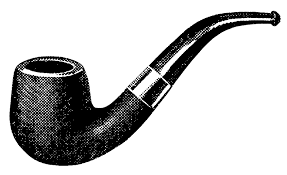
REMI #3, 22, male, an alcoholic writer. REMI #3 should carry an outrageously pretentious pipe and an enormous lighter.

REMI #4, 22, male, an alcoholic writer. REMI #4 should not exist.

All four characters should wear matching nametags without numbers throughout the play. All four characters should also be holding amber bottles.

Time and Place:    Nowhere in no place. Never in the present.

Read more

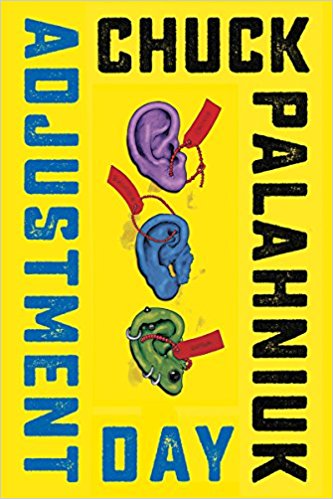
Book Review: Chuck Palahniuk’s “Adjustment Day”

By: D.M. Olsen

As a big Fight Club fan, I came to this book with high hopes for the type of enthralling narrative interspersed with social satire—often bordering on the absurd—that Chuck Palahniuk is known for. Adjustment Day seeks to deliver the same impact—as Fight Club did in the 90s—in a sort of Version 2.0 escalation of the cult concept. Palahniuk uses the novel to introduce what the title suggests, an “Adjustment Day.” A day where a group of men, who have been reading a blue black book by Talbott Reynolds, gather to take down the men in power. They know who to target based on a secret list that has been circulating on the internet and gaining votes. The ear of a person on the list will garner the person who harvested it power in the new world order that is to form after Adjustment Day.

Read more

The Blackout

BY KELLY THOMPSON

Annie rummaged in the black purse on her lap that she was relieved to recognize as her own and located a small lipstick mirror. She stared into it, moving it around the contours of her face, able to see only two rectangular inches at a time, but the pieces fit, yep, she was pretty sure that was her. She groaned. It took her a few minutes. Wish it wasn’t me. A black lump of self-hatred rose in her throat, bile.

Read more

Book Review: Susan Henderson’s “The Flicker of Old Dreams”

BY: A.m. Larks

Isolation and ostracization feature heavily in Susan Henderson’s latest novel, The Flicker of Old Dreams. The setting is Petroleum, Montana, population 182 and decreasing, “Those who’ve heard of Petroleum are often surprised it’s still here. The town is primarily known for what it no longer has: oil.”  In a town this small, the people of Petroleum are required to be interdependent upon one another because the trains have stopped running, there is no cell service, and the winters are long and harsh.

Read more

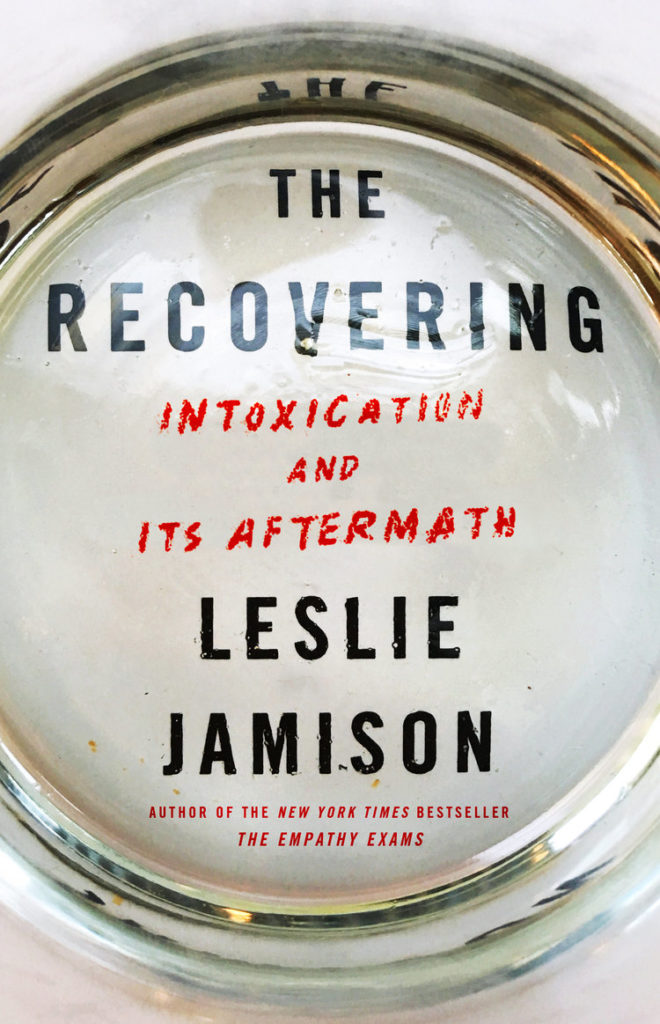
Book Review: Leslie Jamison’s “The Recovering”

By: Heather Scott Partington

Leslie Jamison wasn’t a stereotypical drunk. She wasn’t a stereotypical student, either. Even at the peak of her alcoholism, Jamison held down a job, published a novel, and attended the Iowa Writers’ Workshop, Yale, and Harvard without hitting a conventional bottom. If you read Jamison’s 2014 essay collection, The Empathy Exams, you know her unique voice, her elegant syntax, her capacity for listening to another’s pain and rendering it on the page as something unnervingly fresh. The Recovering is the story of Jamison’s journey to get sober, told through the filter of her research about the lives of other artists and writers.

Read more

The Greater Good

By: Liz Warren Pederson

Nathalie called me— called me!— to discuss her deathwatch project. She said the technology is there but the market for hardware is iffy at best, especially coming from a startup. She said there was no point launching from the inventor’s country of origin because socialists lack ambition. She said the inventor had only come to her because his full-time employer didn’t think the IP was aligned with its core values. The plan is to use a crowdfunding platform for market validation and to attract first-round investment. She said a courier would bring me a prototype so I could test it. Then she sighed. “Jay. Manufacturing will be like passing a stone.” That she called at all just goes to show how “compelling” she thinks this is for the American market. It was only the third or fourth time we’d actually spoken in the year I’d worked for her.

Read more

The Dome

A monologue
By: Scott T. Starbuck

The rock where the scene takes place is before a backdrop of Biosphere II in Oracle, Arizona.  Cactus and sage props give the illusion of a natural desert setting. Dawn is breaking. There is a light breeze. A large live lizard stands before the rock.  The entire scene is addressed to the lizard with only short moments of reflection, or gestures toward The Dome. The speaker is a Yakima Elder, with a small flask, who decided to die instead of entering The Dome with his tribe.

I already know I won’t go in.  I know I’ll die out here. Survival may be the greatest form of justice; and greed, the greatest evil. Right now, I’m fighting for the survival of my soul, gazing as deeply into the ancestral waters as I can.  Honoring what’s there in my pinhole of light in the universe.  It’s the best I can do.

Read more

How a Woman Who Lived in a Windmill Taught Me That I Mattered

By: Tina G. Rubin

I had just landed my first international writing assignment and it was turning out to be a dud. I’d come 5,000 miles to cover one of Holland’s historic windmills, and it wasn’t even working.

“You have to run them weekly, or they deteriorate,” Jaantje Bloembergen told me. But she hadn’t turned hers on in a year.

The April day I parked my car at the windmill Jaantje and her husband had converted into living space, she was in high spirits. Her tangle of gray hair framed a smiling, ruddy face. I took to her immediately.

Read more

Book Review: Geoff Nicholson’s “The Miranda”

By: D.M. Olsen

Some might consider Joe Johnson’s situation a crisis. He just quit his job as a torture expert for a covert government agency called the Team. Joe also just divorced his wife and moved into a remote home three hours north of London, where he intends to walk the circumference of the earth from the privacy of his backyard. He plans to walk a small, circular path twenty-five miles a day for one thousand days. However, as Joe quickly finds out, and as the compelling narrative unfolds, privacy is the last thing afforded by Joe’s new house. He is surrounded by nosy neighbors, a philosophical mailman, and a band of skinheads who invoke a turf war with the veteran torture artist. And, of course, Miranda.

Read more