
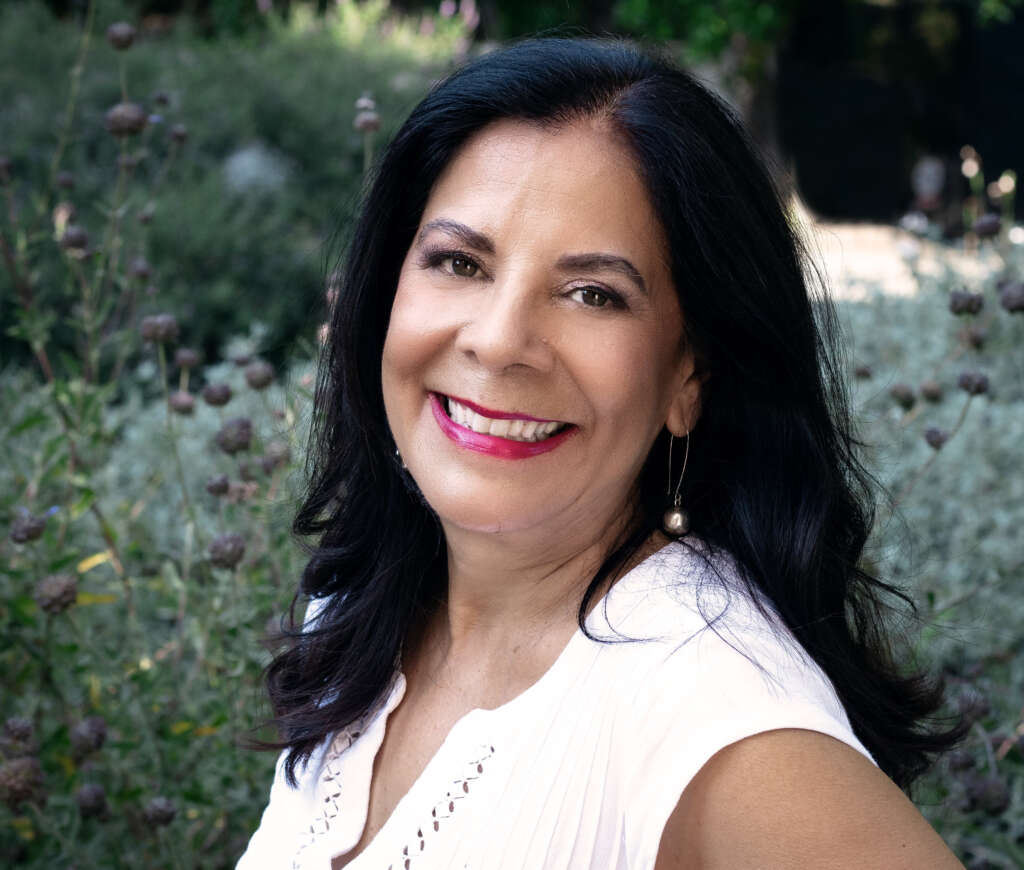
By Geordie Stock
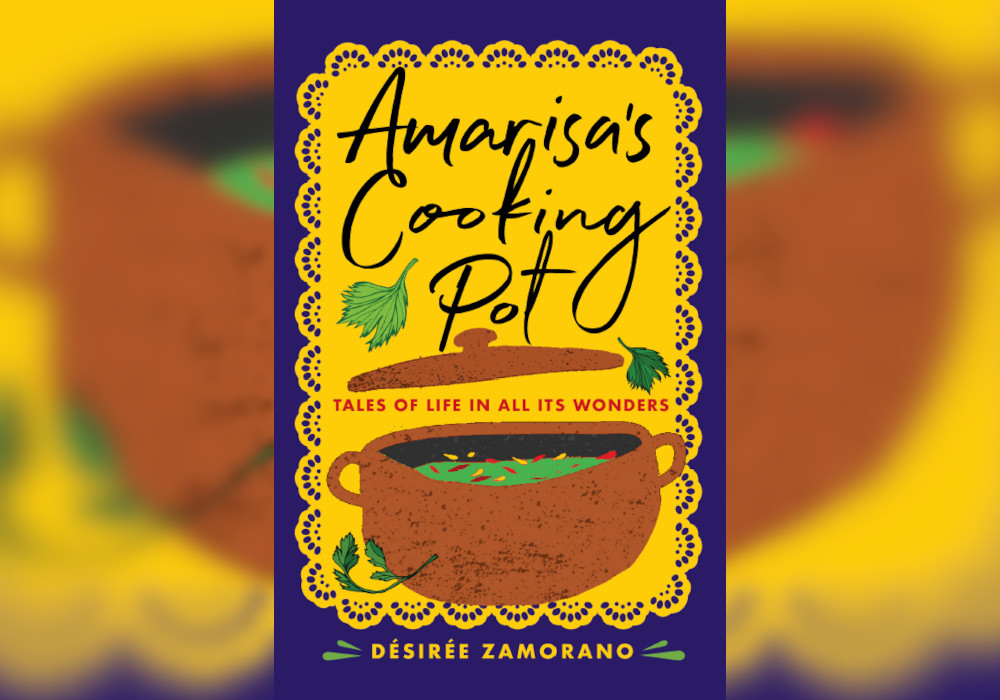
Désirée Zamorano is a foodie, and in her short fiction, it shows. Her latest book, Amarisa’s Cooking Pot: Tales of Life in All its Wonders, is a hearty meal of a collection. Zamorano’s characters are overjoyed, furious, desperate, forlorn, pensive, and resolute. They populate the collection in magical fairy tales; cold, mean diatribes; and bittersweet introspective days at the beach. To go from one story to another feels a bit like transitioning from an entree to a dessert – or vice versa – but the tonal shifts are not jarring… except where Zamorano intended.
The Coachella Review spoke with Désirée Zamorano about the depiction of food in her stories, what cooking says about her characters, and what it means to represent some of the more unique corners of Southern California as a lifelong resident of the region.
The Coachella Review: What was the inspiration for these characters and these stories? And because food feels like such a key element in a number of the stories, part of me wants you to say it started with a dish you grew up with.
Désirée Zamorano: [laughs] That’s great. You know, let me talk briefly about food for a moment.
I was just reading a kid’s book last night, and it said the four siblings had dinner and then they went to bed… and my main question was, “Well, what did they have for dinner?” I am a foodie. I’m [someone] who takes a lot of pleasure in food. It’s another sensual part of a story for me. I [learn more] about characters when they eat or don’t eat certain things. Food is super important to me. As we talk, I am eating a gingerbread latte cookie that I made this morning. So, I can’t help it!
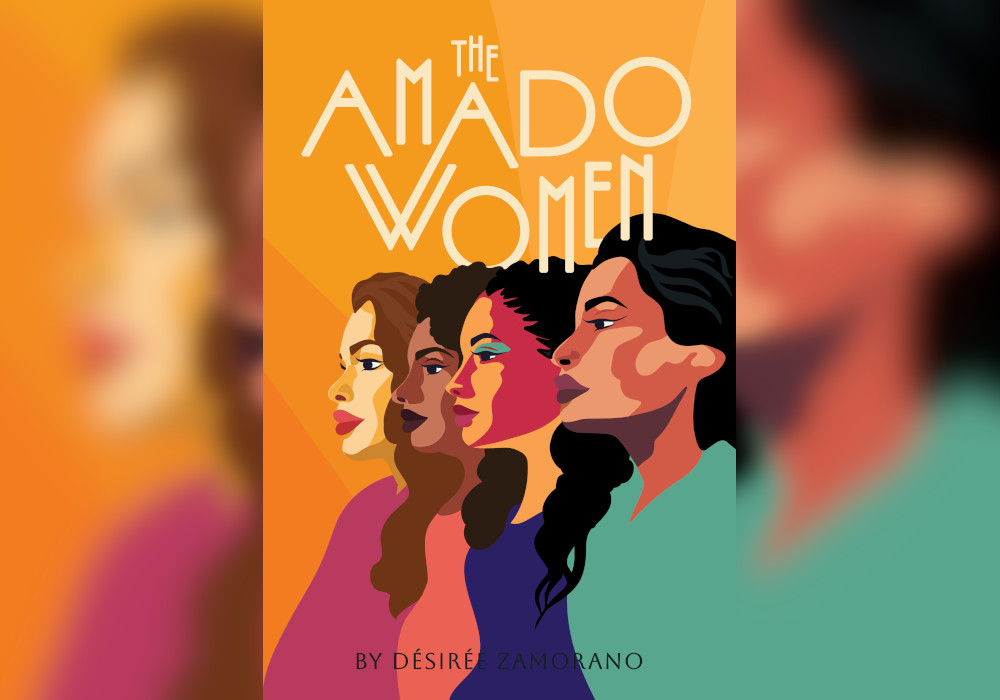
I really can’t tell you what the beginning of the collection was. The stories came out in different order. But all of them were written when I lived in Altadena, and I think you know about the fire in Altadena which destroyed about 9,000 structures. My husband and I raised our family in our Altadena home since 1998. The story “Alma Paramo” is based on my house and me gardening in that house, and playing with the thought of seeing a stranger in the front yard also gardening. That might have been one of the first stories. It certainly was one of the first [to be] published somewhere. [Around the time] my novel came out, The Amado Women, my publisher said, “Can you submit to Huizache [literary magazine]?” I had a short story called “Adela’s Pages,” in which I pictured a character living in my home, and the things that were happening to her. In one of the parts of the story, she walks up to a hill where nobody can talk to her, reach out to her, or touch her on New Year’s Day. That was very much Altadena; you couldn’t get reception in certain parts of the city, and I think that’s still true. So that was the beginning of the collection.
When The Amado Women came out, the author J. Ryan Stradal said, “Hey, do you have a short story? I’m editing Taste magazine.” And I hadn’t written it yet, but I had a story in mind about a magical cooking pot, which is kind of a riff on Strega Nona [by Tomie dePaola]. When I was a kid, I read a story called Boil, Little Pot, Boil over and over again. I think all it cooked was oatmeal, but I, of course, had to ramp it up. That turned into “Amarisa’s Cooking Pot,” which became the heart of the collection because the next few stories that followed were connected to Amarisa’s world.
TCR: Often in these stories there’s a food item, or a shared meal, that ties to an intense emotion within the characters of the story. While it helps that you’re a foodie, do you factor in the impact of food in your stories when you’re creating the emotional arcs of these characters?
DZ: Goodness, let me think. Can you give me another example that you’re thinking of, because I’m kinda stuck with “Amarisa’s Pot” right now.
TCR: I was thinking about the story “1969,” where Manuel eats with his estranged wife and daughter for the first time after reuniting. They have a meal together, where he drinks the same soda – RC Cola – that he was drinking on the drive up to visit them. Even though it’s just a cheap cola, on one side of their reunion it feels superficial—this sugary drink during this desperate drive to beg his wife to return—and on the other side it’s something he’s now sharing with his family. It’s still that same cheap cola, but sharing it with his wife and daughter changes it.
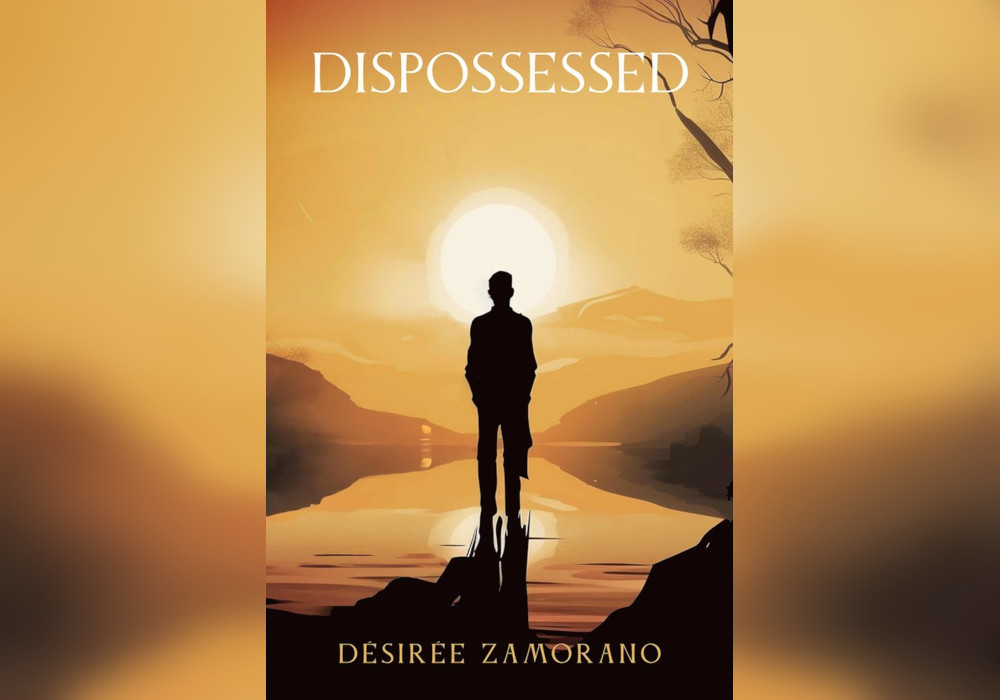
DZ: Thank you for picking that particular story, because that’s one of my favorites. [It’s] an excerpt from the novel Dispossessed, if you want to experience more of Manuel’s story. But that story is historical fiction.
I have some memories of the ’60s, and as I was growing up my dad would always drink RC Cola. A family dinner was exactly the dinner that is described in that scene… you know, some chuck steaks, some flour tortillas, some RC Cola, and everybody’s happy. I’m drawing from my own memories, but it is exactly what you say: What does this meal reveal about the characters? That was a happy meal for Manuel and his family. A complicated meal, but a happy meal.
TCR: I was thinking about comfort food when reading this collection, and the history of a family and a culture and – especially in terms of the title story featuring Amarisa and her magical cooking pot inherited from her grandmother – considering what that kind of cooking pot would represent to this family. Amarisa is educated, yet she’s struggling. And this magical pot doesn’t just provide nourishment, it actually enables her success. Amarisa specifically considers the way the pot makes things easier, giving her both time and energy, making her better at her job, even better with her son. She’s a better professor and a better mother because of this sacred pot from her family history. To me, this is about more than just feeding your family; it’s a connection to culture that enables upward mobility.
DZ: I’m gonna go a little more basic… it’s really Maslow’s hierarchy, right? You need to have your basic needs met. I teach at Cal State Long Beach as a lecturer, not a tenured professor. A few years ago, before I wrote this story, I learned that many lecturers are struggling, some of them unhoused and food insecure. And I thought, Oh my God, this is terrible. I mean, you’ve gone through so much education, and you still don’t have some kind of security.
I was really working on that sense of financial insecurity, and, yes, food. That’s why we have free food programs for kids at school, because a hungry kid can’t learn. A hungry kid is distracted and upset about their living situation. So yes, food is plain old nourishment. And I’m gonna jump to the last story, when the mom is giving her son some tortillas because that’s all they’ve got. But the son still shares his food with animals. So that displays his generosity of spirit and, just like in other fairy tales, it’s repaid in multiples.
TCR: I like the idea of a collection of stories as a meal with multiple courses, varying complexity, disparate flavors, all of which are cultivated and presented in a way that provides a full, emotional experience. And what helped keep me invested from story to story (or course to course) was the structure, with the individual sections. What was your thinking in terms of the arrangement of the stories into labeled sections, like “The Family Quartet” or, my favorite, “Gritty”?
DZ: That was part of the revision process. I had submitted a manuscript to the University of Nevada Press, and their reader said, “Yeah, but it’s not cohesive.” At the time, it was ordered differently. I realized, like all writers, it’s clear in our mind why we’re doing things, but sometimes we have to lead the reader a little bit. I reorganized my stories and figured out instead of the family quartet going through the collection, bunching them together made it stronger and more intelligible to the reader. Because with short story collections, you can dip in and dip out, and you might forget about the connection between the characters if I threw [one of the Family Quartet stories] in the middle of the book. Then I thought, What are the other sections that I can join? Then came “Mothers and Sons,” which was pretty vivid to me. And the fairytales. And with “Gritty,” I just wanted to warn people!
TCR: When I look at this collection, one of the things that struck me is the way you’ve represented Southern California. These stories exist on the outskirts of what some might call Los Angeles. People think of LA in terms of glamour, luxury, Hollywood, show business, etc., and perhaps for good reason, but so much of it is these big freeway arteries that reach out into shoulder-to-shoulder blue-collar communities, these ethnic enclaves. And even outside of the greater LA area, your use of setting is interesting… for instance, Lizzie’s parents don’t live in Santa Barbara, they live in Goleta. Which is a very specific place. How do these places – Goleta, the San Gabriel Valley – speak to the authenticity of your characters?
DZ: Well, you mentioned blue collar, and I think working-class people are underrepresented [in literature], right? And for whatever reason, political parties seem to focus on the white working-class person, but there’s a lot of people out here struggling. I am Mexican American. Every time I write a story, I want to represent my demographic. Our portrayals are so narrow and limited, I get furious. Look, I’m gonna go way back. Maybe thirty years ago I was listening to NPR, and this very intelligent person was talking about how she’d never heard of Bell Gardens or Bellflower or Bell or Cudahy. And you know, my dad had a business in Huntington Park. He was a public notary, so we did income tax returns for people who were from all of those areas. I knew who those people were, I knew what those areas were like. And I was so offended that people in California thought California was only Beverly Hills and Bel Air and Brentwood—
TCR: And Disneyland.
DZ: Yeah! I mean, Disneyland is great. I’m a fan of Disneyland. But Southern California is so vast and wide.
I wanna tell you a really goofy story. I wrote the Family Quartet and the story “Wednesday,” in which [main character] Gilbert ends up in Belmont Shore watching the kite riders and this amazing feat that they do. And he can’t wait to bring Amarisa to see it, because he feels elevated by it. But the funny thing is all of these stories were written in Altadena. And I don’t live in Altadena right now… I live in Belmont Shore!
TCR: I love that you brought that up because that is such a lovely moment. You talked about representation, and in this collection alone there’s a wide spectrum of voices and emotions. Sometimes these characters make really overt statements about their plight and the injustice of their world, and sometimes they’re more subtle. I’m wondering how you make those decisions, in terms of your characters’ reactions to their places in society. Is there an effort on your part as a writer to infuse your stories with political messages?
DZ: I tend to write a story knowing how it ends. I know there [are] lots of writers who don’t know how it ends, but for me the ending is like a punchline. And I need to build to the punchline. Part of building to the punchline is ensuring that the reader is emotionally engaged. I’m a senior fiction editor at [Pacific University’s] Silk Road Review, and students vote [for] stories, and if it doesn’t emotionally connect with me, I can’t give a thumbs up to the story. I want the reader to be connected emotionally, viscerally. I think that’s where food comes in because, you know, we have a real connection with food. In terms of the political things, a writer can’t be didactic because people will change the channel, turn it off, close the book. It’s not interesting.
I think everything is politically situated. We can ignore it, we can pretend it’s not there, but take Norma [from the story “Norma”], for example… she’s a very political professor. And she’s really angry about her son’s choices. She’s aware of the world at large, and she’s angry with how little impact she has on her own son. And in “Caperucita Roja” – which, if you don’t know, is Spanish for Little Red Riding Hood – Valeria goes to save her grandmother. She laughs at her brother for pretending he gets harassed, until she realizes she’s being harassed. I think many of the people in my demographic, we downplay aggressions. Because otherwise we’d get pissed off all the time. “Okay. All right. This is life. I’m okay. It’s not about me.” We downplay these things because we want to assimilate swiftly, and we want to dominate. We want to be part of the dominant culture.
I’d like to give my novel Dispossessed a little shout-out, because it’s still such a relevant piece of fiction. It talks about the mass expulsion of Mexicans and Mexican Americans in the 1930s and its impact on this one person. It’s basically Southern California Mexican American history in one book.
What’s your background?
TCR: Well, I’m basically a white guy, but my grandma, Lupe Guzman, was a Mexican American raised in Lone Pine, over on the other side of the Sierras. And she eventually moved to LA to raise her own family. My mom grew up in Downey.
DZ: Which my students call Latino Beverly Hills, which is hysterical to me.
TCR: While everyone has a connection to food, I know that I have an affinity for particular dishes because of my grandma, you know? Because it’s nourishing, yes, but it’s also history. Maybe I don’t miss my grandma as much as I would if she hadn’t given me my first tamales and taquitos and salsa. Now, every time I have those, I can think of her.
I’m gonna go back to the diversity of these stories. As a writer, do some characters feel like better channels for different thoughts and emotions? Is the dramatic impact of these characters and their emotional landscape more a result of the personality you’re putting into them, or your technical craft as a writer?
DZ: I think it’s case dependent. The story “Unconditional Love,” where the mom goes to retrieve her son’s body, I had a personal connection with someone very similar to that character, so I just put myself in that woman’s mental landscape as best as I could. With Gabriel [from] “Wednesday,” he appeared in “Amarisa’s Cooking Pot” as a tow truck driver and yet he was such an affable guy that I thought, Well, what else could happen with him? I think I find myself in my characters’ mental landscapes more than I “create” them.
For Norma, it’s funny. I created that character when I was working at Occidental College, and I sent it to a colleague and said, “Dolores, you inspired this character… not in an emotional way, but through your political activism.” When Dolores did research in Chiapas, she wrote to me, telling me how many connections she had with that story, including the name of her brother who died serving in the military. I think it’s like Lawrence Block said: You tap the universe. You know? You tap the universe, and the stories are out there.
TCR: As you said, some of the stories in your collection share characters, but most don’t. How did you decide to have these sorts of “spinoff” characters? Were there other stories that were considered for inclusion, and did they contain any crossover characters? What does the web of Amarisa’s Southern California look like?
DZ: I wish I had an entirely braided collection, because I love the four opening stories. But I couldn’t figure out a way to create the connections; they would’ve been a little bit tortured. It would’ve been gimmicky, and I didn’t want to make it gimmicky. I wanted to make it organic. I just told the stories that were interesting to me. Like the cookies story [“Cookies”]—I love that story. It’s kind of a what if… A friend of mine told me that her brother had moved in with her mom and basically taken over the house. I put that all together, and I had fun with it. I kind of take things that are happening and play with it.
 Geordie Stock is a writer with nearly two decades of production experience in the gaming industry, currently pursuing an MFA in creative writing at UC Riverside Palm Desert. He is based in the San Francisco Bay Area where he lives with his longtime romantic companion, Karl the Fog.