
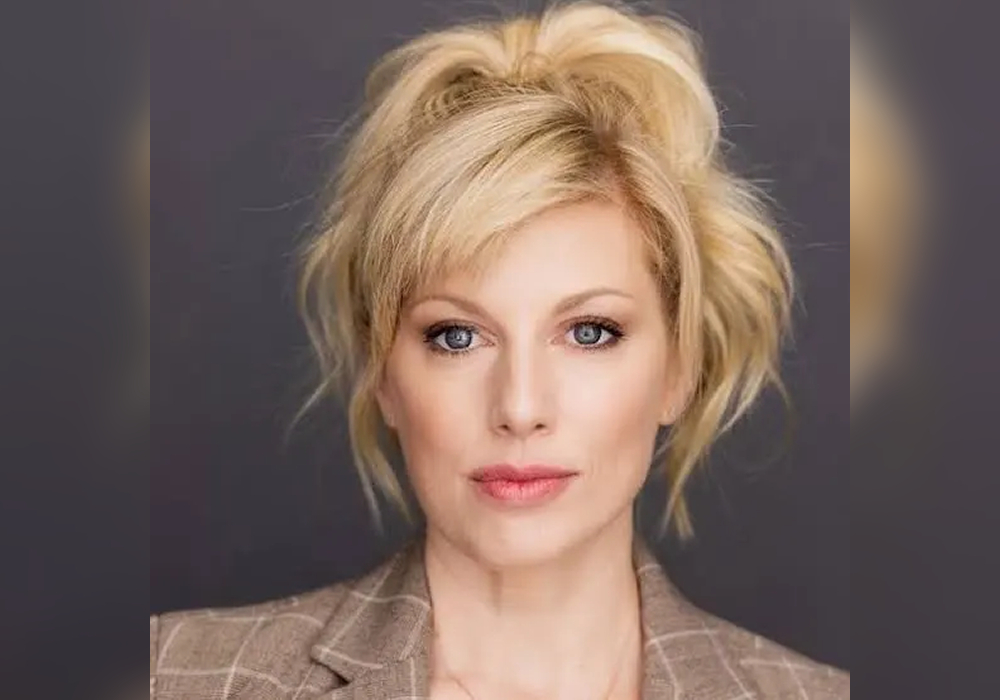
By Julie Colbrese
Jaime Parker Stickle is a master multitasker. She’s an actor, professor, host of two popular podcasts, mother, and now a two-time author. She’s fiercely committed to helping others, especially young women, who come up after her in these pursuits. It’s part of her core belief—to pay it forward, and share what she has learned about writing, publishing, and life in general. Her second novel, Take Hart, picks up where Vicious Cycle left off, with a new murder to solve and a new life challenge for former-investigative-journalist-current-spin-instructor-new-mother-private-investigator Corey Tracey-Lieberman to navigate. In Corey, Parker Stickle has created an engaging and endearing protagonist who readers will learn shares more than a few similarities to the author herself.
The Coachella Review caught up with a very calm and collected Jaime Parker Stickle in the middle of an otherwise chaotic family move, talking about her unique path to publishing, what motivates her to keep writing, and how she takes her coffee.
The Coachella Review: You’re one of those people who seems to have more backstory than years behind them. Can you talk about your route to becoming a published author?
Jaime Parker Stickle: Well, I made a deal with the devil: Let me publish twice before I hit fifty. I actually did, but [the deal] wasn’t with the devil. It was with me. When I first moved to LA, I learned how to do make-up so I could make money while I was getting started in scriptwriting and acting. I met a woman, the wife of a politician, who hired me to do her makeup for a big fundraising event. She gave me this advice: for each decade, make two goals and let those be your focus. If you hit the end of the decade and you haven’t hit your first goal, move the second goal to the top and pursue that goal. So, I did that. I was in my twenties at the time. I was like, Okay, I’m going to write for either a pilot or a TV show, which I did. I said yes to everything. Next, I said I’m going to get in front of all the casting directors. I did that, even if it wasn’t on a show. I was in front of them all the time. After I checked off those things, I went on to the next goal. It was to get published twice before I hit fifty. And to get a really good agent.
TCR: You did it!
JPS: I did it. And I have a really good agent. I feel very fortunate. Dara Hyde was one of the first agents I met during my MFA program. She made me an offer within 72 hours of receiving my query letter and told me to think about it. I already knew I wanted to be with her because she is here in LA which gives her a deep understanding of this city. Highland Park, Los Angeles is a character in my books. Dara has dealt with actors who have turned into novelists. She has a great reputation and is legitimately one of the nicest people in the world. Plus, she has a great kitchen where she took her Zoom meetings during COVID. It was her kitchen tile that cemented the deal for me.
TCR: An honoring of your values: relationships and an impeccable aesthetic. You wrote Vicious Cycle while you were earning your MFA at UCR Palm Desert. How long after you graduated did it get published?
JPS: I graduated in spring of 2020, and it came out in the fall of 2025. So, five years, but there were long stretches we weren’t working on it. We were waiting, watching the industry. You know, we had the pandemic in between there. I graduated on Zoom.
TCR: That had to be disappointing. What else were you doing during that time?
JPS: COVID with a four-year-old. No one knew what was happening with publishing or anything. It was a lot of waiting. Because it was my first book, that required a lot of my agent watching, listening, waiting for the opportunity to pounce at the right time during a pandemic. But before I even queried agents, I hired a friend from my MFA program, an incredible editor, Oliver Brennan, to do a developmental edit. I wanted it to be perfect. I didn’t want to risk querying for the first time without a really polished, solid manuscript. And that worked. My first week of queries I received full manuscript requests from each agent.
TCR: That doesn’t usually happen with a debut author. And then you got a two-book deal?
JPS: Yes. I got a two-book deal when my agent took it out on submission to publishers.
TCR: That’s even more impressive. Did you start right in on book two after your first book was published?
JPS: No. That’s one of the things I didn’t know but wish I did about book publishing. There’s so much to do after you sell a book. Even though my manuscript was in good shape, there were still many, many rounds of edits to make. I feel really privileged to work with Thomas & Mercer as a debut author. They work with very successful writers with sixteen, seventeen, eighteen books under their belts. Those authors know how to write efficiently. They’re doing it full time, and they know how to generate the content they need quickly. I have a kid and a job. I’m a professor. I have two podcasts. Keeping up with the work that surrounds [publishing] is a learning curve that I had to navigate with everything else I had going on.
TCR: The publishing industry can be tough and doesn’t necessarily favor debut authors. Besides delivering a great manuscript—which you obviously did, twice—what else in particular do you think contributed to your success at getting published?
JPS: I didn’t grow up with a lot of money, but I recognize that I have benefitted from certain privileges, and I’m not ignoring that. I know what I look like. I grew up outside of Detroit. I have Midwest values and a work ethic I got from my family. I know how to hustle. Everyone in my family worked for what they had, some without graduating high school, some joining the army and using that to graduate with three different engineering degrees. I’ve had to navigate a huge learning curve to get here. And I had to do it with a job and a kid. I’ve been very focused on what I want. I’ve done my research and I’ve built relationships. I’ve gone into it as a partnership with my editor and publisher. Being new doesn’t mean I don’t have my own opinions. I know what I want. Women, especially young women, don’t always have access to the information that can help them/us be successful. I vowed I would change that and educate as many young people, especially women, as I can. I am committed to being transparent about the things I’ve learned.
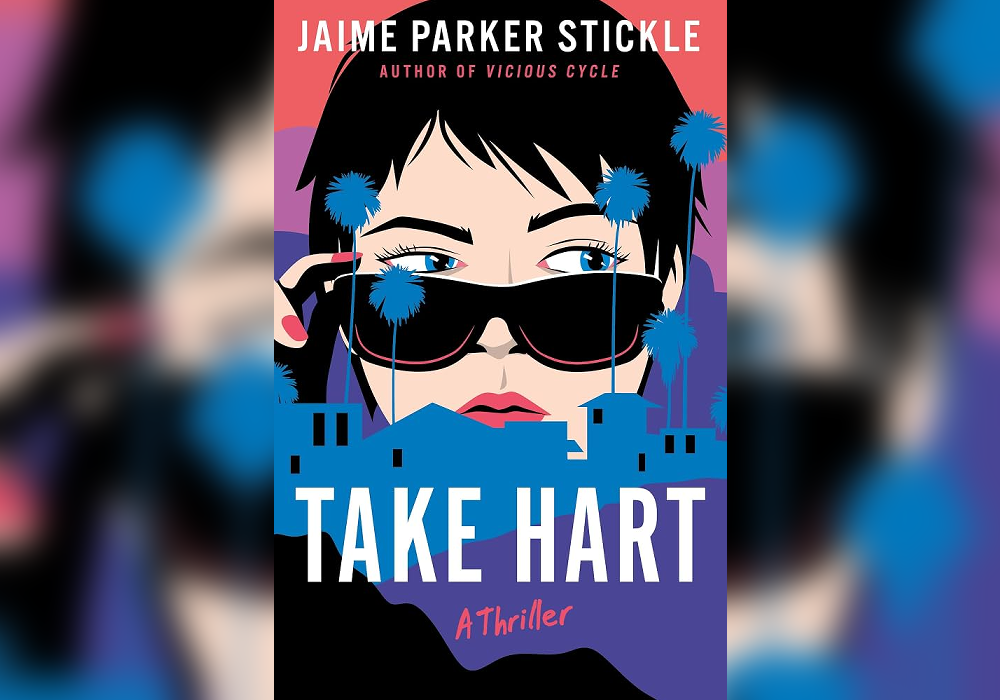
TCR: Once you set your goal of writing a novel, did you always know it was going to be in the crime/thriller genre?
JPS: I did. The Corey in LA books are crime novels, but I call them “human experience” novels. People always want to put you in a genre. I remember a visiting lecturer to my MFA program said all literature has crime in it. It may not be the focus on the story, but something happens and it’s usually a crime of some sort.
TCR: I’m not surprised you’ve created your own “human experience” genre.
JPS: I have my own “post-partum noir” thing going. I’m making that my own subgenre.
TCR: Yes! Oh, that’s so good. So funny!
JPS: I don’t think anybody who knows me thought I would write crime because of my humor. The writing I submitted for admission to my MFA program was also a crime novel. As it turned out, I abandoned that project and wrote Vicious Cycle instead. But I was always going to be a crime writer. Like a lot of crime writers, I was obsessed with Law & Order, SVU, and other shows like that.
When I was acting, I desperately wanted to play a cop or an FBI agent. I wanted to write procedurals until I found out they were using actual FBI agents and former cops to write them. No one was going to hire me for that. So, then I started writing the Corey in Los Angeles series. It came out of an organic place, out of my connection to the Highland Park neighborhood of LA where I had been living and what I was experiencing there at the time. To be honest, I was bored with my first manuscript. I had been working on it since my twenties. I thought I was required to start something new for my MFA. You’re not, but I didn’t know that.
TCR: Both your Corey books have a lot of personal elements to them. How do you decide what parts of your own life or experience to incorporate into your writing?
JPS: I knew I wanted to write about my neighborhood. I leaned into that because I love Highland Park. It’s this wonderful community of people in a wonderful neighborhood. Yet, I was devastated by the things that were happening there, to my neighbors and to the community. I wrote this blog for a while that talked about all the insidious acts of crime, the meth, the guns. No one else was talking about it. It wasn’t in the papers, and it wasn’t in the news. We had a Facebook group where it was loud and proud but also, you know, it’s important to talk about the things that aren’t okay. There were drugs and homicides, and it was real. It was sad. It bothered me that we weren’t hearing more about it. Gentrification plays a huge part of it. People sell drugs to make money to afford to stay in the neighborhood they grew up in. You end up being a victim as well. It was my neighborhood, so I made it Corey’s because I care about it and the people who live there.
TCR: When we met in June, I told you how much I appreciated the sensitivity and authenticity with which you depict your character’s self-management of her postpartum panic disorder. What made you decide to include that, in particular?
JPS: Postpartum depression and postpartum panic disorder are both valid, and both need to be spoken about. We need more community around them. Specifically, no one talks about postpartum panic disorder as much as they do depression. There’s a problem with that because it’s actually more prevalent than anyone realizes. Having obsessive thoughts about knives, for example, is quite common. No one wants to talk about it because it’s scary and can be misunderstood as a psychosis. No new mother wants to risk having her baby taken away. When it happened to me, I was afraid to tell anyone. I was having five panic attacks a day and not telling anyone. Luckily, I married a Jewish man from Manhattan, so psychiatrists, psychotherapy, and all that was all very normal to him. When I told him, he said he’d go with me. I got on medication that saved my life.
TCR: Both novels talk about the disorder very honestly. It’s a part of Corey’s life, yet it doesn’t define her. I’m curious if you got any pushback. If it made anyone uncomfortable along the way as talking about women’s health issues sometimes does.
JPS: I know what you mean. I didn’t get any pushback. Everyone involved with the books understands my commitment to making Corey as real and relatable as possible. I feel very fortunate to have had that support. It was important to me to not just play it off as a one-note, but to really show what it’s like to live with that disorder and still try to function as a mother and a person.
It’s been very gratifying to have women of all generations—Gen X, Boomers, Millennials—come up to me at writers’ events and thank me for writing about postpartum anxiety. They were told not to talk about it; no one talked about it. I’m committed to talking about it and writing about it.
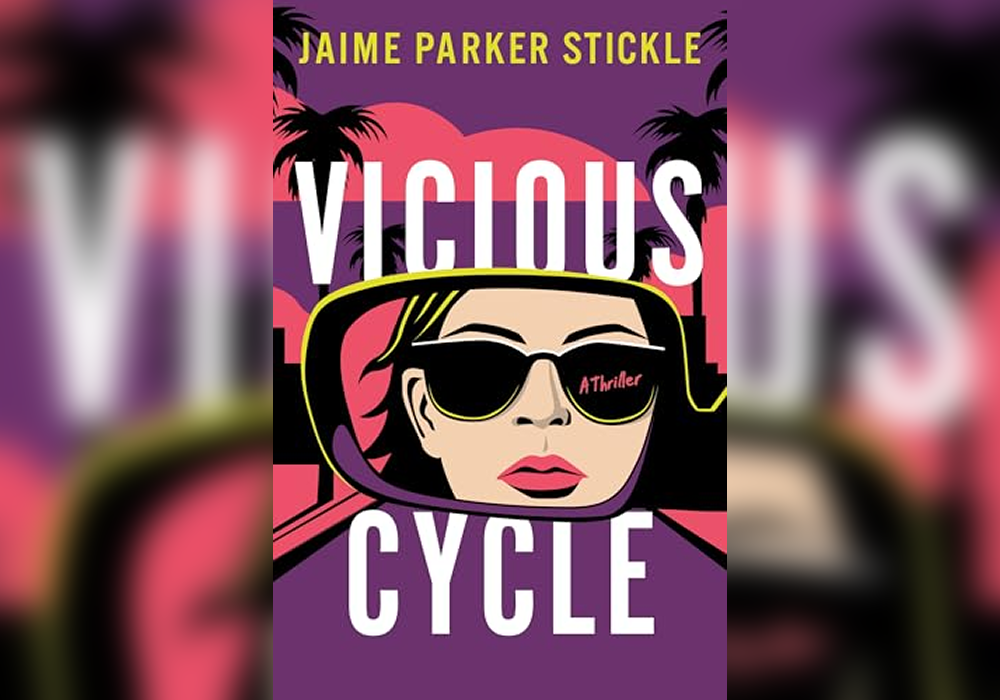
TCR: There’s a lot of humor in both books. There’s a recurring bit where Corey plays with hyphenating and unhyphenating her last name, as a kind of metaphor for her identity, as she struggles in her marriage. It’s so clever and just so real. And I especially liked that the people around her, the people who “get” her, just sort of roll with it in a really kind and supportive way. It was so funny and well done.
JPS: I’m so glad you picked up on that!
TCR: I know you lived with the character of Corey for a long time with the writing of your first book. She was very real and present for you and for your readers. When you sat down to write Take Hart, what was it like to revisit Corey?
JPS: You know what’s so interesting? It was all right there. She was right there. She was ready to be back. I could not believe how quickly she spit herself onto the page. I mean, I would have these moments where I was racing to keep up with her voice.
TCR: You write crime, so I assume you read crime. To prepare for writing the Corey books, did you read a lot of crime/thrillers? Or, if not, what did you read?
JPS: I do read a lot of crime. Megan Abbot, Ivy Pochoda, Rachel Howzell Hall, the Claire
DeWitt books by Sara Gran, the Baltimore Blues series by Laura Lipman. Obviously, Tod Goldberg and Lee Goldberg, [who] both speak to my humor. My books are dark, but I always feel like levity is needed in some of the darker pieces. There’s a very funny book called Kevin Kramer Starts on Monday by Debbie Graber. She’s a graduate of UCR too. I’ve bought at least a dozen copies of that book.
TCR: Not giving anything away, Take Hart ends with a bit of a cliffhanger for fans of the series. Can we expect another adventure for our protagonist Corey Tracey (with or without the hyphen) Lieberman?
JPS: Corey has at least one more mystery to solve, and her life seems to just get more complicated with each page. Definitely stick around for the next installment.
TCR: You know I will. What about our favorite double-last-name author? What’s next for you, Jaime Parker Stickle?
JPS: I’m scheduled to be at about twenty-seven different writing and book events. I’m working on my next two novels. I have my two podcasts, The Girl with the Same Name and Make that Paper that are starting up again and, you know, my kid, my job, moving, life.
TCR: You seem to manage it all with humor and grace. You’re inspiring as an author and a woman and a human.
JPS: Thank you. That’s so kind of you. I really appreciate it.
TCR: Final question: I don’t know how anyone can write without coffee. Do you have a go-to coffee order? Or some other ritual around writing?
JPS: Oh my gosh. I like cold brew with lavender cold foam. But I make it at home or if I go out, I go to our local coffee shop, Toasted. It’s my favorite place. Sometimes, instead of lavender, I’ll have it with rose. I like anything floral. I like a rose latte, but my very favorite is iced coffee with lavender cold foam.
TCR: What’s your quick take on cardamom? I love cardamom and I suspect we have that in common.
JPS: Oh, cardamom is killer! I love it so much. Orange and cardamom, orange blossom and cardamom. I will come visit you and I’ll bring cardamom and lavender scones. No, I’ll bring cardamom, orange and lavender or Earl Grey scones. This is my summer of scones.
Julie Colbrese is a writer and a writing coach. She holds an MS degree in Forensic Psychology and is currently completing an MFA in creative writing at the UC Riverside Palm Desert program. She lives in Palm Springs, CA where bad things happen even when the sun is shining.