
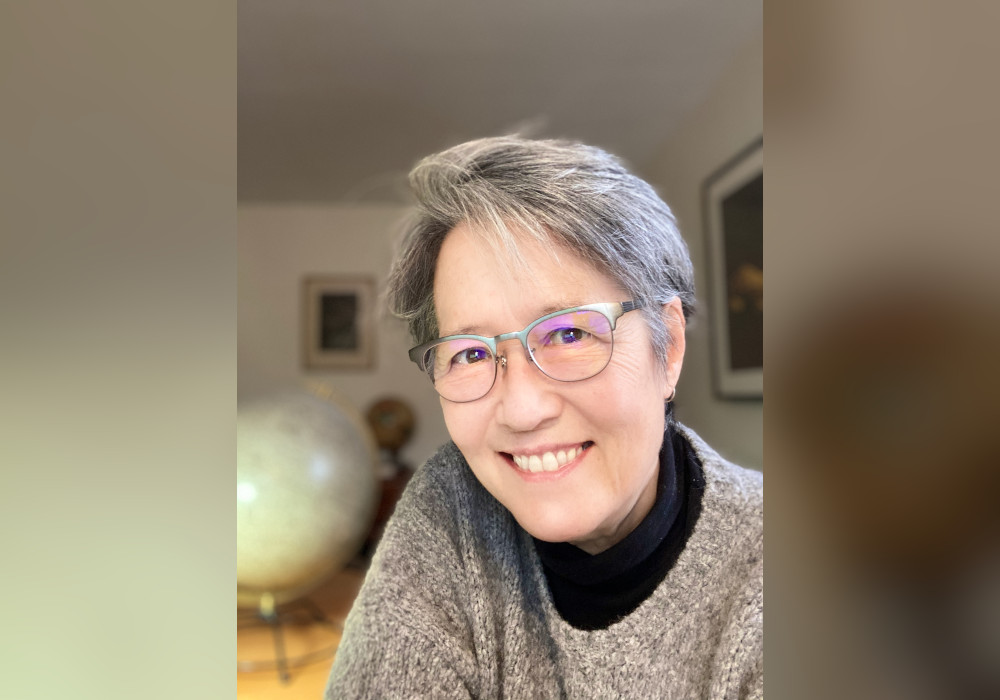
By Betty Fall
Critically acclaimed author, award-winning filmmaker, professor of English and literature, Zen Buddhist priest—Ruth Ozeki’s extensive portfolio is as impressive as it is varied. Ozeki has built a literary career exploring all facets of how people connect, especially through reading and writing, and her stories have resonated with audiences across the globe. Despite already having such an accomplished life and career, Ruth Ozeki still finds ways to branch out further and keep things fresh. This time, she sets her sights on the realm of short fiction.
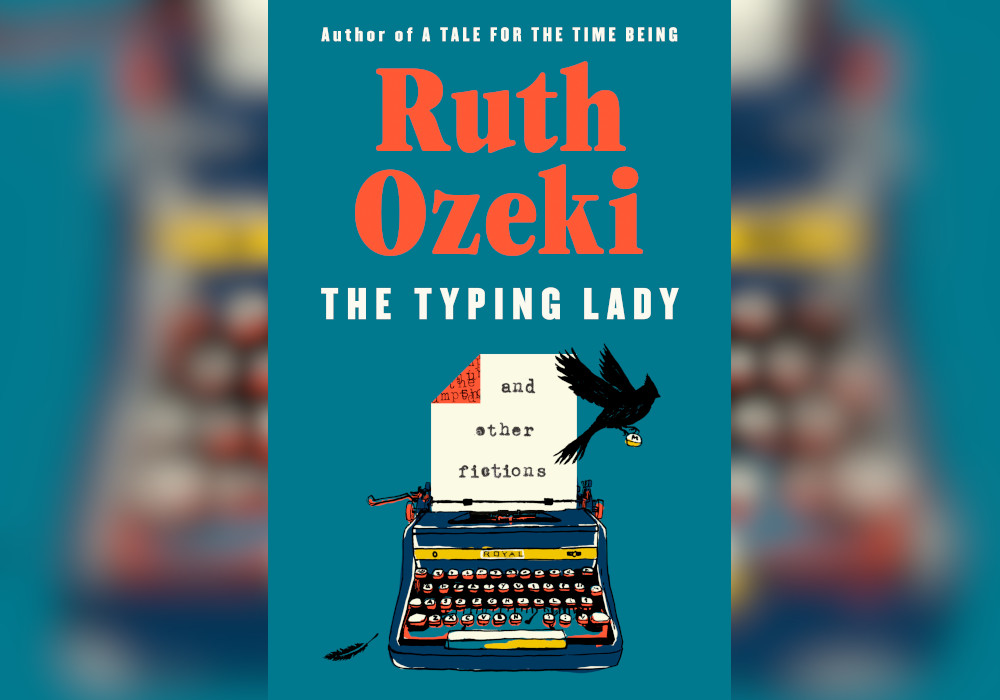
The stories in Ozeki’s newest book, The Typing Lady: And Other Fictions, explore a wide array of experiences and play with the nature of storytelling with the same empathy, precision, and wit that made her previous works so striking. Some highlight the ways authors struggle to relate to their own stories, lived and written, let alone relay those feelings to other people; others reflect upon the foibles of youth. Two feature some particularly temperamental birds. While not interconnected, these fictions are undeniably unified by Ozeki’s unique voice and passionate zest for the literary.
The Coachella Review spoke with Ozeki about putting together a debut short story collection as a tenured novelist, books as a quantum phenomenon connecting author and reader, and the unexpected benefits of amassing a typewriter collection.
The Coachella Review: You’re best known for writing novels, and you’ve also worked in film and television. This is your first short story collection, though. How has putting this collection together differed from your other writing experiences?
Ruth Ozeki: It really is very different. I started teaching at a university level, and I was teaching fiction writing. Because of the limitations of the short semester and all of that, it’s impractical to teach novels because they’re just so long. So I found myself teaching short fiction, and I’d never really focused on short fiction as a form before. For some reason, most people start with short fiction and then work their way up into writing novels. I seem to have not gotten that message, and so I started with novels and then worked my way into short fiction. And it was really interesting to do it that way.
Teaching the form really made me appreciate it in a way that I perhaps hadn’t before, on a technical level. The two are very, very different. The process of writing them is different, the feeling of being inside of them is different. One of the things that I love about short fiction is, well, that it’s short. That you move in and out of the world in a very kind of intense and compressed way. So that’s one thing. I love the fact that, in a way it’s more like poetry, in that you can really focus on the language in a granular way that you perhaps can’t do as much in a novel. I think of the novel as being more like a compost heap. You can just kind of throw anything on it, and eventually nature will work on it, and it will decompose, and hopefully turn into something rich and fertile. But the short story isn’t like that. It’s more gem-like—it’s more like this polished stone—and I really love that. I love the process of working the prose and working the form and removing things that were extraneous. A novel is bigger and bulkier, and can accommodate digressions. In fact, I think that’s the strength of the novel—that you can digress. It adds a certain kind of richness. But it seems to me that in the short story form, it’s kind of a precision art. And I really love that, and I love being able to get in and out in a relatively quick way.
The hard part about writing short fiction—I mean, it’s rewarding to be able to get in and out. The hard thing is that when you’re out, you have to come up with a whole new idea, and a whole new fictional world, right? And that’s a challenge. But, overall, I just really loved it.
TCR: On that note about being in and out, and then asking, What’s next: Many of your stories reflect your wide breadth of life experiences, including your work as a professor and your Zen Buddhist philosophy. What’s your process for deciding on one idea or another for any given story you choose to write?
RO: Yeah, gosh. You know how these things are. An idea comes to you, and you just start playing with it, and eventually, if you’re lucky, it gains enough traction so that you realize that it has the potential to become something. Other ideas, for whatever reason, just fail to thrive. There are several stories that I was considering for the collection that, they just weren’t there yet. For some reason, being inside that world didn’t spark joy for me. And at some point, they might, but I couldn’t force it, and I didn’t want to force it. So I think that it’s less a decision that’s made rationally with my mind, and more a kind of feeling. Does it excite me to be inside this world? Are these characters mysterious enough and interesting enough to make me want to get to know them more? Is the language of the story—the tone, the narrative voice—compelling enough to make me want to continue? So it’s just kind of my Spidey-sense of all of those elements. Is it strong enough, is it working enough, is it compelling enough, to make me want to spend another paragraph here?
TCR: Essentially, you’re coming at it as the first reader of the work, and you’re deciding, Okay, is this something that I would want to keep reading, let alone continue writing?
RO: Exactly. Do I want to read another paragraph? Do I want to write another paragraph?
TCR: So, with that in mind: even though you started out with longer fiction, I noticed some of the stories in the collection were first published twenty-plus years ago. How did it feel returning to (and revising) some of these older, shorter stories with fresh eyes?
RO: You know, it felt great. Very often, when you publish something, you don’t get a second chance. You publish it, and it’s just out there, and that’s it. And that’s fine! But, one of the reasons that I wanted to do the collection was that I had these stories out in the world, and they were like little chickens that had flown the coop. And I liked the idea of bringing them all back home and housing them under one roof. Also, because I’d been teaching short fiction, I really felt that I needed to try to master the form a little bit so that I didn’t feel like a complete fraud.
I was thinking about short fiction, I was teaching it, I was working on it myself, and then I thought, I could actually have enough to make a collection if I included some of these older stories. And so I re-opened these documents that I hadn’t looked at for a long time —I think the oldest is about twenty years old —and going through them again, I’ve changed as a writer over that time. I could see ways that they could be improved. And that was exciting to me, because they’re my stories; I can improve them. I can make them better. It was really wonderful to be able to do that. It felt very special to be able to revisit these older works, and have them reflect the writer I am now, more accurately. So that was fun, I loved it.
TCR: With that in mind, many of your stories contain auto- and meta-fictional elements that reflect your own experience as an author. In the opening story of the collection —“The Typing Lady: An Author’s Note”—the titular typing lady is asked, “Why, after writing only novels, she had decided to switch to short fiction.” Have people responded to you working on The Typing Lady in a similar manner?
RO: Yes. Absolutely. And that first piece that you mentioned, it’s called “An Author’s Note.” So I’m inviting readers to take that as nonfiction. But then, as you’re reading it, you begin to realize that, in fact, it’s not nonfiction; it must be fiction. The typing lady is actually a character from my last novel.
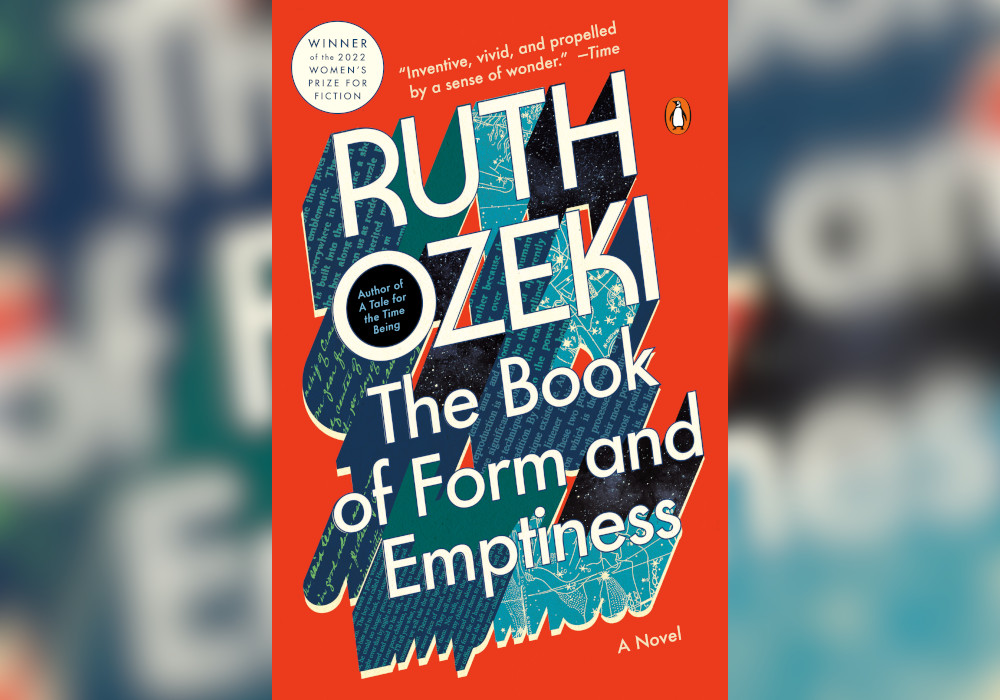
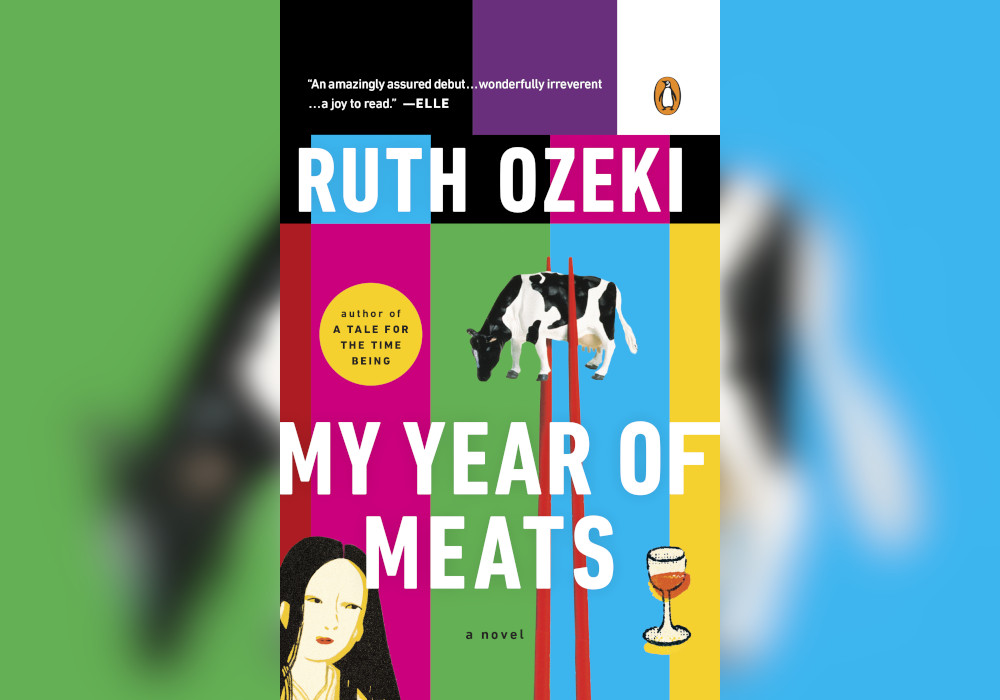
TCR: The Book of Form and Emptiness.
RO: Yeah. And in that novel, she’s a character very much like the character in the “Author’s Note:” she’s somewhat Asian-looking, she’s got silvery hair, she’s got square black glasses, and she spends her time in a carrel in the public library, observing what all the characters in the novel are doing, typing rapid field notes. In the “Author’s Note,” we have the supposed author, which would be me, sort of, watching this typing lady, who is also sort of me. Readers of The Book of Form and Emptiness pointed out that, yes, the typing lady resembles me. And that’s how I meant it. You know how Hitchcock always appeared in his films? It was a kind of cameo, and it was just a joke. Because I really feel like the typing lady. When I’m in the middle of writing a novel or a story, it’s like I am in the location with the characters, and I’m watching how they behave, and I’m typing up field notes about what they’re doing and what they’re saying, and I’m trying very hard not to interfere too much. And that’s exactly what the typing lady in The Book of Form and Emptiness does. She’s trying very hard not to interfere in [the protagonist] Benny’s life.
So then, take it to the “Author’s Note.” It’s just one iteration removed. It’s this supposed author, watching this typing lady, who is also the same author. There’s this French art term that expresses this. It’s called mise-en-abyme, which is basically “set in the abyss.” It’s the description of an effect in painting, or in literature, wherein a picture contains an identical miniature picture of itself, which then contains an identical miniature picture of itself, on and on and on, into infinite regression.
TCR: Like a matryoshka. Those little Russian nesting dolls.
RO: Yes, right, exactly. Or the Morton Salt box. The Morton Salt box has a picture of a girl carrying the Morton Salt box which has a picture of the girl carrying the Morton Salt box, on and on. And as a child, I was fascinated by that. And that’s something that Jorge Luis Borges plays around with. And I love Borges. I just think that Borges is a wonderful writer, and I love that kind of game-playing. It’s a way of playing with autofiction that points at its artifice, and treats it playfully rather than seriously. That’s what I was after: creating a kind of mise-en-abyme effect.
TCR: Throughout The Typing Lady, you don’t just write about yourself —you also write about writers (and other creative types) a number of times, often with wit and mildly self-deprecating humor, but always with love and empathy. What keeps you coming back to writing about writers, and these themes surrounding writing and storytelling?
RO: You’re a writer, you understand this. It’s how I experience the world. I experience the world through language, and things don’t feel quite real to me unless I’m able to write about them. It’s sort of my primary interface with the world. Because it’s something I’ve felt, ever since I was quite young and could first read and first learned how to write, this has been a powerful theme for me. This idea of trying to represent reality somehow, and how you do that. How do you represent reality? How do you evoke life experience in a fictional world? The other thing too is, especially when I was a teenager, I was having a pretty rough time. And the thing that really saved me was writing and reading. So this idea that writing can save your life is something that appears in many of my —I would say all of my work. That’s the embedded theme in just about everything that I’ve written.
And it makes perfect sense, because I would go so far as to say that any piece of literature written in the first person has the same plot. Which is basically, “Dear reader, I survived to tell this tale.” There’re many different manifestations of that, and there are many different ways of telling that same story, but that, I think, is at the heart of most of my books, in some way or another.
Did you read Charlotte’s Web when you were a kid?
TCR: I actually did not read Charlotte’s Web! That was something that completely glanced me by.
RO: You’re a writer, you should read Charlotte’s Web. Because it appears to be a story about a little girl with a pig and a spider. But it’s not. It’s about Charlotte, the spider. It’s about a spider who saves her friend through the power of language. It’s all about the power of language. It’s so beautiful, and I think it’s the perfect story. I think probably all of my work is an attempt to recreate that story somehow, but I’ve never completely succeeded.
TCR: I mean, that’s fair! I do think ultimately, when it comes to writing, we’re trying to evoke the same emotion that something —usually a book —evoked in us at some point when we needed it the most.
RO: Yes, exactly. I completely agree.
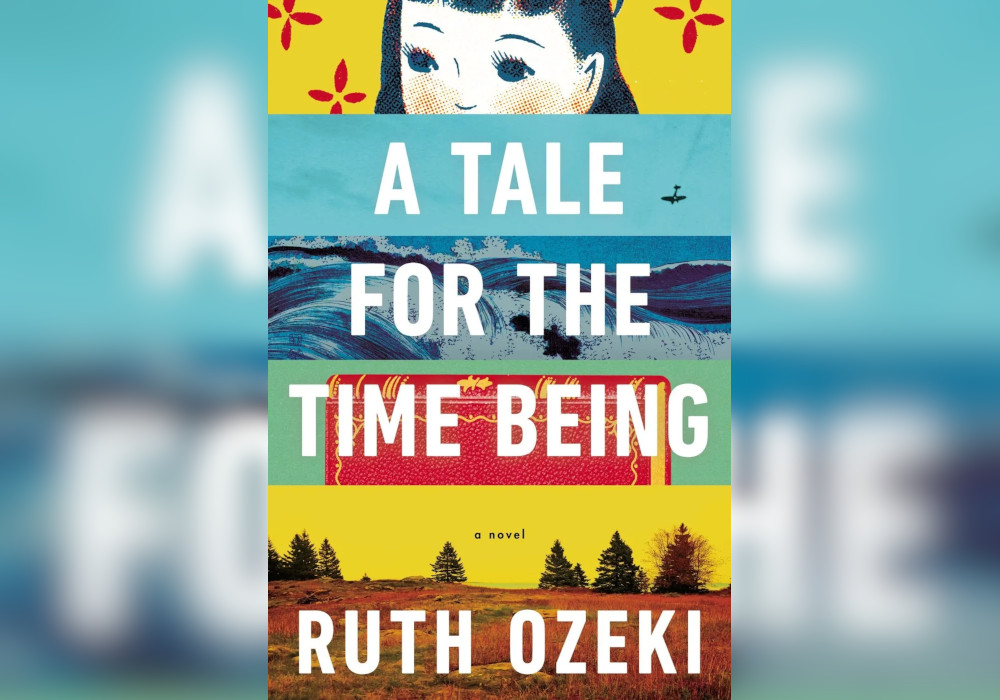
TCR: Your stories tend to be very interested in self-reflection, and how it can feel difficult to authentically express one’s story and views to a reader. But you also speak often on how people connect and self-actualize through storytelling, like in A Tale for the Time Being and, as you mentioned before, The Book of Form and Emptiness. When and how did you become confident in your ability to connect with your reader?
RO: That’s something that slowly dawns on you as a writer, I think. When I first started writing, of course I had no confidence, because why would I? And to be honest, I wasn’t really thinking about my readers, because I didn’t really think I would have any. I didn’t know —I hoped I’d have some, but how would I know, right? So I wasn’t really thinking about the reader. I was thinking about myself as the reader. I was thinking, is this story working for me? That’s as far as I can ever know. I have no idea —at that point, too, I had no idea what a reader would possibly want from a story. All I could do was figure out was [if it was] working for me. And then, little by little, as I published more, I started to realize, Oh, there are actually people reading. And they have their own responses to it.
That’s when I had this kind of revelation that we think of a book as being a singular object, like The Book of Form and Emptiness is this book —
TCR: The physical text.
RO: Yeah. I could pull it off the shelf and I could show it to you. But I realized that’s actually not the case. That anything that you write, any book, any story, as the writer, you do your best to articulate, and express, and create this singular object. But as soon as you put it out into the world, it becomes something different. It is no longer the object that you think you have made. It becomes a collaboration between you and the person who is picking it up, and in this case reading it. And it can be very different from this thing that you wrote. The thing that I think I wrote might be very different when somebody else picks it up, because they bring their own lived experience to the page, and then The Book of Form and Emptiness becomes a co-creation between me and that particular reader. And that reader is going to be different from the reader sitting next to them.
In that way—to use the quantum metaphor from A Tale for the Time Being —a book is like a quantum phenomenon. It can appear both as a particle, as a singular object, or it can appear as an array. So it’s both multiple and singular at the same time. And that made me realize all I can really do is trust myself and write the book that I want to write. And then I put it out into the world, and I trust my readers to take it and create something new and different with it. And I think that over the years, what I’ve learned to do is trust my readers. I really do trust them. We make beautiful things together, and I only do part of that. Because they’re bringing their life to it, and their eyes, and their mind, and their body to it. And they’re making their own thing. And that’s fun! It’s dynamic. It’s a very dynamic process. So that’s why it’s exciting.
I used to not like book touring. But now I really like it, because I love going out and meeting readers. And it’s like, What did you read? What Book of Form and Emptiness did you read? I want to know about this. It’s interesting, suddenly. It’s exciting.
TCR: So, back to The Typing Lady. Regarding specific stories: I noted that “Dead Beat Poet” and “Where Ambition Goes to Die” both concern characters who are miserably content with their lives grappling with fantastical manifestations of human drive. I think you’ve already answered this a bit, but what pushes you to chase after your ambitions —not just writing, but all the things that you’ve done and would like to do with your life —in lieu of a literal brain ghost?
RO: Actually, I probably have literal brain ghosts. Maybe that’s what it is.
When I start thinking about it, I have to trace it back further and further. I think it’s really a kind of spiritual quest, a philosophical quest, almost, to try to understand myself in relation to the world. What does it mean to be a sentient being? And of course that changes all the time. Who we are in the world, this self that I think I am, is changing all the time. And so as a result, at every moment, there’s a new aspect of that relationship between self and the world that one can explore. That has always intrigued me, and I think that’s what really what drives me to do it. There’s something about first understanding it, and then being able to articulate it somehow in a form that feels interesting to me.
I do a lot of journal writing, which is so unbelievably boring, if you read it. You would read it, and you would be like, Oh my God, who is this boring person? Truly, my journal writing is so boring, and I do that as a way of trying to find out what it is that’s bothering me, what’s confusing me. And somehow I think that getting all that boring stuff, boring language out the way somehow helps me find my way to a kernel of something that is a little bit more interesting, that then I can express as a story or as a novel. Something like that.
TCR: When it comes to your younger protagonists, I find it really striking how you balance childhood naiveite and innocence with the capacity for both maturity and harm in stories like “The Anthropologist’s Kid,” “Ships in the Night,” and “Feelings.” How do you go about finding that balance writing characters with perspectives so different from your own current one?
RO: I think that everybody has a period in their life that feels, for whatever reasons, more crucial, somehow. It’s either a period of confusion, or suffering, or maybe it’s intense joy as well; it’s a period that feels particularly alive. And for me, that was when I was a teenager. It was a very confusing time. You’ve been a teenager; you know. And I think that all of those stories come from that. It’s probably the time when I did more things that now, as a saner adult, I feel some remorse about. But I also remember things that were very beautiful, and very alive. So I think I revisit those. A lot of my protagonists tend to be in that teen bracket. And I think that’s probably why. That was a time that for me was terribly confusing, but also felt seminal, somehow.
TCR: Most of the stories throughout the collection feature, or at least mention, a typewriter. When selecting older works and writing newer ones, did you consciously include that motif throughout, or did it come about naturally?
RO: Two things happened. When I was first putting together the collection, I was thinking, Is there a motif that connects these stories? And I sent the stories that I had to my friend, Karen Joy Fowler, who’s a wonderful novelist, and has written many beautiful books. She was the author of Booth most recently and The Jane Austen Book Club, and she writes a lot of speculative fiction. She was the one who pointed out that many of these stories have something to do with writing.
And then, around that same time, around the election, I just had this feeling of —because I could see the writing on the wall. I was like, You know what? You guys can go on ahead into the future, but I’m just going to stop here. I’m just gonna go back into the past. And it was kind of a joke, but it was just like, I’m tired of the twenty-first century. I’m just going to go back to the last century and live there for a while. And it was around then that, just like in the first story, I was driving home from Cambridge, and I passed a typewriter store. And I pulled over and went in, and hours later I came out with this beautiful typewriter from 1956. And I suddenly found myself collecting typewriters. I bought that one in Cambridge, a couple weeks later I bought one in New York, a little while later I picked one up on eBay. So I was spending all of this money on typewriters, and basically realized that if I just put typewriters in the stories, then I could deduct the expense of the typewriters as a business expense on my taxes. And so that gave me an added incentive to put lots of typewriters in the stories.
TCR: That’s fair, and it’s also smart. I’ll keep that in mind for the future.
RO: I’m telling you. You know, if you’re going to write about places, too, write about places that you want to travel to anyway.
TCR: I’ll go ahead and ask what might be a dreaded question: Do you have a plan for what’s coming next? Any projects, fiction or otherwise, in the works?
RO: I’m working on a novel. I’m hoping that it will be a short novel. But I’ve said that about every novel that I’ve ever written, and they never come out short. This one, I really do hope that I’ve learned some lessons from doing the short story collection. I’m hopeful that I will be able to contain it. Because I really do think that —I know it’s true for me, and I know it’s true for my students —that our attention spans are shrinking. And it’s harder and harder to pick up and finish a whole novel. And I’m now seventy. And it takes me a really long time to write a novel. So, just doing a simple bit of math, you realize that if it takes me ten years to write a novel, I might not be around to finish it. In that sense, it makes sense to try to write shorter works. Because I have stories that I want to tell. So the quicker I can write them, the better. It’s just pragmatic.
TCR: Exactly, that’s the thing: A well-done short story is economical, both in the sense of what they’re able to express to you in such a short amount of time but also [in the sense that], Wow, I sat down, I read a whole story, I’ve had my brain chemistry changed, and I feel good about it.
RO: That’s exactly right. I’m hoping that I’ve learned something from writing the short story collection. But, knowing me, probably not. It’ll probably take forever.
TCR: Well, I mean, as long as you’re having fun while you’re doing it.
RO: Yes, exactly. That’s exactly right.
TCR: The last question that I have is just for fun. What’s your favorite typewriter model, and why?
RO: Right now, it’s the most recent one that I got, the Hermes 3000. It’s so beautiful, it’s a Swiss typewriter. The shape of it is beautiful, it’s a beautiful-looking typewriter. It’s way overvalued in the vintage typewriter market, and I understand that, but I just can’t help loving it. There are others. I love the German Olympia typewriters. They’re beautiful. Very often when I’m looking at a typewriter, I’m interested in the typeface as well. There’re various different typefaces, so a typewriter with an interesting typeface is always very appealing to me. But I’m really trying to not go overboard —to buy any more typewriters. But we’ll see.
TCR: What’s one more for the collection?
RO: That’s right. What’s one more for the collection? I figured that, as long as I’m still promoting the book, I can still use it as a deduction on my income taxes. But once the book is out in the world, I think I have to stop.
Betty Fall is the current blog editor at The Coachella Review and a lover of all things genre fiction and format fuckery. When not reading or writing, Betty can also be found drawing, sewing, playing fighting games, and thinking about writing, the last of which is an endeavor in and of itself.