

Edited by Angelo A. Williams
In this edition of Voice to Books, we attempt to tackle literary theory. Across four reviews, we offer a wide-ranging set of analytical frameworks that may enhance our understanding of literary production and consumption. Crystal Anderson’s Beyond The Chinese Connection challenges our notion of cross- and intercultural characterization. Michael Datcher’s Animating Black and Brown Liberation mines Black and Brown authors for self-defined survival strategies rooted in Ishmael Reed’s axiom, “writing is fighting.” Dunn, Holmes, and Hunter’s Decentered Playwriting proposes alternative structures for playwrights beyond the mono-culture of the status quo. Toni Morrison’s Language as Liberation interrogates the classics and finds within the American literary canon a repetitive structural trope: characterizations of white characters as pure-virile through juxtaposition with one-dimensional Black characters as degenerate-craven. For readers and writers alike, literary theory can help deconstruct and construct narrative by giving us a look at what’s behind the stories we tell and digest with an eye for social and cultural questions within our contemporary zeitgeist.
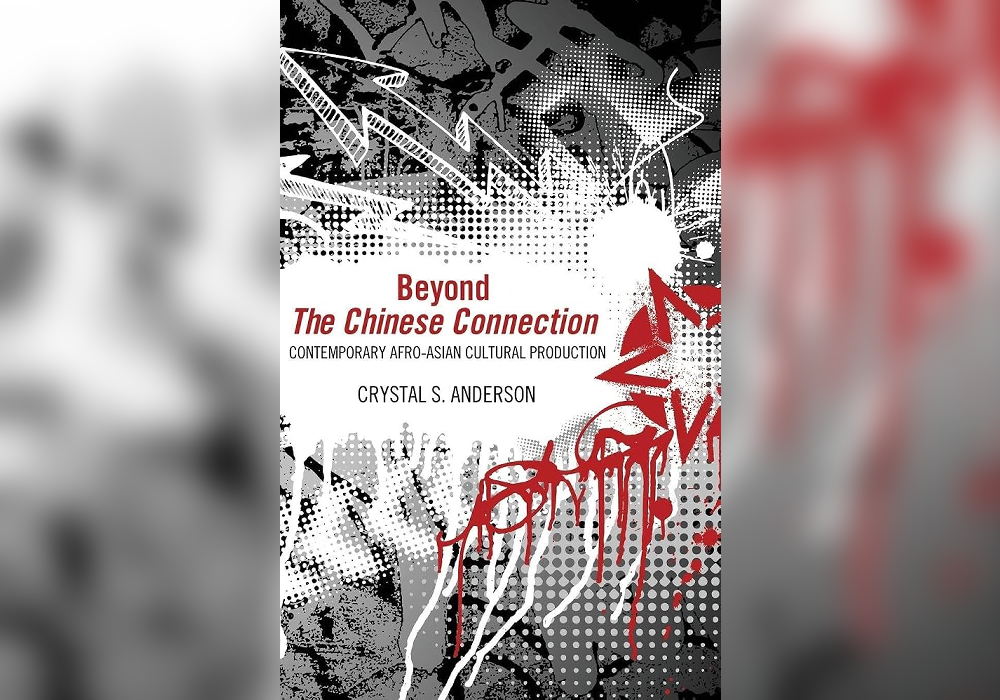
Beyond The Chinese Connection: Contemporary Afro-Asian Cultural Production
By Crystal S. Anderson
Reviewed by Yennie Cheung
As a look into the coexistence of Black, Asian, and Asian American cultures in literature and film, this highly academic text is informative for both prose and screenwriters looking for multicultural craft inspiration. Published in 2013, the book gives examples from satirical literature and martial arts film/TV that coalesce behind one shared experience: oppression by a dominating system.
First, Anderson explores what she calls cultural emulsion, where the groups interact while keeping their national or ethnic identities separate. The book’s most frequent examples are the films written by and starring Bruce Lee, an icon in all three cultures whose work includes strong Black and Asian characters fighting a common enemy: white crime bosses. Lee’s characterizations defy negative Western stereotypes of minorities while also highlighting white brutality and imperialism through settings such as The Way of the Dragon’s symbolic fight scene in a Roman gladiatorial arena.
Appreciation seems key to what Anderson dubs cultural translation, which uses one culture to interpret another. Exchanges between ethnic Japanese and Black American influences highlight this section, including the anime Samurai Champloo, which celebrates the individualism of hip-hop to criticize Japanese conformity and isolation. Anderson couples this with Paul Beatty’s novel The White Boy Shuffle, which utilizes Japanese nihilism to explore young Black identity during the racial tensions of the 1992 Los Angeles uprisings. This, paired with the mentorship between the teen protagonist and a Japanese American internment camp survivor, reveals a shared disillusionment with American inequality that transcends rather than emulsifies differences.
While current cultural sensibilities may dismiss some of Anderson’s examples for being created by people with no firsthand Afro-Asian cultural experience, the book still provides solid analyses of how cultural exchange can emphasize solidarity and understanding among different racial groups. Through setting, character, and respect for social perspectives, writers can show that even in conflict, the human experience is universal.
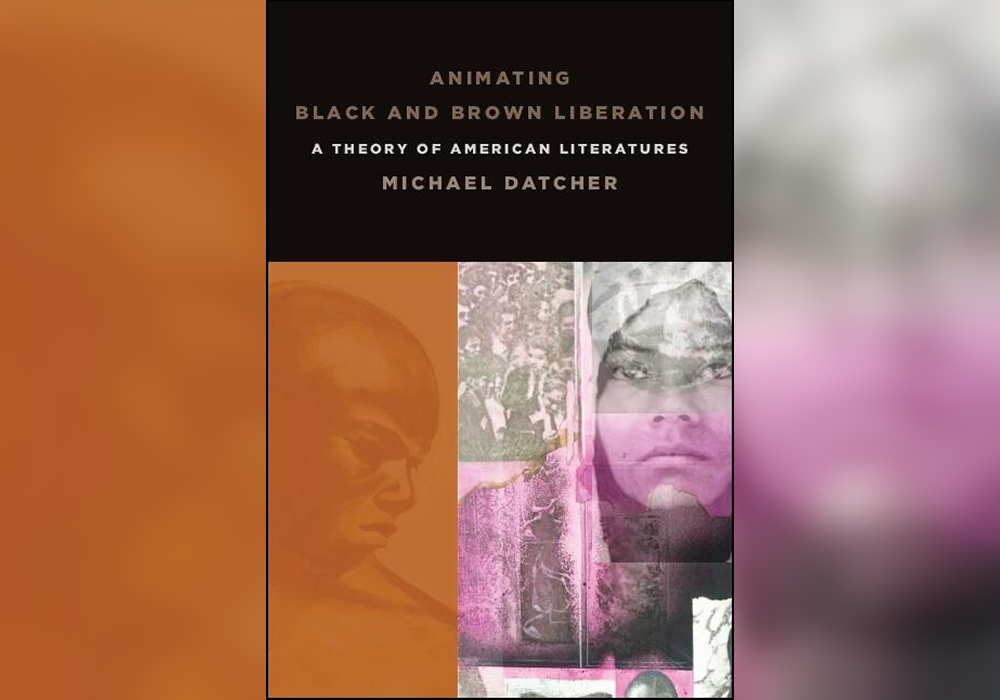
Animating Black and Brown Liberation: A Theory of American Literatures
By Michael Datcher
Reviewed by Angelo A. Williams
Animating Black and Brown Liberation poses a question both literary and lethal: Which bodies are granted animacy, i.e., “motion, value, force,” and which are disposable? Datcher’s solution: to mine selected literary texts authored by Black and Brown writers for strategies of survival, illustrating how these works serve as tools for liberation and resistance, emphasizing their significance in social justice discourse.
Datcher pairs Salvador Plascencia’s The People of Paper with Ishmael Reed’s Mumbo Jumbo and finds a common solution to identity erasure: writing rooted in self-definition and community wisdom as spiritual practice. Recognizing these acts affirms the humanity of the oppressed, fostering validation and a sense of shared purpose, which can inspire the audience to see their own stories as vital.
Datcher continues this pairing of authors with Toni Cade Bambara’s The Salt Eaters and Cherríe Moraga’s Heroes and Saints. This pairing reveals how communities create “an emancipatory alternative public [space]” to combat the “hieroglyphics of the flesh” embedded in racialized hierarchies. These safe spaces within endangered places foster hope and resilience, emphasizing the power of community in social change and resistance efforts.
Datcher analyzes the works of Cherríe Moraga and Gloria Anzaldúa’s This Bridge Called My Back and June Jordan’s Poetry for the People works that pose multiracial, liberation-oriented anthologies as counterpublic spaces where social transformation and the challenge to the hegemonic order are essential.
He ends by coupling Wanda Coleman and Kamau Daáood, whose poems he says both identify the scars of society and provide a diagnosis for saint and sinner: “heal thyself and radiate…” This is the reward of the text. While words alone can’t stop bullets, self-definition is required for self-defense. Social imagination delivered through literature is at the root of the Abolitionist, Civil Rights, and Black Lives Matter movements. Datcher’s attempt in his paired textual analysis to center Black and Brown writers in conversation with one another may inspire a shift in the perception of Black and Brown individuals and communities so often defined from a deficit frame.
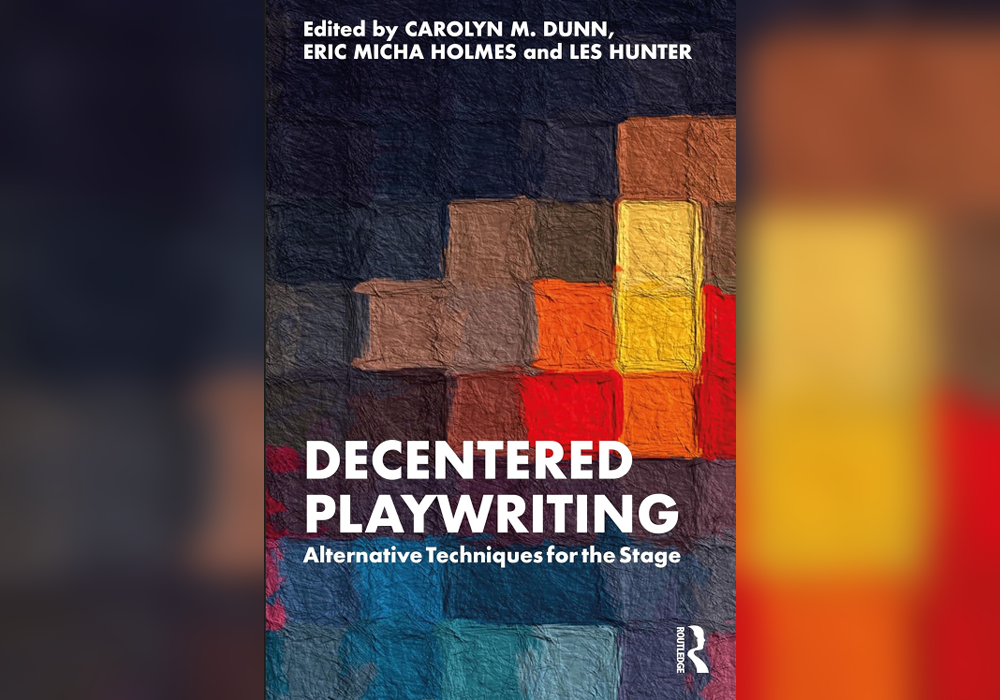
Decentered Playwriting: Alternative Techniques for the Stage
Edited by Carolyn M. Dunn, Eric Micha Holmes, and Les Hunter
Reviewed by Pallas Gutierrez
American students are underexposed to plays. Those curricula that do incorporate plays often fail to include plays written by anyone other than white men. In their anthology Decentered Playwriting: Alternative Techniques for the Stage, Carolyn M. Dunn, Eric Micha Holmes, and Les Hunter set out to disrupt theatrical hegemony by helping playwrights build practical skills for writing decentered plays.
Each chapter moves from history and theory to at least one example text before concluding with writers’ exercises. In “The Dramaturgy of Japanese Traditional Performing Arts,” for example, Sarah Johnson analyzes Japanese theatrical techniques and their applications in other theatrical traditions. Johnson examines how Paula Vogel’s The Long Christmas Ride Home, incorporates Japanese and American theatrical traditions “by equally emphasizing both cultures.” The exercise Johnson provides is to write a scene “with a character deeply interested in a culture different than their own,” while reminding playwrights to “keep your own relationship to the cultures represented… in mind.” Through this consistent chapter structure, playwrights get a handful of examples showing how they can thoughtfully incorporate global techniques into their work.
Although Decentered Playwriting draws on theatrical traditions from Hawai’i to Zimbabwe, many cultures are overlooked. Fourteen of the twenty featured authors are based in the mainland USA. Many of these American authors come from racially marginalized groups, but the book is limited in scope. Hopefully, Decentered Playwriting is merely the first work guiding playwrights to consider decentered techniques.
Decentered Playwriting is a practical guidebook for the playwright thinking beyond European drama. While not a cure-all for the Eurocentricity of mainstream theatre, it is an assertion that other ways of making theatre exist and might make all of our plays better. As artists around the world are considering what inclusivity looks like, Decentered Playwriting is a step toward global storytelling traditions gaining recognition.
Language as Liberation: Reflections on the American Canon
By Toni Morrison
Reviewed by Angelo A. Williams
Toni Morrison’s posthumous text offers a craft lesson on characterization informed by the work of a dozen canonical American fiction writers. Drawing on lectures from her tenure at Princeton, she argues that American literature repeatedly invents an “Africanist presence” —a term including all racial and ethnic “dark-skinned serving other(s)”— as the shadow against which whiteness imagines itself innocent, masculine, individual, and free within the canon. In this way, America is imagined as a monolith, where minorities play a subordinate role in the service of white supremacy. The core question Morrison asks of us as writers is whether we will carry the myth forward or reject the simplistic Black-white shadow-and-act paradigm of early American fiction.
In her introductory example, Morrison takes on the essential American myth of the Lone Ranger. She points out how he is never truly alone, as he is entwined with the Native American Tonto who on every occasion provides support and companionship. The Ranger’s independence is manufactured by his subordinated companion’s work and presence, which paradoxically makes the Lone Ranger appear singular.
Morrison finds this same pattern in the works of a number of canonical American authors, and interrogates how racial characterization organizes plot, character, and conflict. Morrison’s analysis is particularly effective in her reading of Hemingway’s To Have and Have Not and two of its characters, Harry and Wesley. Harry is constructed as “the classic American hero: strong, solitary, virile, risk-taking,” a characterization that is strengthened through a comparative contrast with Wesley, a Black man posited as weak and craven by nature. Morrison shows us how Harry is allowed to have interiority, while Wesley’s internal self arrives in service of Harry. Harry is a man, but Wesley is worthless, cowardly, disposable; all traits not rooted in his actions or internal thoughts, but in his caste.
While not the original focus of the text, this framework also opens the door to discussions surrounding depictions of other forms of marginalization. Ultimately, Morrison’s work gives us pause to reflect on our craft choices, asking whether we are creating a new narrative or reinforcing a myth of superiority.
Voice to Books is a periodical short list of reviews focusing on writers from marginalized or underrepresented groups. It is edited by Angelo A. Williams.