
By Geordie Stock
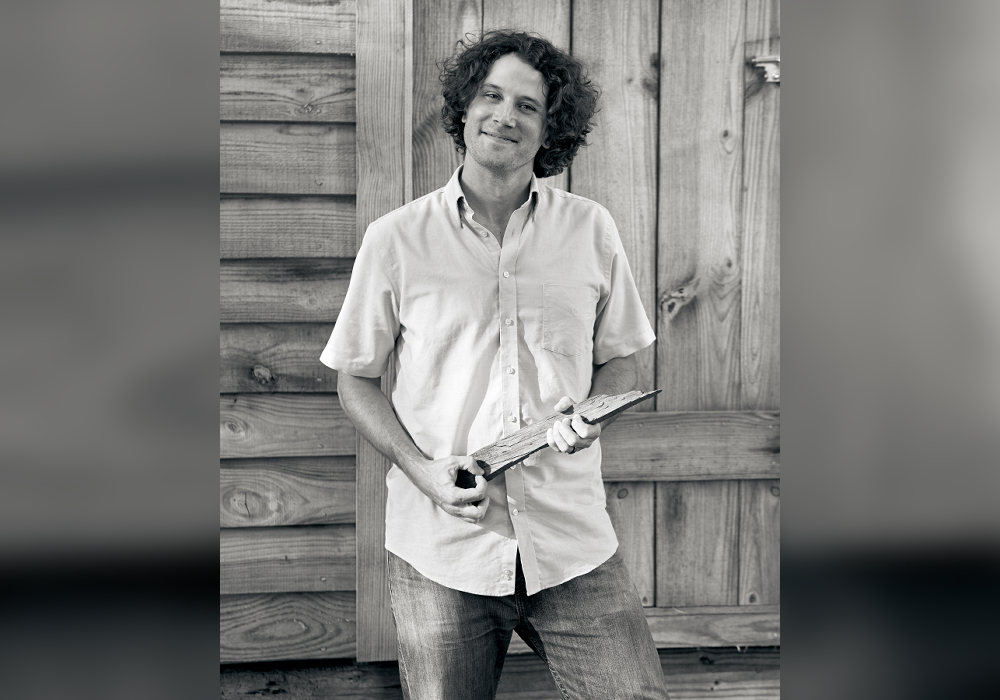
In early 2024, English professor and singer-songwriter Ephraim Scott Sommers applied to take a sabbatical from Winthrop University to focus on his writing. At that point it had been years since he completed his last poetry collection, and he was brainstorming directions for his follow-up. Then, nearly a year before his scheduled break from teaching, he was diagnosed with type 1 diabetes. That dramatic crossroads helped forge Sommers’s newest collection.
Diabetic Gumdrops is an all-encompassing creative project by an author reckoning with a turning point in his life. As a result, it reads as part therapeutic journal, part raw, vulnerable artistic exercise, part poetic concept album, and part historical document cataloging his struggle with and ultimate acceptance of his condition. The poetry collection provides a unique, compelling perspective on Sommers’s experience of living with diabetes. And if the humanity on display in this book is any indication, he’s taken this life-changing news in stride.
The Coachella Review talked to Ephraim Scott Sommers about his creative process and the stages of grief echoing through Diabetic Gumdrops.
The Coachella Review: What is your history with poetry and songwriting? What drew you to those genres?
Ephraim Scott Sommers: I’ve always loved to read. My mom read to me when I was a kid and she used to give me a dollar per book in the summer, which is a terrible deal, but I still would do it. Because of that, I taught myself to read really quickly as a way to get through books. And my father was a musician, he had a jam room underneath my bedroom and they jammed every week. I could see the community that playing music brought to my house every Friday night. There was something alluring about that to a kid, making rock and roll. By the time I had turned eighteen, I’d taught myself guitar and taken some singing lessons and music classes. A few of my high school friends – Wyatt Lund, Trevor Jones, and Justin Pecot – played in the school’s jazz bands and marching band, and after we graduated, they started a funk rock trio without vocals. One day in college Wyatt came to my apartment and was talking about them needing a singer. I said I would try out. We started in Trevor’s parents’ garage, and it built from there.
The place I went to college – Cal Poly, San Luis Obispo – was very conducive to original music. There weren’t a lot of cover bands because bars wanted live bands playing original music. We moved in together, wrote our own tunes, played original music. We got a tour van, got a little radio play, put out a couple albums. We even toured the US in 2008. No record label or manager, we did it all ourselves. It was a really, really fun time.
In my journey towards wanting to be a better songwriter and musician, I decided to take some poetry classes. I figured, There’s no way [understanding language a bit more clearly] isn’t going to help me write songs. In college when I helped people with essays or tutored it was almost like I was seeing text in colors or something, like there was a soundscape of those words that sounded correct to me. Something would stick out to me about the sound of lyrics, poetry, and verses that was always alluring to me, the way they would create a feeling which was beyond the grammar or mere meaning of the words and was more how they sounded. So I knew poetry was something that I wanted to test out, and I ended up getting a really great teacher named Kevin Clark, a professor at Cal Poly. He was just really helpful to me, and pushed me to continue my study of poetry. He had me enter a poetry contest and I was an honorable mention. The deeper I got into poetry, the more I started to really like this mode of creation. It could do some things for me that songwriting couldn’t. With songwriting, I tend to want to include as many experiences as I can, which means you’re writing in a more general way if you’re writing a pop song. You’re a little more limited. Whereas with poetry, you get a little more space to play around with the intellect, the imagination.
The two work in tandem for me. I can go to poetry for some things that I can’t do in songs, and vice versa. And when I get frustrated in one medium, I can go to the other. And so, that’s how I got interested in poetry, just to become a better songwriter. Then I ended up loving the form so much precisely because it wasn’t songwriting. Since then, I’ve kind of cultivated those two genres, going to grad school to focus on poetry but still songwriting in the background. And both have served me well, especially now that I’ve been able to focus a lot more on my music.
TCR: How do you know you have something that’s good for a song versus something that’s good for a poem?
ESS: Some of that has to do with how targeted I might be in a given situation, like the context that I’m in. During school when I’m really busy, I’m just doing a catalog of jumping-off points in my notes. For example, my wife and I had gone to a casino and she was winning a lot of money on the slots. So I got this idea of a song about the heater that my wife was on, which is just noted as “song idea.” Above that, I have an essay idea. What I try to do is be strategic about whether something is a good line for a hook that can start a song. That’s usually where a song might begin.
With a poem, it’s more about whether there’s a question I want to answer, or an experience I want to explore. Something that I don’t have figured out yet that I want to delve into. The point is to collect a sort of imaginative chum, and then when I have the space I’ll pick an idea to focus on. Maybe I have some kind of musical thing that already exists that I need words for, I might look in my list of notes and say that hook about a heater could work in a particular song or melody that I’m working on. I like to write essays and am working on a memoir as well. So I like to think of my process as kind of problem solving for a creative puzzle, where I’m gathering things constantly and when I have the time to dig deeper into each of them, I can get a better sense of whether something belongs in a poem or a song.
A lot of it is being open to stopping, being open to changing, being open to letting whatever genre I’m working in – and whatever that thing wants to be – become what it needs to be rather than forcing something. I have to be open to that process. And I think the deeper you get in the game in any specific genre, the more you learn about yourself and how you work.
TCR: Let’s say you have that day to explore one of your notes or ideas for a poem… what does that day look like, in terms of your creative process?
ESS: I am hyper focused perhaps to a fault, so my process is to put everything else away to work on a single idea for four or five hours with the goal of getting to a first draft. Whether it’s a song or a poem or an essay, it needs to be a finished thing, because personally I’ve found that if I let things dwell in half-finished states they never get finished.
The other thing I’ve realized is that I have stopped working on ideas when they get difficult despite the fact that those are the moments where I need to get through that difficulty because that is what stops the poem or the song from becoming the thing it needs to be. I worked with some songwriters out of Nashville through a nonprofit called The Beat of Life, which took songwriters into jails to have them create music with some of the inmates. We’d write a song in two to three hours together then perform it in front of the general population at the jail. Some things that it taught me about my process were that when the poem or the song is getting very difficult, that’s when you need to lock in, focus, and get a draft done. That helped me realize that I could write a song in three hours instead of thinking it should take multiple days.
With both poetry and songwriting, it’s a constant exercise of making the best of my time so that I can get a draft that is a finished frame. And then I put it aside for a while before coming back to it later to fine-tune and make it better. That’s how my process has worked: just finish the damn thing!
TCR: When you have a first draft do you have any sense of how close it is to “finished?” Do you ever say to yourself, This needs fifteen more drafts until it’s “done?” What does your revision process look like?
ESS: It varies. I want to get to the last line of whatever it is. I want to make sure that the essential frame of what the thing might want to be is set up and that I’ve written my way toward some kind of discovery. Some kind of change must happen. I need to discover something about myself, and I need to discover what the poem or song is actually about.
When I get there, I can look back at the whole thing and say, Okay, now I need to go back and fine-tune with this idea in mind. Now it’s time to make every line live up to that idea of what this thing needs to be. And do things change after that? Yeah, of course. New discoveries are made. But I want to have a pretty definitive idea of what that thing is becoming when I set it down and set it aside. And that approach, for me, has helped quite a bit.
TCR: As someone who loves the art form of poetry but isn’t super knowledgeable of modern poetry collections, I loved the impact of this collection because of how each piece interacts with the others. This book functions on one hand like a poetic concept album in that you’re telling one story with a collection of poems that often have very different tones, and on the other as an artistic journal of someone dealing with their diabetes diagnosis. How did the specificity of this collection occur to you? Did you sit down and say to yourself, I’m going to make a whole collection about my diagnosis, or did it come together more organically?
ESS: I was approved for a sabbatical the year before I got diabetes; I applied for a January 2025 sabbatical in January of 2024, and they told me it was approved in March 2024. Then that June I was diagnosed with diabetes. Before the diagnosis I had been kicking around the idea of making a book entirely of odes, but I didn’t have an idea of what the subject matter was going to be. I went back to Keats. I went back to Martin Espada. I went back to Whitman. I went back to Pablo
Neruda. I was just kind of seeing in my reading, what is the possibility of odes? What has been done before? There are books of odes out, but I had a difficult time off the top of my head thinking of a contemporary book that was 100 percent odes.
When I teach poetry classes and when I talk to people who don’t care about or read poetry, they tend to gravitate towards odes. I think it’s because of the tone, the attitude, and the fact that there’s some humor there. Whereas with other poems, I think people can feel like they’re an outsider to the form in that they’re not understanding the thing, or that poets are really melancholic all the time, or that the process of reading poetry should make you feel sad. I think those expectations of the genre come from how poetry is taught in high school or junior high, or how it exists in pop culture.
Another thing that I knew [was that] the odes need some mud; if there’s going to be some positivity, there needs to be some contrast. And I hadn’t quite found that yet. Fast-forward to getting diagnosed with diabetes, it was months of me struggling. With teaching, with creative work… it was really hard. And within the first three months or so I started thinking, You’ve been given time and space next year to write, maybe the project is to create an artistic artifact about the first six months of dealing with this chronic illness. I started thinking about the management of a chronic illness more as an artistic challenge. Can I wake up every day, even though I’m dealing with diabetes, and write a poem of praise for four to five hours? Can I start with some frustrating experience that took place and end in praise somehow? It was like a creative artistic version of what I was trying to do in my everyday life, but couldn’t yet. I couldn’t see the humor in some of these situations, but if I can write about it can I get there in the future? Can writing this thing help me change how I’m viewing this condition in my everyday life?
I’ve never been a writer of therapy, I’ve never been a person who believed in that. But writing the book was therapeutic and totally changed my life in a positive way. I just received the physical copies yesterday, and it’s very rewarding to have an artistic artifact that records the difficulties of those six months. I have this record now for myself and for my wife, a catalog of what we went through, and I’m really proud of that. And whether people love it or not, I’m really pleased that you enjoy it as somebody who doesn’t regularly read poetry. That means a lot to me.
I think it can be interesting to make a life challenge into an artistic challenge, to use art as a way to deal with difficulty, to sublimate whatever that thing is that’s happening in real life, put it on the page and play with it, see what can happen from it. I wouldn’t tell anyone to do that, but it worked for me. Maybe it might work for somebody else who’s going through a difficult experience of managing a chronic illness or managing a grief or any kind of difficulty. If you’re having big feelings, maybe going to poetry, reading some or writing some, would be helpful.
TCR: The evolution of the speaker’s voice in this collection is really compelling, someone reckoning with and reorganizing both their functional and emotional life around their disease. Was that intended as part of the overall experience for the reader, to see and feel the change of the speaker’s voice as they come to terms with their condition?
ESS: I read it last night, the whole thing. And I did notice the shift in tone over time, which I was really pleased with because I could see it in the metaphors. At the beginning, it’s a war. There’s death involved. And then as the poems continue, the metaphors get more playful. It’s not so serious. I could see that. And I think it was intended but not explicit. The instinct was to lead from some kind of darkness to light, and that’s kind of how these poems and this book came together. As the poet Frank O’Hara used to say, “you go on your nerve.” You have to have this almost naive and insane belief that you’re going to finish the thing you’re making. It’s going to exist, you’re going to make this experience, you’re going to give it to others, and you hope that others will relate to it and feel that experience matters and it has some kind of meaning to them. That they can understand and sympathize or empathize in some way.
TCR: So much about this collection deals with frustrations big and small, shame, and the many different ways grief and loss manifest in life. With that in mind, what do you want readers to take from that balance of language and tone, between charming whimsy and painful despair?
ESS: I didn’t want to write a book that just bitched about diabetes in a melancholic way. I didn’t want a book that was like suffering porn. I didn’t want to write a book whose ultimate aim was for you to feel sorry for me. I didn’t want to be the great sufferer. That wasn’t the point. The point was to totally shift the perspective from which you might look at this condition. I don’t think that the reader would be willing to go along with somebody who is just whining all the time. They can go on Facebook for that. That’s why I am so grateful for landing on the ode itself as a container for those difficult things, because you begin with frustration and end with humor. Over time, it’s the humor that stays. The darkness is swallowed up in that idea of the ode, in that lens, and we’re going back to gratitude constantly. We’re going back to thankfulness.
I don’t think I really put it in the book much, but I kept going back to this idea which is that a hundred years ago I’d be dead. I wouldn’t get to live at all. What I landed on after writing poems of gratitude every day was that I have to be thankful that I have been given the ability to continue living, and I started seeing everything with that lens. This is a frustrating situation, but that’s the gig with diabetes, and it’s much more palatable for me long term to think with the lens of the ode on. What if I look at this pharmacist as a person who’s just going through their day? They’re not out to get me. The world’s not out to get me. It’s just that the health system is ridiculous sometimes and it’s going to be frustrating, but what if I retreat to laughter rather than anger? That is probably better for me if I’m going to have to deal with this and manage it long term.
So that was all purposeful. With the ode, I wanted that looking at these things that are really frustrating in a way that’s unexpected to the reader. Because what would be expected is someone’s just been given diabetes and they’re just going to be angry and sad and fearful throughout the whole. I didn’t want to do that.

TCR: This collection reminded me of a quote attributed to Martin Scorsese, “the most personal is the most creative.” In terms of you shedding light on this condition, what does it mean to you to own and name this disease in this way by exploring it through your art?
ESS: My wife and I laugh all the time about how little people know about diabetes, and it would be hard for me to judge those kinds of people because I was the same way. I didn’t know anything about it because I didn’t have to know anything about it. So, I’m trying to invite people into that experience a little bit more to maybe understand. There are so many books on the science of diabetes, how to live with diabetes, how to dose for carbs, how to take insulin, but I wanted a mental and emotional catalog of that experience as well.
While there are a couple other poetry books that loosely relate to the diabetic experience, this one’s mine. I wanted to own the experience for myself, like you said, to get control of the narrative for myself, but I didn’t see anything that was cataloging a new diagnosis. And I really also want people who have just been newly diagnosed to have this book for them; these are some of the things that you’re going to have to think about, these are some of the challenges, what is useful to you? The mental load is something that not a lot of people talk about or know about outside of the diabetic community. That load that everybody’s facing constantly can be so overwhelming.
And so, my hope is that someone who has just been diagnosed with diabetes could pick this up and maybe find a tiny little bit of levity there. [I want the book to] say, You could look at this [with humor]. In some situations, maybe that could help a little bit. That’s my secret hope or wish. But it’s difficult to ask anything of a reader. You make this artifact, you give it to them, and you hope they relate in some way. But it’s hard to ask anything else beyond that.
TCR: The collection is entirely comprised of odes, as you said, but they have different structures and express different poetic styles. Some read like very traditional sonnets, some read like free verse, and others are more distinctly and obviously “modern. When does a poem’s structure reveal itself to you during your writing/creating process?
ESS: It’s usually something that happens on the fly, and usually it has to do with pacing. Am I trying to speed up the reader or am I trying to slow the reader down? The second poem in the book is written in couplets, and it’s about the moment right before you tell somebody that you have a chronic illness, and you know it’s going to fuck up their day. What I wanted to do is slow the pacing way down – especially after the poem which came right before it, which has no punctuation, with short lines that spill down the page really fast.
The ode as a form is interesting to me, and that’s what I wanted to play with, not only in the subject matter. I wanted to play with how fast I’m pushing you through or slowing you down. When there is white space, when I’m writing in those longer lines in couplets or anytime I’m giving you some stanzas, that’s when I would be most trying to slow you down. And that’s kind of the Keats idea of an ode that is a little more meditative. The form and structure of those ones would be to give the reader time to ingest these things. The other poems that have no punctuation at the beginning, and the sentences are just spilling on top of each other and getting you down the page quickly, are that idea of Whitman. Let’s praise everything, let’s go really fast, let’s get energy in this.
So the structure becomes a playground. I begin the poem with an idea knowing that I’m going to praise something, but as the poem is developing then I decide whether this poem wants to go faster or to slow down and think a little bit more. The ode acts as an interesting lens through which to view the difficulties of a chronic illness, and then the question becomes what’s the best structure to contain that idea, the subject matter that I’m discussing, or the emotions that might be illustrated.
TCR: I recognized a lot of the stages of grief when going through this collection; there’s anger, there’s denial, there’s apologia, there’s bargaining, and ultimately a lot of acceptance. Over time, the focus shifts from the speaker’s internal feelings of shame and pain and depression to the external, the feelings and cares and experiences of others, all of which facilitates the author’s appreciation and acceptance. There are poems that externalize the condition onto other people, like Miss June and the father who appreciated your guitar, and there are poems that almost ignore the condition in service of living in the moment, like the lovely ode to Valentine’s Day or the poem with the early morning swim in the lake. I’d love if you could talk about moving feelings from internal to external and moving from a place of almost helplessness to a fairly zen acceptance.
ESS: I say this to the current generation of students a lot, the ones in college right now: the difficulty of this generation is that a lot of them are dealing with conditions that are invisible. And as poets, if they want to write about those things, they have to find a way to make them more concrete for the reader. Anxiety, mental health difficulties, you have to find a way to make what is internal external to a reader. Some of that is just sensory details, some of that is metaphor, and some of that is finding symbols. Those experiences in two of the poems that you mentioned, with Miss June and the guitar, those experiences really happened. But what’s interesting about that is those people are dealing with grief in a certain way, living with that grief. Since I’m also dealing with grief, can grief bring us together in some way?
My goal as an artist living with diabetes is to find the right metaphors to make this thing more realistic to you, to make that thing stand out to you, so you can start to see that there are things that you can touch and smell and taste and characters that you can meet to make this difficulty that we’re all facing come to life a little bit more.
Another reason I like to move from the interior to the exterior is that it provides energy. When I leap from interior thought to an exterior image, now all of a sudden a feeling is associated with that concrete thing, and that thing can become a symbol, and then I leap to something maybe larger and more expansive that you can see in a scene. Maybe I talk about the sky. And then maybe I shrink back down, back into the interior, and what is created from that is momentum that keeps you moving forward.
Because what’s really important to me is the energy in a poem. I never want to be boring. I never want to try to outsmart or educate a reader. I just want to give them an experience that keeps them hooked and engaged and interested and imaginative and moving so that they don’t leave the poem early, so that they stay locked into that poem and take from it an experience that they can understand.
TCR: How do you ensure the specifics of maintaining this condition don’t overwhelm you communicating and translating the emotions of these experiences?
ESS: There are a ton of specifics with diabetes, but that book’s already been written, right? The book that is overloading you with details about how to manage the illness, that’s not what’s interesting to me. Not as much as the attitude or emotional response of the experience. So I’m cherry-picking the best details and not wanting to overload the reader. I think there’s one poem where I really get into like the names of the devices, and then I kind of stop and ask the reader, “Are you as sick of the names of these devices as I am?” I always want to think about the experience of the reader. I would be overwhelmed by all that terminology, and I didn’t want to do that. I didn’t want to have you come to a book where there’s all this ridiculous terminology that you don’t understand, these acronyms and stuff. I wanted to treat a reader who wouldn’t know anything about diabetes.
I like poetry that is accessible to everyone. I don’t want to make a book where the language keeps you out. I don’t want to do anything in a poem that makes you want to turn away from the poem. Like Whitman, I want to make the most democratic poetry possible that is not for just people who go to college. I want to write a book for my friends that don’t read poetry. It’s already a difficult thing to go and read a poetry book. It’s already a big ask of someone. It’s not like music, where you get into an elevator or go to a restaurant and there’s music playing. There aren’t poems playing in public places, you know? Someone has to make a decision to go seek that thing out. I think Kurt Vonnegut said to pity your reader, and I’m always thinking about the way to invite more people into poetry rather than to turn them away by trafficking in the stereotypes of the reasons people are turned off by poetry anyways already.
TCR: Where do you feel that Diabetic Gumdrops sits within the broader catalog of your work?
ESS: My first book was The Night We Set the Dead Kid on Fire, about my hometown, Atascadero, California, a blue-collar farm community with a ton of violence. There was a lot of drug and alcohol abuse and difficult relationships, difficult characters, jail, all those kinds of difficult things. So that was a catalog of damages of a certain area and experience that I grew up with. It’s a pretty dark book, I would say. It’s trying to reach toward the light.
My second book is called Someone You Love Is Still Alive, and it’s about the experience of getting married in the midst of a ton of different national tragedies that were happening. How intimate love of another human being can be a sort of rebellion against this backdrop of national tragedy, or these things that are happening every day that we’re shown, or the way that the world might be divided or kind of getting into their own teams and arguing with each other. It was looking at that tension between those two ideas: I have this thing that I’m really happy about, but then the world on the computer is showing me all these things that I need to feel guilty about or should feel something… but do I? It was asking about the possibility of praise, kind of reaching towards praise. I can see the beginnings in the second book of looking at the ode, there’s like an ode or two in one of those books. So for this, my third book, this is where I landed and I’m really excited about it. I took a lot longer to put out a third book – it’s 2026, so it’s been seven years or so – but it came fast and I really am proud of this one.
I also want to say that I’m appreciative to have these things in my life, to have creative outlets as ways to navigate difficult life experiences. I don’t know where I would be if I didn’t have the ability to write poems about having diabetes. I don’t know that I would have been able to deal with that experience in the same way. And I don’t want to create the idea that I’m just like, Oh, I have diabetes all figured out, but I definitely wrote myself towards a kind of acceptance and that’s helped me mentally navigate it with a little more levity. Not only has it been good, I think that the process of writing this book has changed my life. And that, to me, means that the art is successful.
 Geordie Stock is a writer with nearly two decades of production experience in the gaming industry, currently pursuing an MFA in creative writing at UC Riverside Palm Desert. He is based in the San Francisco Bay Area where he lives with his longtime romantic companion, Karl the Fog.