
By Isaiah Mustafa
I didn’t notice the tears streaming down my face until the theater began clapping. The film wasn’t over. Only a scene had ended, but the room was on its feet in the middle of the movie.
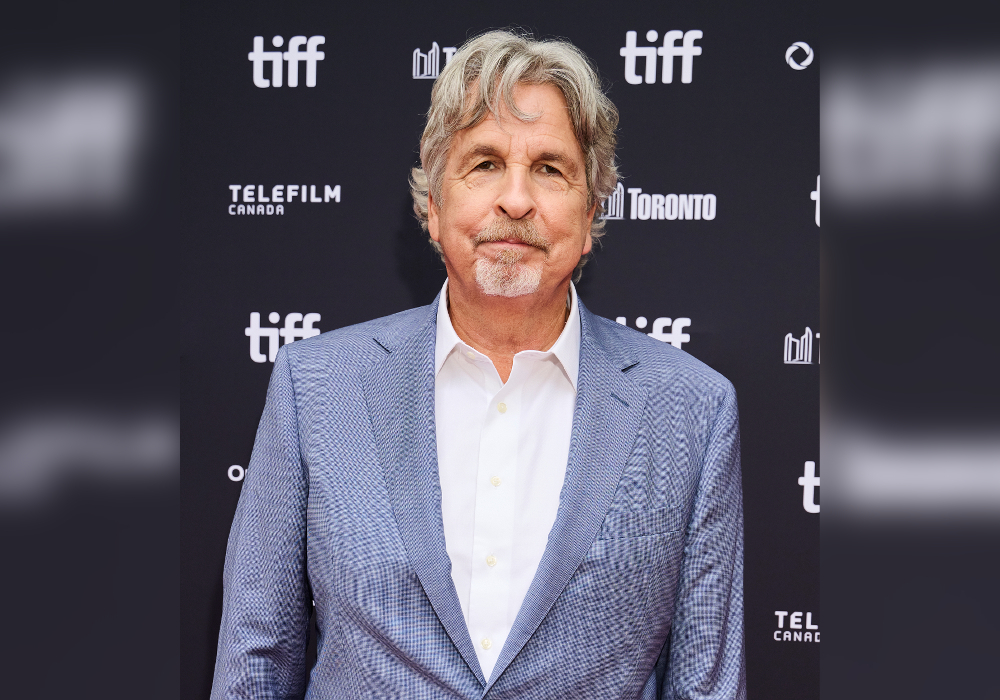
The film was I Play Rocky, directed by Peter Farrelly. To the public, he’s best known for directing the Oscar-winning Green Book and, with his brother Bobby, the comedies Dumb and Dumber and There’s Something About Mary. To me, Pete is a friend. We met filming The Three Stooges, where I played Moe’s Hip Executive. On my first day I went big on a take, as big as I thought I was allowed to go. Pete walked over, grinning, and said, “That was great. Even bigger.” A director who believes in you doesn’t always accept the first thing you give him. He knows when to ask for more.
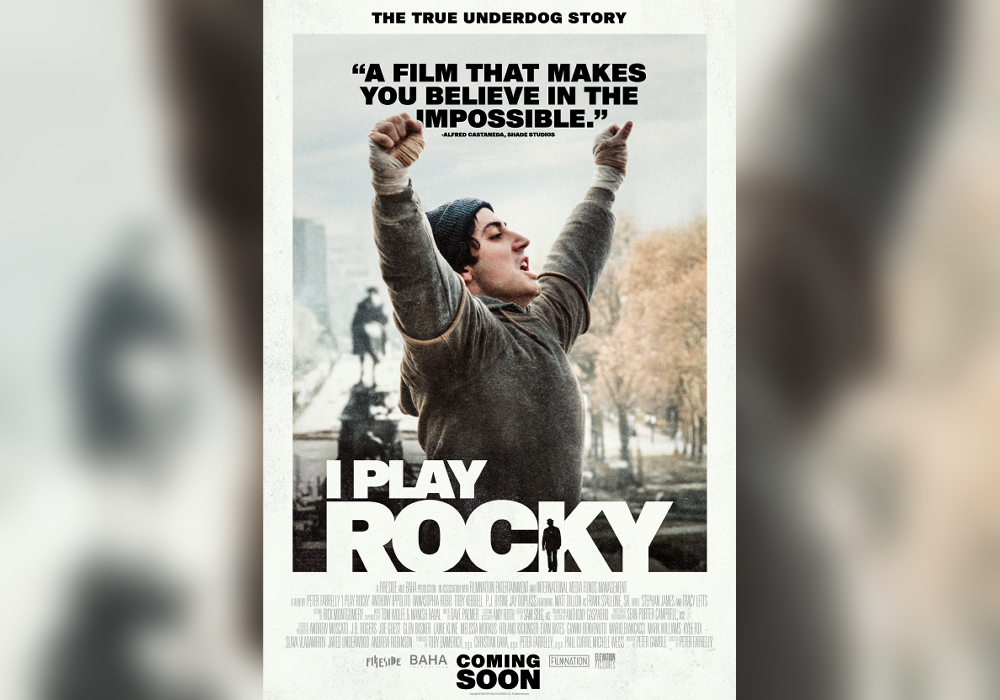
I thought about that a lot watching I Play Rocky, the story of how Sylvester Stallone wrote the classic boxing movie Rocky. Anthony Ippolito plays Stallone, and Jay Duplass plays John Avildsen, the man who directed Rocky.
The scene that got me takes place in a doorway. In Rocky, Mickey, the grizzled old trainer who ignored Rocky, shows up at his apartment and asks to manage him. Rocky has spent his life wanting someone to believe in him, and when it finally happens, he lashes out until Mickey gives up and walks out, then Rocky runs into the street after him. I Play Rocky shows the day they filmed that scene. Stallone’s first take has nothing in it, and Avildsen tells him that he needs to go find it.
What Avildsen did for Stallone is what Pete did for me, albeit in a much smaller way. With Ippolito, the job was different. Pete told me that when Ippolito played the doorway scene, everyone on set was blown away, himself included. It makes sense that a director who knows when to ask for more also knows when he already has what he needs.
I spoke with Peter Farrelly on behalf of The Coachella Review at the Toronto International Film Festival, where the film premiered, about that scene, the movie that makes him want to make movies, and the magic of an actor who can create his own reality.
The Coachella Review: The relationship between a director and a star is much like a quarterback and a head coach, or a head coach and a captain. How long after casting and getting to know Anthony Ippolito did you know, Oh shit, I got Tom Brady?
Peter Farrelly: I was hoping when I drafted him—I thought he was Tom Brady. We were preparing to do a worldwide search for the Stallone character, and Anthony had sent in a tape, unsolicited. He had heard about the movie being made, tracked down the script, put himself on tape in his grandmother’s basement, and sent it to my casting agent, Rick Montgomery, who called me and said, I’ve got Stallone. I said, What are you talking about? We haven’t started casting yet. He sent it to me. It was incredible. And I said, That’s it. That’s our guy. I knew that was the guy we were going to do this with. But I didn’t know the depth that this guy would go to. I never saw acting for a moment. I saw him being Stallone. He was in a zone, like I’ve seen few actors do. He became this guy. The closest I could say is like Robert De Niro in Raging Bull—he just became Jake LaMotta. And that’s what [Anthony] did. It’s not like he was method, by the way. He wasn’t like Stallone when we cut. But when he was in there, when he was acting, man, he was in it.
TCR: I heard you say that he created his own reality. And in the movie, Stallone does pretty much the same thing. He has this belief in himself that nobody else had.
PF: That’s exactly right. He did exactly what Stallone did. Stallone, you know, it wasn’t happening, and he said, I’ve got to write my own thing. [Sasha Czack, Stallone’s wife, played by AnnaSophia Robb] goes, Do that. He goes, Well, I’m not a writer. She goes, Anyone can write. And he did it—wrote it, got good at it. He wrote a bunch of scripts before Rocky and learned how to write. And then he created his own reality. And that’s exactly what [Ippolito] did. It’s so impressive to me.
TCR: Man, when you’re on a team like that, you can feel it. When you step on the field, you know you’re going to win. Was there a moment when you were shooting it where you were like, This feels good?
PF: Yeah. There were moments throughout the whole thing I felt that way, but there were moments where it was beyond good—where everybody on the set’s emotional. Like when he does the thing at the door. You [see] the people watching that within the movie, but the [actual] crew around it is all doing the same thing. We’re all incredibly blown away by it. And by the way, he’s a lot like Tom Brady in this way: he prepares well. He shows up, he knows everything. He knows way more about Stallone than I did. He went down a rabbit hole—watched every interview with Stallone, every movie with Stallone—and he learned the difference between Stallone the person and Rocky.
TCR: Wow. That’s impressive. He’s a bookworm—like a student of the game.
PF: Yeah!
TCR: You know in hockey, when a coach will scratch a veteran just to kind of send a message to the room? I felt like there was that moment when he did the thing with Avildsen. He did that, but he did it by giving him a second take. It wasn’t like he was taking something away; he was giving him something. And that floored me.
PF: That’s accurate. That’s exactly what happened on that day when they were making Rocky. Rocky yells at Mickey, Mickey leaves, and they chase after him. And Avildsen said, What the hell? What happened in there? What changed? And Stallone stepped out for five minutes and came up with that scene. And Avildsen said, Unless you really shit the bed, or I got a hair in the gate, you’re getting one take. But he did shit the bed. There’s nothing there. He’s like, There’s nothing here, and you’ve got to find it. And he did. And Stallone captured that. That’s my favorite scene in Rocky, and it’s my favorite scene in I Play Rocky.
TCR: Oh, by far my favorite scene in your film. I had tears in my eyes. I was like, Oh my gosh, this dude’s doing it. He’s giving it right now.
All right, Pete, last question for you. Is there any book that you like to read before you start a project that kind of inspires you or gets you in the zone?
PF: Not really. Honestly, what gets me is movies. There are a couple of movies I will watch. And—people are always surprised by this—the movie that usually gets me in the right mood is Something Wild, Jonathan Demme. It was a great movie with Ray Liotta and Jeff Daniels and Melanie Griffith. I think it was Ray Liotta’s first movie. And it was the movie where I fell in love with Jeff Daniels, which is why [my brother Bobby and I] put him in Dumb and Dumber—because I knew he was hysterical, he could do comedy, but he could also play it real. There’s so much about that movie I like. I like the colors—Tak Fujimoto was the [director of photography]. I like how it looked. When we did our first movie, Dumb and Dumber, the first guy I called was Tak Fujimoto. I said, Hey, would you be our DP?
I like the music. I like the feeling. There’s a feeling of America in that movie—them traveling along—and it’s got ups and downs and all things, but there’s a beauty to it. That movie makes me want to make a movie. And I watch that pretty much before every movie.
 Isaiah Mustafa is an actor, writer, and director. A former NFL wide receiver, he became widely known as the global spokesperson for Old Spice. His credits include Horrible Bosses, It Chapter Two, Boy Kills World, I Know What You Did Last Summer, Shadowhunters, and the Farrelly brothers’ The Three Stooges, where he met Peter Farrelly. He currently plays John Sampson on the Prime Video series Cross. He is also an MFA candidate in creative writing at UC Riverside Palm Desert.