
By Jenny Hayes
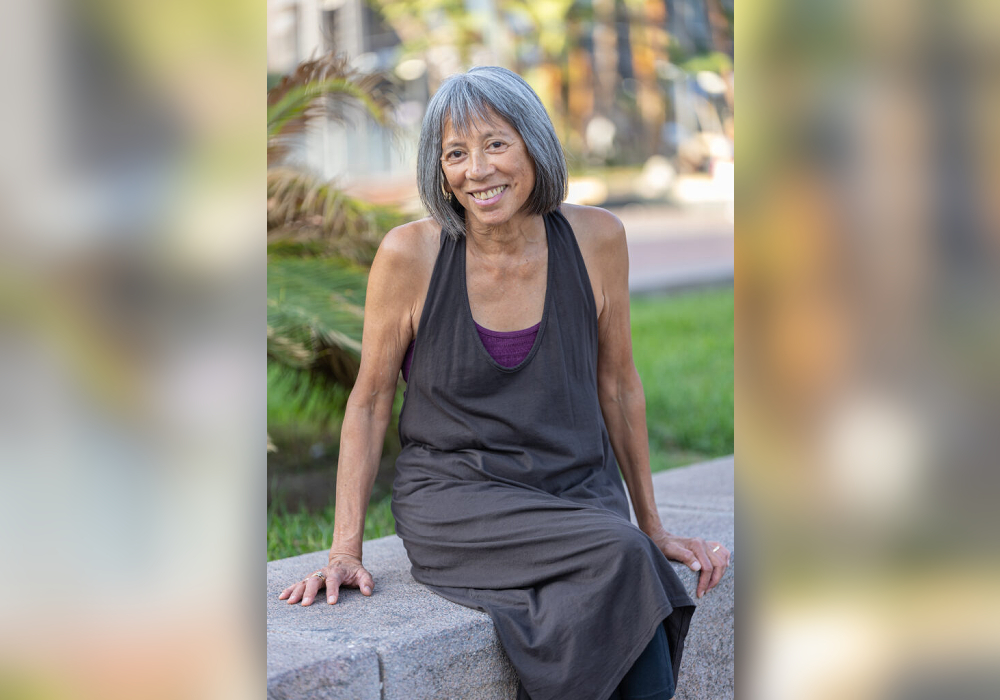
Donna Miscolta’s fiction often draws from her experiences growing up in Southern California in a Filipino/Mexican family. She only started writing it as an adult living in Seattle, Washington, however, finding the time to put words on the page amidst a busy life raising children and working as a city government project manager. Through steady practice, Miscolta became a fixture in Seattle’s literary community, and her work received recognition from groups like Artist Trust and the Washington Center for the Book. Now retired and living in Málaga, Spain, she continues creating characters who grapple with identity, independence, and family ties.
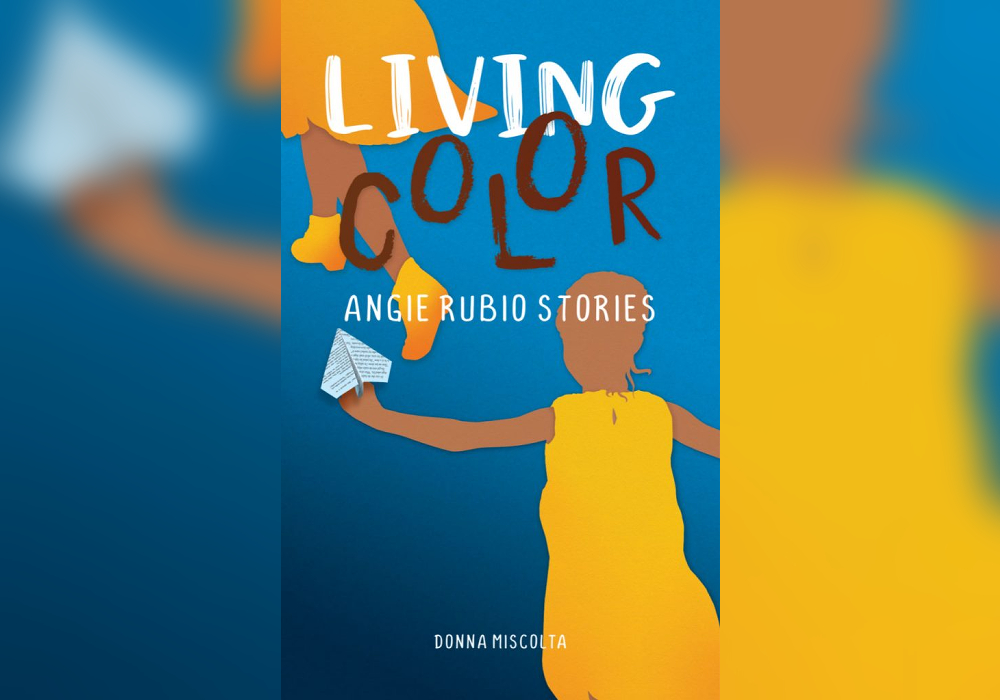
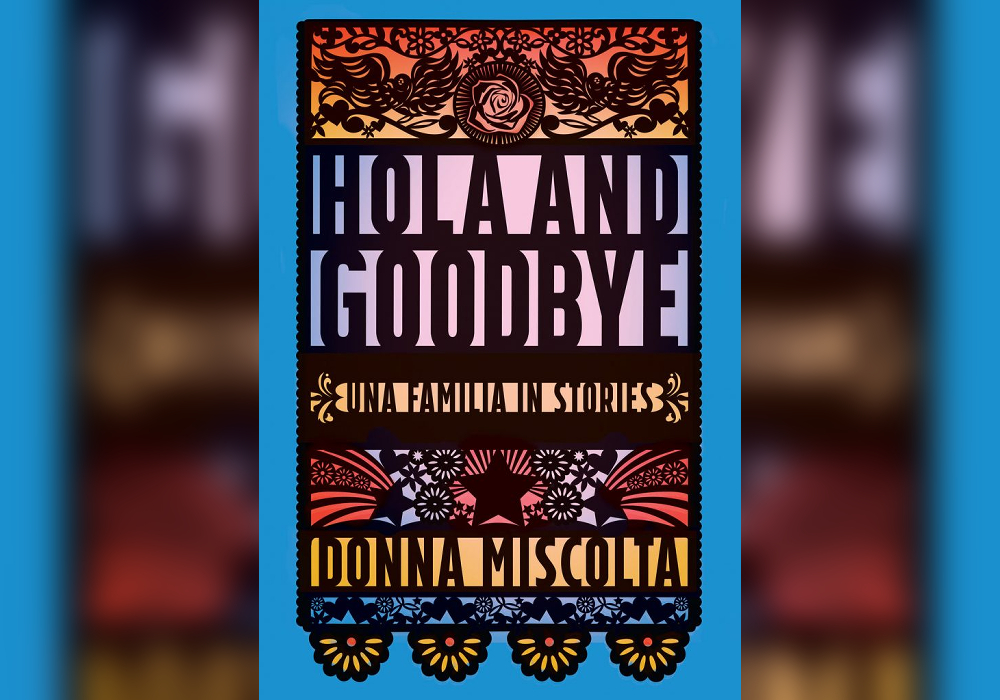
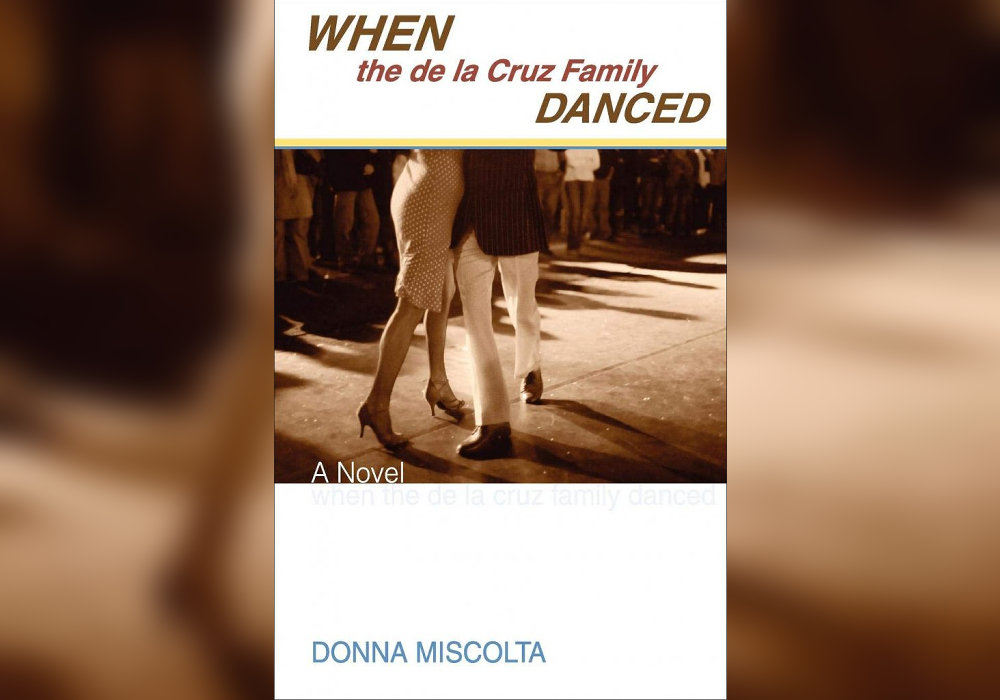
Miscolta’s newest novel, Ofelia and Norma, follows a pair of twin sisters as they begin to grow apart and navigate separate paths as large-bodied women in a world that doesn’t make that easy. With chapters that bounce between each sister’s point of view, Miscolta shows their connection evolving through periods of trauma, isolation, and growth. Ofelia and Norma is Miscolta’s fourth book, following When the de la Cruz Family Danced, Living Color: Angie Rubio Stories, and the collection Hola and Goodbye, which includes a story that introduced the twins at a younger age.
The Coachella Review spoke with Donna Miscolta about establishing and building upon Ofelia and Norma’s characters, recurrent themes and settings in her work, craft choices, and how moving to Spain has influenced her writing.
The Coachella Review: Ofelia and Norma were characters in a story in your 2016 collection Hola and Goodbye. What was it about the twins that made you want to expand their story into a longer work?
Donna Miscolta: I think it wasn’t finished for me, that story called “Strong Girls.” It focused on the lives of Ofelia and Norma as teenagers, and had a pretty positive and affirming ending, because the intensity and strength of their sisterliness saved them. And I don’t think they’d yet in their lives had to confront something that really challenged them beyond the world of high school. They were definitely challenged when the wrestling coach used them as fodder for his team, but I think they recognized what was happening, and they were able to come together to respond, reinforcing their sisterhood and who they were as individuals. But I think what happens after that—in the next phase of their lives, when they’re young adults and interacting with the bigger, more complicated world? I wanted to go there. I had been encouraged to go there.
When I was seeking publication for that story collection, there was one editor who declined it, but who said she thought “Strong Girls” could become a novel. So that was something that sat with me for a while. Then in 2015, when I went to Ragdale for an eighteen-day residency, I had just finished another project and was ready to start something new. That’s where Ofelia and Norma were resurrected on my screen. They took up residence with me in that haunted house.
TCR: Yeah, in the wrestling story, there are painful aspects where they’re getting made fun of for their size, but they’re able to deflect that together with humor. So it makes sense to take a step beyond that, where at some point a sense of humor isn’t going to be enough to keep the world at bay. And it’s interesting to see how they both develop more as individuals even beyond what was in the original story.
DM: Right. I don’t personally have connections with identical twins, but I’ve been around twins, interacted with them casually, observed them. I never interviewed twins to find out how they respond to each other and the world, and eventually how they establish their own individualities and their own lives. But I just felt like I could imagine such things, since at a certain phase in our lives it’s natural to figure out who you are in the world, especially in relationship to your family, and especially in relationship to someone you’ve been so close to like a twin, when people often couldn’t tell you apart and tended to treat you both as one person. How hard it must be to be conflated with another person. And yet, how unique and comforting at times.
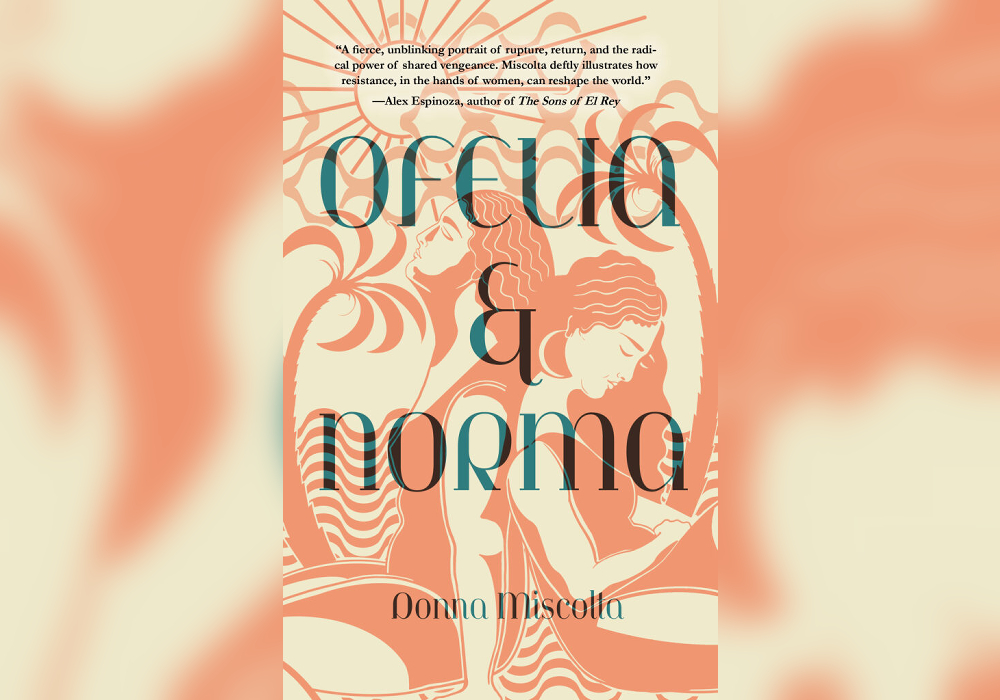
TCR: The twins face individual personal challenges in the book and have their own journeys, but throughout it they’re also dealing with being large women, both in the way others treat them and with their own self-image. How did you approach this as far as having them each deal with this in their own way, and also keeping their reactions true to the timeframe of the book in the ‘70s?
DM: I wanted to root their personal liberation from the punishing and limiting societal norms in themselves and in their sisterhood. They’d had a deep connection to each other from childhood. They were each other’s mirror, and what was reflected back at them was love and compassion. It was the depth and strength of these emotions that kept them going during their estrangement.
While they were pursuing their separate lives with little knowledge of what the other was up to, they were each learning how to come to terms in her own way with her body, at a time when fat acceptance and body positivity were not part of the culture. And they each had people in their lives that helped them, intentionally or not. In Ofelia’s case it was the frustrating relationship she has with Lyla, the twins’ mother, as well as her pursuit of a friendship with her coworker Celeste. In Norma’s case, it was her relationship with Lola, who serves as a sort of surrogate mother, as well as her eventual friendship with her colleague Gabe. I guess it was about finding meaningful and honest human connection among the individual, corporate, and cultural bullies that abound in the world.
TCR: The book isn’t told completely chronologically—you go back and forth a little between the early years, the girls being in college, and then the period shortly after college. How did you decide how to put those pieces in order to tell the best story? Did you write it chronologically, or more in a back-and-forth style?
DM: My tendency and inclination is to write chronologically. But every book you write is a different experience from the one before. When I was writing this book at Ragdale, I didn’t know exactly where the story was going, but each day when I sat down to fulfill my self-imposed word count, I asked myself, What happens next? It was kind of a slow-moving stream of consciousness chronological messiness. When I left Ragdale and eventually finished a draft, I liked what I had, but I knew it didn’t have the peaks and valleys in the right places. I think the issue was that I had two protagonists, two different phases of their lives (essentially pre- and post-college), and I had essential backstory. My very smart writing group helped give me some direction, which is when I started playing with a non-linear order. I had some hesitation about moving things around. I’m really bad about taking things apart!
After wrestling with it, ordering and reordering chapters, it felt close but not quite there. It needed fresh eyes. So I requested a manuscript consultation through Black Lawrence Press. Adam Prince was the consultant that month, and he gave me some good suggestions about where he thought the book should begin. More moving things around! But I played around with it until I figured out this structure that’s both woven and layered. Two timelines running in parallel, interspersed early with flashbacks that were actually scenes from the original story, because I needed that backstory. And then eventually the timelines merged and became the same, present-time story. Figuring that out was a challenge, because you can’t use your previous book as a guideline of how to write the next novel. Every story has its own structure.
TCR: I’m curious also about the point of view—Ofelia being first person when it’s just scenes with her, and then third person for Norma or scenes with both of them. Did that just come naturally, or was that a structural decision?
DM: I started out writing both characters in first person. It’s just how it was coming out at the time, and I think it was a way for me to get inside each character. But when you’re inhabiting twins, sometimes the differences are hard to move from your head onto the page. I think my writing group helped me with that realization. I decided to have Ofelia in first person and Norma in third person, given that Norma’s trajectory was more heavily laden with trauma and viewing it from third person gave it a wider viewing angle. This decision also worked because Ofelia’s first-person POV signaled her as the primary teller of the story.
TCR: What was the biggest challenge of taking these characters and making a novel out of a larger piece of their lives?
DM: One thing was just defining them in my head and who they would become, and then making sure that on the page they were distinct people. But also, I wanted to show them going from strong girls to strong women as they came out of the other side of their individual and shared ordeals.
TCR: I also enjoyed some of the minor characters in the novel, like Norma’s roommate Elsie, who was sort of comic relief but also ended up being more than that. Like Norma kind of laughed at this little blonde girl trying to be Mexican, but then saw that she was genuinely interested in Mexican culture and really loved it. And some of the other characters, like Norma’s friend Gabe or Ofelia’s boss, they all added a bit of flavor to the book.
DM: I just finished reading a novel where in the acknowledgements, the author talks about how she based each of the characters on someone she knew. I do a lot of that, base characters on people I’ve met and observed. I didn’t really know a character like Elsie up close, but when my older daughter was in college, she had a roommate with some of Elsie’s traits. She was from a Southern state and just really fascinated with Mexican culture, dressed in folk clothing, and was less of an expert in Spanish than she believed herself to be. It was both comical and offensive. But maybe there was also some earnestness there. In the book, there certainly was in Elsie. It wasn’t that she was simply appropriating something. She really had an admiration for the culture, wished to be part of it, and I guess she felt that she was honoring it by… appropriating it!
TCR: Yeah, at first I was like, Oh my god, this girl… but then it felt like she was a little more complex than she seemed, not just a cartoon character. Even though she was a little ridiculous. But we’re all ridiculous sometimes.
DM: Yeah, it’s easy to throw in a caricature, but it can also be distracting from the narrative. And that’s why her boyfriend Chuy was in there at the end. Because he recognized something in her that he felt was true.
TCR: I wanted to ask about you moving to Spain, which I think happened three or four years ago?
DM: We’re in our fourth year.
TCR: I know from reading your blog that you’ve made an effort to seek out local literary culture, which there’s so much of in Spain. But I’m curious how your writing practice has changed since you’ve moved. Has it changed the way you write or what you’re writing about?
DM: I think I pretty much brought over my writing routine, which is a daily thing, several hours at a time at intervals throughout the day. That’s my retired person’s routine, which I realize is a luxury. I just finished another manuscript that I started when I was in Seattle. And that is the last novel I’m going to write that’s set in Southern California. All my novels have been set there, but the next one, which I’ve started, is going to be set in Spain. And somehow I just sort of skipped over Seattle! I’ve never set a novel in Seattle, and I lived there for forty-six years.
TCR: Yeah, a lot of my writing is set in Berkeley, where I grew up, and I haven’t lived there for thirty years. So I totally get that.
DM: I think it’s because those were our formative years, where so much happened that had an impact on us. So much of who I am is connected to the place where I grew up.
TCR: But that’s exciting to be writing about Spain now.
DM: It’s about—surprise!—an American in Spain as she moves among the different groups and communities who live in Málaga: the seasonal, the immigrants, those who call themselves expats, the international. And of course, the Spanish, who are very friendly and fun. But to actually establish a friendship doesn’t happen overnight. Or for a couple of years! I can count on one hand the number of Spanish friends I have. And that’s not using up all the fingers.
But it’s been interesting to talk to them, though there are times when I have trouble understanding them, since my Spanish is still a work in progress, and sometimes I can’t express exactly what I want to say. I’m hearing from some of them how they were affected by things like living under the dictatorship, going through the transition to democracy, and other changes that have happened in their lives. It’s also interesting to think about how they view me as a foreigner, particularly as an American. I think the book will reflect those views and perspectives as my protagonist figures out her place in a city and country whose past and present are an ongoing source of learning for her.
TCR: I was going to ask if you thought you’d write more about the family in Ofelia and Norma, who were also in Hola and Goodbye. But it sounds like you’re putting that to rest.
DM: Some people have suggested that they’d like to see Angie Rubio, the child and adolescent protagonist of my last book [Living Color], as an adult. Maybe Angie Rubio could be the adult in Spain now!
TCR: I think there are a lot of writers who have characters who move from one book to the next. Some authors just work that way, where there’s a stable of characters who come in and out.
DM: Yeah, and maybe they’re not done with that character, or that character suddenly comes to the forefront. In the new manuscript that I just finished, there are five siblings in the story. I happen to be one of five siblings. Purely coincidence.
TCR: Of course!
DM: But I’m thinking of making one of the minor characters among the siblings into the protagonist in this next book. It’s still up in the air, and I haven’t had a chance to really think about it. And maybe I don’t have to. Maybe I just write it and see what happens. I’m really looking forward to having the time to get back to it after Ofelia and Norma are well launched into the world.
TCR: And speaking of that, you’re coming to the United States this fall to do some promotion for the book. Where are you going to be?
DM: Well, I’m starting in San Diego, because that’s where my sisters live, and my brother is an hour and a half away. I’ll be doing two, possibly three events, including at Warwick’s, which is one of the bigger independent bookstores there. After that I’ll be in the Bay Area, visiting my daughter and grandson, and I’ll be doing an event in San Francisco with Marianne Villanueva, a Filipina-American writer who has a new collection of short stories, and then another in Oakland with Margaret Lee, who has a memoir about uncovering her grandfather’s story in South Korea. Then in Seattle I’ll be at Elliott Bay with Karen Maeda Allman, Third Place Books in Ravenna with Jennie Shortridge, and then Village Books with Jane Wong.
TCR: Is there anything else you wanted to mention to our readers?
DM: Every time you have a book out, you want it to reach as many readers as possible. I really hope this is a book that people will connect with in some way, with the characters and the themes—it’s about sisterhood, it’s about body image, mother-daughter relationships. It’s hard for me to escape that last topic. I just feel like the relationship between the mother and a child is really different between a father and a child. I think the expectations are different. I think the guilt and regrets are different.
TCR: It’s funny how the themes you’re interested in come up in your writing, whether you’re trying to focus on them or not.
DM: Right, because they come through the characters, their needs and wants. The mother in this novel is very self-absorbed. But I hope that it’s also clear that there’s a reason why.
TCR: I think so. Especially as the story goes on, as Norma starts dancing and gains more empathy for her mother’s story and how her whole life, she’s been reacting to this big disappointment. And she’s self-absorbed, but I think it’s clear she loves her daughters. She’s doing her best, she’s just got some stuff to work out.
DM: Right. She’s doing the best she can, which still leaves a lot to be desired. I think in so many cases, women’s dreams are sort of shunted to the side, diminished or destroyed. That’s such a common story. And yet, necessary to be told.
And then the male characters—there are some who don’t come across very favorably. But I wanted to also include Gabe, who’s a good guy, because they exist. And then there’s a father who has a good heart, but he’s kind of at sea about how to be a father to the twins.
TCR: I never thought about that while reading the book, like, all these guys are jerks – I think you’re just getting a slice of these people’s particular lives.
DM: And sometimes a slice is all you need. In the end though, most of my books are populated by women. I find them interesting!
 Jenny Hayes lives in Seattle and is a graduate of the low-residency MFA program at UC Riverside-Palm Desert. Her fiction has appeared in Hobart, Geometry, Spartan, Jenny Magazine, and other interesting places.