
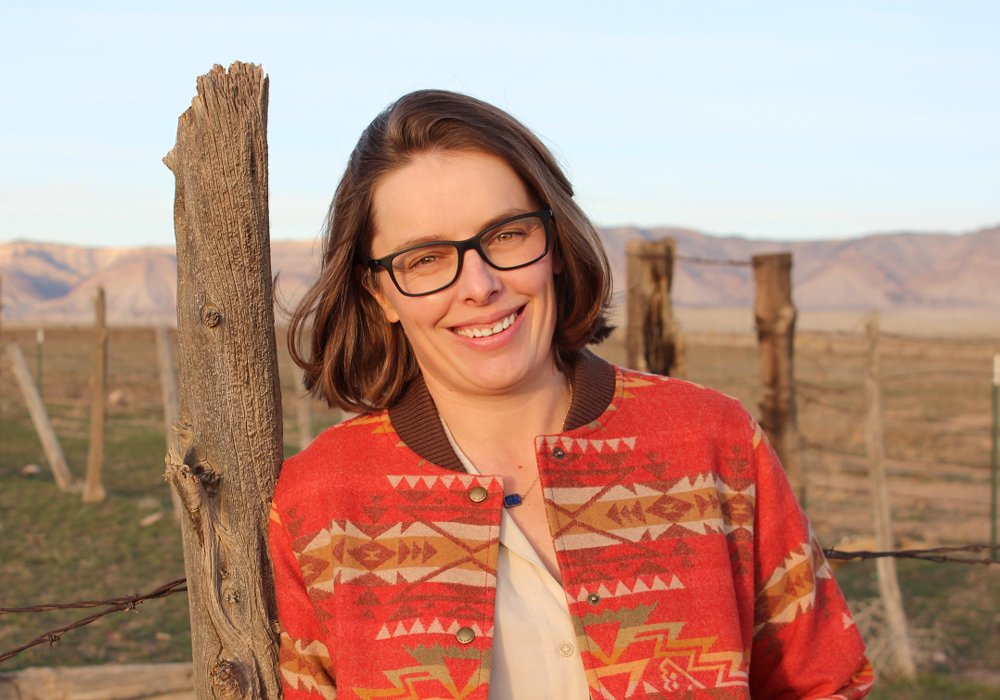
By Sandy Duchac
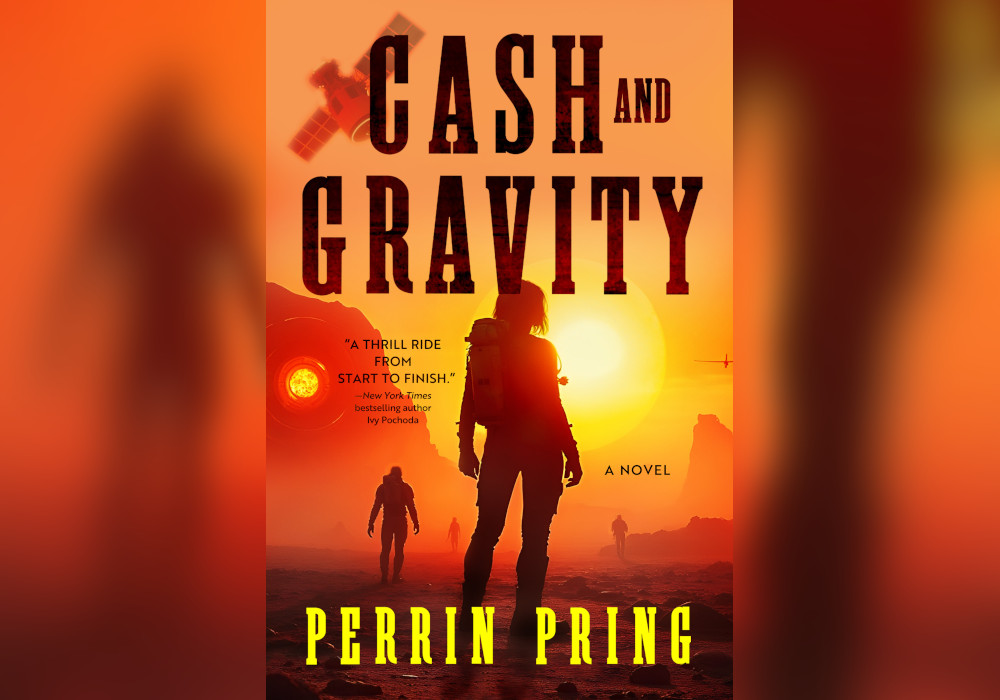
If authors are meant to write what they know, Perrin Pring’s work as a park ranger provides a wealth of knowledge. As a law enforcement officer, Pring is required to patrol thousands of acres, investigating crimes, providing emergency aid, and navigating unforgiving terrain with little to no backup. The work demands adaptability, restraint, and a constant awareness of risk—skills that translate seamlessly into storytelling. Pring brings that same precision and tension to Cash and Gravity, the first installment in her genre-bending series.
Set in a near-future where six mega-corporations have replaced governments and compete for control of space, Cash and Gravity follows an unlikely trio racing to secure a fusion device capable of reshaping humanity’s future. Chevy Cole, a Launch Tech marine who left her conservative past behind to be first into the fight, is drawn in after a failed Nevada siege leaves her unit dead. Izan, an elite super soldier known as an Ace, entrusts Chevy with a mysterious package and a dangerous secret. Joined by Dolon, a mercenary tasked with delivering the package to an Idaho safehouse, their uneasy alliance takes shape in a world where loyalties shift, stakes escalate, and survival is anything but guaranteed.
The Coachella Review spoke with Pring about her time as a park ranger, the long road to publication, and how both a road trip conversation and her decision to pursue an MFA at UC Riverside, Palm Desert shaped a novel that balances speculative worldbuilding with grounded, character-driven tension.
The Coachella Review: What sparked the idea for Cash and Gravity?
Perrin Pring: It started as a random conversation on a multi-day road trip. My husband and I were driving back from a rafting trip—Colorado to Utah, then across Nevada—and it was September 2020, when Starlink was launching. He asked if that kind of privatized communication could make governments obsolete. And I was like; That’s a fun sci-fi premise. I could write a book about that.
TCR: How long did it take before you started writing?
PP: Pretty quickly. Within a couple weeks of getting home. I had an early draft by March of 2021, and then I set it aside because I didn’t know what to do with it.
TCR: Before this, had you written other books?
PP: Yeah, this isn’t my first. I’ve written a lot of manuscripts. I even published a sci-fi trilogy years ago with a small press, but they went out of business and there was no marketing. I’ve done some self-published work, too. This is the first one that’s being traditionally published, so they’re calling it my debut.
TCR: How long did it take you to get to that point?
PP: I tried for seventeen years to get an agent. There were moments where I thought, This is the definition of insanity. But I kept writing—and eventually I realized I couldn’t just keep doing the same thing. I had to adapt.
TCR: That’s a long time to stay committed to something without that validation.
PP: I think that’s the part people don’t always see. You see someone get an agent or get a book deal, and it looks like it just happened. But for me, it was years of writing, revising, starting over, trying to figure out what wasn’t working. There were periods where I stepped back, or where I wasn’t producing as much, but I never fully stopped.
TCR: Did your relationship to writing change during that time?
PP: I think it had to. Early on, it was more about just finishing something. Later, it became more about understanding why something worked or didn’t work. Eventually, it became about being willing to let go of things that weren’t working—even if I had spent a lot of time on them.
TCR: That sounds like a shift from persistence to intentional growth.
PP: Yeah, exactly. It’s not just about continuing—it’s about improving. And I think that’s what finally made the difference.
TCR: What changed for you?
PP: Going to UCR Palm Desert was huge. I didn’t just want to study craft; I wanted to understand the industry. Once I got into the program, I brought this manuscript back out. I took a class with Stephen Graham Jones and turned it in, and he liked it enough to tell Tod Goldberg, my thesis advisor, about it. I had turned in a completely different project to Tod, and he basically told me he never wanted to read it again. Then he asked for this one.
TCR: The story centers around Chevy and Izan, and you made some interesting choices with gender. How did that come about?
PP: Originally, Chevy was male and Izan was a woman. Tod randomly called me one day and said, You need to switch the genders. And I was like, I’m listening, but I’m not convinced. And then I was like, Well, I’m not here to say no. I’m in the program to learn and adapt.
TCR: That’s wild. I can’t imagine the characters any other way.
PP: At first, all I did was switch the pronouns, but over time it became something else. It got really fun because Chevy became this character who lives loudly and unapologetically. She gets to take up space in a way we don’t usually see. She’s a door kicker. She’s the person you want in a fight, but she’s also messy—she makes mistakes. Outside of those high-stakes moments, her life skills probably aren’t great. But she’s trying, and I think that’s part of what makes her feel real: She’s not this polished, perfect version of a hero. She’s someone who is figuring things out as she goes, and sometimes she gets it wrong, and sometimes she gets it right.
TCR: That imperfection feels important.
PP: I think we’re used to seeing characters who are either completely put together or completely broken in a very specific way. But Chevy lives in between that. She’s competent, she’s confident, but that doesn’t mean she has everything figured out. And I think that tension is what made her interesting to write.
TCR: There’s also something interesting about how you handle gender in the book. It doesn’t feel like you’re making a statement. It just exists.
PP: I think that’s what ended up being the most interesting part of it. Initially when the genders were flipped, I didn’t really change Chevy as a character. I just changed the pronouns. And over time, that started to shift how the character functioned on the page. What became really fun was that she just gets to exist without apologizing for who she is. She’s not trying to fit into a specific mold. She’s not trying to be likable. She’s just doing what she thinks is right in the moment.
TCR: She’s also not punished for being who she is, in the way female characters often are.
PP: Exactly. She gets called out when she makes bad decisions but not for existing the way she does. And I think that was something I didn’t fully realize I was doing at first. But after the revision process, what stood out more was Chevy. She’s big, she’s loud, she takes up space, and she doesn’t apologize for it. And that became a lot more interesting to me than the original concept.
TCR: You mentioned earlier that the book changed a lot. What did revision look like?
PP: I had four POVs at one point, including Izan’s, and I had this whole backstory about the Aces—their friendships and teamwork. Most of that got edited out, and it made sense to get rid of Izan’s POV because he spends so much of the book passed out. But initially, what interested me was that Aces—these super soldiers—were mostly small women because of the logistics of space. I thought that was cool, because it’s not what we usually see. But everyone was like, This is too much. Cutting [Izan’s] POV ended up being one of the best decisions because it made his motivations less clear, which raised the stakes.
TCR: So, removing information made it stronger?
PP: I was giving the reader too much before. Once I took that away, it created tension.
TCR: Were there other major changes?
PP: There was a lot more worldbuilding in the initial draft, but I still think the world now feels fully developed. What’s cool is that I really understood the space-based elements I kept in—like the drop ship sequences, the phases they move through, and how gravity is affecting them. I did a lot of research, had people read it who understood that material, and watched a ton of videos on things like deceleration burns. The early version was very technical because I wanted to get the world right. But through revisions, I realized what makes the book work [especially in sci-fi and fantasy] is stripping that back. You keep what you need to make it feel real but focus on pacing and momentum. That was a valuable lesson—seeing how the book started to move once I did that.
TCR: Did that change how you think about worldbuilding going forward?
PP: Completely. Because before that, I felt like I had to prove that I understood everything—that I had done the research, that the world made sense at every level. And now I think about it more in terms of what serves the story. I still do all the same work behind the scenes, but I’m a lot more selective about what makes it onto the page. Because the reader doesn’t need to see everything; they just need to feel like it’s there. And I think that’s what makes it believable.
TCR: When you say you understood the world deeply, what did that look like in practice?
PP: It meant that I knew how everything functioned, even if it wasn’t explicitly on the page. I knew how the ships moved, how gravity affected people, how long things would take. That gave me confidence when I was writing, because even if I wasn’t explaining it, I knew it made sense.
TCR: So, the depth is still there; it’s just invisible.
PP: I think that’s what makes it feel real. If you don’t understand it, the reader can tell. But if you do understand it, you can simplify without losing credibility.
TCR: That’s a hard balance to strike.
PP: You want to show that you’ve done the work, but what matters is whether the reader believes the world, not whether they understand every detail of it. And the cool part of this is that a lot of the big leaps forward with the manuscript—the things that got it into the version people wanted to sell and read—came from other people. From friends who were reading it and giving feedback, mentors, all of that. I think there’s this idea that writing is this solitary thing, where you just sit in a room by yourself and don’t talk to anyone. But for me, my process is so much stronger when I take feedback. And sometimes it sucks, right? I got feedback like Tod telling me he never wanted to read the other book again, which, at the time, was pretty demoralizing, but I’m not upset about it now. Even though it can be hard in the moment, working with peers and mentors—and now my agent and editor—that’s what really moved the book forward.
I will add this: some of my peers from the MFA program are exemplary editors. They may not be editors by trade, but to say that they don’t have those skills is underselling them entirely, and I am lucky enough to have gone to school with them and built relationships with them.
TCR: How did you learn to trust that process?
PP: I think it came from doing it over and over again. At first, it’s hard not to take feedback personally. Your instinct is to defend what you wrote or explain what you meant. But over time, I realized that if multiple people are reacting to something the same way, there’s probably something there, even if it’s not exactly what they’re pointing out. And once I got more comfortable with that, the process became stronger.
TCR: How did working with an agent shape the book?
PP: My agent told me, “I don’t represent sci-fi, but I’ll represent a near-future thriller.” And I was like, Okay, what’s the difference? And it basically meant pulling back on the heavy science and focusing on pacing and character.
TCR: Did that change how you think about genre?
PP: Yeah, completely. Because I had always thought of it as sci-fi, and in my head that meant getting the science right, making sure everything made sense, making sure the world was believable. But what I realized is that genre is also about how the story moves. A thriller has a different pace. It prioritizes momentum, tension, and clarity. And that was a shift for me—not just what I was writing, but how I was writing it.
TCR: So, it wasn’t just cutting content – it was reframing the story.
PP: It wasn’t about removing the world; it was about deciding what the reader needs to stay engaged. I still had to understand all the science, but I didn’t need to put all of it on the page. That was a shift for me, because I had done all this work to build the world. But learning what to leave out is just as important as what to include.
TCR: That feels like a hard lesson.
PP: You want to show everything you worked on. But ultimately, the reader doesn’t need everything—you just need enough to make it feel real.
TCR: I have to say, the military voice felt incredibly real. I honestly assumed you had served.
PP: Thank you. That is high praise. I haven’t served, but I work with a lot of veterans, and I had people read it who helped me dial in the language. You have to find that balance: too technical and people get lost, too simple and it doesn’t feel real.
TCR: Let’s talk about your job as a park ranger.
PP: I am not here to speak as a representative of the government, but I can comment on my experiences as an individual, and I can say that, for me, being a park ranger was the coolest job I ever had. It was literally your job to range, you know? So, it’s in the name. You go around, and you find problems, you solve them, you see cool stuff. I started working seasonally for the Park Service in 2010 and then I was first promoted at the end of 2020. When I was in the field, I got to do all sorts of cool stuff—I still do, to some degree. I was at several parks where you have to do horse patrol. I got to do snowmobile training, and I’ve taken jeeps in weird places, got to fly in helicopters, got to go rock climbing, shoot guns, all that kind of stuff.
TCR: What do people get wrong about that job?
PP: I think people don’t realize how much of it is law enforcement. They think it’s just helping people find campsites or giving directions, but you’re dealing with real situations—sometimes serious ones—and often by yourself. It’s not unusual to be out in the middle of nowhere with no backup, making decisions in real time. And you don’t have the same safety net you would in a city, where multiple agencies can respond.
TCR: That sounds like a completely different level of pressure.
PP: You don’t get to step back and wait for someone else to handle it. You’re there, and whatever decision you make is the decision. And I think that changes how you think about problem-solving. You get used to making decisions with incomplete information, and you get comfortable with that uncertainty.
TCR: Does that mindset carry into your writing?
PP: For me as a writer, I’m not great with research. I get bored looking stuff up, but I’m good with experiential learning— and all that transfers well. I’m not writing about being a park ranger, but I can tell you what it’s like to have spent all night in the woods looking for somebody. That translates into writing, even if I’m not writing about park rangers directly.
TCR: Do you think that experience changed the way you think about tension in a story?
PP: It changes how you think about stakes. When you’ve been in situations where you don’t have backup and you have to figure things out as they’re happening, you get a better sense of how people respond under pressure. It’s not always clean. It’s not always logical. Sometimes it’s just doing the next thing that keeps you moving forward.
TCR: That comes through in the pacing of the book.
PP: I can write a character who has to make a decision without time to stop and explain things, and then they have to deal with the consequences after. And that’s something I tried to carry into the story. Even though the setting is very different, that feeling—of having to keep moving, of not having all the answers—that’s something I know really well.
TCR: You mentioned feeling like you were failing for a long time. How did you deal with that?
PP: I internalized it. Like, if I’m not succeeding at this, then maybe I’m not good at it. And when you’re working on something that personal, it’s hard not to make that connection. Because writing isn’t separate from you. It’s not like a job where you can say, “That project didn’t work.” It feels like, I didn’t work.
TCR: That’s a tough place to stay in for years.
PP: I don’t think there’s a clean way through it. You just keep going. And over time, you start to separate the work from yourself a little bit. You realize that something not working doesn’t mean you’re not capable—it just means you haven’t figured it out yet.
TCR: That’s a big shift.
PP: I think that’s what allowed me to keep going. Not thinking, I’m failing, but thinking, I’m still learning. And that’s a much more sustainable way to approach it.
TCR: What would you say to writers who are still trying to break in?
PP: Writing isn’t like wearing a uniform. I can go to work, and if someone’s mad, they’re mad at the uniform—at the job, not me. But with writing, if someone tells you it sucks, it feels personal. It feels like they’re saying you suck. But I always knew I wanted an agent, even if I couldn’t figure out how to get there. And I didn’t give up. There were years where I wasn’t working on my writing as much, but when I decided to go to grad school—specifically, UCR Palm Desert, because it focused on the industry—that’s when things changed. At that point, I wasn’t doing the same thing over and over anymore. I was adapting. I was pushing myself beyond where I had been. I think a lot of it comes down to resilience. Not in the sense that you’re not affected by adversity, but in your ability to absorb it, move on, and keep going. If you have a goal and you’re not there yet, but you keep working toward it, eventually your work meets opportunity—and luck. There’s luck involved. But I really believe the only time you can take advantage of that luck is when you’ve prepared yourself for it. Every now and then someone gets incredibly lucky—they write something, it lands in a slush pile, and the right person reads it. But most of us aren’t that lucky. The only thing you can do is prepare as much as possible, so that when you do get in front of the right person—an agent, an editor, whoever—you’re ready.
For 17 years I felt like I was failing. That’s a long time. But I kept going. I think I have a little bit of Chevy in me in that way—I’ll keep walking through doors, even if I don’t know what’s on the other side. I never thought this book would go anywhere. I wrote it the same way I had written a lot of manuscripts before—just getting it as far as I could on my own. It wasn’t until I entered UCR that I was able to take it beyond that. So being on the cusp of it—of debuting—is honestly unexpected.
You have to keep going, but you also have to adapt. For me, going to grad school changed everything because I stopped doing the same thing over and over and started learning how the industry works.
TCR: When you look back at the process—from that first draft to now—what surprised you the most?
PP: Honestly, how much it changed. I didn’t expect it to become what it is now. I thought it was just something I wrote, and I didn’t know what to do with it. But once I started getting feedback and working with other people, it kept evolving. And I think that’s the biggest thing—it’s not just about writing the book. It’s about being willing to reshape it.
TCR: Did you always see this as a series?
PP: Not at first. The original version didn’t end on a cliffhanger. That was something that came later, when I started thinking about how the story could expand.
When I met with my editor, I had mapped out what a second book could look like, but I also left it open depending on what they wanted. And they came back and said they wanted more, so now it’s growing into something bigger.
TCR: What’s next for you?
PP: The second book is already done, and we’ll see where it goes from there. I think there’s more story to tell.
Sandy Duchac, a student at UC Riverside’s Palm Desert MFA program, spent most of her life telling other people’s stories and now has turned her focus to her own.