
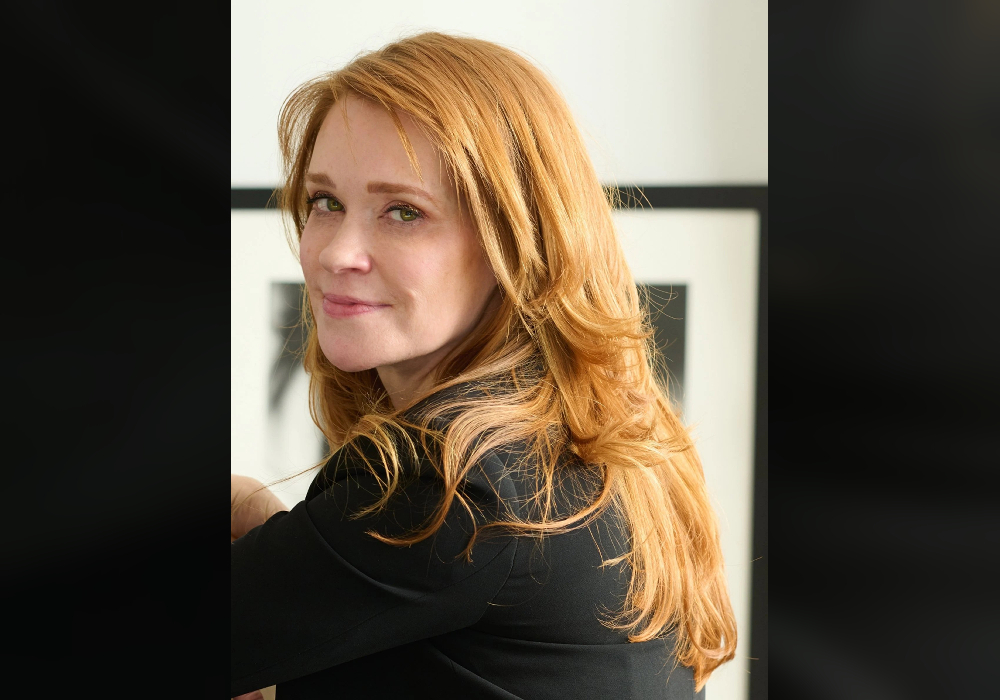
By Pallas M. Gutierrez
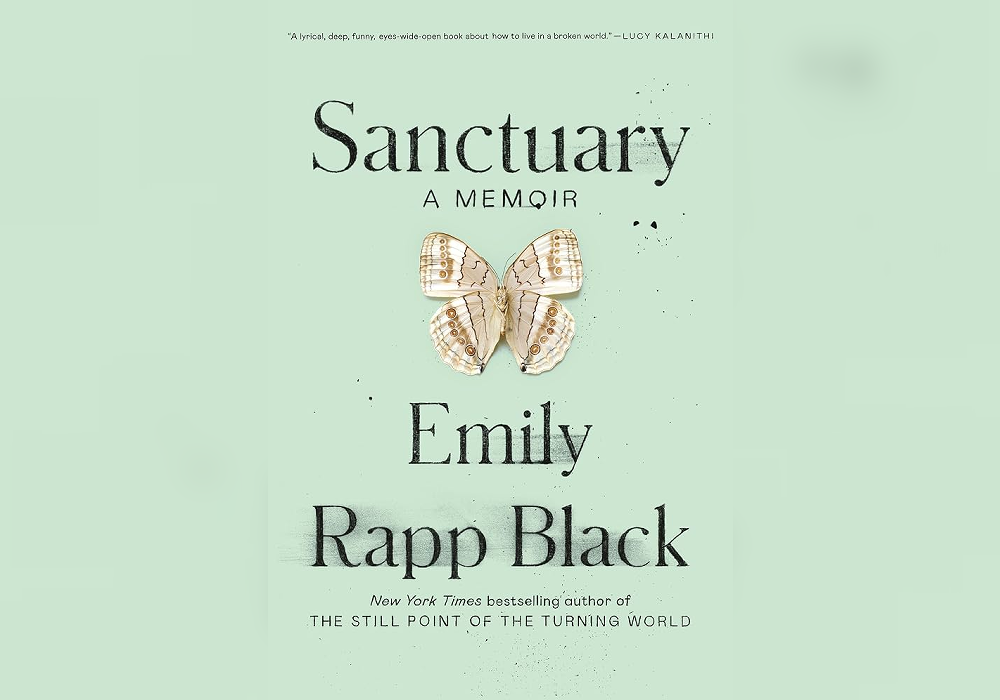
Emily Rapp Black does not shy away from the tough stuff. Her first memoir, Poster Child, explored her experience as a disabled person. The Still Point of the Turning World detailed her experience of losing her son Ronan to Tay-Sachs disease. As a result of that loss, many people over the years have told her, “I could never survive that.”
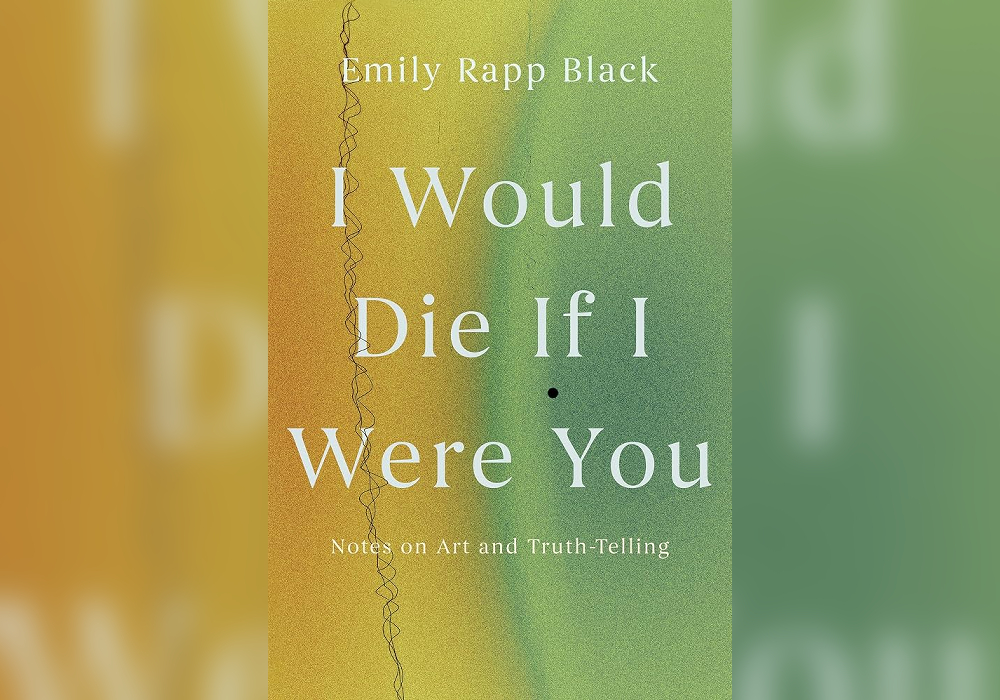
Emily Rapp Black explores that sentiment in her latest book, I Would Die If I Were You, where she shares her experiences and provides advice to writers interested in topics that other people would say are “too sad.” Between explaining philosophy and recounting her own experience as a writer, Black provides insight into her process, such as her Sticky Note Layer Cake strategy: “Whenever I have an idea, I scribble it on a sticky note…I add the notes at random, one on top of the other, and at some point, I peel them off, one by one, and start looking at what I have.”
The Coachella Review chatted with Emily Rapp Black about philosophy, superhero movies, chaos, surviving it all, and writing about it.
The Coachella Review: One of the things I really enjoyed about I Would Die If I Were You was how you wove together personal experience, theology, philosophy, and explorations of art, from War and Peace to The Fantastic Four. How did you balance those threads as you were writing?
Emily Rapp Black: I’d say awkwardly. For me, it’s a natural way of writing. I have so many different interests that aren’t necessarily ones I want to go deep into, but I feel like are relevant. One of the things I especially love to do in my work is to bring in philosophy, because it’s what I studied as an undergrad and a graduate student before I decided to try my hand as a creative writer. It appeals to me in terms of the frameworks that it allows for: flexible frameworks and containers that are so complicated, they become simplified when applied to real life. And it’s fun to see the ways in which our contemporary stories are resonant with thinkers from centuries ago who all were trying to do the same things to figure out life, love, grief, happiness.
I’ve always loved action films. It just shows how where you are in time [when you interact with a film] makes a difference. Like, I cried through all of X-Men and if I watched it now, I probably wouldn’t be that upset. And if I had watched Fantastic Four when my son was dying, I would have been upset. It shows you the ways in which everything that filters into our brain can be composted in a way, or alchemized into a lived experience that someone else can enter into, even if they’re not in the same position that you are. For some of the issues that I’m writing about, a lot of people don’t have those experiences, which is fine. But they can understand intense grief or intense love.
My hope is that people will see that their interests in their lives can be attached to their projects in a way that’s meaningful, both to themselves as they write and also to the readers who may interact with it. I like People magazine, but I also like old dead philosophers. You don’t have to choose a lane.
TCR: Given that a lot of people have strong opinions about the usefulness or relevance of philosophy, did you ever worry that any of the references that you made would be inaccessible?
ERB: With my second book, The Still Point of the Turning World, that was an issue, and I switched representation as a result. That wasn’t a diss against the agent. Philosophy was what was speaking to me. It was speaking to me so powerfully because it was the only good [thing] happening in my life. I don’t really worry about it. Because I feel like my ideal audience is people who are interested in the long history of thought about human life, and that isn’t everybody. And that’s completely fine.
Sometimes, I do have to roll myself back. I find [philosophy] to be a creative balm, because it makes your brain work. [You think,] What does the sentence mean in German? It’s so busy over here that your creative brain gets a break.
I wanted I Would Die If I Were You to be a template for people. If you’re interested in mechanical stuff, why not put that in your work? Why isn’t that something to be mined for meaning and story? I think everything can.
TCR: You write about chaos from several different angles: how art helps us deal with the chaos of life, how chaotic exercises like the sticky note layer cake can lead to clarity. What place does chaos have in not just process but in a piece? How can chaos be used effectively in a final version of something?
ERB: The short answer to that is that the narrative should help the reader find their way through the chaos. I got so excited when I learned that fact [in the book] about tornadoes: that there is a fucking still, silent moment in a cone of chaos. That to me is the goal of any kind of thought or story of thought: a still moment inside all this raging chaos. It’s especially important now because the world is on fire everywhere, and it’s hard to find any kind of grounding. I would say that chaos is not to be feared.
I always say to students, bring a really messy thing to the workshop. The workshop is not for you to be super brilliant and awesome; the workshop is for other people to work on it. It’s not a “one-person-does-great-shop.”
I have a very chaotic process, and I’ve learned to enjoy it. It feels fun now. I never was very good at making outlines in school. Then I saw Dostoevsky’s [messy] notebooks, and I felt so seen. I’ve learned to lean into that.
You can find moments within the chaos where you can track a course that’s yours alone, which means befriending your chaos and saying, This is the way that I write. It doesn’t have to stay that way. But for now, that’s how it is. It’s an important narrative principle to understand that chaos is written into order. You can’t have one without the other. Just like grief and love, or death and life, they’re baked into each other. People want to have this sort of clean line, but you don’t get the clean line unless you have kicked aside some of the chaos. I’m more interested in what was kicked aside and how that relates to the way forward.
In the first Scary Movie, that guy with the white mask [is] always somewhere in the corner. I feel like that’s chaos. It’s there all the time. And I think if you can’t acknowledge that, then you can’t write to your full potential, because you’ll always be holding back, trying to get it right. There isn’t a way to get it right. That, to me, is liberating. The sooner you can accept that as a creative person the more freedom and fun you’ll have. When I sit down to write, I want to enjoy myself even though I’m engaged in meaningful labor. The chaos that’s created in a creative practice—to me, that’s a safe haven.
TCR: I was in college when the pandemic started, so I’ve had a lot of story ideas influenced by COVID. People have told me no one wants to hear about that. In Chapter One, you wrote, “There’s nothing so sad or so joyful that an artist can’t explore, approach and explore, although you may have been instructed to believe otherwise.” Do you think that there’s a way in which writing about collective tragedy or grief functions differently than writing about individual people dying?
ERB: I stand by that statement. How many World War II movies do we have? Seven thousand million gazillion? It never gets old. I think people are worried about writing things about the pandemic because it’s too close to home. But that’s the point. There’s no repetitive story. There are iterative stories. There are different versions of the story. COVID stories are interesting because it’s part of the stream of history that we landed in, right? That’s the mucky water that we’re in. I think that it anchors the story in time and history if it’s a collective experience. I think it’s kind of a gift. People say that because, right after COVID, there was this onslaught of COVID stories, but that would have happened after World War II if they’d had Instagram. It just happened more quickly. Everything happens so much more quickly that I think sometimes people don’t feel prepared for it. But I don’t think that’s a reason not to write it. A good story is a good story, being told in a beautiful, true way. There’s attention to craft, there’s attention to narrative, it feels necessary, it feels somewhat urgent, like [it] can happen anytime. So, make yours great.
Also, COVID was weird. It was especially hard for people who were supposed to be in social environments at a formative age. That, to me, is interesting. My whole college experience was gooey and IRL and unhooked from anything. It was super formative for me and hugely important. I think the college COVID experience is worth telling. Maybe people aren’t ready to hear it yet. But that’s exactly why you should tell it.
TCR: Something that I thought was interesting during COVID was how aware everybody was of how many people were dying. In I Would Die If I Were You, you explore the idea that we live in a culture that is afraid of death. I just read Everything Is Tuberculosis by John Green, and he talks about how children dying from disease used to be so much more common. But we didn’t have many women writing at that time about the experience of losing children. I was wondering how you think our culture would be different if those narratives had been allowed to exist, if those stories had been documented.
ERB: I think fewer people would be so excited to have children because they’d be like, Well, there’s a fifty-fifty chance. It’s sold to modern-day moms as this ecstatic experience where suddenly you become an Instagrammer talking about, like, which washable rug you’re going to put in your living room. But it’s not like that. That’s not the real problem; the real problem is death. I think people who experience child loss would feel less alone. It’s really hard to have a sick kid and lose that child. People want to put up an invisible shield around themselves because they feel those stories are unwritten and untold, but they don’t want to acknowledge them because it’s scary. I understand, [but] also I have no patience for that.
I’ve gotten letters from people who are like, I read your book when I was pregnant, and my kid was hit by a bus when they were fifteen, and I think of it differently now. I’m sad that happened to that person, I’m deeply sad. It’s an awful thing. You wouldn’t wish it on your worst enemy. But at the same time, people assume that it’s all going to be fine. And sometimes it is, and sometimes it’s not.
I think that gets back to my whole issue with luck and agency. So much of it is outside of our control. I think that scares people because it should. It means that your life isn’t going to be the way that you thought it would be. Before we became this industrialized country, that was [true for] everybody. The plague came, and you were just waiting to be hauled off on a cart. And if you weren’t, it was by accident or luck, but it didn’t mean you [did] the right things. It didn’t mean you were a good or a bad person. I think because we don’t have those moments of collective fear, people think they can insulate themselves from it. Maybe COVID changed that. I don’t think it changed [the grieving process] in the child loss community because people still have the same reaction. It’s a very distinct kind of grief. It is the worst thing that can happen to somebody, but it happens to people all the time.
I try to be patient, but I’m not a patient person. I have very little patience for people who are like, Oh, I couldn’t do what you do, or, I could not live your life. That’s a failure of your imagination, not mine. You don’t know anything about my life, and I don’t know anything about yours. Now I don’t want to, because you seem boring. If that’s your reaction to an experience that’s transformative in every way, then I don’t want to have a conversation with you because you suck. Obviously, I don’t say that out loud, but I feel it.
If you’re afraid to engage with something real, then I don’t want to engage with you. It doesn’t mean it has to be all boohoo sad. I mean, get together a group of women who’ve lost their kids. They’re the funniest people you’ve ever met. It’s not what everyone thinks it is because nothing ever is. Nothing is ever what it seems.
TCR: I loved reading about the Loss Ladies and people writing about their own experiences, talking about their own experiences, and being in community with people who’ve had similar experiences. How would you advise people to find similar communities for other experiences that there aren’t established writers’ communities for?
ERB: I would say Google, probably. There’s a support group for everything. Usually in those groups, there’s going to be someone who’s writing something. That’s a natural human reaction, to write things. I think it’s pretty easy to find those communities. I started that group specifically because I had had the experience of being in a writing group where people were so flattened by the sadness of the story that they were then flummoxed in terms of how to respond to the work as art. I’m not here for therapy. I’m not here for people to tell me that it’s sad, because I know that. I want someone to be like, Is this working on the page? Is this something that a reader can enter into? Have I allowed space for someone to come in and have feelings that aren’t necessarily aligned with mine, but are in conversation with them? I have students that are like, I don’t like this story because I don’t like dogs. That’s not the point. The point is, what does the writing do? Sometimes when you have a hard story, people don’t want to talk about the writing. They want to talk about the content, which seems like it’d be the same thing. But to me, it’s not. If we can focus on the delivery, which is what I’m meant to do in that group, then the content becomes more bearable and beautiful and true and intense. And those are hard stories, but they’re also true stories.
TCR: You talked about art and theology making sense of the senseless. I’m a big baseball fan, so I was thinking about how statistics are also something that try to create sense. Can you think of any human endeavor that is not trying to bring order to a chaotic world?
ERB: Politics. They’re all just trying to find power, which is different. Or to align the narrative with their own interests, which is not the goal of art. The goal of art is to align the story with anyone that’s interested, right? It’s to leave room for a consumer or a viewer or a reader.
TCR: The epigraphs throughout the book came from such a diverse array of writers and thinkers. I was wondering what your process was for selecting them.
ERB: I love me an epigraph. I usually do like two or three in a chapter.
A lot of my epigraphs come from my friend, Katie Ford, the poet. I read a lot of poetry, and I find it to be a nice framing device. An epigraph is a nice onramp for the reader while also paying homage to my larger goal, which is to show that all [stories are] in conversation with something else. An epigraph instantly expands the narrative beyond what’s inside the chapter because we’ve broken the time-space continuum of whatever’s happening there. We’re gesturing to a different time, place, writer, whatever. It’s a way for me to have poetry in my books because I can’t write it [myself]. I wish I could.
TCR: Besides “Don’t read reviews,” do you have any other advice for writers who find themselves getting pushed into a pigeonhole or mischaracterized in reviews of their writing?
ERB: I think you have to not worry about it. For example, people always call me a memoirist. I also write other things. I ghostwrite books. I write fiction. I don’t just write memoir. But somehow, I’m a memoirist because I’m a woman. They always mention disability, and that is not the focus of my life. It is and it isn’t.
Anyone that’s not a white, straight, hetero dude, people are going to pigeonhole you. It doesn’t matter. I know what I do. You have to keep doing what you’re doing. And if people want to put you in a box, then they can put you in a box, but that doesn’t mean you have to go in there. You can look at it and be like, Oh, it’s interesting. It’s a nice box, but I’ll burn that. It’s part of the book business, which is a dumbass business, and marketing, which is a dumbass business. So don’t read the stuff, don’t Google yourself, and just write your work and get your hate mail, get your love mail, and respond to all of it. It is what it is. It’s just a book. And it’ll have its own little life. Who knows what’ll happen. There’s nothing I can do except what is asked of me and trust that the people who will read the book will be interested. And if they don’t find it, they’ll find it another time. Just keep writing.
 Pallas Gutierrez is a writer, teaching artist, and lighting designer from New York City. They are an MFA candidate in UC Riverside’s Low-Residency program. Pallas is the managing editor for The Coachella Review. Their essays about queer community can be found on Autostraddle. Outside of writing, Pallas enjoys crafting and volunteering in their community.