
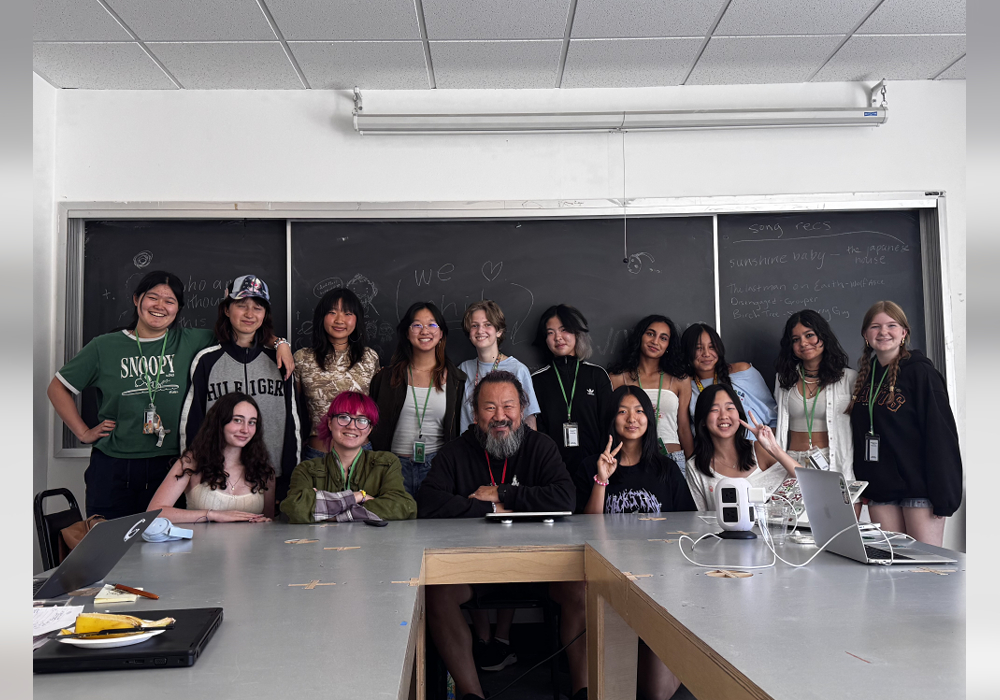
The Last Generation Press staff with their mentor and publisher, Chiwan Choi. Photo courtesy of Chiwan Choi.
By Angelo A. Williams
Last Generation Press began with a summer poetry class and quickly became something larger: a teen-run publishing project committed not only to young writers, but to the idea that publishing itself can be grassroots, communal, and ethical. Founded by writers who met at the California State Summer School for the Arts (CSSSA), the press released its first anthology, Writing from the End of the World, during last March’s Association of Writers and Writing Programs (AWP) conference in Baltimore. Now, Last Generation is thinking beyond a single book toward a broader literary home for teen voices.
In conversation with The Coachella Review, poet/publisher Chiwan Choi and teen editors Muriel Neill, Sienna Wong, Aisha Weththasingha, and Harper Nosek-Mulvihill talked about what it means to build a press from the ground up, why writing needs community, and how a small print project can become a real cultural intervention.
The Coachella Review: How did Last Generation Press begin?
Chiwan Choi: I’ve always been focused on democratizing publishing because, coming up, I was excluded from too many things—for being young, for being inexperienced, for not being white. When I met this group at CSSSA, what struck me was the way they bonded and collaborated. I remember telling another class recently that there’s a reason so many protests and movements begin with someone’s little print shop. You make a zine, you make a flyer, and it can change the world. That spirit was already here.
TCR: What did CSSSA make possible for all of you?
Sienna Wong: It really felt magical. I don’t think I’ve ever described an experience that way before. It was the first time I’d been in a space where art felt like a viable future, not just a private hobby. We were all coming from different places and disciplines, but we found each other through writing. The press grew out of wanting to extend that feeling of community and keep it alive after the summer ended.
Muriel Neill: What was so unique about CSSSA was that it felt like anything was possible. I had only gotten seriously into poetry a few months before the program, and then suddenly I was in an environment where publishing didn’t feel distant or inaccessible. Chiwan gave a class on publishing and made it feel real. I remember bringing up the idea of wanting to publish work, and the response was basically, we could just start that ourselves. That was huge for me. It made the writing world feel like a place where things become possible when you have community.
TCR: Why create a press instead of just putting together one anthology?
CC: I offered [the student editors] the possibility of creating an imprint they could really run themselves. I could give the structure through Writ Large Press so they wouldn’t have to deal immediately with the legal and financial complications of owning a business while still being students, but the point was that they would do the real work. I had moments where my own anxiety kicked in about deadlines, especially with AWP coming up, and I thought, Maybe I should just finish it for them. But that would’ve defeated the whole purpose. If they missed a deadline, they missed a deadline. Instead, they got it done. That mattered. It meant the press was actually theirs.
TCR: What did you want the press to stand for beyond publishing a book?
CC: We talked early on about the ethical commitments they wanted the work to stand for, and those values came from them: the rejection of fascism, the rejection of hate, the refusal to let publishing become detached from what you believe. The idea was simple: You want the thing you make to align with the thing you believe.
MN: That part matters a lot to me. Even as a small press, I think there’s value in being conscious about how your art interacts with people, how you interact with art, and therefore how you interact with other people. Poetry is already not what society expects from young people a lot of the time. So, if we’re going to make something, I want it to be rooted in what we think is right and in the understanding that even something small can have an impact when people come together around it.
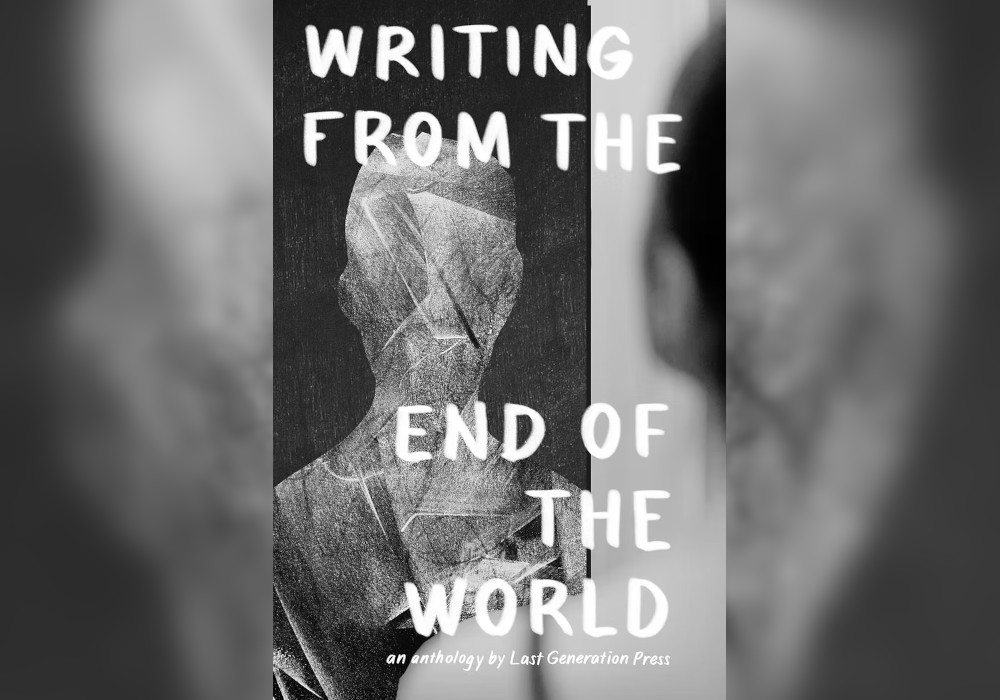
TCR: The anthology’s title is striking. What did Writing from the End of the World mean to you?
Aisha Weththasingha: The title came out of our class. We were talking near the end of the program about how it can feel like we’re the last generation of poets in this world, or at least like we’re writing in a moment where writing feels urgently necessary. We need artists more than ever right now. That title felt right because it held the pressure of the moment, but it also held all of our different voices. Everyone is writing from a different place, but somehow the pieces came together really naturally.
TCR: What does being a writer mean to you right now?
MN: For me, it’s hard to feel like a writer outside a community of writers. Writing can feel so individual, so private, so tied to one person’s voice. But being part of the anthology and part of the press made me feel more complete as a writer, because I was surrounded by people whose work could speak to mine and whose presence made me want to keep going.
Harper Nosek-Mulvihill: I think a lot of people, especially young people, think they aren’t really writers or that what they have to say doesn’t matter. And writing is so overlooked in schools—at least in my experience in public school. I’d never taken a creative writing class before CSSSA. Part of what this press can do is affirm that your story is worth saying—and not just worth saying privately, but worth publishing and sharing.
TCR: How did your own roles on the project shape the way you think about literary work?
MN: I worked a lot on editing and getting everyone’s pieces together, and some interior design, too. That made me realize how much writing is also about care—about sequencing, shaping, and helping a book become itself.
SW: I worked mostly on layout, and that changed how I thought about the anthology as a collective object. It wasn’t just a set of separate pieces anymore. It became something designed, something built.
HNM: I did social media, website design, and some layout work. That made me think about audience and access differently. The press isn’t just about the writing itself; it’s also about how people find the writing, how they enter it, and whether they feel invited in.
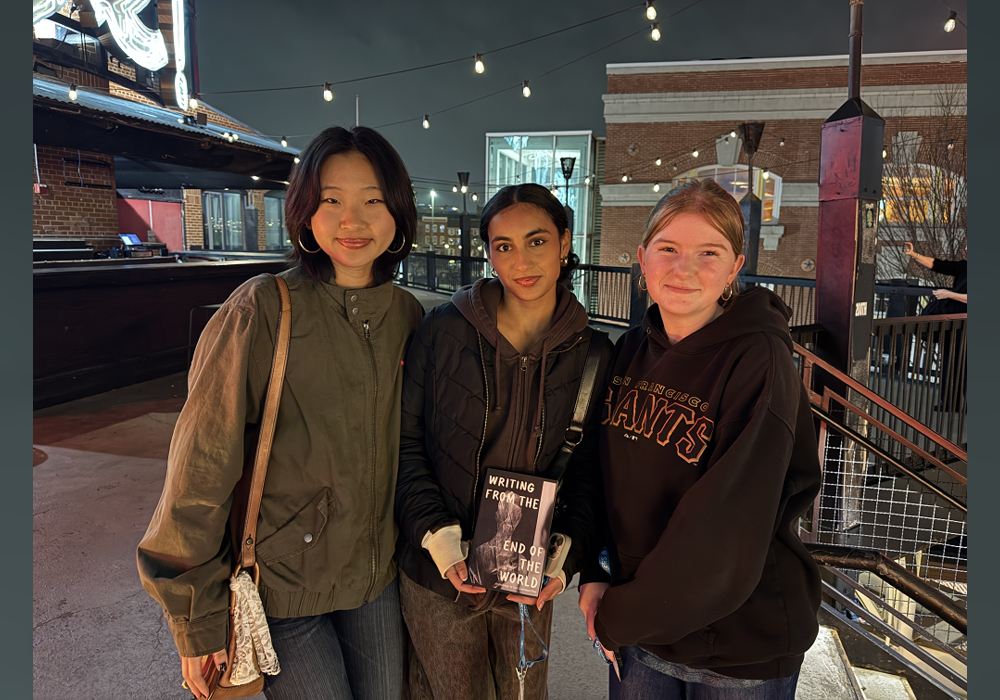
Last Generation Press’s Sienna Wong, Aisha Weththasingha, and Muriel Neill at AWP in Baltimore, March 2026. Photo courtesy of Chiwan Choi.
TCR: What was it like to bring the anthology to AWP?
AW: Incredible. The best part was [having] adult writers come up to the table, hear what we were doing, and [they would] immediately say, “I wish I had this when I was younger.” That reaction made the project feel real in a new way. It wasn’t just exciting for us—it was clearly filling a gap that other people recognized right away.
SW: Seeing the book physically for the first time really changed things for me, too. Until then, I knew it mattered, but I don’t think I fully grasped the scale of what we had made. Once people started responding to it in Baltimore, and once I saw how many teachers, writers, and family members understood the value of giving young people a platform, it clicked.
TCR: What do you think adults misunderstand about young writers?
CC: Society values young people mostly for their potential. The assumption is always that they’ll matter later. But one of the ideas behind the class was, What if we just wiped out the future? Why are young people valuable now? Why do they deserve love now? That changed the energy in the room. They didn’t just write into that question—they gave that feeling to one another. That kind of generosity has carried into the way they built the book. You can’t fake that later. It has to be at the root.
TCR: What comes next for Last Generation Press?
MN: We’ve talked about making the anthology annual, and we’re hoping to publish other writers, too. I’m really looking forward to whatever comes next because it means we keep going.
SW: I think one of the things we’re all holding onto is the sense that there are a lot of quieter writers out there—people whose teachers or friends know they have something, but who might not otherwise see a place for themselves in publishing. If this press can be that place, then that feels like the right next step.
TCR: What do you hope someone your age takes away from seeing this project exist?
HNM: That you don’t have to wait for somebody else to tell you your work matters. You can build the space yourself—or build it with other people. And once you do, it becomes easier for the next person to believe they belong there, too.
 Angelo A. Williams is a nonfiction writer, professor of Ethnic Studies, former political staffer, and MFA candidate in Creative Writing at UC Riverside, working on a memoir about fatherhood, ACES, CPTSD, and generational inheritance. A former staff writer for the Sacramento Observer, he has published in The Source, Rap Pages, Word in Black, and the Los Angeles Sentinel, and authored “Crossroads Traveler” in Tough Love: The Life and Death of Tupac Shakur. He narrated Discovery Channel’s The Crimes That Changed Us: Rodney King and hosts the fatherhood initiative podcast This Is How Dads Do It.