
By Charli Engelhorn
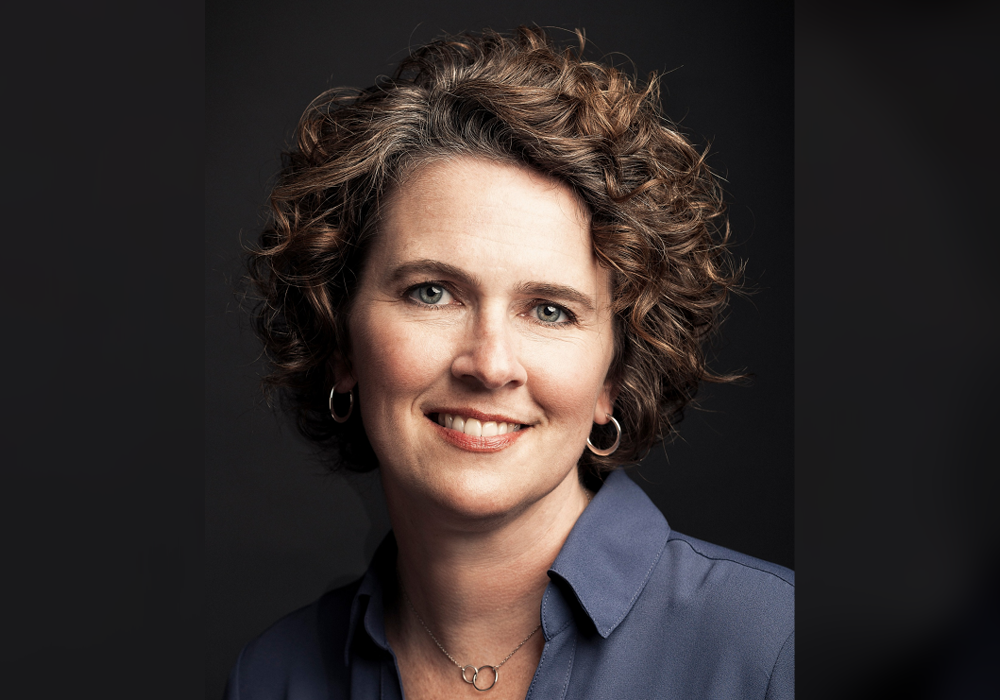
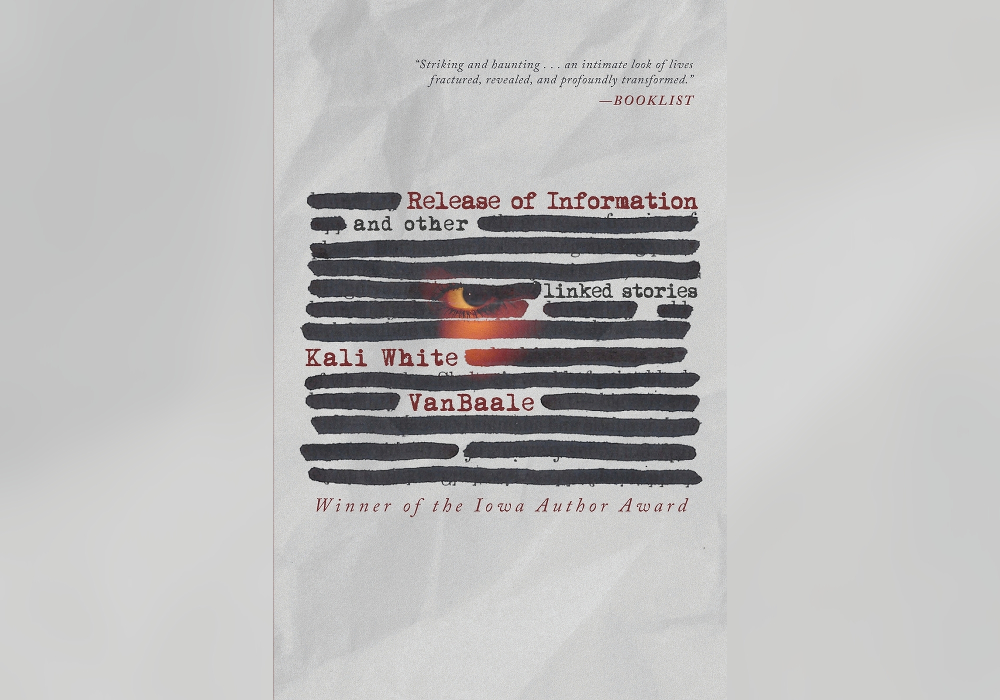
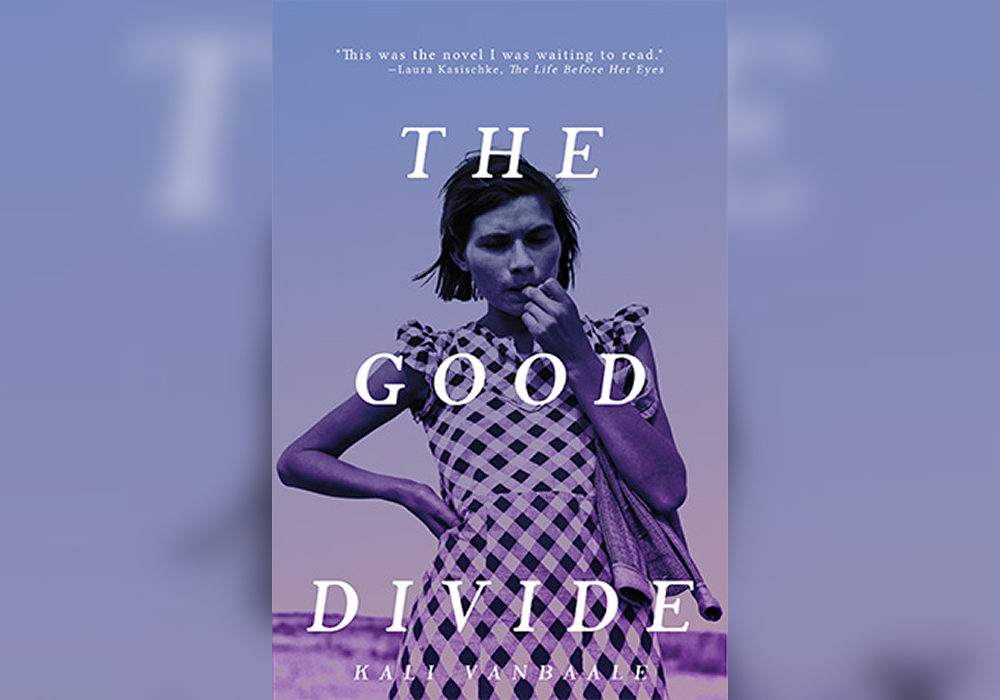
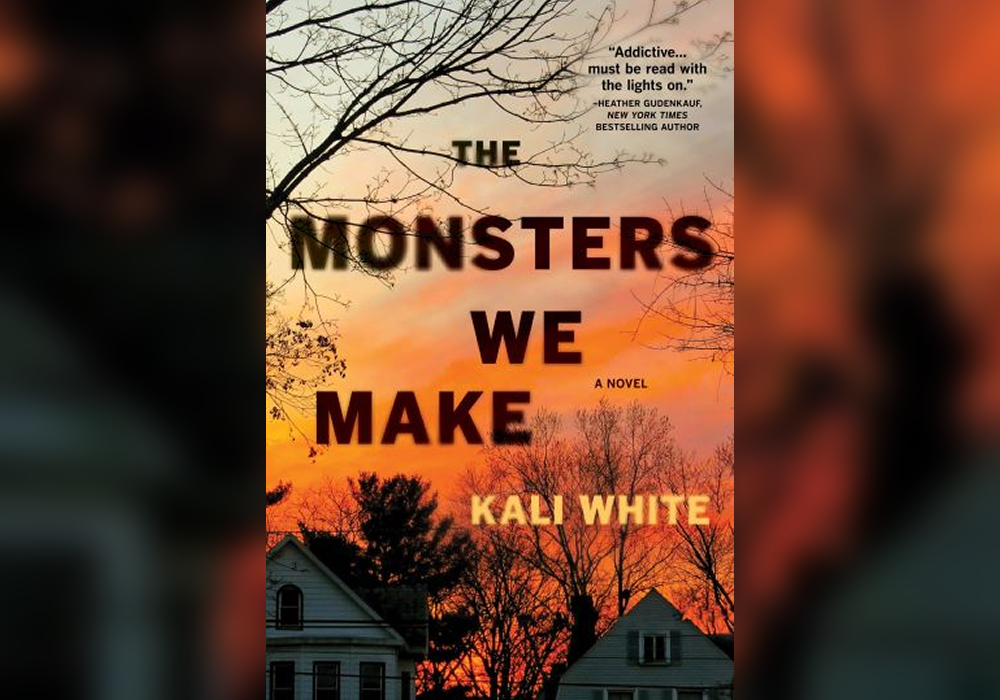
Kali White VanBaale is the author of the novels The Space Between, The Good Divide, and The Monsters We Make, but at The Coachella Review she is also known as the author of the short story “Monkey Mountain,” published here in 2019. That story features in her debut story collection, Release of Information and Other Linked Stories, in which White VanBaale weaves together the lives of thirteen connected characters. In this way the stories, told with deft restraint and rich description, become endless, persisting beyond the final page of each character’s journey. The intimacy White VanBaale achieves by giving the reader an insider’s perspective of each character—both within their own story and through the POV of different characters—highlights one of the major themes of this collection: What we present to the world is to a large extent a façade. This posturing, arising from a near-universal sense of insecurity, resonates via stories that reveal the pitfalls of comparing our lives to others’.
White VanBaale’s collection explores loss and regret, the bonds of marriage, and the voices in our heads that dictate who we are and what we can be. And yet, each reckoning carries a sense of hope. Whether it be through courage, confession, or acceptance, these stories affirm that people can rise beyond their fears to find not only the life they deserve, but also the life they want.
The Coachella Review spoke with Kali White VanBaale about the transition from writing novels to short stories, the challenges of the publishing industry, art for the sake of art, and the secrets women endure for survival.
The Coachella Review: The tangled web of characters in Release of Information is vast. Before we dive into the stories, can you first talk about the origin of these characters? Which one came first, and what opened the world to include the others?
Kali White VanBaale: The very first story I wrote was my first attempt at a short story when I was in grad school in 2011 and 2012. I attended the low-residency MFA through Vermont College of Fine Arts, and we were on campus for twelve days twice a year. At that time, I had [written] two novels and primarily considered myself a novelist. But I wasn’t keen to submit pieces of the novel in workshop because I think it’s hard to have ten or twelve new readers twice a year digging into the novel without context. I thought, You know what? This is a sign. Maybe this is a good chance to start trying short stories. I came into fiction backwards with novels, and short stories seemed like unknown territory, so I’d been a little intimidated by them. That first story was “Bijou,” the wedding dress story, and the early iterations were quite different. But that was my first attempt venturing into short stories with that character, Nicole. The second residency, I submitted “Jar of Nails.” I didn’t know it at the time, but those two stories ended up spawning the complete collection.
I went on to write a couple more stories. “Release of Information” was next and got published, and then “Monkey Mountain” followed and was published in The Coachella Review. I had those base stories. Then, one day, I sat down and started penning another story, which turned out to be “Hyatt at the Arch,” with this husband [character], and as I was writing, I wrote that his wife’s name was Tricia. I paused and said, Wait a minute. I think I used that character’s name in a previous story, and sure enough, Tricia had been a background character in the story “Jar of Nails.” I started thinking more deeply about her. In that story, she’s a bit of a stereotype, as most of the secondary characters in several of the stories are, and I kept thinking about bringing some of these characters forward and exploring a different context for them—from where they appear first, maybe with a stereotypical, one-dimensional view of them, and going into something different. So that’s where it grew from, and then I started linking them.
TCR: Part of the magic of writing is when the characters take over and turn you into a glorified conduit. It sounds like you may have experienced that a lot.
KWV: I did. Especially [with] two characters in particular: Tricia, who appears through a couple stories, and Kelly. But Kelly, who first appears in the story “Girl in the Pipe” as the sister, was the secret-keeper in that story, and she was the character who had experienced the true trauma. Once I realized that, I couldn’t let her go, and she just kept reappearing. One of the last stories I wrote was “Caricatures,” where Kelly finally gets to speak for herself, which I thought was important. She’d been the character who haunted me the most because the story “That Time I Didn’t Tell a Grown Up” started out as a personal essay. That was [based on] a real thing that happened to me as a child on the school bus. I had a seatmate who revealed this thing that was happening to her, and I was young and very naïve, and I don’t think I understood what she was telling me. And I never told anybody—my mother, the bus driver, anybody. I always wondered what happened to her, and she ended up evolving into Kelly.
TCR: Was it healing for you to give your former seatmate a future through Kelly?
KWV: Yeah, I think sometimes we do that. It takes us so long to sort things out from our pasts and fully understand them, or understand them in a more mature, wiser context. We don’t realize we’re carrying these bits and pieces from our past that hover at the edges of consciousness. We often try to write about them in nonfiction. I attempted to in the original essay about my seatmate on the school bus, but it never quite came together. Being able to fictionalize it, that memory… it gelled and came together within the context of the larger collection. That was the first time I’d ever experienced that, where I had tried writing something as nonfiction first, and it just never came together, and then once I fictionalized it, it made sense. I realized it could be [Kelly’s story].
TCR: How did you decide the order in which we meet the characters?
KWV: I went ’round and ’round about how it should be ordered. Some of the stories have to come a little earlier because of how we meet the characters. And when I started writing later stories, they occur later in the chronology of a character’s life, so some of that dictated itself. But I struggled a little bit opening with “Hyatt at the Arch” as Jay’s story, even though I knew I was going to close the collection with “Hyatt Pune,” which is Tricia’s story, and they talk to each other from the beginning to the end of the collection. The emphasis of these stories is more on female experiences, so I did struggle opening with the experience of a male character. But that story had to open for Tricia’s to carry impact at the very end. So, chronology was a factor, but [because] I wanted the stories to talk to each other, one story had to come first so its companion story could talk to it.
TCR: I love the idea of stories talking to each other across the pages. And these stories are so well-written. You show a mastery of pacing and description that resonates off the page. What has your writing journey involved?
KWV: My writing journey has been very unconventional. Very strange. When I started out writing, I knew nothing. I was, like most writers, an avid reader. I was in my early twenties, got married young, started having kids, and I joined a community writers’ group. I went through a couple of failed novels. Then, I wrote my third novel, entered it into a contest, and won, and that’s how I got my first book published with a smaller independent regional publisher. I started writing my [next] novel, and I did get an agent for that one, although she was never able to sell it. Around that time, I started feeling like there were some gaps in my writing knowledge. I wanted more craft language and to expand my writing skill set, and I started having the desire to get into teaching. That’s when I went to graduate school, and really, without grad school, I don’t think I would’ve felt confident enough to expand into different genres, like short stories, essays, memoirs. Now, I feel like I could write pretty much anything, except for poetry.
After that, I did publish my second book. I changed agents again, and this time, with my third book, it was more genre… crime fiction, domestic suspense. That was my first agent-sold book to a publisher in New York, and that experience was completely different because there are more [editorial] constraints with genre books. When it’s a book that falls within a specific readership, there are certain parameters you’re writing to, and I wasn’t quite used to that. That book wasn’t necessarily what I set out to write.
When I pivoted and started working on this collection with Cornerstone, who I had come to because I’d helped edit this nonfiction anthology [The Past Ten]… I wanted to get back to the literary roots, the kind of storytelling where I could indulge in language and deep characterization and not so much [in] heavy plot points.
TCR: I think that’s an interesting perspective that many people might not know—that need to write to certain standards of a specific genre, what that feels like to write toward expectations, rather than allowing the language to flow in a natural way. I’m sure, like you, many of us would find that experience to be more challenging.
KWV: Coming from the MFA world, we don’t talk as much about plot or hardcore plot points. I think in literary writing, there’s less emphasis on that. So that was a big hurdle for me. I always write from characters—I’m not a writer who comes up with a big plot idea first—and that can be harder to sell. More and more, I think publishers want a sure thing with a clear, sparkling plot to sell so they can place it more easily in the market.
It’s weird for writers now, thinking about things like branding and positioning. I’ve been writing and publishing [for] close to thirty years now. My first book came out twenty-five years ago, so I’ve seen a lot of changes in publishing, and it’s been hard to adjust and figure out, especially getting older and taking on more of this positioning and marketing… it doesn’t come naturally to me, so I tend to flounder.
TCR: You’re not alone.
KWV: I’m so relieved to hear that!
I keep falling between the cracks. I’m not literary enough to be Colson Whitehead- or Zadie Smith-type literary—big-ideas literary. But I also don’t fall into genre, so I keep bumpering between these two worlds trying to figure out where I fit. I was so grateful when I started working with Cornerstone and the publisher accepted this linked collection. It was a joyful project. It was something I really wanted to write, and I didn’t feel constrained in any way or wondering where it would fit.
TCR: Getting back to the stories, there seems to be a clear division into two generations. The older generation’s stories, which focus on the members of this affluent suburban community, are told in the third-person POV. The younger generation’s stories, dealing with pivotal moments in their lives, are told in the first-person POV, except for “Monkey Mountain.” Was that difference intentional, and if so, what was the motivation?
KWV: At first, I don’t think it was intentional. I realized later, when I was finishing the final stories, what I’d been doing. I think I subconsciously realized that the younger narrators were more comfortable with internal intimacy. When we get older, we’re more guarded and world weary and care about how things look to the outside world and how we relate to it.
My kids are young adults. My oldest is twenty-six and is about to get married, and my youngest is twenty, and it was around that time when my youngest was in her late teens, late high school or early college, that I realized I was so uncomfortable with how open her generation was on social media, like filming themselves crying for a TikTok video or being emotional. That was so foreign to me. It was clearly a generational thing in how they’re just more comfortable sharing in public, so I think that perspective started to translate into some of the stories… the point of view and closeness I would choose with the different characters.
TCR: Many of the stories deal with women reckoning with the expectations of who they’re supposed to be and their vulnerability in society. The suburban women put on a façade, but they’re dealing with darkness inside. Others are forced to confront the sexualization of their bodies against their will. Even Martha, the girl in the pipe, can’t shed the innocent little girl everyone needs her to be, as though allowing her to grow up tarnishes the miracle or memory. Did you intend to write a book with such feminist-forward themes?
KWV: I really didn’t. I think [the themes] started feeding off each other as I was writing these characters. Every single story in the book was pulled from something real. Either something that happened to me, a family member or friend or neighbor or something I saw in the news. The girl in the pipe was a reimagining of the old Jessica McClure [news] story from Texas, the little toddler that fell in the pipe. She grew up and changed her name, and I always thought that was so fascinating. She needed to shed that [as if to say,] The experience that the rest of you had watching this famous rescue on TV was not what I had, and her need for privacy and to regain some of it.
“Jar of Nails” was based on the many baby showers I’d gone to and seen all these poor women be forced to hold a baby even if they didn’t want to. [These were] family members or friends who’ve endured side-eyeing for making that bold and brave decision to not have kids. I think people treat women a little suspect if they make a conscious, informed decision to not have children.
When I submitted that story for grad school, I had a male instructor who took all kinds of issues with it. Most MFA programs enforce a gag rule with workshops, so I wasn’t allowed to speak, and he drove the conversation around that story. Like the diaper poop chocolate game… he thought that was wholly unbelievable. He didn’t know any self-respecting women who would play that, and I had to sit in silence as the mother of three who had… I can’t tell you how many baby showers I’ve been to where I had to play that game, including my own. He also found it very hard to believe a baby would be forced into a woman’s arms. It was the first time I’d experienced being told my lived experiences were wrong. It had such an effect on me, that a man was telling me my experiences were unbelievable. I never forgot that. I was that much more determined to publish the story as-is, with the chocolate diapers and the woman being forced to hold the baby unwillingly.
That [experience] shaped everything about how I became a creative writing professor. I don’t have gag rules in my workshops, so the writers aren’t forced to experience marginalization or not being believed. They can say, “Timeout, this really happened to me.” The discussion shouldn’t be about whether [something is] believable. The discussion should be around what is not working on a craft level. But I don’t believe that or I don’t buy that… those discussions don’t happen in my workshop. I can’t imagine what writers of color or anyone with diverse backgrounds or experiences, how much they’ve had to put up with. The dominant voices often get to dictate what all the experiences should be in fictional characters and stories, and I found it a completely dispiriting experience.
TCR: What’s interesting is that despite the specificity of these stories to each character, I found that they resonated in a universal way. The ideas of keeping secrets, feeling trapped, feeling isolated or on the outside of what seems to be everyone else’s happy, perfect life—these are issues we all face. For me, the propulsive nature of the small snippets of information about each character built an intimacy with the material. In what other ways were you able to capture the universal emotion of these specific moments?
KWV: Because I had been collecting odd snippets of experiences from other people—something someone would tell me about what they’d experienced that I couldn’t quite let go of—plus my own [experiences], [each moment] resonated with me personally. For example, the final story was inspired by a good friend who’d gone to India for three weeks for work and had the worst case of insomnia I’d ever heard of. She kept getting up and going to work, and I thought it was fascinating. Like, she got to Day 7, and she had only slept a handful of hours. Something about [that story] really resonated [with] the female experience. There’s something within us, whether societal expectations or those horrible pressures we put on ourselves, that make us feel like there’s no option to not rise to the occasion or expectation. Maybe that’s where the universality comes from. I could see and feel whatever was behind her story because [I’d] felt it myself.
TCR: So, you felt this larger theme behind her actions that represented how women are expected to always be on and do the right thing? Like, we’ll be seen as weak if we ask for or need help?
KWV: Yes. Like, Tricia’s husband finds this book, and there’s this weird thing about his wife he doesn’t know, and at the end we find out it’s this punishment she’s carried for years for this incredibly human mistake. I think for women, we have a harder time letting those [mistakes] go.
TCR: What’s the takeaway from this experience that you’ll carry into your next project or your career?
KWV: Here I am, three novels later, and I do a short story collection. This was the book I did for myself, for the pure love and joy of writing, of language. This one allowed me to reconnect with that love of storytelling. The publishing industry can beat you up, and this book helped me reconnect with the parts of writing I love.

Charli Engelhorn is a playwright, novelist, screenwriter, and award-winning reporter. She received her MFA in creative writing from the University of California, Riverside Palm Desert Low-Residency program and is an alumnus of the prestigious Warner Bros. Television Writers’ Workshop. Charli was most recently staffed on NBC’s Found and previously wrote on the first three seasons of FOX’s The Cleaning Lady. She has lived all over the U.S. but has found her home and tribe in Los Angeles.