Make Contact, Not War

BY MATTHEW DIBBERT

There seems to be a rule that a talented director will eventually make a bad movie. With so much that can go wrong with making a film, it’s almost inevitable. Paul Thomas Anderson made “Inherent Vice” (2014) and Susanne Bier made “Serena” (2014). So far, Denis Villeneuve has escaped this fate. His latest film, “Arrival,” does not reach the heights of his previous work, but it is nevertheless a quality picture.

Read more

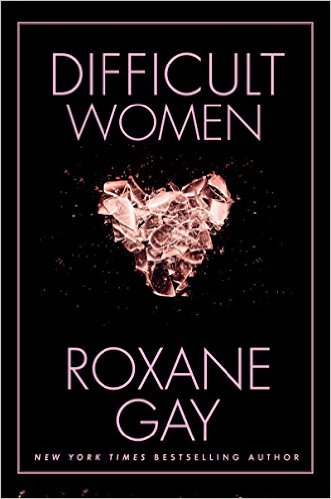
Book Review: Roxane Gay’s “Difficult Women”

By Jenny Hayes

difficult-womenRoxane Gay’s Difficult Women is a relentless and thrilling read. As in much of Gay’s other work, particularly her novel An Untamed State, there is no looking away from brutality, yet moments of grace, beauty, and humor serve as striking counterparts to the more unsettling passages.

In these twenty-one stories, women negotiate problematic relationships, search for love and comfort, and try to cope with pain.

Read more

An Open Letter to the Art Collector Who Paid $17.2 Million for a Kneeling Hitler Sculpture

By Sharon Goldberg

Dear Art Collector:

Congratulations! The art world is all abuzz over your winning bid for Maurizio Cattelan’s “Him” at Christie’s recent “Bound to Fail” sale, a record-breaking sum for work by the famous artist. I personally wouldn’t spend $17.2 million for a nearly life-sized, wax and polyester resin effigy of Adolph Hitler, but I can see how a dictator or two might add to your caché among those folks who like art that pushes conventional boundaries.

Read more

Book Review: Rich Ferguson’s “New Jersey Me”

By Jenny Hayesnew-jersey-me-cover

Rich Ferguson’s debut novel New Jersey Me is a coming-of-age tale set in an intriguingly dysfunctional ‘80s South Jersey town. The narrator, Mark, has a chaotic home life. His mother moved out of the house when he was fifteen, leaving him alone with his dad, a tough-talking, somewhat shady police chief, and the good things in his life are few and far between. He and his best friend Jimmy are even convinced they’re cursed by a “pet jinx” that causes all animals in their care to meet a premature demise. The two teens spend most of their time listening to music, getting wasted, and trying to have as good of a time as they can in Blackwater, a town Mark describes as “just strip malls, gun shops, radiation, and funeral homes.”

Read more

Slapping

BY BILL RATNER

I was nineteen, and it was a long time ago, and the only thing I really had to go on back then regarding courtship and intimacy was what my friends said was okay to do and how my parents had behaved long before that. The rumor was, my friend Terry and his girlfriend Caroline were slapping each other around in his dorm room at night, or at least Terry was slapping Caroline—as a thing—more than once. In my memory of it I’ve probably added the part where she slapped him back, because that way it would have at least been even. Caroline was beautiful. She wore backless gowns to the dorm parties and didn’t care how her hair looked. She and Terry were together all the time. I guess she loved him. Terry’s father was a preacher in a large southern town. Perhaps they were the slapping kind.

Read more

Dark Matters

By Craig Clevenger

Dark Matters image small

“You’re a smart kid. Figure it out.” — The Hitcher, 1986

Every ghost story is, at its core, about the struggle to be recognized; about the dead—invisible and immaterial—and their efforts to be received by the living, who in turn must do likewise among those not being haunted. Witness the typical second-act protest in a typical horror film: “I’m not crazy. I know what I saw. I was there.” For the living, to be similarly disregarded—to be treated like a ghost—can be worse than meeting one. I don’t write ghost stories, but I do write about characters who are both figuratively haunted and who have in some fashion themselves been rendered ghosts. People call my stories dark.

Read more

TCR talks with Bruce Bauman

Cover-Broken-SleepBy Heather Scott Partington

Bruce Bauman’s novel Broken Sleep is six hundred pages of madness. But it’s madness with intent. The author’s postmodern rock and roll saga takes on politics, art, and the idea of inheritance. Moses Teumer, a professor suffering from leukemia, goes looking for his real parents to find a bone marrow match. He discovers his mother, Salome Savant, was a young artist impregnated by a rumored Nazi; Salome was told after Moses’ birth that he was dead, while he was skirted away in a quick adoption. When Moses finds Salome, he also discovers he has a half-brother, Alchemy Savant, who is a star in the most famous band in the world, The Insatiables. But in a book where characters believe they can time-travel through their DNA, nothing is as simple as it seems.

Bauman, senior editor of the well-respected but recently defunct literary magazine Black Clock, is a professor for CalArts’ MFA and Critical Studies programs. His work in Broken Sleep is unlike anything I can remember reading. Its multi-layered plot, titles, character names, discography and puns operate on a level unlike most contemporary fiction. Bruce and I caught up recently by email after our panel at the LA Times Festival of Books (“Fiction: Finding a New Normal”).

Read more

Lenney on Lenney: TCR talks with Dinah Lenney

By PAM MUnter

Dinah2A graduate of Yale and the Bennington Writing Seminars, Dinah Lenney also trained at New York’s Neighborhood Playhouse School, home of the esteemed Sanford Meisner technique. Like writing, acting has taken her to myriad places—stage, screen and theater—allowing her to play a wide variety of roles.

Dinah has taught both acting and writing courses all over the country. She has also spoken at a TED conference at USC, a presentation integrating her interest in all the arts, “When Life Meets Art.” With Mary Lou Belli, she wrote Acting For Young Actors: The Ultimate Teen Guide.

And she has written two memoirs, the first (Bigger Than Life: A Murder, A Memoir) the story of her relationship with her father following his brutal murder. The second (The Object Parade: Essays) is a collection of autobiographical essays. More recently, she edited and contributed to a collection of flash essays, Brief Encounters: A Collection of Contemporary Nonfiction, with Judith Kitchen.

In between books, Dinah has written essays and reviews for literary journals, anthologies, and newspapers—both online and print. She is currently a Senior Editor for the Los Angeles Review of Books. She and her husband live in Los Angeles and have two grown children.

The Coachella Review: Let’s start at the top. Why did you start writing?

Dinah Lenney: I’ve been writing as long as I can remember—since I was a kid. I wrote to entertain myself and I wrote to let off steam—to figure things out—because if I didn’t write it down, whatever it was, I thought I’d burst. And that’s still why I write. I write, therefore I think, y’know? And not the other way around.

Read more