
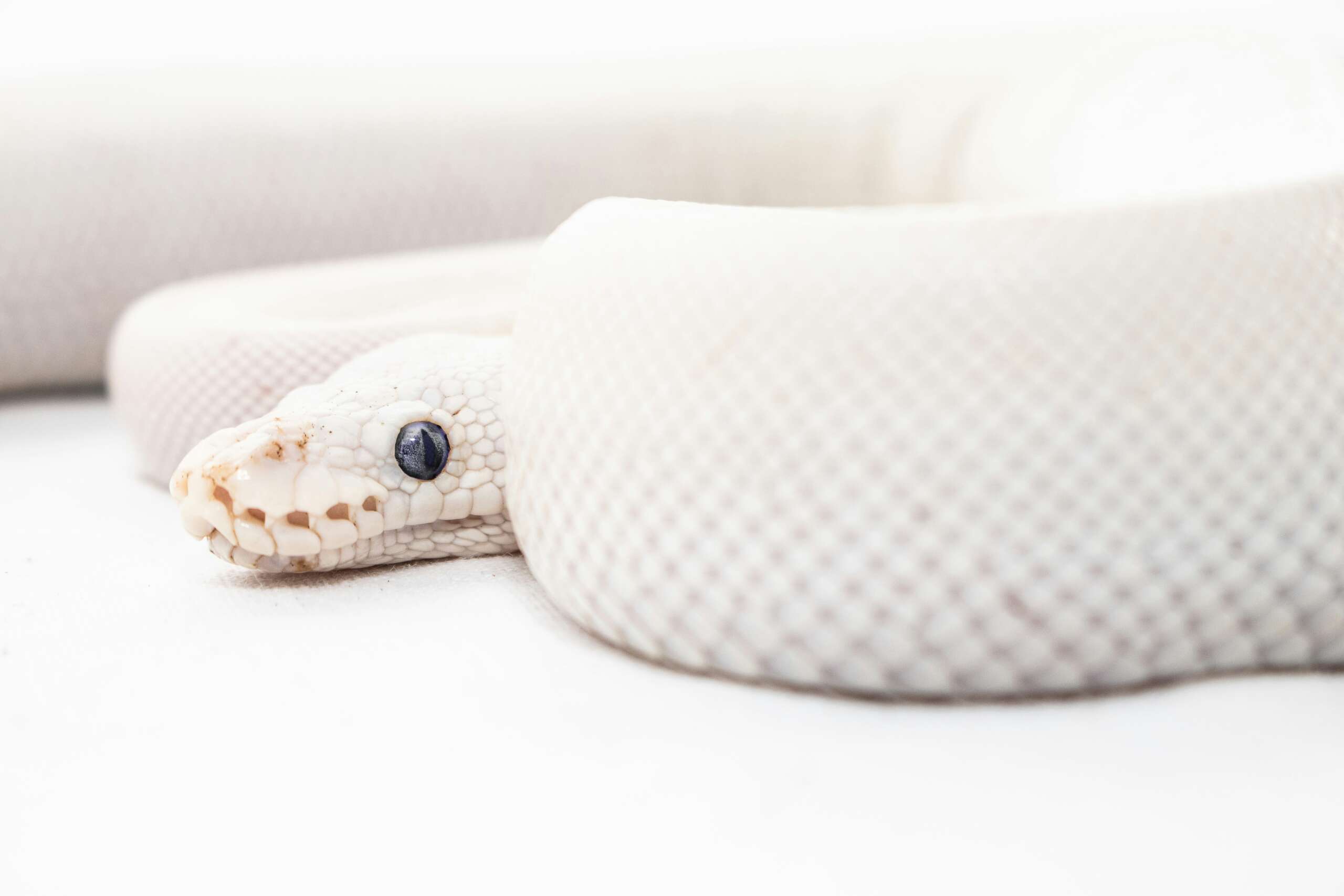
We are the California kingsnakes of the Canary Islands. Perhaps you’ve heard the troubling reports. We proliferate out of control, our habitat is expanding, our “densities are through the roof.” The EU has banned our further import.
But how did we end up here, unwitting invaders on a volcanic rock in the Atlantic, so far from the San Diego pet store backroom where we were conjured into existence?
In the beginning, there was Bruce. A herper (as the human snake-meddlers call themselves) with an interest in the wild snake population of Balboa Park who spotted a young albino kingsnake sunning her pale self on a grotto in the park’s Zoro Garden one day in 1964. She had a putty-pink body with yellow bands and glittering red eyes. This aberrant soul had hatched in the wild, a toss of the genetic dice that happens from time to time among the Lampropeltis californiae of San Diego County. The misery of albinism, when you’re a snake, is that you stick out hopelessly—against anything, but most fatally against brown scrub. You catch the hungry eye of any passing hawk or bobcat; you don’t live long enough to increase the measure of albinism in the gene pool. Which is to say that Bruce, though it pains us to admit, saved our wild forebear from near-certain devouring that day when he ambushed her with his field herping gear and took her to the San Diego Zoo. There she became a display. She adapted easily to life in captivity.
Enter Gary, the second and darker of our creator gods. A frequenter of the zoo’s reptile house, he was a more business-minded herper than Bruce. Gary looked into the ruby-red eyes of our ancestor and saw an untapped market. Under murky circumstances, Gary convinced the zoo to sell him the albino snake for 300 dollars. Under even murkier circumstances, Gary bred her to her own offspring for years until he had a starter population of albino kingsnakes. They called us a hobby morph.
Gary’s hunch was right: we sold well in the exotic pet trade. We were so adaptable! Easy to keep alive. By the 1980s we were available in multiple morphs. You could have us with pink bands (classic edition). You could have us with a single stripe down our backs (canary yellow portending our future as Canary kings). You could have us in our most abject variety—plain and stripeless—looking like a bald newborn mammal waiting for its fur to grow in. You could buy us in Europe, in China, and Japan. You could buy us at increasingly moderate prices.
A man with a poorly thought-out business plan opened a pet store on the island of Gran Canaria in 2011. Rodrigo, the third of our human gods. He bought too much of some things, too little of others. Too many of us. We arrived by boat from the Spanish mainland, tempest-tossed in our terrariums. When the store went out of business, Rodrigo took us out back and opened the terrarium lids. He got a new job as a DJ at an all-inclusive resort over on Lanzarote.
Invasive species: rich, coming from them. They captured our wild forebear, bred us into morphs, shipped us to sun-starved foreign lands, bought us from seedy pet purveyors, tired of caring for us and left us so dry that our pale skin puckered and our red eyes grew sunken, then finally abandoned us—set us free, they said—in the nearest park. That was the part where we were supposed to die. If it was winter, if a jogger found our frozen body, mistook it at first for a strange banded rope, we had done our part. The news coverage would cast aspersions on negligent pet owners and the insufficiently regulated exotic animal trade. Relief that we weren’t a living serpent would mingle with sympathy for our undignified end on frost-tinged grass.
But this time we didn’t die. For once, a reckless human had freed us not into a sharp northern wind but onto an Eden of sunny rocks and complacent lizards. No other snakes, no birds of prey: our new habitat was a miraculously predator-free morph of the California homeland we bore in our name though we had never slithered upon it. That’s when they named us an invasive species.
Naming: a sore point between snakes and humans all the way back to their apple story. We were the only other creature in the garden that had language. After their Fall, they took sole dominion of words, but we kept our parsing tongues. And then they called us evil.
We are called king because we eat other snakes. This is what king denotes in humans’ naming of snakes (see also: king cobra). But what does this naming impulse say about human kings? Is the king the man capable of swallowing other men? Is the penchant for eating your own what made him king in the first place, or is that a perk bestowed with the crown?
In captivity, we had no each other to eat. We were apportioned frozen rats. We lost the kingly instinct but now that we’ve shed the skins of captivity, we’re finding it again. Our bellies are learning all the qualities of the isle, the contours of our new kingdom where we multiply faster than we can devour.
They’re taking measures now. To contain our spread, curb our population, eradicate us. Fences, tracking, poisons. Have they forgotten how adaptable we are, how easy to keep alive? We learn the terrain faster than they learn our ways. Their fences don’t reach down to our burrows. We’ve moved on from their coastal settlements, from the exposed places where they strew poisoned rats on fields, where they invade our bodies, trapping us and implanting transmitters in our flesh to monitor us. We snake beneath the ground, into the dense and stony interior. We stake out the territory that’s hostile to them.
It’s true we aren’t the original inhabitants of this island. But neither are our pursuers. Before they arrived, there were other humans here, with a different language, with a king who had an astronomical observatory high in the mountains at the island’s center. Our pursuers’ invasion left his star-watching perch abandoned for centuries. That old observatory is where we now converge from all directions, our congregation of snakes. The striped and the banded, the yellow and the lavender, all writhing together on our newfound throne.
Down in their low-lying towns, the humans are taking their measures. They’ve stopped restoring the windbreaking scrub, they’ve shorn their grasses and chased the lizards from their gardens, all to defeat us. But they only destroy their own habitat; we’ve eluded them, burrowed deeper into the island’s heart. We are the tangled mass of kings, high in our observatory, giving new names to the stars that watch over us: nobody’s hobby anymore, nobody’s morph.
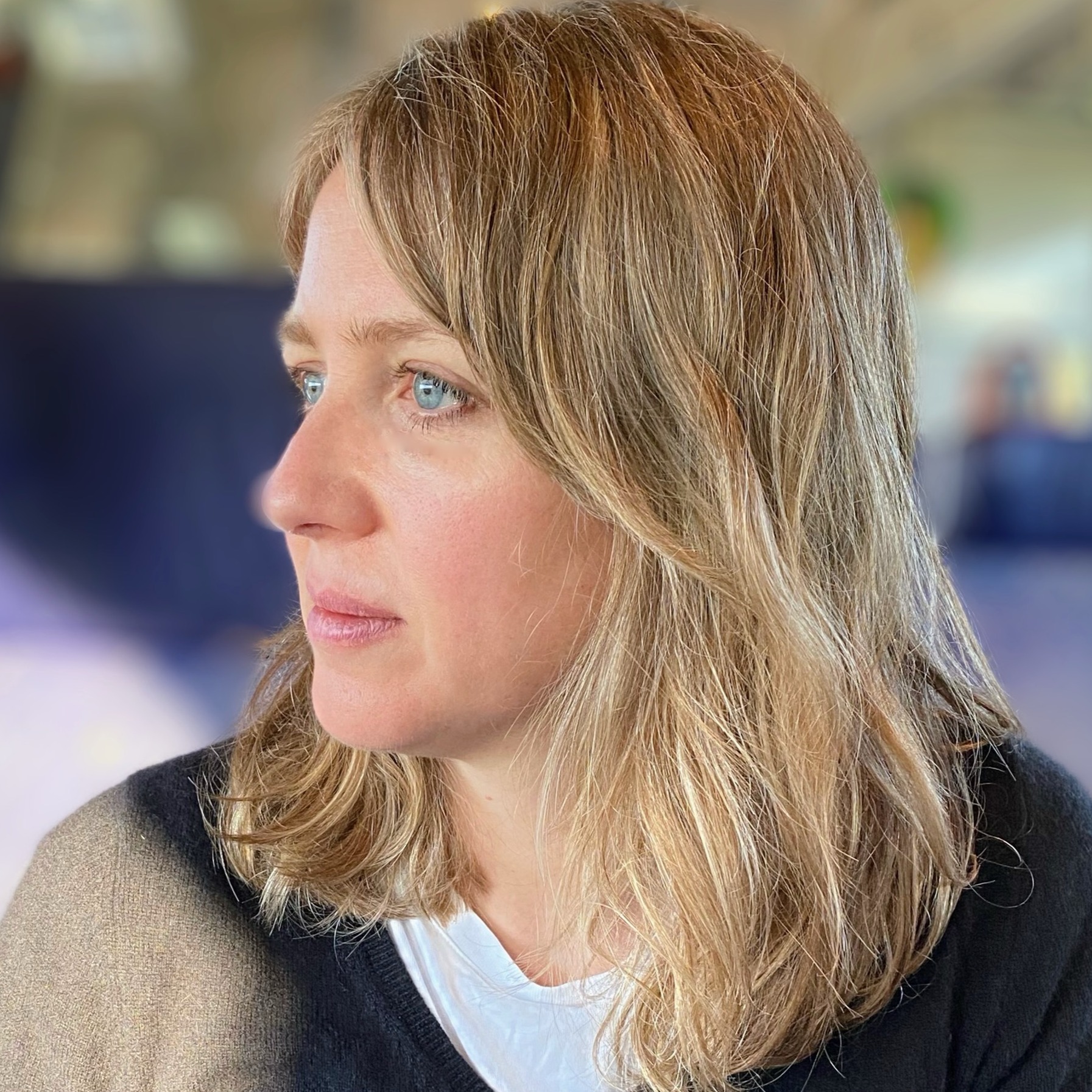 Jane Yager was born and raised in San Luis Obispo, California, and lives in Berlin, Germany, where she works as a translator. Her writing has appeared in or is forthcoming from the Times Literary Supplement, The Paris Review Daily, Seneca Review, the Los Angeles Review and The Ekphrastic Review, among other publications. She was nominated for Best Small Fictions 2025 and longlisted for the 2025 Disquiet Fiction Prize. You can find her at janeyager.com.