BY: A.M. Larks AND A.E. Santana
While many may think of comics as superhero-kid stuff, the comic book business is an immense global industry—reaching a huge and diverse audience. In 2017, North American sales totaled over $1 billion. Whether it’s a classic comic book or a graphic novel, the combination of words and images need to work in perfect harmony to tell a story.
What is the process of a harmonic collaboration between author and artist? TCR contributors A. E. Santana and A. M. Larks talk to both sides of this equation: creator and artist of “The Power Knights” and owner and founder of Kid Comics, Keithan Jones, and Amber Tillman, author and creator of Medicine Cabinet, about developing comics as either the artist or writer, and just how this harmony is achieved.
was rereleased this fall with a new introduction and afterword that speak to our contentious political climate. Ulin–critic, author, and ruminator in the best sense of the word–reframes his 2010 argument for the role of books in 2018’s dysfunction, fake news, and fractured narrative. Can reading save us? Ulin isn’t sure, but he sees value in resisting cynicism.
Dallas Woodburn’s debut collection of stories, Woman, Running Late, in a Dress, is characterized as interwoven stories, interlinked stories, and, in her own words, “a short story cycle.”
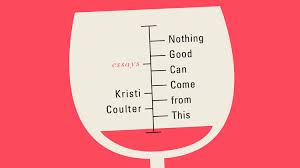
If there was a warning label on the cover of Kristi Coulter’s debut book of essays, Nothing Good Can Come from This, it might read, “This book will cause you to interrogate your life, habits, and doctrines and challenge any previous assessments made about your relationship with alcohol.” That is not to say Coulter’s essays presume to convince the reader of a closeted drinking problem; rather, her heart-rendering prose ladled with sardonic wit create a rumination on the mundane persistence of time, the dichotomy of who we are and who we pretend to be, and the nature of society and compromises required therein, which, if one is not careful, can accumulate into addiction. With a quick and often dark cadence, Coulter weaves her essays to create a remarkable story about the unremarkableness of her journey to sobriety, not in the feat itself, but in the banal scenarios that led to her drinking and decision to stop. There is no melodrama infused in the stories of her alcoholism or sobriety, no sensationalism about addiction, no wringing hands or desperate pleas to the gods. As Coulter explains, after years of massages, yoga, therapists, and other attempts to trick her into wanting to quit, she woke up one day and realized, “what I wanted was no longer important. I would just have to wait and hope that eventually I would want something else.”
Janet Scott Batchler is the author (with her husband and writing partner, Lee Batchler) of Smoke and Mirrors, Batman Forever, Pompeii, and My Name Is Modesty. Most recently, they have written Jack and Dick, a behind-the-scenes look at the 1960 Kennedy-Nixon election, set to go before the cameras in 2019 with Hyde Park Entertainment. She is a graduate of the prestigious Directing Workshop for Women at the American Film Institute and served on the Board of Directors of the Alliance of Women Directors from 2004 to 2010. Batchler is currently a screenwriting professor at the University of Southern California’s School of Cinematic Arts.