“Slouching Towards Los Angeles: Living and Writing by Joan Didion’s Light is a collection of twenty-five essays, edited by Steffie Nelson, exploring the myriad ways in which Joan Didion has influenced and shaped contemporary writers.”
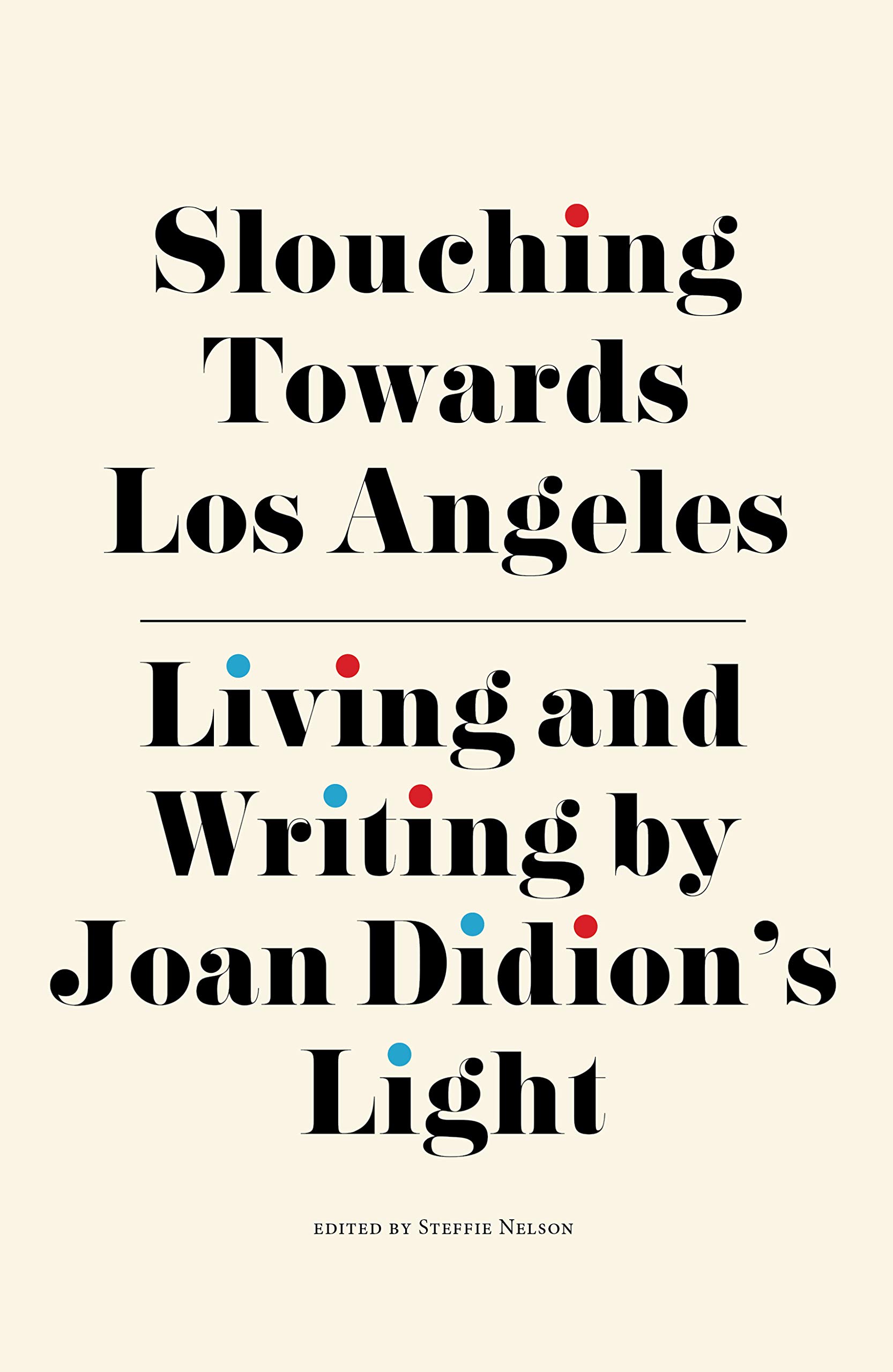

“Slouching Towards Los Angeles: Living and Writing by Joan Didion’s Light is a collection of twenty-five essays, edited by Steffie Nelson, exploring the myriad ways in which Joan Didion has influenced and shaped contemporary writers.”

by Ioannis Argiris The opening of Parakeet by Marie-Helene Bertino starts off as a wild dream state for Luna, a young bride-to-be. Her dead grandmother manifests as a parakeet in a hallucinogenic vision and urges Luna to reconcile with her brother before her wedding day. We meet Luna at a dilapidated hotel on Long Island, trying on her wedding dress,…

Rachel DeWoskin is a five-time novelist and memoirist. Two Menus is her debut poetry collection which, despite being billed as poetry, does not escape a certain delicious fictionness, like here: “The night Des tore her hair out, it was literal. / White sheets beneath her lit the hospital,”

Today in America 2020, it is four months until the next presidential election and nothing is certain except our ever-growing regret that we did not elect the most qualified person for the job when we had the chance.

Lacy Crawford’s memoir Notes on a Silencing speaks to the ways gender, privilege, and power silenced Crawford twenty-five years ago. When Crawford was fifteen years old, she was lured to a boys’ dormitory one night, pulled from beneath the night shadows, and sexually assaulted.

“Imagine you are swimming in the ocean. Something brushes against your leg while you are treading water. It is most likely a piece of seaweed, but your heart stops because you know it’s a shark and suddenly the shore seems impossibly far away.”

On the one hand, Stephanie Danler lives in the “Writer House” of our dreams: a small cottage hidden away in Laurel Canyon, with a yard for dinner parties and a mythic history that may or may not involve Fleetwood Mac.

Don’t Read the Comments is Eric Smith’s fifth young adult novel. Smith heavily integrates popular culture into his fiction, and this novel is no exception. The protagonist, Divya Sharma, is an eighteen-year old celebrity gamer known as “D1V” who supports herself and her mother through corporate sponsorships,

Only a few hours after Jennifer Spiegel is diagnosed with breast cancer, she is immediately on the page, sorting her thoughts and emotions through writing. “At this point, I have no clue what stage it is, if I’m going to die, if I’ll have one or both breasts cut off, or if nothing will be removed at all. I will tell you this: I instantly feel that my body is the enemy.” The result is a candid and compelling debut memoir by novelist Jennifer Spiegel, Cancer, I’ll Give You One Year: A Non-Informative Guide To Breast Cancer, A Writer’s Memoir In Almost Real Time.
 Spiegel’s memoir in “almost real time” reminds me of a story I once heard about a man suffering from Alzheimer’s. The man was due to give a presentation to a large gathering of people and had only recently been diagnosed. Right as he walked on stage, he forgot why he was there and what he was presenting. Looking out to a silent crowd, and not knowing what to do, he started to name out loud the emotions he was feeling. Frustrated, confused, frightened, alone. It was a method his psychiatrist had recommended that could help him to calm down when he had a memory lapse and began to feel anxious. Standing on that stage, it helped. He started to relax and remembered why he was there. After the event, many of the audience members approached him and told him that was the most powerful part of his presentation. Spiegel’s memoir has a similarly powerful effect.

When we first meet Maggie Downs in her debut memoir Braver Than You Think: Around the World on the Trip of My (Mother’s) Lifetime, her mental state is immediately established from the image of her shuffling through the Cairo airport in flip flops, her sweatshirt hood pulled over her head, and her body hovering between sleeping and waking because, “Sorrow does that.” Incidentally, travel can do that too, and Downs’s memoir tells a story of both.
Ten years ago, Maggie Downs quit her newspaper job and set off on a yearlong trip around the world. As she traveled from Peru to Bolivia to Uganda to Thailand, her mother’s mind and body were succumbing to Alzheimer’s disease back in the US. The trip is initiated when Downs, underwhelmed and disengaged with her job and life, decides that she must live because her mother can’t; because her mother gave up dreams of seeing the world to tend to her parental and familial duties. Downs asks herself: “By confining myself to this cubicle, wasn’t I making the same mistake my mother made?” In this state of suspension between doubt about her future and certainty of her mother’s, she found the reasons to travel: “to see what I was made of, to discover how strong I could really be, to live out the dreams of my mother.”