
By C.E. McKenna
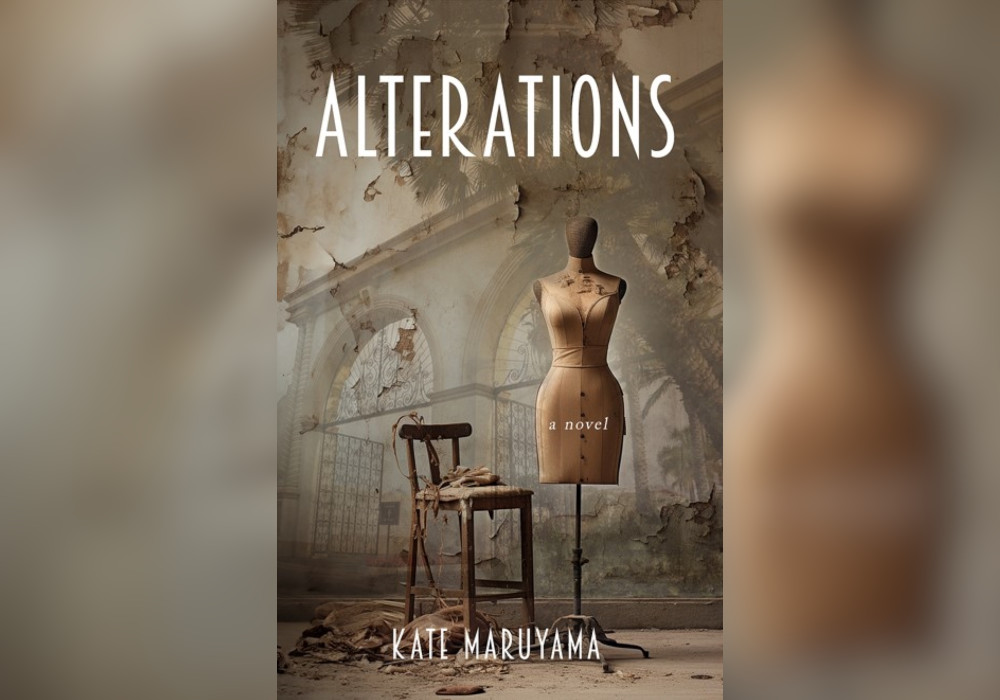
Los Angeles writer Kate Maruyama has been widely published in the horror genre, including a supernatural piece TCR recommended for a Pushcart Prize. But her most recent book, Alterations, is more appropriately shelved next to intergenerational dramas like Min Jin Lee’s Pachinko or Jung Chang’s Wild Swans. It follows three women in the Morello family—Adriana, Lizzie, and Laura—as they navigate the world in the wake of Lizzie’s parents’ death. The story dances across the twentieth century, with particular focus on Adriana’s early life in 1930s Hollywood, where she works as a costume designer at Paramount Studios under the legendary Edith Head. While there, Adriana falls in love with a character actress, Rose, and when Hollywood society begins to suspect that the two might be in a lesbian relationship, Adriana makes a decision that will ricochet across generations. Alterations is a story comprised of stories, where black-and-white movies and colorful Japanese manga become lenses through which characters understand their own lives, and where grief—no matter how old—can affect modern love.
Kate graciously sat down with The Coachella Review to chat about the book, her writing process, and her love of Hollywood’s Golden Age.
The Coachella Review: Alterations weaves together the perspectives of three women who are all related. One from the late 1930s in Hollywood, and then two from 1998 when a personal tragedy brings the women together in Baltimore. Could you tell me a little bit about the inspiration for this book and how it came into being?
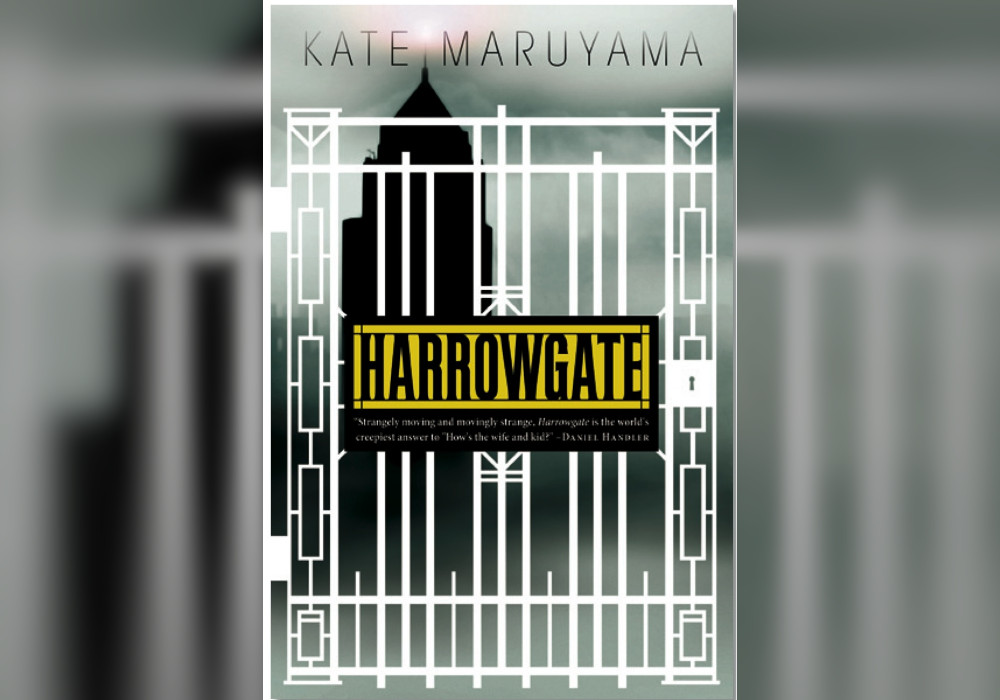
Kate Maruyama: I was noodling around for a new novel. My novel Harrowgate had already been accepted for publication, and I wanted to start something new. I ended up going for long walks, and I started with a little thread of Laura, the present-day character. I was with my friend Toni Ann Johnson, who’s a writer—we exchange all our work—in her breakfast nook, and she said, “Why aren’t you writing about movies? You love movies.” I’ve loved them my whole life. And that led to a short story that I hadn’t quite figured out that was set at a Blockbuster [Video rental store] about a kid bringing home movies and sharing them with his grandma, and I couldn’t figure out what the story was there. Both of those got kind of mashed together, Laura and Lizzie’s.
At that time, I was getting a little crabby with only the male stories being told. Extremely Loud and Incredibly Close had just come out, and I was like, All right, we’re done with that little boy. I can definitely get into a kid who’s a girl, you know? I started writing from there, and I started doing research, and Rose and Adriana just happened. I had gotten as far as their meet-cute, but they were just going to be friends. Then I read the incredibly sad story of Cary Grant and Randolph Scott, who were partners for a good seven years. Basically, I think Randy was out of the closet, and Cary was just maintaining and kind of ignoring the studio who found him a wife. Randy went on that honeymoon. They all three lived together. They were ignoring social mores, and it’s a really interesting position to be in, in that if you were just pleasantly polite and didn’t bring it up, it would be fine to live with your same-sex partner. But then the world starts coming in.
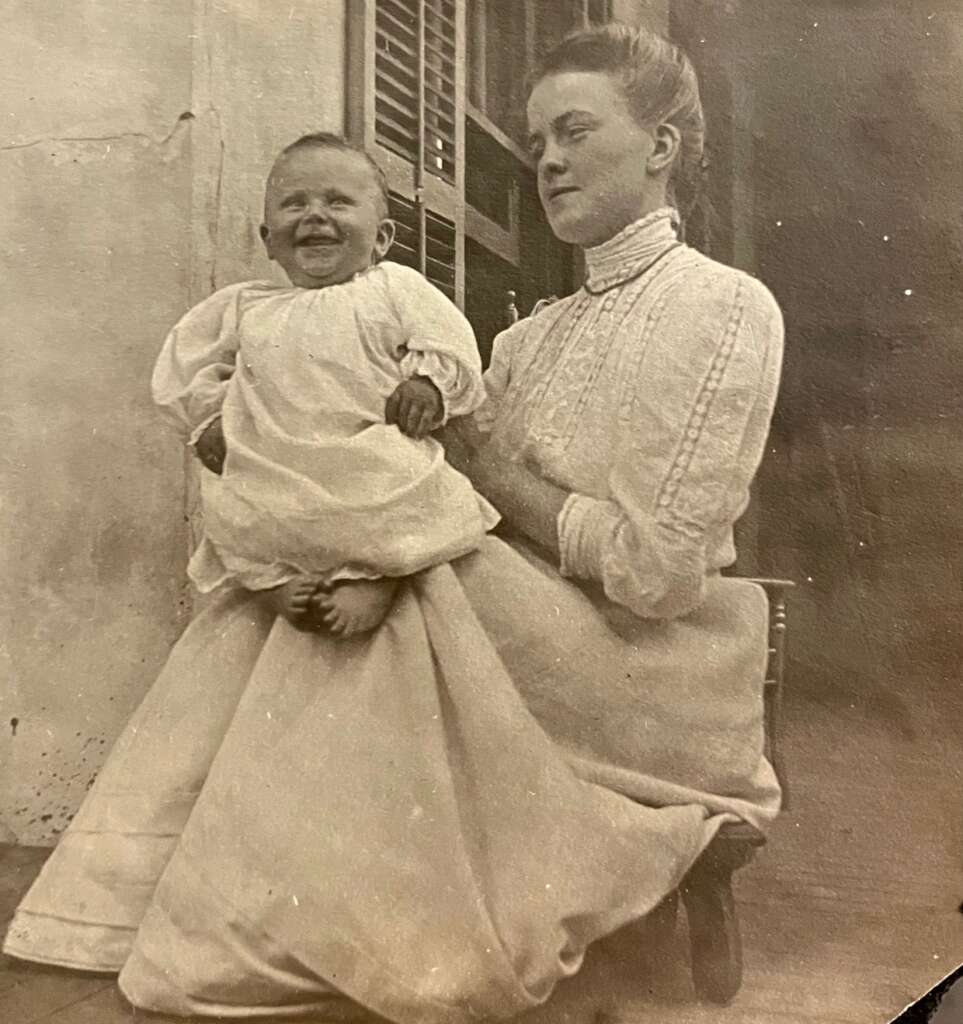
Another inspiration was my mom’s great-aunt [Ruth Rich], who in 1915 was living with the love of her life, Mary, in a Boston marriage. They lived together happily until Mary passed in the 1950s. This was in the South—Jacksonville, Florida—in a family that was incredibly homophobic… but people were like, “Oh, they’re just two spinsters together,” and that was a beautiful thing. I was studying what it feels like when you have to choose between your profession and living with the love of your life.
With Cary and Randy, after seven years, the story goes, they were shooting a movie, and both of them emerged from the same bedroom in the morning. Everybody was there, so even though people knew, for some reason it becoming public made the studio put extra pressure on Cary to make him choose. Other people say they naturally grew apart for other reasons. Whatever the reason, it was very sad that society was not going to allow that to exist any longer.
TCR: I was so impressed by the love stories that you wove into these pages, and I liked what you just said about choosing between love and career, which obviously Cary Grant had to do. But that’s something that we see women having to do quite a lot, even in the modern day. And there is a piece of this book that feels so oriented towards the different ways women love and the different ways women grieve. Did those come into your mind while you were plotting it out, or did that come up naturally?
KM: I’m more of what—I know people say “pantser.” I hate that word, especially because I’m from Connecticut, and in Connecticut you would say pyants. “Gardener” is what George R. R. Martin calls it. So, once I started pursuing each of these characters, it was more just listening to them and what’s going on. I definitely was asking questions about what it was like, especially around Edith Head and Barbara Stanwyck, because those are two extraordinary women who managed to forge careers that were really unheard of at the time. I was more asking questions about what it was like to be a woman at that time, how they succeeded in their careers, but also what the risks were.
Stanwyck was the first female star to be given incredible contracts by a studio that would allow her to loan out for movies she wanted to do at other studios. Back in those days, the studios just owned you, and they could put you in anything. And in her career, aside from her very early career, she always played incredibly strong women. Her characters were either fast-talking, quipping women or women going through something a little more nuanced than what was being portrayed at the time.
Basically, both she and Edith Head—if they hung out with women too much—were rumored to have had “hen parties,” which was the word for lesbians hanging out. And that was damaging to their careers. Head divorced a man and very quickly remarried because how she appeared to the studio really mattered. At Paramount, Head was an assistant to the head of the costume department, who was a terrible alcoholic. She was constantly covering for him. She would show up at his house, force-feed him coffee, and drive his ass to work because she knew if he didn’t have a job, she would not have a job. So, she ended up doing his entire job as well as hers, and she would costume an entire picture, which was unusual for costumers at the time. A costume designer would usually only design the women’s clothes. She made sure everybody in the picture had a costume, she worked around the clock, she was relentless.
Paramount realized she was already doing the job when they fired that guy [the department head]. And they fired him because he wanted more money, which was kind of funny because he was doing not much of a job. [The studio] ended up being able to pay her for that position a quarter of what he had been making—I got it wrong in the book, which is rather embarrassing. I said it was half.
I was looking at women dealing with this difficult area of work and then maintaining a personal life. As far as grief goes, I think it’s hard to know what to talk about without a spoiler, but I think I just sort of followed my main characters down that path. I’m glad that it resonated.
TCR: One of the things I admired so much about this book is that it was so compelling, but it also felt true the whole time. The multiple points of view felt [imitates drum fill] seamless.
KM: Thank you very much. I will take any and all puns around sewing.
TCR: I’m interested in the writing process of that. You said that you followed the characters, but in the woven narrative, you actually have Lizzie’s first-person point of view and Laura and Adriana’s third-person points of view. When did you realize that this was Lizzie’s story?
KM: It was a terrible, terrible process, and very difficult, and took many years. It was a bit of a hot mess. What happened is that once I realized what the story was going to be, and the three different points of view, I forged forward. At 35 pages, I was like, This will be the most brilliant book ever. And then everything just fell to pieces. I had no idea where to go.
After that, I decided to focus on Adriana’s story and tell it all the way through. Every once in a while, I would chip away at Laura and chip away at Lizzie, but I didn’t quite know what Lizzie’s climax would be because I had to get to know her better. Every time I would dig in there a little deeper. And then when I got to the end of Adriana’s story, I realized it was—spoiler alert—a romantic tragedy. I had a meet-cute with Laura and Bart, and I was like, All right, that story will be a romantic comedy.
The idea of Lizzie telling the story must have been going on with me subconsciously, but it was only when my agent said, “Why is Lizzie telling this story now?” that I was like, “Ohhhhhhhh.” I was able to then go mad doctor on the book and completely take it to pieces, index card it, see what I needed more of to balance things out, [and] what I needed less of. I probably cut 100 pages and added 60.
So the [reason] it feels tight is because of endless, endless, endless editing. Composing gives me the screaming meemies. Some people really get in there and charge forward, and they really love the drafting process. I find it terrifying, but I just keep plugging away at it until it’s there. But one thing that I do enjoy is the editing. And I think I got there because I used to work in screenplays, and when you edit a screenplay, it’s much simpler because it’s smaller, and it’s sparer. I learned that if you tinker with just the weight of a scene—if you tinker with dialogue—you can create a rhythm. Looking at each scene as a story really helped me with editing, and then also being able to shuffle those scenes, which I learned while I was assistant editor on the worst horror movie ever made. The director had shot himself into a corner, the dialogue was terrible, the scenes were flat. But the editor would rearrange them so that a very dead scene, if moved after a tense one, would be imbued with a little bit more meaning. So that is how I arrange the scenes to flow. I learned that, yes, you do need a little bit of ebb and flow with drama. And you need breathers for your reader. So, to answer your question, a lot of it was editing. For a very long time. It took three years to compose the book… and then it took a solid year to get a workable draft, and then another year to get one that was really good enough to go on submission.
TCR: Speaking of film—I counted 32 movie titles in this book.
KM: Oh, wow!
TCR: And it’s a list of classics from the twentieth century that runs the gamut, from Bringing Up Baby to Texas Chainsaw Massacre to Jane Eyre. Even Mrs. Doubtfire is in there. And then you have real-life movie stars and real-life costumers who grace the pages. Did that take a lot of research, or is that just something that you had inside you?
KM: There were a few things I had to look up to make sure I was remembering them correctly, but I was raised on a university campus, Wesleyan University, and my father, Joe Reed, founded the film department there with John Fraser in the 1970s. He taught a lot of film classes, and in those days, they only had projectors, so when he got a film for class, he would bring it home and screen it. We had a screen and a little 16mm projector. So, before VHS, I grew up watching movies all the time. We also went to every single thing that came out in our small town. I grew up completely steeped in movies, and if the family really enjoyed them, we might watch them two or three times before we sent them back. I believe The Court Jester came in with Danny Kaye, and I watched that twelve times in one week. It was so good.
TCR: I love Danny Kaye!
KM: It’s a very funny movie. I did a little research sometimes for the year because I couldn’t remember. I had to make sure the movie had come out. I [went] back and rewatched the Barbara Stanwyck movies, but that was also a lot of fun. It really helped with getting her voice. She had a really specific way of speaking that comes across all of her work.
TCR: There’s also a big multicultural element to this book. Lizzie has both Italian and Japanese heritage. Did that come out of your life, as well?
KM: I’m married to a guy who’s Japanese; I have hapa kids. Lizzie came to me as hapa, and maybe it’s just natural because I’m the only white girl in my house. It helped in going back to the 1990s, thinking about her going to Baltimore, probably because it is such a segregated city—or was in the ’90s. I was thinking of her probably going to an all-white school and how that would feel coming from a city. It gave me another chance to make her feel a little bit isolated at first. And it’s nice that she found a friend who’s mixed, because it is a really singular thing. It just felt natural.
I live in such a culturally mixed life that it’s very strange to me that Laura and Adriana have such a white existence. On the other hand, when I moved to LA in the ’90s, and I was working in jobs very much like Laura’s, I could count on one hand people in the industry who were not white, because it was incredibly monochromatic. I could imagine Laura moving to Baltimore and only seeing white people because of how she’d been raised. Adriana moved there in the late ’40s, and I imagine she lived a very segregated life, as well. But it’s always a balance, right? You want to create a world that’s realistic, but you also want to create a world that’s realistic to the characters of the time period.
TCR: And the very beginning of Adriana’s story deals with what the Italian immigrant experience was in the early twentieth century on the East Coast. There was a lot of racism towards Italians.
KM: I absolutely appropriated my husband’s grandmother. Adriana’s young story was informed deeply by my husband’s Italian grandmother and stories that she knew from the time.
TCR: I thought it was really admirable how you chose lenses for your characters. Laura sees the world through a romanticized view of old Hollywood, Lizzie sees things through manga, and Adriana seemed much more straightforward in her approach to things, which I felt was influenced by the way that she grew up. She learned early on that life wasn’t full of happy endings. These made the characters feel so full and distinct. How did you decide on those lenses?
KM: Laura [was] easy, because I had her problems. I would date someone and transpose a 1940s movie star on them, and sometimes it meant I would date them longer than I should have. I was trying to create someone for her to romanticize for Bart, and fortunately Hard Boiled came up as a very easy thing. When I was working in Hollywood, I saw two people who took my breath away. I was working for Sylvester Stallone at the time, and I was a little jaded around movie stars. But I was walking on Beverly Drive when I was working at William Morris, and I saw Billy Wilder in the flesh, and I stopped, and my jaw dropped because I was such a huge fan of his movies.
The other was when I was picking my boss up at the Peninsula Hotel, and Chow Yun-Fat stepped out in front of my car. He’s way taller and way more charismatic than even the movies get across, and my jaw went down [again]. I was so mortified, because you’re supposed to act cool when you work in Hollywood, but I definitely lost my cool. He was an easy one to pick for Laura to obsess over.
And then Lizzie—I just wanted to dig into her. Lizzie loses both her parents in the beginning, and trying to make sense of that with a thirteen-year-old brain was easier for me by going through her art. I have a strong sense of being thirteen and remembering that time, but I wanted her to have an interest that wasn’t mine and a way of processing that wasn’t mine. So, instead of writing, drawing felt like a good way in.
TCR: I noticed that there was a parallel between Lizzie and Barbara Stanwyck’s life. Stanwyck was also orphaned at a really young age. Were there other parallels you brought in?
KM: I didn’t even think about that. I recently picked up the biography of Barbara Stanwyck that I had read when I was writing this book, and I was like, “Oh!” I just needed Lizzie living alone with someone who was too old to take care of her, and that was the only way I could think of making that happen without getting too into drama with the parents. It was helpful to start with three points of view because when I had to get Adriana from 1950-something through to present day, everything that had happened to her affected her children and affected her grandkids. That tightened the story up.
TCR: I also noticed Stanwyck had a son who stopped speaking to her when she was older, which also ties into some of the things that happen in Alterations.
KM: Oh, that’s interesting! Yeah, he did. When books go to market, I like to do public readings of them because it feels like I’m putting good energy out there for them. I did a reading of a scene with Stanwyck and Adriana, where I imply that Stanwick could have been gay. And at the end of that, a woman steps up to me, and she says, “Robert Taylor, who was Stanwyck’s husband, is my grandfather.” All of the blood rushed out of my head, and I nearly fucking fainted, because I was like, Oh my god, what have I done? And she said, “You know what? If she was gay, that would explain a lot. He is such a bitter old man.”
TCR: Oh, wow!
KM: Yeah, that was a trip. That’s the risk you [take when] writing in Hollywood while living in LA.
TCR: Or writing about real people. But I thought touch-stoning on real people gave this book such a tie to reality. It made all of the characters and the story feel so real.
KM: I like things that dip into real historical figures and move through historical dramas, which in movies is always the way. Like including Franz Liszt, the composer, in Phantom of the Opera. It gives it a little bit of gravitas. What’s funny, though, is that did make me hope that it doesn’t come back to bite me. That is a risk with historical characters. In my horror novel, Charlie Chaplin gets it on with a demon, and Chaplin has a lot of survivors. But I guess I can’t be [held] liable, because there’s no such thing as demons, or so we hope.
TCR: It definitely came through the pages, how much you love movies. And you imbue two of the characters with a love for those movies at the moment that the book starts, and then another one learns to love those movies as the book progresses. I appreciated that a lot. There is a character in these pages, Rose, who is a character actress. Is she based on anyone real? Because there is a scene where she makes an appearance in Robin Hood, a real-life movie.
KM: I wrote this story a while ago— the publication story is a long one. But I did go find a redhead in a movie. I did open up Robin Hood and go to that scene and found a specific woman, and I was like, That’s Rose every time through. She’s not really based on someone specific, but I did think a lot about the Goldwyn girls and all of the character actors. The larger story with Rose, too, is how Hollywood doesn’t take care of people, even if they have a steady job all the way through.
I lived in Beachwood Canyon, and there were some aging stars there, and there’d be people you recognize and who were doing fine but were very much living on memories and were no longer getting jobs. I worked at the Hamburger Hamlet on Doheny where there was a fellow who came in who was an animator; he had done the credits for the Partridge Family. He would come in once a week and get a plain burger and a refillable cup of coffee and sit there the entire afternoon, and I felt so deeply sorry for him because he got [phased out] by computer animation. It makes me sad. A lot of that stuff went into my horror novel, The Collective, which is about Hollywood and demons and things.
TCR: Since you just touched on your background as a horror writer, can you talk about if there were any lessons that you took from writing horror that you brought into this drama and somewhat romantic comedy book?
KM: I had no idea I was a horror writer in my first novel. I thought of it just as a love story— a novel of realism. But it wasn’t really, because it’s a man whose wife and kid are dead but still living with him, and there’s a demon who’s a doula. When it sold as a horror novel, I was actually really grateful. It opened up a really awesome community. I find horror people really lovely to hang out with, really supportive of each other. And I dove into that genre. But Alterations called to me first. I don’t really know what I’m writing, and I definitely learn from each novel things about structure and things about character. When I re-read Alterations before it was published, I had learned a few things about verbs. I had to go back through and fix that stuff. But each genre I write in definitely instructs the other. And maybe because horror needs rising tension, I might have gotten a bit more ability with that, having written Harrowgate, my first novel. I think all books speak to each other, but I enjoy writing in different genres, for sure.
TCR: Around the end of the book, Laura says, “Old ladies weren’t just old ladies. Nonna had entire worlds in her past.” There’s this idea that there are so many stories that speak to one another and influence one another. I loved that lesson from this book, and I wondered if you had brought that into the book, or whether the book taught that to you.
KM: I have had amazing older people in my life. And talk about appropriating grandmothers—my husband’s were both phenomenal. Mine was a bit of a monster. He has one grandmother who has been totally underestimated all the time, because she was getting older, had a fluttery voice, was a tiny lady with gray hair, but she painted the outside of her house until she was 85. She was up on the roof doing roofing, she was just tough as nails, and also had amazing stories from her childhood, and from her mom’s stories. So, it was a nice way to speak to ageism, which really irritates me. It drives me nuts when I see clerks condescend to incredibly old people just because they’ve lived through wars, you know. They’ve raised children, they’ve lost people in their life, there’s so much going on there.
I think some of this comes from my mom. She was a reporter in a man’s world in the 1950s. When she got married, she went back to work, and they said, “What are you doing here?” She said, “Coming to work,” and they said, “Well, what about your husband? Are you taking care of him?” She said, “I’m paying his tuition. Yes, I’m taking care of him.”
When she got pregnant, there was just no question. She said she ended up with a baby, and she had been fired. I always thought about people who had had prior professional lives, and then once they had children, were sort of pushed out of them. I definitely wanted to speak to that. I’m hoping that, if nothing else, people who read the book maybe will be a little kinder to the old people in their lives and understand that [the older people] may have had lives that they don’t even talk about anymore.
TCR: You talked a little earlier about the publication story of this book, and how it took a little longer than normal.
KM: Yes, it did. I finished this book in 2013. I had a big New York agent, and he went out with it. And we were very interested in the responses because when I went out with Harrowgate, they were like, “Eh, I don’t quite get the bad guy.” Usually, you’d do a mid-submission rewrite. With Alterations, my agent said he couldn’t understand because the passes were all over the place. And some of them were just calling out random stuff. What he and I realized is that they basically couldn’t figure out what shelf to put it on because it’s not strictly an LGBTQI story. It’s also not strictly a straight story. So mainstream publishing could not figure it out. And there were, I think,16 passes.
I actually had given up on the book. At that point, I was really sad because I loved it so much, and I felt like there were so many layers there. But [friend and fellow writer]Toni wouldn’t let me give up. She was like, “I love Adriana.” This was around 2016. She said, “I’m sorry, this book is going to sell, and I picture us at your book launch with me interviewing you.” And she kept harassing me, so I started submitting it to small presses on my own in 2020, and then finally it did sell. And we did it! She did interview me at my book launch at Chevalier Books. It was just a really beautiful moment because it took a very, very long time.
I think the lesson there is, if you believe in the book itself, it will find a home. And also, even though we’re going into drastically, horribly conservative times, culture has caught up with the fact that if you have a family, someone’s gonna be gay. People have caught up on the idea that there’s diversity—that there are more than just straight, cishet people out there. So, I think that people are more comfortable with the idea of a family having these different stories going on, and it’s not that this is a terrible secret. It’s just something that the family did not know or understand.
TCR: It’s really heartening to hear that such a good book got so many rejections.
KM: I’m very open about rejections. Harrowgate, I think, got turned down 18 times before I got picked up.
TCR: That’s amazing. Sometimes you read a book and think, How did this get published? And then other times, you read a book that is just so good, you imagine that the first editor who read it just snatched it up immediately.
KM: Oh, you know what’s funny? An editor at Random House adored Harrowgate: held it to his chest, ran down the hall, everything you’ve envisioned. I had a conversation with him, and it was absolutely great. And it turns out they got to marketing, and marketing said, “This is a book about a man by a woman. Who is this book for?” Nobody asks guys that, right? Nobody’s like, You’ve written from the point of view of a woman, who is this book for? But it was so funny: I was moderating a panel of all bearded men who wrote horror at the LA Times Festival of Books, and I told this story, and they audibly gasped! Because they just don’t live in that world.
TCR: What’s your favorite Barbara Stanwyck film?
KM: Oh, gosh, I go back and forth because I really love large portions of Meet John Doe, but it does get endless in the end. She is the snappy reporter in it, which resonates with me. I also enjoyed Lady Eve, and Mr. Smith Goes to Washington is a really good one. I can’t pick one. I’ve always been such a big fan of hers, I think that’s why I wanted to hang out with her for a while in fiction.
It’s interesting—the rom-coms of the ’30s and ’40s are so much better than the ones of the ’80s, when I was at a rom-com age, because the women are fucking stronger. I mean, they couldn’t hold the job, but there was more respect, and the women were meant to be smart, and they weren’t put down, and there was not this ditzy, klutzy dame. I mean, there was a screwball dame in Bringing Up Baby. But, if you ever want to have faith in something again, it’s nice to go back there.
TCR: You’re right. I hadn’t thought about this, but even where the women were the butt of the jokes… I think of Margaret Dumont in the Marx Brothers films a lot. She’s still really strong in those characters; they are self-possessed and powerful.
KM: And the women in the ’80s movies give themselves up for the guy and actually change themselves… I mean, think about Grease, you know?
TCR: Oh, god, yeah. Grease 2 is a better movie than Grease, and I will fight everyone on that.
KM: Oh my gosh, she gives up everything about herself for this meh dude. It’s terrible! I would date one of those ’40s guys over what we were being given in the ’80s, for sure.
 C.E. McKenna is a writer, historian, and software engineer from Colorado. Her work has been published in the anthology On Fire and Under Water, The Offing, Cagibi, Lumina, Quarte