
You are dying.
You have known you are dying for some time now.
You have known, really, since before the test you took at the free clinic came back positive. Even the times before, when it came back negative, somehow you knew it would get you eventually. The dramatic irony was just too much to resist.
This was always going to be a tragedy.
You’ve known you are dying for some time now, but now you’re really starting to feel it. You feel what it means to be really dying, more than the general sense that everyone is going to die. Now, you feel it imminently. Intimately.
They don’t let people like you be happy.
You have been to more funerals than birthday parties this year, as if the point really needed to be driven home. You’ve spent years raging and painting and grieving. Grieving your friends. Grieving their ambitions. Grieving the art that should have existed, the art that now will never exist.
You hate yourself for the times you rolled your eyes at your friend’s performance art shows, his heavy-handed dramatics, the paint smeared on his naked body and the strange, high-pitched chanting.
When you look at his pine-box coffin in the only shitty cemetery that will take his body, you wish you could drag his corpse from the dirt and beg his forgiveness. You want to grasp his skeletal shoulders and tell him that you now understand what he was trying to say: that the act of creation was itself the endeavor, and that this was all that matters, and you finally understand, but he is dead now and you are a thousand miles away and you will soon be dead yourself, and so it doesn’t matter anymore.
You hate yourself for having nothing to say at the time. You hate yourself for being unable to say it now.
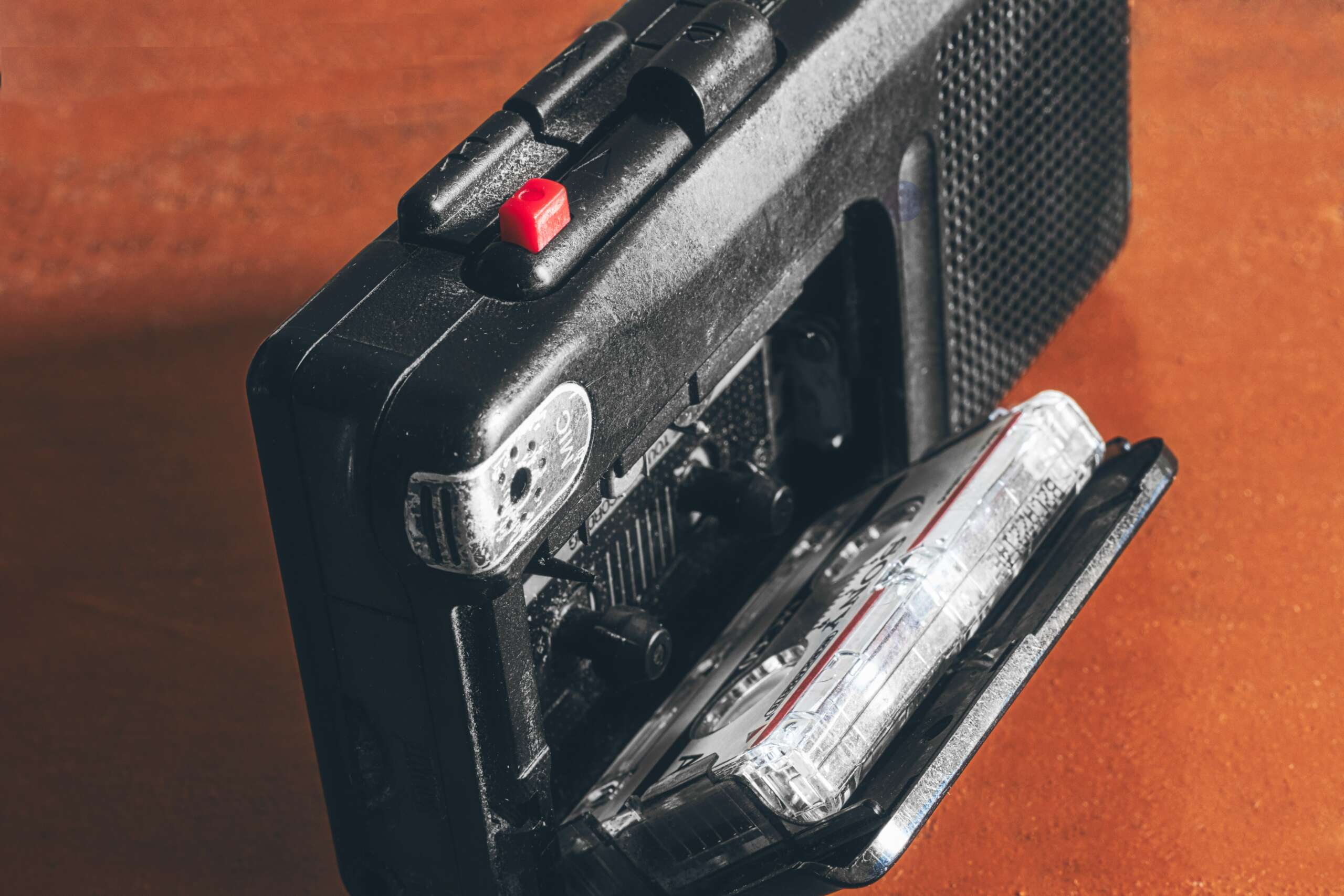
You say all of this into a tape recorder, everything you have to say that doesn’t matter anymore because your friends are dead, and you are dying, and there’s nothing you can do to stop it.
You tell your friend Jasmine that you’re sorry for blowing off her thirtieth birthday party because you were coming down from an unknown cocktail of drugs and booze from the night before. You tell her that you didn’t know it meant that much to her until three months later when she told you about her friendless youth in Arizona and her deep-seated fear that she would never escape that lonely existence. That when she died of this fucking disease, you had yet to have the chance to make it up to her, and that you couldn’t even go to the funeral because you were on the ward again.
You tell the girl at the corner store that you know she saw you steal that bag of chips when you were seventeen and you were down and out and you were starving, but that she never said anything but gave you a small sympathetic nod, and how you wanted to thank her every time you saw her, but you didn’t know how.
You tell your best friend that you hope she knows why you left the city the way you did, how you hope she forgives you for running away. You tell her how you couldn’t become another reluctant slot penciled in on people’s planners: a shift sitting at the hospital, a funeral that overlaps with a meeting you can’t afford to miss this time. A graceful, understated exit, you decided. You ask her if she’s mad at you, you ask if she could ever forgive you for not ever saying goodbye.
You tell her that you love her.
You tell all of this to the tape recorder, and when they run out, you put them in a cardboard box in the closet of your childhood bedroom. You fill tapes the way you once filled sketchbooks and notepads. Unrelentingly. Obsessively. Like it was tied to your ability to breathe. You filled hundreds of them before the tremors started, before the virus targeted your brain or your nerve endings and rendered your hands increasingly useless.
They were small at first, the tremors. When it started, you just needed to steady one hand with the other to draw a delicate line across a canvas. This, you could live with. You could adapt. Then, the shaking deepened, your clumsy hands smudging delicate features of your portraits.
The first time you woke to find that you could no longer grip a pencil at all, you smashed three canvasses to ruins and grasped for a fourth when your sister found you and gripped your shaking arms and begged you to stop. You screamed and wanted to set them all ablaze, to throw everything you’ve ever made on the flames. Every tube of paint, every jar of turpentine, every single book that you ever filled. You scream at your sister to let you go, to let you build a bonfire and destroy it all, to throw yourself on the pyre with it and leave the earth with nothing to remember you by but the ashes of your rage.
Tears fall from your sister’s eyes and she doesn’t let you go until you collapse to the ground in a heap together, and you finally still when she tells you in a thick voice how you’re breaking her heart, and you can’t tell her you’re sorry.
The tape recorder is a pale comparison. Your words have never been as coherent as your painting. But it is something.
Tonight, you leave it at home, but when your oldest friend picks you up in the evening, you ask him to take you to buy more blank cassettes.
He jokes about you making a demo, and how you’re a bad enough singer you might have made it as a punk.
He takes you to Walmart and he watches you walk among the living, always just close enough that he can intervene if you were to fall against the linoleum floor. It might have been sweet, but you find it patronizing. The ugly fluorescent light makes your skin look luminous, otherworldly.
You rush in and out quickly, heart thumping. You have never been agoraphobic before, but more and more you find the press of crowds overwhelming, crowds of people triggering the sharp aluminum taste on the back of your tongue.
He is behind you, a case of Coors Banquet under his arm. It’s your favorite dive-bar beer. You remember telling him a million years ago, how it was the one taste of home you occasionally indulge.
You have made him promise not to treat you like a patient tonight. No fussing, no tip-toeing around your health, your limitations. He knows you can read his face, anyway, that his lips are pulled too tight to be as carefree as he is pretending to be. You can tell he is struggling not to scold you for smoking, for rolling down your window and letting in the cold. It is against his nature not to intrude.
Underneath his coat, he is wearing the Denver Broncos sweatshirt he’s had since you were in high school. He used to roll it up in his backpack and throw it on when you had class in the portable classrooms. It was one of the only items of clothing he had with him when he came to play house with you in New York. He used to layer the sweatshirt over his pajamas on the freezing nights, and you would lay under every blanket you owned and shiver through the night in each other’s arms.
You’ll wonder if the hole you patched on the sleeve is still mended with your inconsistent stitches, or if he has had them redone with a defter hand. You’ll wonder if there is still a paint stain on the sleeve from where you stole it and took it to the studio one evening because it was in an old warehouse with no heat. You’ll wonder if he wore it on purpose, if it reminds him, too, of that brief episode of your lives, or if to him it’s just a sweatshirt.
You make a mental note to ask this question to the tape recorder when you return home tonight.
He drives your dad’s old Ford pickup to Garden of the Gods, and you crank the window all the way down and configure your body like you used to when you were a kid, so that your head rests against the windowsill and you can stare straight up at the stars. The ancient rock formations are silhouettes against the clear navy sky, the mountains are dark spires at your back.
With each turn that he takes, you lock your eyes with a star off in the distance and for a split second you and the star are the only still beings in the universe as everything spins around you.
You are all that is right with the world. You are the only things that make sense.
He drives you to an alcove overlooking the rock formation dubbed the Kissing Camels. You remember this place as a lover’s lane when you were a teenager. It was too populated, then, for you to be seen there together, but it must have lost favor over the years. There’s only one other car, the windows fogged inside with smoke.
He pulls into the spot furthest away and keeps the truck running so the radio still plays. A song that was popular when you were in high school plays on the classic rock station. You feel a thousand years old. You feel sixteen. He sings along in the quiet, embarrassed way he does when he knows someone is listening to him.
When he thinks he’s alone, he has a ringing baritone, and you remember to tell the tape recorder that you heard him singing from the hall when he was doing dishes at the apartment all those years ago, and you sat in the stairwell for an extra five minutes just to listen, knowing he would stop if he heard your footsteps on the stairs.
You pull a joint out of a battered box of cigarettes and you light it while he gives you a look of judgment he’s never been able to hide.
It’s medicinal, you tell him.
He asks about all the times you did it before now.
Same medicine, different pain, you say. It sounds melodramatic, even coming out of your mouth. He rolls down his own window and watches the road behind you nervously. You’ve had this fight so many times. You’ve won, ultimately. It’s not the drugs that will get you.
You watch as the door to the other car opens and three teenage girls spill out, falling over each other as one of them doubles over with hacks and coughs. The other two girls are laughing themselves to tears, and the coughing girl finally joins them, too, uncontrollable laughter punctuated by a wheezing cough. Two boys in the front shout at them to get back in the car before they get caught, but the girls are still stuck in their fit of laughter, gripping one another’s shoulders and using the base of their palms to dry the tears from their eyes.
Your friend is laughing, too. You find yourself smiling.
Were we ever that young?
A set of headlights come over the ridge and you barely register them before he has backed the car up and set off down the road again. The cold air whips around you, and you savor the last remaining centimeter of your joint before stamping it out in the center console.
When the windows go up, the music seems to be sucked back into the car with you. A Beatles song, one of the sentimental ones that now reminds you of a funeral dirge, played at too many memorials, sung by too many choirs. Like the smell of flowers, it is something pleasant that leaves you feeling uneasy, intertwined with the death that surrounds you now.
You change the channel and land on some unoffensive corporate pop song on the Top 40 station.
You ask him to take you somewhere else, that you don’t want to go home yet. He tells you not to worry, and you don’t. You never worry when you’re with him, but you’ve never told him this.
He drives you to the lake.
Lake has always been too strong of a word for it. It’s really a reservoir, man-made, lined with concrete and manually stocked with fish. It has always been a popular spot to swarm during the dry Colorado summer. Landlocked people setting up towels and umbrellas on the dirt to make believe they’re touching the sea.
Empty now, the streetlights reflect gentle ripples in the dark water.
Half-joking, you ask him why all of his spots are cruising spots.
He laughs and hides it with a swipe of his hand over his beard. He’s always done this, when he finds something funny that he’s not supposed to. Like an amused teacher, not wanting to encourage a rowdy class.
You’re aware of his eyes on the back of your head. You feel, very suddenly, like a dog being fed a hamburger on his last day before being put down. People are just collecting their memories of you now, storing them for later, hoping for something profound to keep with them after you’re dead.
You are dying.
As you sit there, your immune system is cannibalizing itself. Your chronology is slipping. You are no longer trudging endlessly forward.
Your days are the last few frames on a camera roll about to run out. You feel as if someone has already spread out all the photographs documenting your life and shuffled them together. When you are dead, they will never be put in order again.
There is an end in your sight, and now all that you are is the past.
You are twenty-nine.
You are sixteen.
You will never be thirty.
You sit on the imitation shore beside the boy who loves you.
He has just turned thirty.
He is sixteen.
He has years and months and days and hours and seconds beyond thirty, and for a split second you wish you could steal them from him. You are afraid of the part of you that would take days and weeks away from the boy who loves you to give yourself more time, but it’s there. You know he would give them to you if he only could. You feel the same swell of rage you feel at every elderly person you pass on the street.
Why you? The voice wants you to scream at them. Why you and why not me?
You wish to become the monster they think you are, to scream, to spill your own blood in the middle of the street and make them look at it, make them look at the source of their fear and their disgust. You want to be their vengeful God, you want to bring a river of blood to their doors and make them witness, to punish them the way they feel you are being punished.
The boy who loves you drapes a pilled fleece blanket over your shoulders and hands you a Coors and sits next to you with his knees pulled to his chest and you share no words. The few streaks of silver on his temple are set alight by the dim phosphorus lights, only visible because of the stark contrast with his dark hair.
He stares straight ahead and he tries to speak. He tries to begin, but you cut him off. You tell him no. You tell him not to say what you know he wants to, to spare you from the words threatening to spill out of him.
I know. I know. I know. I know. You repeat the words. You have always known. He tries to speak over you, he tries to tell you to stop, to let him say what he needs to say, Goddamnit. No. You won’t let him. You are going to be selfish, you have decided. Why should your death be about anybody else but you? Let them all live with their regrets; you’ll die with yours.
You yell at him to shut up, and he stares at you, wounded. He tries to speak again and you stand up, letting the blanket fall from your shoulders and letting the beer spill on the dirt beside you. You start towards the water, shoving off his hands when he tries to grip your shoulder, your hand. When your feet hit the water, he shouts at you to stop. When it reaches your knees, he starts to beg.
Stop it stop it stop it stop it STOP IT.
STOP
IT
You can’t. Or you won’t. The icy water needles at your skin, your clothes hang heavy as iron, willing you down. He frets by the shore as you wade deeper and deeper and deeper, not stopping until the water laps at your chest. You reach up and push your stringy hair out of your face and let the water drip down your head and face and you give only a passing thought to the threat of bacteria or pneumonia creeping at the decimated defenses of your T cells.
You are dying and you will hear no comfort.
You are dying and your government killed you.
You are dying and you will not listen to anyone’s eulogy.
A scream comes from somewhere deep within you, something primal and visceral. You don’t hold back, you just scream, louder than you ever have, louder than you must have as a baby. So what if he thinks you’re crazy? So what if the cops come? So what?
Let them see, let them hear. Let them all be unable to look away from your extinction burst.
Let them watch you become a supernova and take their whole world with you.
You run out of breath at the same moment he reaches you and envelops you in him, coming up from behind and crossing his arms over your soaked clothes. The heathered grey of his sweatshirt darkens with the water and you can see the wonky mended hole on the arm and the flecks of white paint on the left sleeve.
Your throat is raw and jagged and you cannot muster up enough energy to continue screaming. You relent and let him usher you to shore and put you in the truck and cover you with all of the blankets. He fumbles with the keys and cranks on the heat as high as it will go.
He will put his head on the steering wheel and his back will convulse with quiet sobs.
You will fiddle with the knob of the radio until you hear a Beach Boys song.
Wouldn’t it be nice if we were older?
Yeah, you’ll think. It would be nice, wouldn’t it?
He will drive you home and you will send him off and go to your childhood bedroom and speak to him through the tape recorder and tell him you have always loved him.
You are dying.
You will live forever.
 Harrison Pettis is an American writer currently based in Wales, where he is completing a Master’s degree in Creative Writing at Aberystwyth University. Originally from Colorado Springs, Colorado, Pettis comes from a military family and has also spent time living in California, Ohio, Virginia, England, Germany, and New York City. Pettis’ experience doing everything from manning the front desk of a veterinary clinic, working at a call center for a law firm, and baking at a pie shop give his writing a unique and darkly funny perspective. He is currently working on his first novel.