
Jane Fonda says addicts don’t get married to people who pay attention, but I don’t think Mike and I were addicts. Anyway, not that I noticed right away. Sure, he’d be drinking pepper vodka by noon on Tuesday, and there was nothing I didn’t owe. Were we self-deluded? We had our strategies of denial and avoidance, like everyone else. I couldn’t walk into a bookstore without dropping fifty to a hundred bucks I didn’t have on stuff I’d never read, and I went to bookstores every day. We’d walk past the St. Mark’s Bookshop or Shakespeare and Company on Lower Broadway and Mike would look at me and make the gesture of slapping his arm for a vein, tying off his bicep with his free hand and his teeth, and then flicking an invisible syringe. We both laughed. Books: my wimpy addiction. I’d go into the store and buy six or seven and stuff them furtively in my knapsack, like stash you buy on the street. Mike would jab me with his finger and say, “Overdose on Gertrude Stein. You go for the hard stuff.”
I was fifty thousand dollars in debt. Grad school loans, the IRS, American Express. Debt had ruined most of my friendships, but Mike was gone before he figured out that I was basically a liar and a thief. I didn’t guess he was an alcoholic until after we split up. Duh, he went to bars five nights a week, and I had spent the first month of our relationship pretending I could keep up. I drank a lot of beer, which I don’t like. Bitter, watery, and pale. I just described myself. Most nights, we went to The Bar. That was its name. For nearly thirty years, it was the city’s neo-realist gay bar, unadorned, unashamed, a big square plain room with a plywood floor, a jukebox, a pool table, and picture windows that looked out onto East 4th Street and 2nd Avenue and weren’t blacked-out like the windows in all the other gay bars in Manhattan, or anywhere. You’d look inside, there’d be the pool table and Mike crouched over it, lining up a shot, and behind him, for a few months, me, gripping a beer bottle and trying to look like a regular guy in a bar that was packed with Ivy League art fags posing as firefighters from Staten Island in blue jeans and T-shirts and work boots. Not that firefighters don’t wear penny loafers. I mean, even in a neo-realist bar, there were plenty of posers, including maybe Mike. My friend Dave called him a “garage mechanic manqué.” I thought he was authentic, though not in the sense of natural or genuine. “Acting on his own authority.” He did what he liked, and then he died.
Mike and I had our ways of ignoring each other, and also our opportunities for communion. I don’t mean sex. Mike didn’t think of sex as communion. He was not religious about penetration or touch, unlike me: the only time I feel like I might have a soul is when somebody touches my penis. Not just somebody, but in particular Mike, whom I gladly would have held through any transformation. Though of course I didn’t. He shook me off, like a horsefly, and then he came back years later and died, not in my arms. Now you know the story.
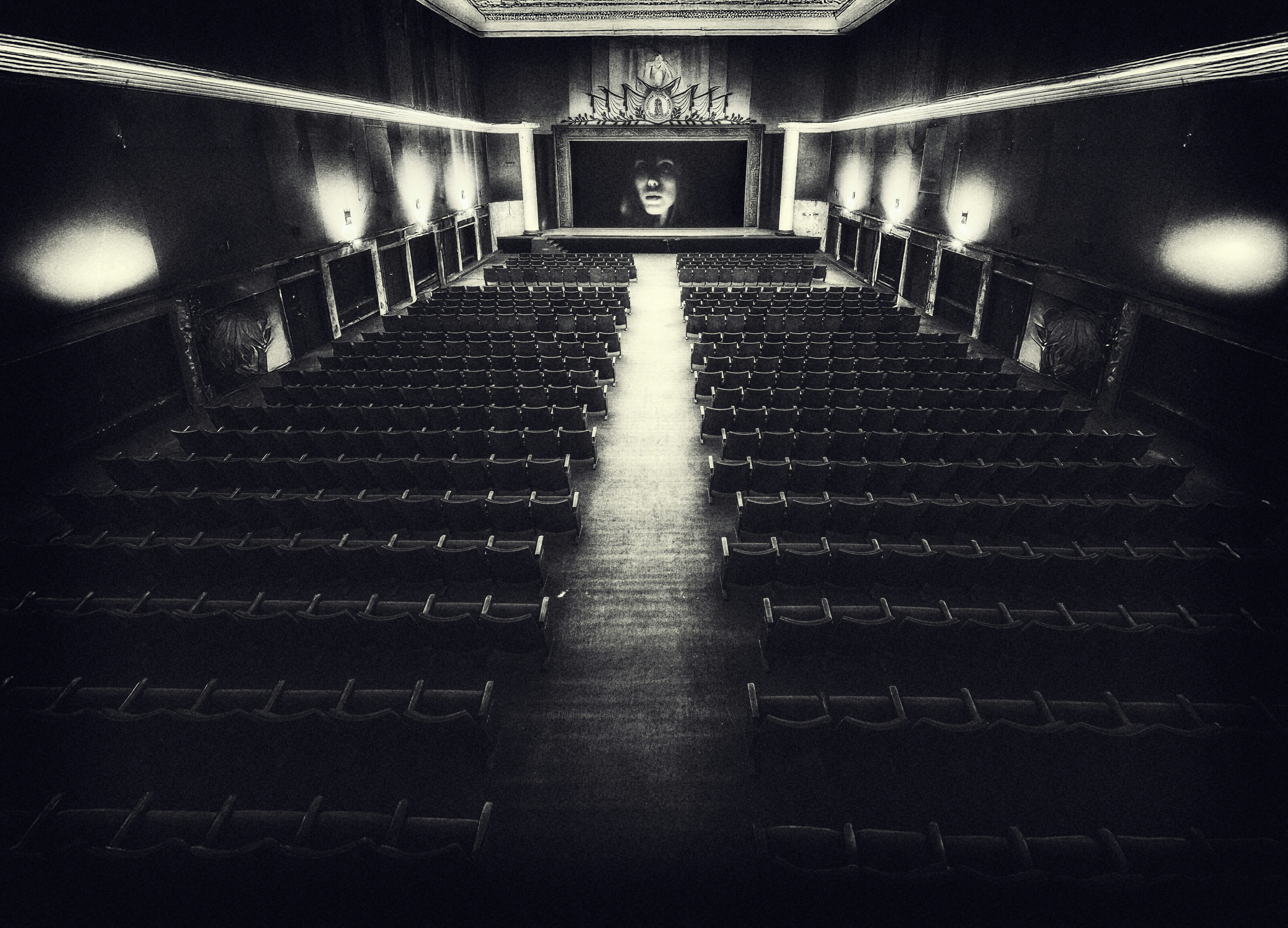
He was religious only about appearances. Everything in his life was on the outside. When he wanted to feel like he was inside of something, or that there was somewhere inside to be, he stuck his dick in a stranger, or went to the movies. We both went. All that first and only summer of our romance we went to three and sometimes four movies a day, in movie theaters and revival houses from BAM in Brooklyn—impossible to find, though all trains go there: its paradox—to the Museum of the Moving Image in Queens, and all over Manhattan: the Film Forum, a.k.a. the Jean-Luc Godard Channel, my second home; the Anthology Film Archives, barnlike, cavernous, and cold; MOMA, with its cranky octogenarians; the Walter Reade, where the seats are comfy and enveloping as Barcaloungers.
We stalked out of the Thalia and never went back because Mike swore their print of Roma città aperta was a video. We sat with radical queers at queer film festivals at the Waverly, which was famous for being in a song in Hair. No longer the Waverly, but the IFC Center, filled with married gays and straight kids in jazz hats—trilbies—watching films about sad, pretty white people from Austin, Texas. At the Japan Society, we sat behind Susan Sontag for a screening of Akira Kurosawa’s No Regrets for Our Youth. I can’t tell you what the film’s about, because I spent the whole time wondering, “What does Susan think about this shot? What does Susan think about that shot?”
We sat in folding metal chairs at the Wonder Bar on East Sixth Street on Monday nights to watch Jane Fonda having an orgasm, or faking an orgasm, or faking the having or faking of orgasms in Barbarella, and Klute, and Coming Home. We hit dragfest showings of ‘70s musicals at the Chelsea multiplex on Thursday nights. At the Pioneer behind the Two Boots pizza parlor on Avenue A, we saw Cannibal Holocaust, introduced by Thurston Moore.
We got as close to the screen as we could, not actually lying on the floor like Godard and Jacques Rivette and François Truffaut at the Ciné-Club du Quartier Latin in 1947, but sprawled across the two middle seats of the first row, scrunched low with our legs stretched out and our necks resting against the top of our seat backs so that we got calluses at the pressure point where the spine meets the skull. We were both out of work. I got fired from my temp job, and Mike had fallen into one of those gulleys that open up between freelance film gigs. We were not good with free time. Life adds up a day, a day, but movies reorganize time and give it back to you as a tool instead of a disaster. In the real world, I evaporated in time and space. Mike showed me how to contain myself at the movies. He was an engineer, a technician, and a photographer, and he taught me to find the light source in each frame, and to figure out where the camera was and watch it move.
Before I started going to movies with Mike, I watched actors. Marlon Brando as he stumbles up the Jersey dock in an act of heroism that is meant to excuse Elia Kazan’s being a stoolie for HUAC. Marilyn Monroe temporarily released from the yearning, angry gaze of needy men, pressed against the moonlit wall and saying, “Help.” James Dean muttering one minute and bellowing the next. I liked too much emotion and too little—preferably both at once. Montgomery Clift pulling a bandage off his nose and trying not to show the pain, then burying his head in Marilyn’s lap. There’s a pair of neurotics, Marilyn and Monty, the two of them not even forty when they shot The Misfits but already drugged up and ready to die, scarred by sex and mocked by John Huston, who called Monty a fag and aimed his camera straight at Marilyn’s butt. “Marilyn is an ass,” he seemed to be saying.
She was also a Gemini, the twin. Imagine her in bed with JFK, both Geminis. That would have been like having four people in the room trying to calm down long enough to have sex. They must have been happy to get it over with and lie spent and naked in the hotel sheets comparing drug habits and lamenting their bodies. Famous people still had real bodies in the 1960s. They had body fat and pubic hair and pimples, and surely it was a relief for Jack and Norma Jean to lie spread-ass all over each other feeling how mortal they were, picking hair from their teeth and swallowing barbiturates gulped down from the same gin glass. They put their hands on each other’s genitals and said, “Hail to the Chief,” and “Abandon hope, all who enter here.” She said, “Jackie’s a French whore,” and he said, “Somebody needs to toss Artie Miller a beating.” Then they laughed and farted and burped and did imitations until they passed out: Daryl Zanuck, Eleanor Roosevelt, Nikita Khrushchev, Dean Rusk, Truman Capote, James Baldwin, whom Kennedy called “Martin Luther Queen.”
That’s what I thought about at the movies, before Mike. I liked to find the gap between the actor and the role, the sudden lapse where the performer lost track of the pose, and you could imagine Marilyn wondering whether she had left her cigarette burning in the ashtray in her dressing room. Or why her famous playwright husband hated her so much that he had given her dialogue like, “If there could be a child in the world who could be brave from the beginning.” Clearly, Miller wrote the The Misfits to punish his wife. In 1960, it was the most expensive black-and-white film ever made, four million dollars’ worth of Marilyn spouting bad poetry in front of Thelma Ritter and a bunch of horny white guys with tell-tale names: Clark Gable is Gay. Eli Wallach is Guido, pronounced “Ghee-doh.” They fight over Marilyn, but the only man who gets his head in her lap is Clift, who plays Perce. Purse! He’s dressed like a leather queen in boots and chaps, and obsessed with his mom. After a big steer dumps him, he cuddles with Marilyn without wanting to mount her or marry her or stash her—Gay’s and Guido’s fantasies—alone in a cabin in the woods for his exclusive if intermittent use.
What I expected from movies was gossip and trauma, landscape, and faces, all of which The Misfits has in abundance. Mike stopped me. “Where’s the light coming from?” he asked. In the actual world, I had no boundaries. My personality drifted into my surroundings, and I turned into you, or him, or her, or them, or it. But in a movie theater with Mike, I was thrown against the flat screen, like a car going into a wall, and I came to in the collision. “Stop watching Marilyn,” Mike would hiss in my ear, “and watch the light, instead.” He caught me. I had been wondering if Marilyn cared that Gable was old enough to be her dad. That’s what “Hollywood” means: the daughter discovers sex and ends up with Daddy. Male stars in the ‘50s and ‘60s were aging and infirm and, like JFK, in need of a little girl with a whispery voice to make them seem potent again. Poor Audrey Hepburn was every dying daddy’s darling. Humphrey Bogart was fifty-five and Hepburn twenty-five when she fell for him in Sabrina. Bogart was two years from death. Gary Cooper was fifty-six and Hepburn twenty-eight when they made Love in the Afternoon. He was dead in four years. Fred Astaire was fifty-eight and Hepburn twenty-eight for Funny Face. It was the last year he danced in a film.
In 1960, the summer they shot The Misfits, Clark Gable was fifty-nine and Monroe was thirty-four. He died the following year. She died too, but not before Miller divorced her to marry the film’s on-set still photographer because he couldn’t take the blame for Marilyn’s failures. It was painful and wrenching how Marilyn never seemed to think she would be able to do it: act, speak, move, dance, sing, care, live. Watching Marilyn was an act of co-dependence. She got you to enable her performance, and it was your job to will her through the role, which of course she did brilliantly without you. She had learned sense memory from Lee Strasberg in order to go inside and haul it all out: the trauma inflicted on her by bad moms and abusive dads and studio heads who forced her to give head and outfielders who beat her up and abortionists and drug dealers and Kennedy brothers and media handlers and kitchen sink realists. I based my personality on Marilyn Monroe’s performance in The Misfits. When I was eight. “Trauma isn’t intimacy,” a shrink told me once, which I knew but couldn’t grasp. What helped was Mike saying, “Find where they put the camera.”
I was broke and addicted to trauma. My preferred forms of self-sabotage: books I couldn’t afford and Mike’s unavailable body. His swagger. He was an object in the world, outside of me. He would grant access but remain aloof, like a cat. You could have him and yearn to have him at the same time. He drank too much, not to get sloppy, but to keep himself upright. He was a tightrope walker steadying himself, not with a balancing pole, but vodka bottles. I never stopped wanting and/or loving him, even after more than a decade had passed, ten years since our—I don’t know what to call it. Affair? Does that sound British? Our brief encounter?
It lasted ten months. I hesitate to say “relationship,” though that’s what I said at the time. “My favorite dead ex-boyfriend.” There were a few of them. Dead exes. Dead or dead to me. Mike is the one who still matters. Why? Setting aside co-dependence, tragedy and loss; and the particular moment of madness in America, the AIDS epidemic, backdrop to our drama, though it’s not what killed him, or how I expect to die—aside from all that: I loved him for sentimental reasons. Did Nat King Cole record that? My inner life is a song.
He’s in the bathroom in his loft in Williamsburg in 1992. His loft’s in a red brick factory building in a neighborhood of abandoned industrial buildings. Not a renovated loft, a factory floor divided into raw units. Walls that don’t reach the ceiling. Cement underfoot. Williamsburg before developers. He’s soaking in a tub he got from a salvage yard upstate. The bathroom’s on a raised platform separated from the kitchen by gold curtains. The tub and toilet face a bank of wired glass factory windows that look west and give the skyline of Manhattan distorted access to your body as you bathe or shave or piss or shit. Mike’s bathroom is an “I dare you” to anyone who needs it. Show Manhattan your ass.
He’s taking a bubble bath, scrubbing his back and belly with a long-handled scrub brush in the shape of a giraffe. His hair is the color of black licorice swirls. His great hands. Not fingers, antennae. His fingers are the sentient fibrous protrusions that snake from the domed brow of an android in a novel by Philip K. Dick. He knows you through his fingertips, penetrates whatever he touches. His long narrow body. Does he have hips? He’s vain about his small feet. His legs are bent, scarred knees showing above the soapy water (bicycle accidents on suburban Boston streets when he was nine). The dark skin of a Sicilian, Arab ancestry in his DNA. His mocking grin. His contentment, really. Because for a moment he has stopped thinking.
He had been violated by men as a child. Like a lot of gay men, he was sentimental about boyhood, because he hadn’t had one. He liked boys—not kids, he was not a pedophile. Boyish men. He mistook me for a boy. His sexual preference was innocence, which I could not provide. If this were Mike’s film of my life, in the style of Andrei Tarkovsky, whom he idolized, there would be rainwater falling indoors, white horses, white men with heroic noses and ruined hair, their faces smeared with oil and dirt, lost objects spread across a chipped tile floor that water flows across, industrial waste in a forest resplendent with weeds, existentialist monologues, diffident women, and a camera that moves so slowly that you hardly notice how far it takes you. A dog runs towards you as you lie collapsed in the moss. You and your friends and companions have allegorical names: the Writer, the Professor. The Eternal Beloved.
The last time I saw him until his funeral he came to my apartment drunk. He had lost his job, and his loft, and his car, and he had run away to Prague in a parody of romantic adventure. For a week he had lived in a bathhouse. The Sauna David on Sokolovská Street. When he finally emerged into daylight, he got beaten up by fag bashers—“In Czech! I got beaten up in Czech!”—and he had lain face down and half-conscious on the tram tracks, for how long, he didn’t know. Presumably until somebody dragged him out of the path of an oncoming tram. He sent me a photograph of his mashed-up face. I sent him money to get back to New York. He was broke, I wasn’t, role reversal, and he touched down in Queens and got a cab to my place. How did he pay the cabbie? Pulled off the Van Wyck and blew him on a side street in Ozone Park?
He was downstairs, at my street door. I did not expect him. “Came to pay you back,” he said, though he couldn’t. I buzzed him up. Let him in. He fell forward into my apartment like a guy in a film noir who is shot in the back trying to tell you a secret, which now, as you catch him in your arms, you will never know. I caught him. He said he’d suck my dick as an IOU. I did not want him to suck my dick. We sat on my ratty couch. I’m not saying I felt like I was doing any better than him, though I had not just been fag-bashed in Prague. His face was a mess. I said as gently as I could that I wished he would take better care of himself. “Why don’t you stay?” I said. “Here, stay here. Stay the night.” We could sleep, I said, just sleep. And tomorrow, I would go with him to AA. If he wanted. If that would help.
And he attacked me. Verbally. He told me everything that was wrong with me. It was a list. He went down the list item by item. All the way back to 1992. It took a while. He had remembered everything. He was thorough, he was specific. He was spare. It was a model of rhetorical economy. He did not waste adjectives on me. I felt seen, though not the way people beg to feel seen on the Internet. It did not return me elated to myself. He was calm and smoking cigarettes. If Robert Mitchum had excoriated you. He wasn’t wearing a shirt. I don’t know why. I think we had partly undressed. He might have started to decide he would think about staying the night. He left, though. He left in his jeans and black leather jacket. It was kind of a cliché. I have no idea where he went. He no longer had somewhere to live. I said, “Stay with me.” Shirtless in his leather jacket. He shut the door softly. That was how he said he loved me too. I still can’t find his shirt. It’s been twenty years. I know he was wearing one when he showed up at my door.
 John Weir is the author of two novels, The Irreversible Decline of Eddie Socket and What I Did Wrong, and a story collection, Your Nostalgia Is Killing Me, which won the Grace Paley Prize in Short Fiction. He teaches at Queens College CUNY in the MFA in Creative Writing and Literary Translation.