
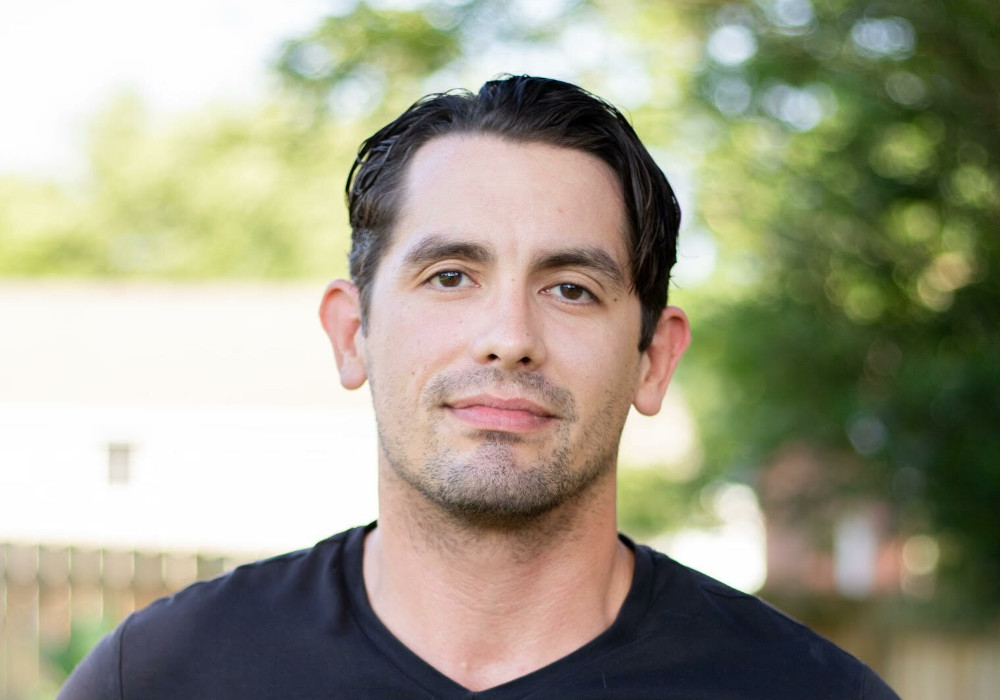
By Shannon Glass
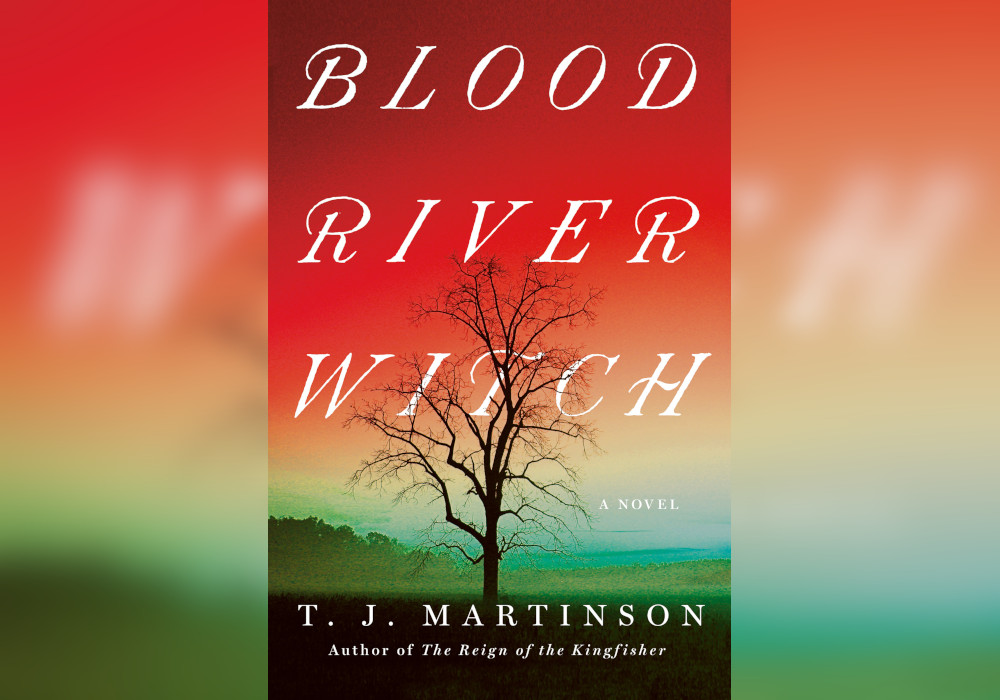
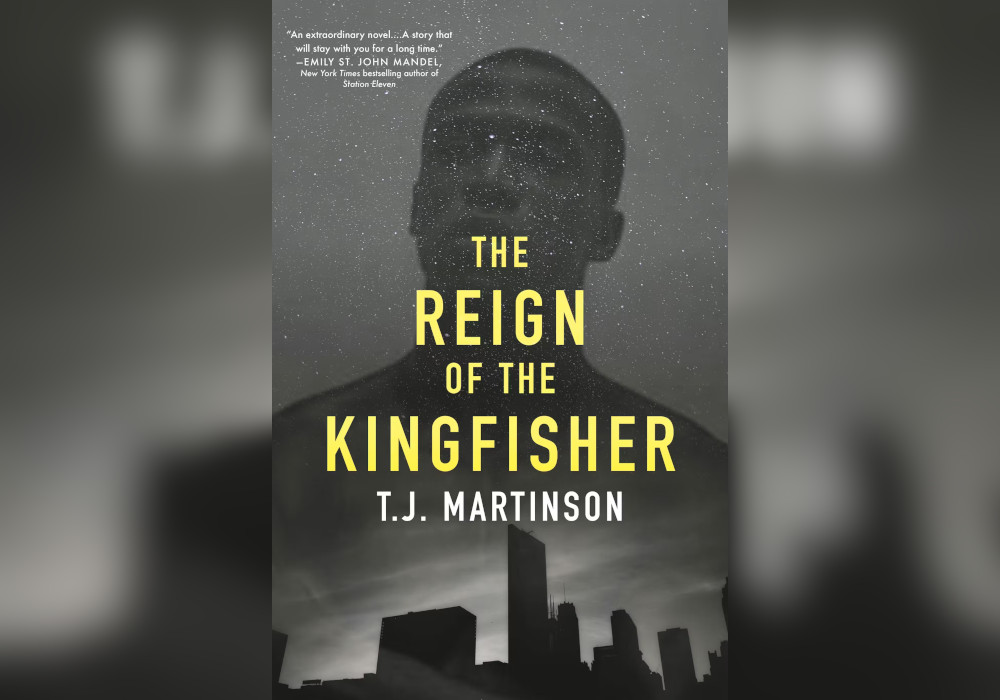
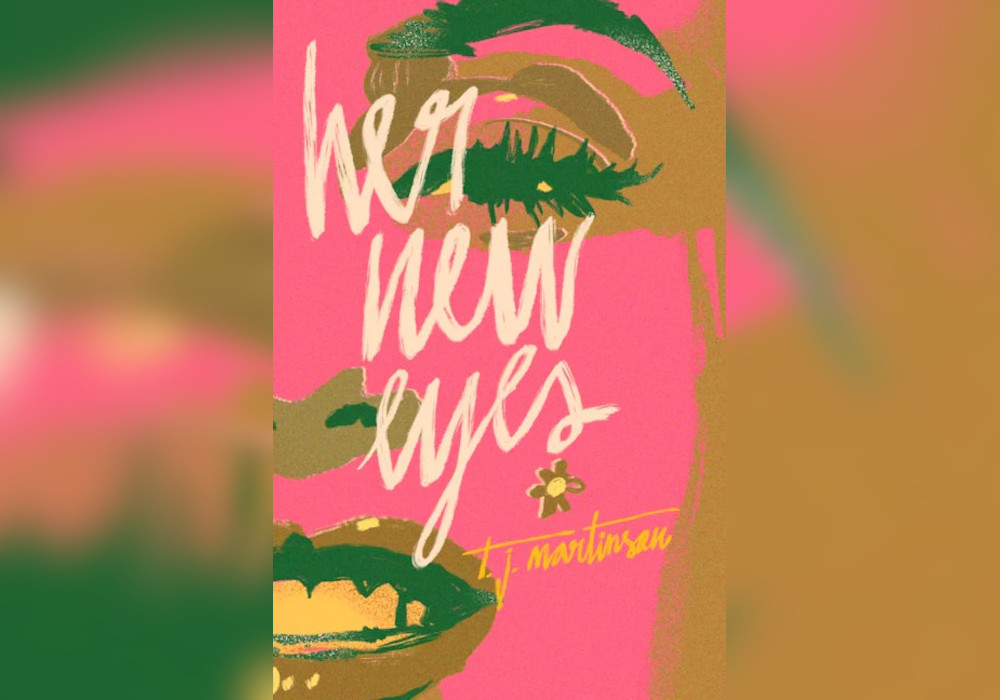
When it comes to writing, TJ Martinson is always trying something new. His first two novels, The Reign of the Kingfisher and Her New Eyes, explore first the superhero myth and then speculative fiction delving into the body-identity connection. With his latest work, Blood River Witch, Martinson takes inspiration from his current home in Kentucky to craft darkly compelling detective fiction. He handles each new genre with confidence and competence that makes it look deceptively easy to step from one style to another.
Blood River Witch follows Deputy Alicia Moore as she works to solve a gruesome crime that drags the worst of her past into the present. Her ex-fiancé, Jake, has been murdered in an abandoned tobacco barn. The scene echoes an older, elaborately staged occultist murder, whose shadow has hung over the town for years. Alicia and Jake were both suspects in that first crime, and though someone else was found guilty of the murder, her neighbors in Calloway County branded Alicia the “Blood River Witch.” Brimming with lush prose and dark images, Blood River Witch is a twisting tale that keeps the pages turning and the lights on well past bedtime.
The Coachella Review had a conversation with Martinson that, despite the dark subject of his book, was filled with laughter about the benefits of genre hopping, teaching, and research, as well as which authors he’d like to see feud.
The Coachella Review: This is your third book. It looks like each book is a different genre, and this is your first procedural crime novel. What prompted the change from what you’ve written before?
TJ Martinson: The first one had a little bit of that DNA but very minimal. And the second one is just totally outside of that. If I’m being honest with myself, I think what I love reading the most is the procedural stuff. I got really into S.A. Cosby and Jane Harper and Tana French.
TCR: Three of my favorites.
TM: I mean, they’re awesome. What I have come to respect the most about crime fiction, the reason why I think it’s really fun to write is: you come into it, and there’s a map of genre that’s pre-available. There’s all these different archetypes and ways of going about it. But then the really exciting writers are the ones who still find a way to do something different in it. I think that’s such a fun, cool challenge where, on the one hand, just given the genre, you have a sense of where you’re going and you know your reader’s expectations, but then, with those expectations, you can get kind of clever about subverting them or twisting them around. I just think it’s a really fun sandbox.
I think there’s something alluring about the detective figure. It’s such a well-worn archetype. But there’s a reason why we keep coming back to it. I think there’s something immediately alluring, but also, empathizable—that’s not a word—about the detective, someone who’s passionate, obsessed, but also deeply flawed.
TCR: The Reign of the Kingfisher has a sort of genre map as well, and Her New Eyes seems more speculative. When you’re switching genres in this way, is there a benefit to your writing process, or does trying something new make it harder?
TM: I think it helps. I’m kind of in that position right now where I’m working on the next one and it’s a crime, but it’s not a mystery crime novel. I didn’t make that decision intentionally, but I think subconsciously there is a part of me that doesn’t want to write in the same exact genre, at least not sequentially. Because what I really don’t want to do, and maybe this fear is baseless, but I have this fear that it’ll just start to turn into plug and play eventually.
TCR: Like writing the same book over and over?
TM: Yeah, just swapping in names and events. To me, that sounds really scary. So I try to get in different genres. And luckily, I read pretty widely, so there are new genres that I get really excited about, and I start studying those and thinking, What could I do with this? And to me, keeping the passion alive is what it’s most akin to. If I’m excited, then hopefully the reader will be excited, and it’s hard to imagine me being excited if I just keep doing the same thing.
TCR: Do you feel like there’s a through line in your work even despite the genre differences?
TM: Yes. I had a reading the other night, and someone asked about that, and it dawned on me that in all three books, there’s this element of looking back at something that happened a while ago. In The Reign of the Kingfisher, it was this superhero’s death. The novel takes place thirty years after that. And then, in Her New Eyes, it’s looking back at Marilyn Monroe and her life coming back into the present. And in Blood River Witch, there was a murder back in 2005 that is informing this present case. In all of them, the past is coming to bear on their present.
For Blood River Witch, it makes the most sense because, as a sort of southern Gothic, that convention is tied to it, right? Like, the past still being alive in this very rotten, decayed, putrefied way.
TCR: I wanted to ask you about the fact that this book is set in the South because it seemed important to the story. Was there a reason you chose it specifically?
TM: Oh man, that’s a fun one. There’s a lot of reasons. I teach classes on Southern Gothic literature. It’s something I read a lot and love. But when I moved to Kentucky from Indiana, my understanding of Kentucky as a native Midwesterner was just as a satellite campus of the Midwest. Immediately, when I got here, and granted, we’re pretty far southwest in Kentucky, I was like, “Oh, this is the South. This is a different world.” And I was kind of charmed by it.
I go out on Kentucky Lake all the time, and there’s an area called Blood River. As soon as I heard that name, I think the novel just came to me in a moment. It’s too good of a name not to do something with.
And the South is so good for mysteries. Because literally my first impression of the South was my wife and I went to Walmart to get some stuff for this house we’d just bought. We’re checking out, and the cashier doesn’t know us from Adam, but just starts talking our ear off for, like, four minutes. There’s a line of people behind us, and none of them seemed overly perturbed because it’s just the way of doing things. You see a stranger, you’re just going to talk and talk and talk. And pretty soon, you know everything about their family.
Which is so good for a mystery novel because there’s normally quite a lot of suspension of disbelief in the way characters divulge things or are willing to speak or who they’re speaking to. Whereas in the South, it’s fair game. You can really play around with people just chit chatting and the way gossip moves around. It’s a really fun backdrop for that.
TCR: Cool. Did the occult themes pull from that southern place as well?
TM: Yeah. In Murray, where I live, which is in Callaway County, where the novel is set… That’s another thing I learned about the South; they don’t identify with their towns, but their counties, which I’m still wrapping my head around. Murray has a sordid history of [the occult].
In the ’90s, there was a vampire cult here in Murray, of teenagers who believed themselves to be vampires. They would drink each other’s blood and some other things that were not even that “harmless.” It resulted in a murder that took place in Florida. But the legacy of that vampire clan is still felt here.
It’s interesting because Murray, as elsewhere across the American South, is steeped in religion. Specifically, Southern Baptist. It’s pretty much omnipresent. There are churches everywhere, everyone goes to church, and it’s a big part of identity. So having something dark coexisting with this prototypical Southern Baptist place, to me, it’s just the best and immediately interesting. When I started [Blood River Witch], I knew I wanted this dark legacy that has been repressed by the place because they don’t want to look it in its eyes, and they want to explain it away. It’s something no one is comfortable talking about. In any good mystery, there should be something that people aren’t saying.
TCR: For sure. And the Bible Belt plus Satanic Panic really worked for this plot. It was cool.
TM: Good, I’m glad.
TCR: But did you have the idea about what the crime was going to be when you started? Or did you have Alicia’s character first? What was the seed for this story?
TM: I had Alicia’s character first. Where this book started was page one of the published novel. And a lot of that first chapter has not been changed drastically. When I started writing, I just started right there. I knew I had this character who I wanted to be a little bit ambiguous in terms of where they stand on things. But I didn’t really know the crime. And then I just thought of something that would be dark and really unsightly and grotesque.
The way that chapter ends is with identifying the victim. And at that point I knew exactly what my main character was and who they were. It so rarely works out this way. In fact, it has never worked out this way for me before, but after that first chapter, I kind of knew the entire story. It just all came to me at once. I was furiously scribbling these thoughts, all from knowing who my character was. I knew what they were about, and I knew the crime, and it just came fully formed. So I was very, very, very fortunate.
TCR: That’s wild. I don’t think I’ve ever heard that. I was hoping for a different answer as a writer myself.
TM: It’ll never happen again.
TCR: It could. You never know.
TM: Yeah, I kind of do.
TCR: You’re also teaching and doing academic research. Do those things feed your creative writing process or are they different muscles entirely?
TM: It probably used to feed my writing process, but in a very bad way. It was like a bad diet, because I think the worst thing a writer can do is be too hung up on the way people are going to interpret things or come at them. When I was doing academic research and thinking about—and this is hyperbolic, but—How would a scholar interpret this? A) They’re not going to read it. And B) Who cares? You’re not writing for them. I’ve learned to divorce those two methods of writing. The good news, too, is that it feels like they’re pulling from very different reservoirs of creativity. It certainly takes creativity to write scholarship, but the way that that is mind-numbing is very different from the way that creative writing can be mind-numbing. They take energy from different places.
TCR: And hopefully, fulfill different desires, as well.
TM: Yeah, mind-numbing but also fulfilling. The fulfillment is few and far between. But yet, there are moments of that.
TCR: You also have cool social media accounts I took a peek at. The topics range from classic literary feuds to writing advice and current publishing events. Is this a great way for you to connect between yourself as a teacher and yourself as a writer?
TM: That’s exactly it. I tell this to my creative writing students: It would be so lovely to have written books in the ’60s, where you’re just some person, and you get a novel, and everyone reads it or whatever gets written about the reviews, and you go about your life comfortably. But now, with social media, I do think writers need to use it, unfortunately. I take no pleasure in thinking that. I still kind of avoided it, just because it just feels like it would be not who I am. Doing social media how I’d seen it done. When I finally made the pivot, I thought, if I’m going to do this, I’m just going to talk about stuff that I actually care about, that I think is cool, and I’m not going to be someone I’m not.
I talk about stuff that is probably, at times, overly academic or dry, but I enjoy it. I found a way to do it that I like to do it. I’ll be in a creative writing workshop talking about something and I’ll think, that would be a good thing to share on TikTok. Or the literary feuds—for as long as I’ve been writing, I’ve been obsessed with authors who wanted to fight each other. I don’t know why, it’s probably some vestige of toxic masculinity leaving my system. I was always captivated by Hemingway trying to fistfight people. I really think it’s good for literature, too. Honestly, I wish more authors would feud. I think it’s great.
I think we see the state of writing right now, where it’s tough out there, and it’s tough to get eyeballs. And I think the response has been, well, let’s support each other. And okay, that makes sense. Or… Or we could go full Bravo TV and just start slinging mud. That’s what I want. I want to encounter authors who hate each other and who are going after each other in the pages of The Guardian. We need to get back to that. Because writing’s fun. It’s exciting, and there’s all this drama behind the scenes that people are never clued into.
TCR: Who would you start a feud with if you could?
TM: Well, I recognized as soon as I started saying that, I was setting myself up. The easiest one is Nicholas Sparks. He can come get this smoke anytime he wants it. I’ll send him my address. I would love it. I would take nothing but pleasure in that. He’s a hack. He sucks. Terrible author, terrible person. But that’s like pretty low hanging fruit.
TCR: Then who would you like to see feuding? Who do you think would be a really fun feud to watch?
TM: Oh man, I love that. I feel like this one’s probably already happened. But maybe not. The only reason I think it’s happened is because it makes so much sense intuitively: Roxane Gay and Jonathan Franzen. That’s an immovable object meets an unstoppable force. Those two would just like… Oh, it would be amazing.
TCR: I would read that, too.
TM: And they’re both good at essays. The takedowns would be so good.
TCR: Okay, we’ll see what we can do to get that started.
TM: Yeah, do a little whisper campaign.
TCR: Are there any other genres that you’ve got in your mind to try out? Your next book’s a crime novel, but will you be revisiting anything else that you’ve already explored?
TM: I’m really enjoying the crime world right now. My next book I have written is a heist, which is my favorite genre of film. I love heist movies.
TCR: You’ve got to get the team together?
TM: Yeah, exactly. But it was a huge challenge to write. It turns out there’s a lot of things you can do in the heist movie that don’t translate to a book, at all. So that was really challenging. But after that, I’ll try some other sort of crime stuff. I also have some plans for some sci-fi stuff down the road. If I ever get there.
TCR: You will. Do you work on one book at a time, or are you one of those people who does multiple projects?
TM: No, no, no. I’m not a lunatic. Well, I am, but not in that way. I only work on one book at a time. My mental health is holding on by a thread as it is. That would really push me over.
TCR: It’s not your only project. You got other things you’re working on academically. You’re teaching. It’s a lot.
TM: Yeah, I don’t need to throw another book into the mix. I think working on one book at a time is always smart, too, because inevitably you’re going to get frustrated and bored with it. And if you have the carrot dangling of that other new exciting novel out there, it is motivation just to wrap it up. One at a time, one at a time.
 Shannon Glass holds an MFA from the University of California Riverside Palm Desert program and is the author of the book recommendation blog thefictionpharmacist.com. She lives in Durham, North Carolina with her husband and their merry band of rescue cats.