
John had always imagined his daughter would one day turn out just like him. He was wrong. In fact, June was nothing like her mother Maggie, either. It was as if she’d been dropped off by a stork, a stork working for Jesus.
Of all their dissimilarities, her love of Jesus was the weirdest. They’d never gone to church as a family. Never said the blessing. No nightly prayers. They celebrated a secular Christmas like everybody else they knew, with obnoxious inflatable yard Santas and overpriced peppermint lattes. Her conversion came at the age of thirteen, when they let her go to a summer Bible camp hosted by her uncle Charlie. Since then, she could hardly put her hands down from raising them in praise.
John would never admit that he was happy to send June off to Jesus College (which was not the official name of her school), but he wouldn’t say he was sad, either. However, not a month into her absence, John was surprised by how much he missed her; it was like staring at an empty picture frame that had once held valuable art.
So, when his father needed a place to stay while his bathroom was undergoing an “age-in-place” remodel, John welcomed him into their home. Maggie suggested John’s father stay in the basement. It was half-finished, the floor cold concrete, the pipes dangerously exposed, the corners tiled with sticky pest strips speckled with bug husks. There was a full bathroom and a futon and an old fridge stocked with beer and expired ranch dressing, but the basement mostly functioned as a laundry room and sanctuary for June and her friends, who once descended into its dark depths to study the word of God and make purity pledges while gorging sour gummy worms and Diet Coke.
The idea of shunting his father underground struck John as a premature burial. They might open the door only to verify he was still alive or to toss down dinner like they were feeding some secret monster. And what about the stairs? His arthritic knees were getting worse and worse. He had trouble seeing in the dark. No. June would not be home until winter break. His father could have June’s room.
John’s father said he’d stay out of their way, but John didn’t want him to stay out of their way. So, they watched playoff baseball together. They played checkers. Went fishing. His father cooked sausages in beer and onions and left the beer and onions on the stove. Maggie said it was more like John’s boyfriend was living with them than his father, but to John the house felt whole again.
Then Maggie left.

She hadn’t really left-left, or so he hoped. She was going to a friend’s lake house. For how long? She didn’t know. She had accrued lots of PTO. She said she needed some peace, but John feared she was leaving him. He had read too many articles about families that fell apart once their children flew the nest. June was their only child, and the statistics in those instances were chilling. So maybe it wasn’t the best time to welcome his father into their house. Maybe she was right when she accused John of trying to replace their daughter with his father, as if all the parts of a family were interchangeable.
John’s mother ran an art gallery in the southwest and had been promising him a visit. When she agreed to come, John did not mention his father was living with him or that Maggie had left.
His mother and father had been divorced for twenty years. Immediately they argued about who got June’s bedroom. His father said he’d already put his underwear in the drawers, and his mother said she wasn’t staying long, so he could move right back in when she was gone, and his father said she always stayed longer than anyone wanted her to, which hurt his mother, but instead of saying so, she drank two martinis.
John said she could sleep in his room and he’d sleep in the basement.
The futon was uncomfortable. A drip pestered him from some unseen pipes. He woke up in the morning with swollen sinuses. Still, he enjoyed having his mother around. She taught him how to make a martini, and suddenly he liked gin: cold, floral, bracing. They watched classic movies together. They went to a gallery and she bought him a painting to hang in the basement, and for a while the house felt whole again.
Then his father left.
John’s mother told him he could have his bedroom back, but he didn’t want to leave the basement. The painting had helped transform it into his own space. It was abstract, with swift, heavy brush strokes and textures suggesting motion, but he couldn’t say what was in motion. Sometimes it looked like a series of clouds, sometimes like leaves quivering in a breeze, sometimes like a cartoon woosh after a coyote dashed off a cliff. He thought if he didn’t look at it every day, if there was no one there to appreciate it, then the painting would lose its meaning.
His sister had recently been laid off and was driving all over the country taking photographs of industrial decay while eating up her savings. She said it would be cool to come hang. John did not tell her their mother was also staying at his house, and he did not tell his mother his sister was coming. They had not gotten along. John’s sister was younger, the middle child, and growing up she tested their mother’s will at every opportunity. When she was fifteen, she stole their mother’s car and drove it a hundred and twenty miles to meet a stranger she’d met on the Internet. Luckily, the stranger was not a rapist or a murderer or any of the multiple types of possible perverts, but he was much older, and he was mortified, and so he sent her home and told her never to tell anyone what happened. She told everyone.
His mother made them all martinis, and they sat on the deck on a gorgeous afternoon, and John was surprised his mother and sister didn’t argue. They spent most of the time catching up like old friends. His sister kept saying how good their mother looked, refraining from snide comments about her plastic surgery, and his mother asked thoughtful questions about his sister’s photography project. Night fell and they ordered pizza and all agreed on the toppings. They went inside and John scooped vanilla ice cream into their empty martini glasses, and when it was time for bed, his sister took June’s room, and John went to the basement with a warm feeling, like he’d been wrapped in the most comfortable blanket.
But the concrete floor was cold on his feet.
So, the next day he took his sister with him and they went to several stores before he found a rug he liked, one soft enough to cushion his feet from the harsh shock of the basement floor. They brought it home and moved all the furniture and rolled out the rug and put all the furniture back. Then John and his sister grabbed beers from the old fridge and sat on the futon, pleased with themselves for successfully tackling an errand. His sister asked if he smoked, and he said it had been a while, and she said she was stoked it had been legalized in so many states, and so she lit up and they shared a joint that made John feel like everything was two dimensional.
His feet were long rectangles. His sister’s face was a fuzzy oval. The entire basement was a construction paper collage.
Their mother came down when she smelled weed. She didn’t approve of their behavior. She told them they were both too old to be hiding in the basement “smoking reefer.” And when she said “smoking reefer,” with the crusty old judgment of an ancient PSA, they both cracked up.
So, John’s mother left.
John’s little brother Charlie was the golden child, the happiest of accidents. He excelled at everything, and if he didn’t immediately excel, he would practice until he did excel. He’d won the state spelling bee at thirteen when he spelled the word eudaemonic. He’d gotten seed money to launch a local pizza delivery app when he was still in high school. He’d found God while hiking the Appalachian Trail and had not let go of Him since. He could’ve been anything and could’ve gone anywhere, but he was currently building houses for people who needed houses. He was finishing a project nearby and said it would be a blessing to come spend time with John and his sister.
It was nice to have his adult siblings in the house, something that hadn’t happened in years. It reminded John of being in charge of them, of his parents going out on a date and giving him the responsibility to get his brother and sister fed, to make sure they all went to bed at a decent hour. What he loved most about those times was letting them have a treat they didn’t normally get to have, winning over their trust with gummy bears and chocolate milk. Now his brother was vegan and his sister’s gummy bears were full of weed.
His sister took pictures of the three of them. They talked about that one vacation when they went to the beach and their mother made them all dress in khaki pants and starched white shirts and stand in the sand for hours while a professional photographer desperately wrangled them into poses of the perfect family. All their faces were sunburned, and the photographer tried to fix it with some kind of green makeup, which made them all look like scorched aliens. But the pictures his sister took were different. Now the three of them looked happy to be together. And everything was fine until dinner, when Charlie wanted them all to hold hands and say grace over the vegan meal he’d prepared, and their sister refused and said she was going out for tacos.
She did not come back.
The next morning, John walked by his daughter’s bedroom and saw Charlie kneeling on the floor, his hands clasped, his head bowed. The bed was neatly made and he used it like an altar. Without looking up, Charlie motioned for his brother to come into the room. John went in, and Charlie grabbed his arm and gently pulled him down to the floor to join him in prayer.
John wondered if God ever got tired of hearing the same prayers over and over. God, please heal my cancer. God, please let me pass this test. What if so many prayers went unanswered because God was up there waiting to hear something original, some totally off-the-wall prayer that would make Him satisfied with His creation for once, someone willing to disrupt the constant stream of groveling?
John’s knees ached, and a queasiness roiled in his gut like he was about to vomit, and soon his mouth erupted with prayer. He prayed for donut holes. The month of November. Darkness. And he wasn’t praying for them as if he wanted them, like, Dear Lord, please grant me darkness. No, he simply spoke clearly: “Dear Lord, please hear my prayer for donut holes, the month of November, darkness.” And the list grew, and he did not know where the words came from, but they came.
John prayed for ice trays, a blank television, grocery store windows, electrical outlets, fedoras, litter boxes, straws, ravioli, water bottles, antidepressant prescriptions, terra cotta pots, glove compartments, swimming pools, forgotten census forms, marker caps, cooling cups of coffee, high school bleachers, pant legs, unlined paper, muffin tins, newborn lungs, golf scorecards, cavities, death certificates, cardigan sleeves, judge vacancies, tip jars, packing peanuts, washers and dryers, potholes, ashtrays, windowsills, recycling trucks, wallets, silence, radio static, real estate, farmer’s markets, conch shells, party balloons, adult coloring books, parking spaces, scrunchies, boiling water, front porch swings, Ziploc bags, grocery carts, condoms, offering plates, eyeglass frames, desk chairs, job openings, buckets, playground swings, destiny, three-ring binders, conference rooms, batting gloves, saddles, thought bubbles, a preheated oven, outstretched palms, blenders, vases, the driver’s seat, the passenger seat, the back seat, laundry hampers, open mouths, piñatas, toilet bowls, skulls, bookshelves, bedside tables, church pews, tunnels, castle moats, blank checks, unmade beds, firepits, foxholes, lunch boxes, tortillas, closed minds, and pillowcases.
And when John finally stopped praying and opened his eyes, Charlie was gone.
Every morning John knelt at his daughter’s bed and clasped his hands together and prayed, and he prayed the way he’d prayed the day before, the words swelling in waves, praying for what seemed unquestionably random and bizarre: the whorl of his wife’s ear, recliners, a rocks glass. “Dear Lord, please hear my prayer for fishless aquariums.” And he got up and did this the next morning and the next, on and on, until his knees developed a rash.
He was on his way to the drug store to get some cream for his rash when he saw Maggie in their backyard digging a hole with a pair of post hole diggers. She had on work gloves and a bandana tied around her head, and she was lovely. Her cheeks were bright and her face was glowing as she hoisted the handles of the digger and drove them into the earth. He couldn’t remember how long she’d been gone.
“Hi, John,” she said.
“What are you doing?”
“Digging a hole,” she said. “What’s it look like I’m doing?”
“Why are you digging a hole?”
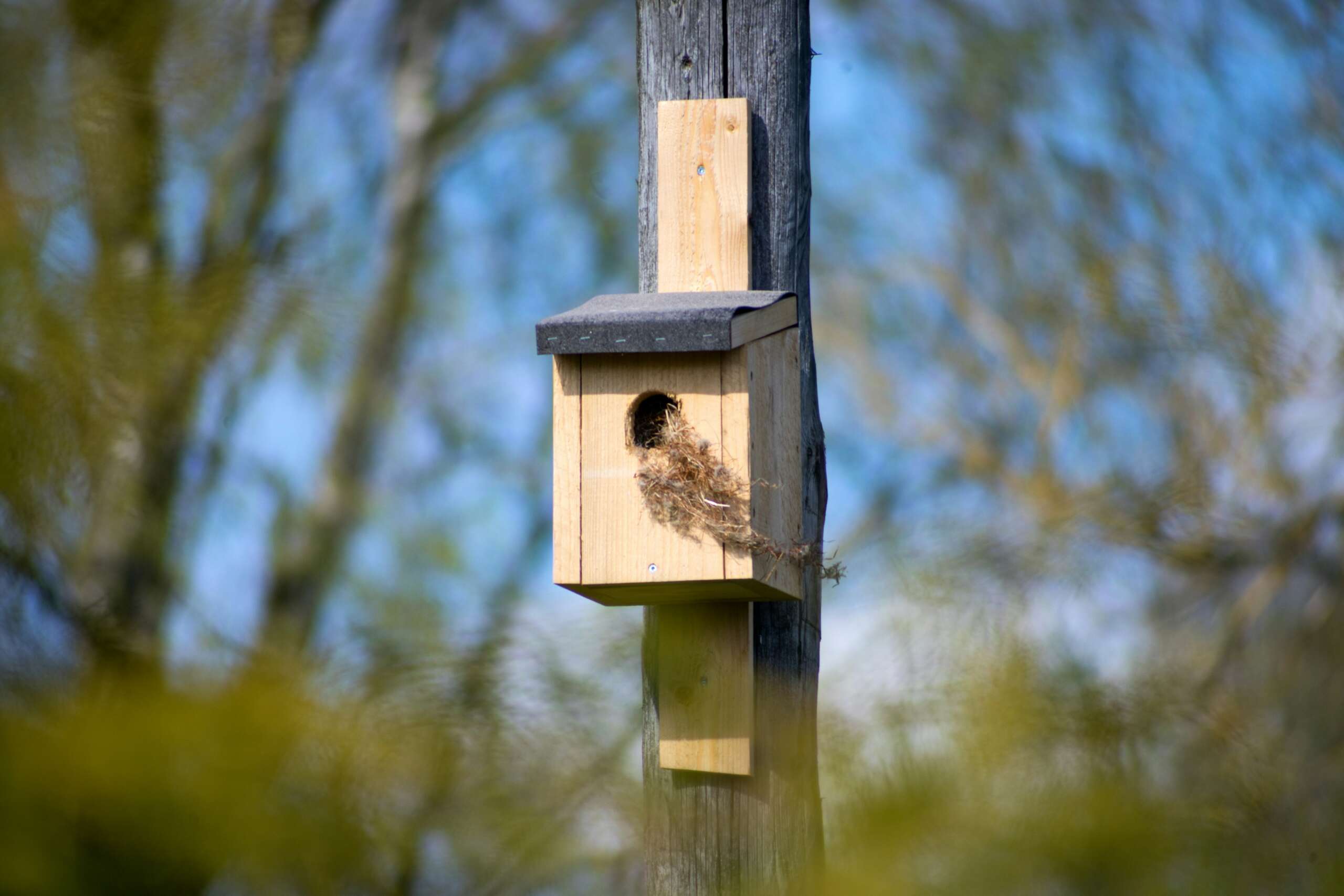
“A nest box.”
“A what?”
“A nest box for kestrels.”
“Oh, yeah, okay.”
John had no idea what a nest box for kestrels was, but the real trouble was he couldn’t decide which ointment to get for his knees. He needed help, so he asked a man who worked at the drug store if he could recommend any of the ointments he was deliberating over in aisle seven. The man looked at John and said, “You’ll know it when you see it.”
When he got home, a tall pole rose from the hole Maggie had dug, now filled with quick-drying concrete. The pole ascended above the roofline of the garage, and on top sat a wooden bird house. Maggie drank coffee on the deck and surveyed her work. She seemed to be a different person, one who would erect a tall pole and top it with a house for some bird called a kestrel, a bird John had never heard of. Was it even a bird?
John sat next to her and rolled his pants up. He rubbed the ointment over his scorched knees. “What’s a kestrel?” he asked.
“Can we go inside and fuck, John?”
There were so many strange things about this question. That she’d asked it while he was so obviously unattractive, pants rolled up, slathering his rash in medicine. That she’d asked it at all instead of performing some other subtle instigating ritual, a tender nibble of his earlobe, a lingering kiss, a signal that might lead them into bed. That she’d used the word “fuck.”
He wanted to show her all he’d done to the basement, so they went to the basement. The sex was not great, or rather, the sex was great because they hadn’t had sex in such a long time and they were doing it in a totally new place, and so it was great to be having sex in this totally new place, but it was quick and awkward, and the smell of the ointment mixed pungently with her sweat and the leather smell of her work gloves. When they were done they took a shower and lay on the futon with the basement air cooling their damp bodies.
“What happened to your knees?” she asked.
He didn’t want to tell her. His prayers embarrassed him, and he figured any mention of his family would remind her of the reason she’d left in the first place. He did not want to tell her it hadn’t only been his father who had come, but also his mother, his sister, and his brother, whom he’d been kneeling with in prayer beside their daughter’s bed.
“I fell,” he said.
“Doing what?”
“Jogging.”
“You don’t jog.”
“Everything’s changing.”
She smiled, but she wasn’t looking at him. “I like that painting,” she said.
When he walked by his daughter’s room, he had to fight the urge to pray. Instead, he jogged. He wanted to make good on the lie he’d told Maggie, but he was exhausted after a mile. He walked to the park and drank from the water fountain and sat on a swing. A mom chased her toddler across the playground. It had been a long time since he’d been on a swing. He used to swing with June, both of them trying to see how high they could get before leaping off, and every time she did, John felt a flutter in his gut, an empty hole bored by worry. Would she land on her feet? Would she sprain an ankle? Would she take off and fly?
John pushed himself in the swing, at first lightly, like he was ashamed of being seen, but soon he pumped his legs, really getting into it, pumping himself higher and higher, so high he hovered for a moment above the seat.
The toddler pointed at him.
Then John plummeted, and his shoes buzzed the wood chips, and his momentum swung him up, up, up, and he let go, soaring into the sky, and as he ascended, he thanked God for answering his prayers, and God said, “No, John. Thank you.”
 Jeremy T. Wilson is the author of the novel The Quail Who Wears the Shirt and the short story collection Adult Teeth, both from Tortoise Books. He is a former winner of the Chicago Tribune’s Nelson Algren Award for short fiction and his work has appeared in Alaska Quarterly Review, The Florida Review, Jet Fuel Review, The Masters Review, Split Lip Magazine, Third Coast, The Best Small Fictions 2020, and other publications. He lives in Evanston, Illinois.