

Before I could scoop the meager contents of the plate into one bite—a small pork chop, a spoonful of rice, lentejas, nothing more—a honk sounded out from the busy thoroughfare outside the house. My abuela perked her head up, discerning for the honk amid an endless line of traffic. Another honk. Then another. She sucked at her teeth and shuffled over, commencing the theatrics of admitting a guest: unlock the front door, first gate, a door in the second gate, an intricate expanse of metal flourishes.
“It wasn’t always like this!” my uncle boomed. He brought me in for a hug, his smile bright. “Back when I grew up here, the gates were down, the road was tiny, you could bike around, the kids all played and wandered and everything was fine.”
What have you done? What will you do? My uncle wanted to know about the clubs, the rooftop bars, the spots I found for a late-night jiggy with a mysterious woman. He always craved these stories, having married young, having devoted his life to serving his family and his wife.
“Y ese rooftop?” he asked, settling into one of the two loveseats that run perpendicular to the entertainment stand.
“The one that Henry mentioned?” I asked. Henry is my cousin.
“And what about that new rum bar they set up downtown? The one in Casco Antiguo?”
I shook my head, trying to hide my blush.
“You’ve been here five days already,” he said. “And you haven’t partied?”
I listed five relatives, five different visits, other living rooms like this one, ones of his own family—after all, a trip back home means a trip back to salons and living rooms and long tables in pizzerias. I had never clamored for a sense of adventure here. With my relatives, we could speak on nothing, we could think on nothing, and we could legit watch TV all day and leave with a sense of fulfillment. Something about nearness to loved ones made the living come easy.
“No pero es que yo estoy bien,” I tried to say, describing this sense to my uncle. “Yo no pido más cuando vengo a Panama. I’m a simple man!”
But my uncle brushed this off, unamused.
“And the food?” he said. I stepped back over by the dining room table, showcasing my plate with as much grace as possible. My abuela chirped in a small complaint before retreating to the kitchen. She knew about her reputation. She had nothing to prove, having come from the deepest corners of poverty, something that my uncle liked to remind me whenever he took me by the crumbling facades of buildings in Curundu, El Chorrillo—slums, in blunt terms. “These people aren’t poor,” he would say. “The people from the country, the people with no running water, they’re poor.” He came from my abuela’s second family, the one she started upon arriving in Panama City after having left my mom and her immediate two siblings behind. So, for my abuela, a bite of pork, some beans—that was a luxury.
From the way he scanned the plate, its small pork chop and sprinkling of rice, and from
how he looked out over the rest of the living room, this hut of a house that could be covered in a few strides, he lost himself in a moment. He started forming a thought, then stopped. I followed his eyes to the fan on the table. Most of my family’s places were cooled through fans like this one: old, dusty, creaking through its revolutions.
“Panama…” he started, finally. “Panama no es así. It’s not like this. I swear, Chris.”
He had worked hard his whole life, devoting himself to never living in poverty again, visiting his mother a few times, letting the old, tiny house of his childhood fade into the distance. His neighborhood came up; his house appreciated in value with each renovation; his family grew.
“It was never like this,” he said. “The food felt like more when I was little.” He opened back up now, the humor returning to him. “Everything here, what you’ve seen of Panama… it’s just limited. Wow!”
He scrambled for his phone, scrolling through photos. “Saltos, Volcan Baru… la playa!”
He turned the phone around to me, displaying a pristine stretch of sand, a calm basin of water, not a soul in sight. The photo could have come from a postcard in a foreign place, an exotic place—Thailand, Hawaii. Not Panama, for sure. He knew, too. Where were we? Since they had expanded the avenida outside, dust from the throughway rose up, flung into the living room if, god forbid, they wanted to open the windows. The avenue expanded the neighborhoods and connected this piece to a main artery downtown, sure, but it also introduced more people, more wanderers in the night. Nothing to scream “crime,” but enough new faces to influence my aunt and abuela to forbid my little cousins from exiting. I thought back to the complex series of steps involved in admitting a guest. Had my family kept the maleantes out, the bad guys, or had they enclosed themselves?
“No, no!” My uncle said, shaking his head again and again. “This is not the Panama you need to see. All this, this is limited.”
He planned for an early departure the next day. “Up at first light!” he boomed, rising to depart in a hurry. Not a bit of this trip could resemble a tourist plan, he mentioned, and that included the company, the vibe, the food.
“Va a ser una locura! Va a ser como si tú hubieras nacido en Panama!” he said right before leaving, surveying the small house once again, waving a hand over his face as if to shield himself from the debris filtering in from the avenida. “But man! When I tell you… I’m glad I left. Some places… you just outgrow, you know?”
That night, the idea—and the sticky humidity—kept me awake. Va a ser como si tú hubieras nacido en Panama! What if I had been born here? If I had grown up in this same room—the one my uncle had slept in as a kid—and slept to the same gray noise of nighttime traffic? Woken up, each day, to my family surrounding me? If I spoke Spanish as my first language, if I counted postcard vistas among my personal hideaways, if I lived not a thirty-minute drive away from all my cousins; if, every day, not only was I not the only Panamanian in my spaces, in my offices, in my communities, but surrounded by them?
The next morning, Henry directed us to a coastal spot way off the main highway, tucked in between pockets of fisherman villages.
“This beach is a blast,” he kept on regaling as we made our way, my uncle driving. “It’s pure vibes. DJ competitions. Pretty girls. Calm ocean. The ocean, the water… como si fuera una piscina!”
I cited the other times he had exaggerated: endless fiestas at carnavales, dancing on stage with celebrities. He wagged a finger at me. The other times… maybe a bit of a stretch in storytelling. But this time! No sir! Had the beach chairs ready and a cooler full of beer in the back. My uncle joked with Henry: what do we do if we spot a pretty girl? Henry echoed the question back to me, knowing full well about my commitments back home. I shied away, stating her name: Bethany.
“Eh-bay-como asi?” Henry tried.
“No, no! Henry! Come on. It’s Beteini.”
Bethany, I clarified. Bethany. Her rich streaks of caramel hair came back to me, how she might fold her hair atop her head as she thought through an idea. She appreciated my culture, having grown up as a third-generation Latina. Her version of this looked like family gatherings to make empanadas together and clapping whenever J-Lo performed at a big-ticket event. But the nearness here, the insight into the daily unfoldings of a family—this never got to her.
“That’s not a girlfriend for Chris,” Henry said, waving off my uncle. “Come on. He needs a Panamanian girl. So, what do we do when we spot a pretty girl? Uncle! Come on!”
My uncle hid a grin.
“No digamos nada a nuestras mujeres!” Henry and my uncle said in unison. Not a word to the women. Not a word to the wives. All debauchery, all day. Not a word? Not a blip? Bethany accepted my yearly trips back as one of the terms of dating me, though it felt selfish now. Needed to spend time with uncles and cousins like this who begged I forget her. She spoke English first, she knew not one ingredient to sofrito, and she glowed in the sun, her skin soaking and tanning in a flash. Bethany and I, we spoke in the language opposite to the one of my uncle and cousin: years and careers and schools for future children to the rooftops, clubs, and outings here.
“There! There!” Henry pointed, lurching over the steering wheel. My uncle jerked into a tiny opening in the roadside flora. A path widened just enough for the car—two tracks pulverized into the sand and dirt.
The trees cleared out before us, revealing a blue line that cut our vista. Water. The sand pushed up into small dunes. A shack appeared, faded lettering detailing something of a rental business. To its side, dinghies rested like beached whales, their wood paneling flaking off with age. Their names, their fonts, told of a different era: La Maria, La Esperanza.
Boom! Boom! Nearby vibrations distilled into a familiar rhythm. A few tricked-out cars lined up on a bank alongside the ocean, their trunks open to reveal absurd stereo systems. Henry busted a move with his shoulders, egging my uncle on to dance with him.
We set up far down the opposite side of the beach, where palm trees crept onto the sand. A few families flanked us with picnic spreads. Squads of young idlers laid out with umbrellas and coolers, vacillating to the beats downshore. Even from this distance, the bass of the car party shook us.
The first beer hydrated us. It cooled us. The second got us going. The third clicked us into gear, swaying to the beat of the songs in our beach chairs. A family nearby screamed as a song came on. “Menea, menea, menea!”
Time slowed to the amber in our bottles. The music lulled and metered out the time. My uncle swayed, eyes closed. Our inner worlds matched the outer ones here. The moment mattered more than the mundo. Feet stuffed into the sand, the comfort of this air between us could hold the weight of any future.
“We always thought you’d marry a Panamanian,” Henry said. He upturned his bottle. As if mentioning a cloud drifting in.
My uncle shrugged. “He lives in America, Henry.”
“Yeah but… look at all of this. He’s not like the other cousins. He loves it here. El es panameño. El quiere estar acá.”
Stephanie, Mario, Emily—he was right. The other family that made it out to America, the first family from abuela, never came back. They never wanted to. They never wanted to remind themselves. But they missed this, right here. Life. Breathing. Air.
“You can’t mess around when it comes to your person,” my uncle said. As much as he played at youth, he loved dispensing his uncle tidbits. “You need someone reliable.” At this exact moment, a group of younger women passed by. One glanced Henry’s way. He was handsome without trying—though he tried hard, of course, keeping his beard shaped up and hitting the gym almost every day. He waved back, too shy to say a word, setting the group off to giggle among each other. My uncle licked at two pinkies and drew them along his eyebrows, smoothing them down.
“You think I have a chance?” he said with a grin before waving us off. “Don’t worry. I’m happy. But you know, Chris, you have to choose wisely. Because not everyone is like Leticia.”
Henry and I shot each other a look. We knew the unwritten truth to their relationship. My uncle didn’t work. My aunt did. She buoyed the family through her paycheck as a teacher. He repaired shit. When people asked, or when they went out to eat, though, my uncle played the role of provider, acting all bigshot, daring more rounds on him as he slammed his card down on a bar. But unpeeling one thin layer, nothing more than finding his wife’s name embossed on that same card, broadcasted the palpable patriarchy to this place. My aunt was the true hero. Bethany held me down like that. I loved all the ways she countered the model of a wife out here, as much as I loved my country: she was independent, matching my career aspirations with her own, and she looked at me as a co-creator in life, not a provider. We built together. My uncle breathed deep,
closing his eyes. Then, with a huge swig of beer, he killed the bottle.
“I know it’s not great,” he said. “My situation. The business comes and goes. Sometimes, it goes. And it doesn’t come back. You know, I was hot shit once! I had the money. I bought my house, didn’t I? Then the contracts dried up. Luckily, by that time, Leticia’s career got going.”
“Nah, tio, tranquilo…” Henry started. My uncle held out a hand.
“It’s the truth. And then, you know, you have to ask your wife for her credit card every time you go out. When that happens, do you want some random girl you met at a rooftop? Or do you want a girl you fell in love with after strolling downtown, hearing about her dreams?”
Henry shrugged, holding up his hands. He had mentioned to me his bad luck in finding a girlfriend. Despite his reputation as a fuckboy, he wanted the opposite—stability, love. From his point of view, he just happened to stumble into casual situationships.
“I know they look good now. I know you want to try every flavor. But maybe, you know, Chris has the right idea…”
“I want that too, tio,” Henry said, rolling his eyes. “I’m just saying. I thought Chris could find that down here, too.”
My uncle nodded. He narrowed his gaze on me.
“What is it, Chris? That you found? Que te gusta de tu mujer?”
Now, of all times, the beer swirled me into a slow state, the Spanish eluded me, the words eluded me, and I conjured up the image of Bethany’s beauty, the way she smiled, satisfied, after cooking up a healthy meal, something she could snapshot and send off to friends. She resisted the image of traditional but, in her words, loved to cook, to play at homemaker, to dress up our two-bedroom place. I had no way of shaping her depth right here, much less in a different language. The ways she surprised me, every day, fulfilled me in providing a glimpse of another’s humanity, worldview. But those were all fancy ways of saying something else, something simple.
“No se,” I said finally. “No se que decir mas que estoy enamorado. Y que la quiero mucho. I love her.”
My uncle nodded his head. A breath stretched out between us, through the ruckus of the car stereos down the beach. We tapped our feet in sync to an earth-shattering bop that came on—something new, to my ear. Henry lit up. He raised a finger, pointing out in the air.
“Come on,” my uncle said. “Let’s try out the water.”
The pool of the ocean spread out before us. Except this pool had no end, no edge in sight, promising more the further I looked out into its horizon. Deep, far out there, the Pacific stretched and spread past far places and far possibilities, lives unlived that we would never know, and, for my family, places they would never know. My uncle had taken his family to Disney World, once, and the trip to Florida had almost bankrupted them more than he had let on—according to my mother. And Henry, of course, dreamed of attending a Super Bowl with me one day, though we both knew that if he struggled to put down for the $30 bottles of rum, he’d struggle with nosebleeds at an NFL game.
Warm understated the quality of the ocean. A suggestion of a wave came by as we waded out, followed in slow intervals by others. Nothing more than casual inferences of the moon’s pull. How? I held the water in my hands. I dunked them back under the water, rose them to the surface, the glass top barely rippling. Blue, too, this rich azure unlike anything I had seen in an ocean—just like the postcard, just like my uncle’s promise.
“Let’s enjoy this now!” my uncle shouted. He had made it far out with my cousin while the water distracted me. Of course, we moved easy in this water. “Chris is in love!”
In this moment, watching my uncle and Henry dance out in the motionless water—where even still, even out here, the music of the party of the beach burst out—of the Pacific Ocean, all of their cues seem to hit me at once, and I made my way to them thinking of how to express that I could still visit, I could start a new life with Bethany and honor this one, too. I could come back to the beach with them every year and we could repeat this, like a tradition: Real Life in Panama, if Chris was born in Panama, if I had a different home, a different upbringing!
“See?” My uncle cried out. “See? It’s fun out here, it’s not all boring, no hay que quedarse en las salas todos los días!”
Of course not, I wanted to say. I trudged along. Smooth, powder sand beneath my feet. The ocean had no way of slowing me. But the drunkenness caught up to me. The beer held me back. Us three, breathing together, living together. I felt such tremendous intimacy with my family in that moment, for their trust in sharing something with me when, in reality, I visited only in these tiny spurts, pretending at being from here when we all knew of the life for me in a different place. I wanted more. I wanted more of this, having tasted a snippet, a beautiful afternoon that would live on in my memory—I knew as much right then, in the very moment. I knew that I would never forget this day. Not for all its simplicity. Not for how it could be summed up in a few beers, sand, and a soundtrack. I felt my face grow hot. I didn’t want the moment to end. I dunked my head under water. I often feel out of place in America, lugging behind a past and a place that fits poorly into the fabric of a different culture. On the surface, the two places, the family I have in Panama and the family I have in America, seem the same, and we all enjoy the same pleasures and the same heat of the sun. Closer, though, only in a moment like that afternoon, do I see some magic to aligning my person with my place, as if I had been a fish caught and lifted into a tank for my whole life, only to return back to the ocean. The resistance that comes with living as a different person—all of that lifts. I don’t have to pretend like I don’t come from different people, or that I speak a specific dialect of Spanish, or that my family isn’t as humble as humble comes.
But not all days would play out like that. The person who brought me here hates this place. I’m never going back, she says. She saunters into traumatic territory these days out of casual conversation. We wash dishes together. I don’t like strawberries, she says. Why? I didn’t grow up with that. Why would I like it? I didn’t have money for it. My mother, your abuela, she left us. We were homeless. Okay, I say. Like, damn. I try to signal that I’ll listen, but I also have a threshold, too. Like, weren’t we just about to enjoy dinner together? And now, my mother, this person, she’ll just wander into this whole rant about how my abuela sent little money after abandoning them, and how that did little to make up for the gap left by her father, who left, too. I can only imagine these same spaces through her eyes. The water might turn black. The ocean might strangle her. She doesn’t swim. She doesn’t enter the water. She doesn’t spend time with the people I spend time with.
This same story, this same beach, I used this in recounting my trip to my mother, and I told of this powder sand, the hot-tub water, the endless joy that accompanied all of us as we found a moment to capture. Just the three of us, I said. Henry, my uncle, me. She nodded along, taking in the details, though she was stuck on something—maybe the mention of the company, the three of us, how we went alone, without partners, without family, without other cousins. That’s great, she said. I’m glad you had fun. The moment paced out and, then, we both knew the words that would arrive to her. We both knew how she needed to comment on this. I never had fun at the beaches, she said. If I was with two other people, it was your uncle Alvin and your aunt Glorys. We would have to work. We never had time or money for the beach. We never enjoyed the sand. The cars? How can they pay for the stereos?
At this point, I cannot dispute her words, of course, but I can listen no longer. Is this your home? I want to say. Is this what you’ve embraced instead? America? Where you can’t even work in peace without some white guy throwing down clothes in the middle of the men’s clothing department at Walmart, where you work, shouting, “They’ve done it now, they’ve taken all the jobs, they even got Mexicans fuckin’ folding clothes in Walmart!” Is this what you want? I want to say. You want this and the A/C of our home over the air of the Pacific?
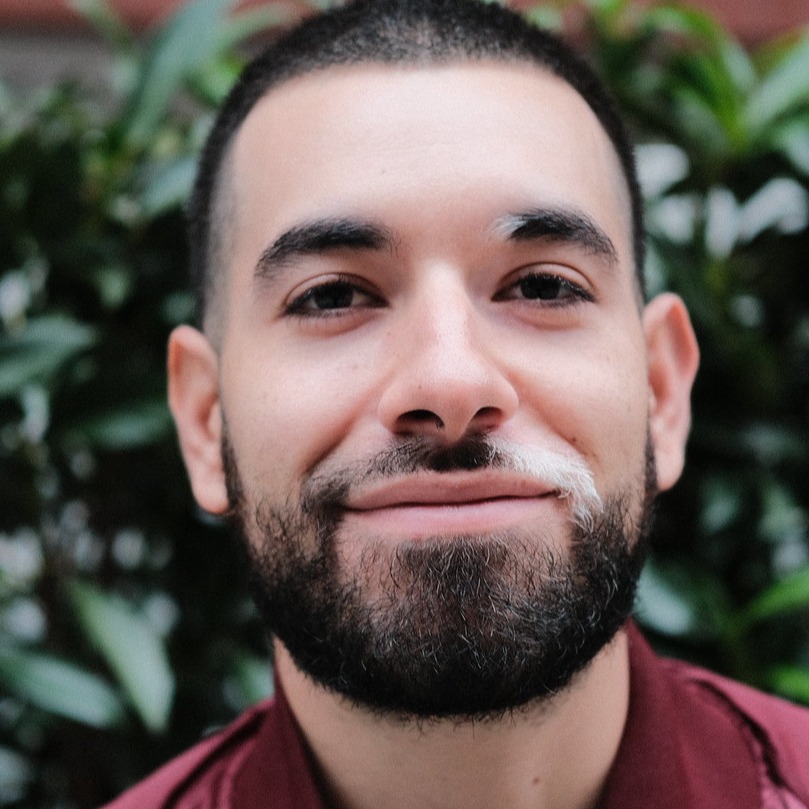 Chris Kubik Cedeño (he/him) is a Panamanian-American writer and graduate of the Rutgers-Camden MFA program. His work can be found in Huellas, Preachy, Porter House Review, San Pedro River Review, Acentos Review, and more. Visit his webpage at www.chriskubikcedeno.com and check out his wandering thoughts at @ckcwrites on Bluesky