
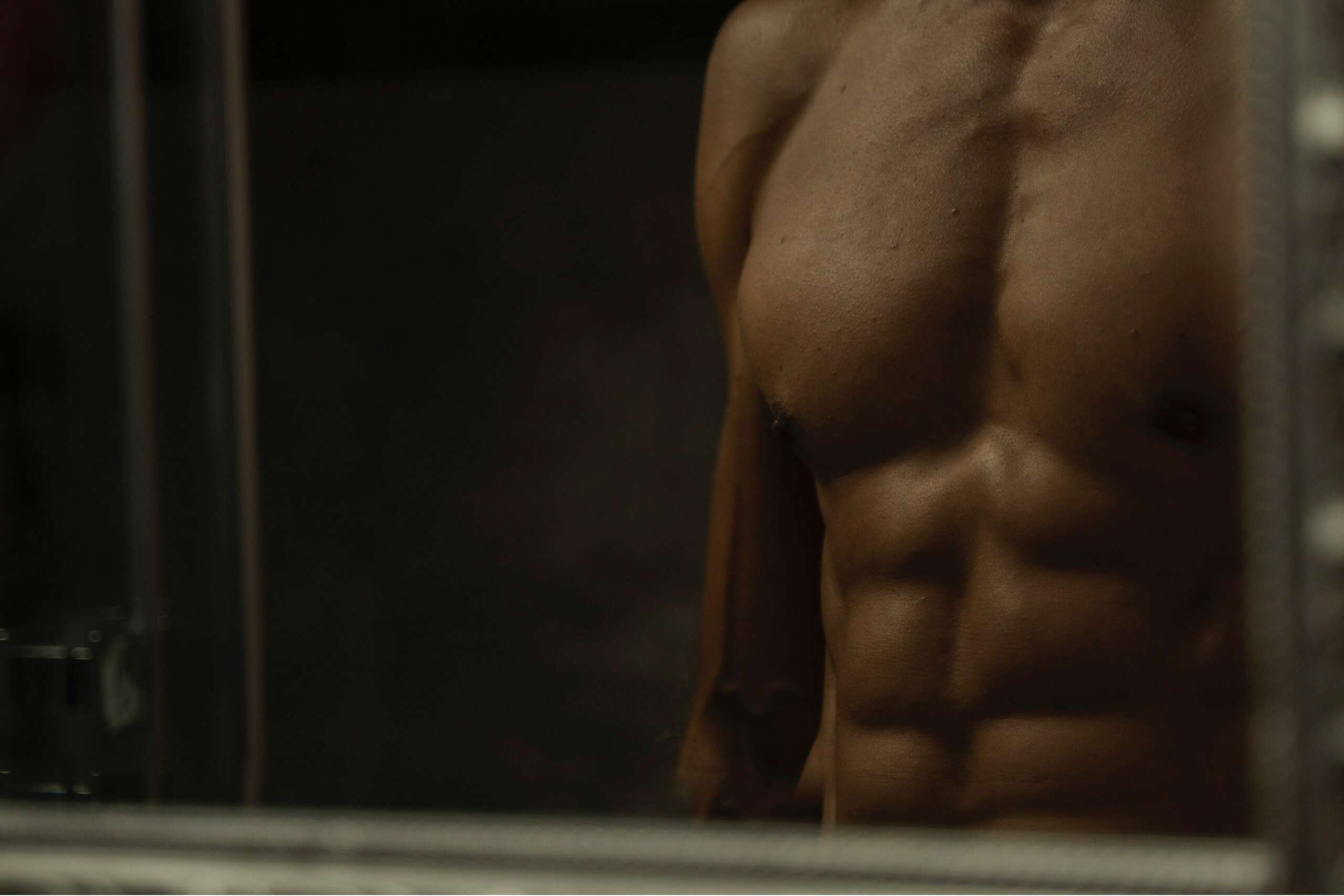
Our first date was going pretty well, I thought. Learning to make guacamole in a cooking class.
“Oh no, I’m getting teary onion eyes,” Brooke giggled. She wiped at her cheeks with her forearms, but they were all skin and elbows, with nothing fleshy to apply. I was supposed to be learning how to fondle a ripe avocado, but I was too busy asking her what it’s like being a ballerina.
“I’m not strong enough to squeeze the lime juice,” she blushed. “That’s why we have partners,” the dietician responded. Time to put my biceps to good use. I locked onto Brooke’s vibrant green eyes, our hands wrapped together for the first time, and we squeezed like hell, sparks of citrus running down our fists. I almost forgot that we were on the third floor of Princeton Medical Center, learning how to eat food in a “Skills Session.” Friday date night in an eating disorder unit.
I first saw Brooke in group therapy circle, long brown hair and a dimpled smile (later, I noticed her telltale cheek creases, caused by the skin retreating from her jawbone). We bonded immediately, having grown up with sport-obsessed parents. Her mom danced for a prominent Toronto ballet company, while my dad was a competitive bodybuilder. We wouldn’t trade that for anything because of what we could each do. On a single toe, Brooke could turn on a dime and turn your head with her grace and power. I could heft 100-pound dumbbells with my fragile wrists. We both agreed: at least that’s something, right? We were just little kids wanting to be special for our parents.
At the hospital, I was the only man surrounded by twenty-six anorexic and bulimic young women. I had arrived after my own relentless cycle of protein shakes, jumbo cans of tuna, and heavy weightlifting, followed by late-night donut and pizza binges, starving and fasting, self-hatred and self-harm, obsessive thoughts about my body—you name it. Except at the time, my ailment felt nameless. It was 2002, and Binge-Eating Disorder, now known as the most common form of eating disorder, wouldn’t be recognized in the DSM-V for a decade.
For twenty-eight days in treatment, Brooke and I hung out in the smoker’s area or the TV lounge and exchanged near-death stories, like the time I almost drowned or when Brooke fainted off a four-foot stage. Our lives felt precarious, not quite ours, as if we were hanging around the edges and we couldn’t get inside ourselves. We sure looked the pair too: I was a frizzy-haired, 6’3”, 200-pound longneck of lean muscle mass while Brooke was eighty-six pounds and 4’11” at twenty-four years old.
And then we were unleashed into the world.
Our first free weekend in the city happened to land on my birthday. On that sweltering summer day, Brooke greeted me in Central Park wearing fleece pajama pants and a unicorn sweatshirt. We later laid around her spacious East Side loft apartment, toasting with a bottle of chianti and two paper cups, while Brooke reenacted her travels in Italy with her mom. By 9 p.m. I was starving, having skipped day food to get ready for the big date. I figured we’d be gorging our way through the culinary capital of Manhattan. Maybe Rosa Mexicano’s—we could laugh about squeezing limes together while they make fresh tableside guacamole. “So how about dinner?” Brooke scrunched her nose, smoking another Benson & Hedges on her oversized picture window ledge.
I shouldn’t have been shocked when I opened her fridge, but there it was. An infinite white void. Except for a single cup of plain yogurt, boldly occupying the entire middle wire rack, snarling at me like Zul, the dark mystical space-dog from Ghostbusters. My birthday dinner that year was yogurt and red wine. I was confused. In the hospital, it didn’t seem like we were sick or broken. Everything was so structured. Our meals and interactions seemed breezy because we didn’t have choices. Was Brooke choosing not to eat? I ignored my own question and focused on her record collection. Brooke had the deep cuts. We put on Echo & The Bunnymen’s Lips Like Sugar.
To say I was infatuated with Brooke is an understatement. I was captivated by my own projections. She was everything I wasn’t. Exotic. Worldly. A contrast so sharp, I could forget that I nearly self-destructed two months earlier. I became busy wondering what Brooke was going to not do next, not eat next, or how many cigarettes she was going to smoke or blankets she’d pile on in eighty-two degrees. She was always so cold. And tired. Yet she seemed so cute when she snuggled up. Was she always like this? Was it good? Bad? I had no idea at the time. I couldn’t differentiate the true from the false.
In fact, I used our differences to delude myself more. Told myself I was getting better because I was going to the gym again and had a strict summer diet of creatine, protein powder, and supplements. And my recurring late-night sugar binges, morning stomach bloat, and crippling mood swings? When those returned, I waved it all away with my magic wand of compartmentalization. Like my childhood hero, He-Man, I had the powerrrrrrr… to disassociate. It allowed me to turn off the most fundamental drive to exist: hunger and satiation. I would even hold my breath between stops on the subway on the way to see Brooke, to see how far I could take my self-deprivation. “Pain now, relief later” was my life’s hammering principle. After I learned to shut off my connection to food and body, the feelings followed, then disappeared. During that summer, I had no idea how I felt in any given moment.
As the sunny weeks went by, I learned that Brooke wasn’t eating. Her sleek sexy loft apartment was becoming a cramped sauna. I went for a jog in Central Park on an empty stomach—I was fasting [read: compensating] for my binge the night before, and all I could think about was Brooke really needs to eat something.
I figured she was getting sicker, but I didn’t know for sure. I wanted to save her. I grew up watching 1980s action movies like Commando, which usually involved a far-too-archaic yet still-too-current trope of heroes rescuing women in distress. I’m the good guy, I told myself. She needed me.
“I had cantaloupe this morning,” she fired back when I offered my observation. “I’m not like, not eating. You can check the trash.”
Like my father chiding my mom for overeating chocolate, now I was arguing with an older woman for undereating fruit? This was getting weird. Strange. That was the extent of my vocabulary awareness. I decided it’s better not to talk about food with Brooke. Maybe if I stopped making it a big deal—for either of us—we’d both relax and “go with the flow,” right? Like our hospital dietician told us: Don’t be too rigid about food choices. It’s progress not perfection.
Then came the night Brooke told me she had to go to Arizona for another round of treatment. Sitting in the twinkly Avenue A Indian restaurant, I tried to reassure her, but I wasn’t actually a woman-rescuing commando. I was merely the audience to her movie while she was going through her own story: The Unbearable Lightness of Being Brooke. That night, watching Brooke push rice around her plate as I shoveled heaps of spicy korma with my sleeves rolled up, guns ablaze, I still didn’t see it—the similarity in our disparity. The sicker I got in my body quest, the more shredded my midsection became. I could therefore convince myself, and everyone else, that I was doing great. Brooke had the outer signs of her disorder. But could I recognize them in her? Or me? And if I did glimpse them, I simply told myself: Fine, if she’s the sick one, then I must be the healthy one. Maybe she thought the same. If she was dating a younger muscular law student, then she was normal, too. Everything was fine.
I remember feeling a little guilty that part of me was also glad. Not only because I knew I couldn’t save Brooke, but because I didn’t want to think about my own health status. She was a reminder that I just got out of a hospital.
With a few long-distance phone calls, I muddled through our separation by focusing on getting back into law school and the weight room. I needed a new identity. Being apart from Brooke helped me pretend Hospital Justin never existed. And that’s how it works. Eating disorders result in separation from others and non-integration of self. They create impenetrable shields of image upon image, projection upon projection. They also have some of the longest trajectories of relapse. Compulsion is a proficient prison warden. If you’re trapped in a body image problem, you’ll spend years grinding out Groundhog Days, never unearthing the real substance of who you are. Which is kind of the point. To bury and avoid your real self, because it’s too painful.
When Brooke returned from Arizona, we replayed another cycle. October, a new season. Things seemed better, watching black-and-white movies under the covers. Then they weren’t. Trying to get intimate didn’t help. The fantasy came crashing down before I even sat on her bed with queen lace bedposts. Up close and personal, I realized I was afraid, not just of Brooke’s frail physicality but the symptom it represented—of a deeply wounded little kid acting out of repressed trauma. The same was true for me and my stretch-marked biceps. Kissing Brooke was a window into her pain and a mirror into mine.
I remember Brooke smiling her side-wrinkled grin from the fire escape ledge when she said, “We’re better as friends.” When I gave up trying to date Brooke, I also gave up trying to rescue her. And myself. I was too tied to my new identity: a self-obsessed, re-enrolled city law student, leveling up my bench press at the Upper West Side YMCA.
Brooke returned to Toronto at her mom’s insistence, for more treatment. We kept in touch, emailing about how much we’d grown up since the summer before. Red wine and yogurt, right? Haha, gross… We were so young, we typed.
A year later I learned in the worst way that the statistics were real. Organ failure, wasting away, suicide—anorexia is the most fatal mental health condition (excluding opioid addiction). I was studying evidence at my graduate dorm desk when the call came. The phone hovered in my hand. Brooke took her own life. She was twenty-six.
It was her third time trying.
The reverberations are always too much to bear. Being numb and unable to process the grief, I resorted to shoving it down with powdered mini donuts. I became a law student ghost in a blazer, periodically materializing in class with headphones, vacant eyes, and glittery lips of glazed sugar. Our shared soundtrack haunted me. She floats like a swan… She’ll be my mirror, Reflect what I am.
My first step to recovery was punching the gas pedal and driving 300 miles north. I landed at Vermont Law School and inhaled the fresh air. I was done with New York. No subway staleness here. In addition to learning about maple trees and environmental law, I learned that I wanted to live. To really live, for more than merely sculpted deltoids or gooey donuts. One night I biked out to the dirt road around Vermont Law School and saw the Milky Way galaxy for the first time: that simultaneously clear-yet-fuzzy white bandsaw of clustered stars cut straight above me in a twelve o’clock swath. Surrounded by such vastness, I saw how small my world had become, living only for my body and its muscular appearance. All my relationships were with substances. Food. Weights. Clothes. Songs I could quote. At best, I was dating my dumbbells, cheating on my meals, and coveting my neighbor’s six-pack. I was incapable of being in a mutual relationship with another human being.
I knew that I was making changes when I stopped holding my breath and found a therapist. With short brown hair and all-knowing eyes behind glasses, she taught me that being in peak physical shape on a random Tuesday wasn’t healthy—it certainly wasn’t required. The body can’t handle that level of deprivation and intensity 24/7 in perpetuity. I wasn’t a competitive bodybuilder or Olympic athlete—and even they have off-seasons, she told me. Sure, I thought, but I could do better.
I’d spend a few more years trying to “do better”—a.k.a. skipping more meals, working out more intensively, and always followed by more binging. This went on until I started to ask the right questions, such as: why is momentum the hardest force to change? My therapist didn’t have to answer. The pattern revealed the truth. I learned that the unconscious is real. Like gravity or climate change, I didn’t have to believe in it in order for it to be true—or to affect me.
Being in Vermont, I couldn’t help but see contrasts everywhere to my New York City life, like the stars for streetlights, and the “Vermont nightlife” that closes at 9 p.m. It also meant thinking a lot more about Brooke. She would have enjoyed going to a farmers’ market and seeing all the grass-fed goat yogurts. I thought I could save Brooke back then, but I now know it doesn’t work like that. A pithy bumper sticker on the back of a rusty Subaru told me so. Vermont loves inspiration, and this one stuck in my ribs:
It’s okay if you don’t save the whole world…
It’s okay if you only save one person…
And it’s okay if that one person is you.
Many years later, whole-hearted and lucky to be alive, I still catch myself wishing I could have done more back then for Brooke. But no one can know the ultimate journey. We held hands, sprinkled with lime juice, and maybe that was enough. I understand our younger selves, trying so hard to be special—to be that projection that the other person needed. We really wanted to go back even further, to be the bright little Brooke and Justin that we were as kids.
 A practicing lawyer in Vermont, Justin Kolber is a recovered ripped dude, an athlete, activist, and author of Ripped, the first memoir about the dual extremes of muscle and food disorders. Read more at Slate, Newsweek, The Good Men Project, Open Secrets, The Haven, Greener Pastures and free newsletter at www.justinkolber.com