by: Bruce Shearer
I have too many white shirts
They are everywhere.
Just waiting for me, all neatly pressed and ready.
First I had one, and one would be controllable
Kept carefully in check.


I have too many white shirts
They are everywhere.
Just waiting for me, all neatly pressed and ready.
First I had one, and one would be controllable
Kept carefully in check.

I.
In Exam Room 3, I drank
barium sulfate through
a bendy straw, breast buds
rising beneath my hospital gown.
Sharp pangs like scissors
snipped inside me, but the x-ray
revealed no ulcers. In his preacher’s
tenor, the doctor insisted
I had no cause for pain.
Already it’s rained too much. Water
pools at the base of the pecan tree
and her leaves pull hard, begging
to dive in. Mama tries to hold them, tight
by the toes, so they won’t fall.
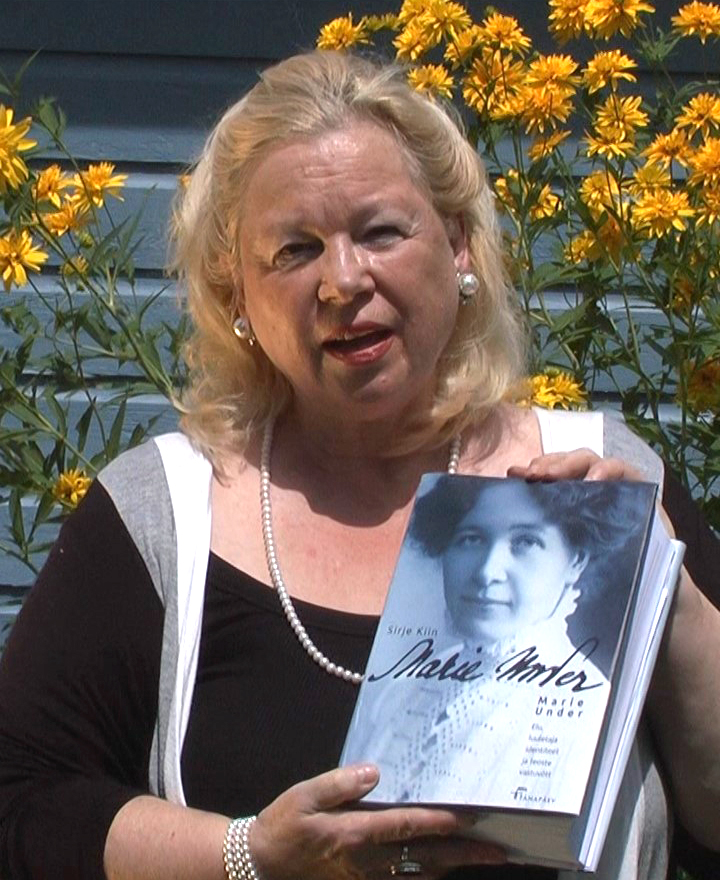
Sirje Kiin is an Estonian writer, poet, and journalist currently living in South Dakota, and the biographer of Marie Under, one of Estonia’s best-known poets.
Born in 1883, Marie Under established herself as one of Estonia’s premier poets in the beginning of the twentieth century through her expressionist and neo-romantic poems. Her early poetry explored themes of happiness, joy, and erotic love. Later, during the 1920s, she addressed topics related to justice and death, with lyrics that merged dark, apocalyptic visions with a yearning for happiness and all-embracing love.
She’ll be coming round the mountain
She’ll be coming
She’s on her way
Did she call first?
She’s hatching
from a round mountain, an egg
After death leaves its stinger
buzzing in my head
don’t let the hive of a million lies
tempt you with their honey.
CAPTIVITY
I was welcomed here.
This room, clear, golden
And dark as a medieval chamber,
Is love on an autumn night.
The fresh perfume of some lotion,
The dark hair and pale and
Hardly visible face,
And the lace of reflected street lamps
Across the ceiling
Scored by window frames
And the folds of curtains.

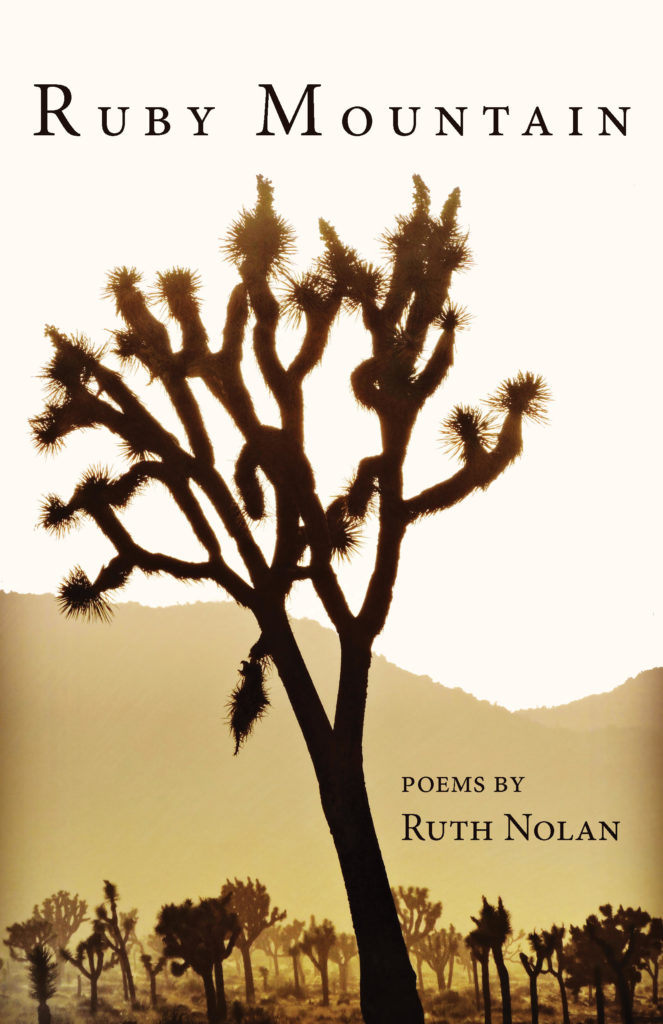
In a time when the power of a woman’s voice rings louder and clearer than ever, Ruth Nolan is putting her money where her mouth is. From the beautiful ecopoetry in her latest project, Fire and Rain: Ecopoetry of California, where she acted as coeditor and contributor, to her deeply personal poetry collection Ruby Mountain, Nolan is, in a word, an activist. She is a profound advocate for the respect and conservation of the California desert, a landscape she has always called home. She speaks not only to its beauty but also to its transformative power. Nolan tells of our relationship, history, and encroachment upon lands where wildfires have burned for centuries. Yes, it’s true. Wildfires are not a new thing. Our living in the places where they unfold, is. She also reminds her readers, students, and fan base of the importance of speaking your truth. As we witness this watershed moment in time, The Coachella Review is honored to spend time in conversation with the passionate and incomparable Ruth Nolan.

The needle at seventy.
The plains states pass,
one endless road and miles
of crops. Now and again,
corn becomes barley.
You, next to me.
The heat was too much;
you cropped your hair, left it
at the last rest stop
hundreds of miles ago.
Your t-shirt lies
on the cooler.
Seat half-reclined
window topless
seventy-mile-an-hour wind
dries sweat before it forms.

BY: J. Markowitz
The physicality of Mag Gabbert’s poetry and essays is dreamily overwhelming. We enter a twilight through the medium of a body—her body—which her craft makes so palpable that it could be our own. Via the sensations of her vulnerabilities, Gabbert delivers us to the liminal spaces between pleasure and shame, power and exploitation, existence and the body. She takes us to the edge of her mortality, because it is there that we are most aware of our own aliveness.