
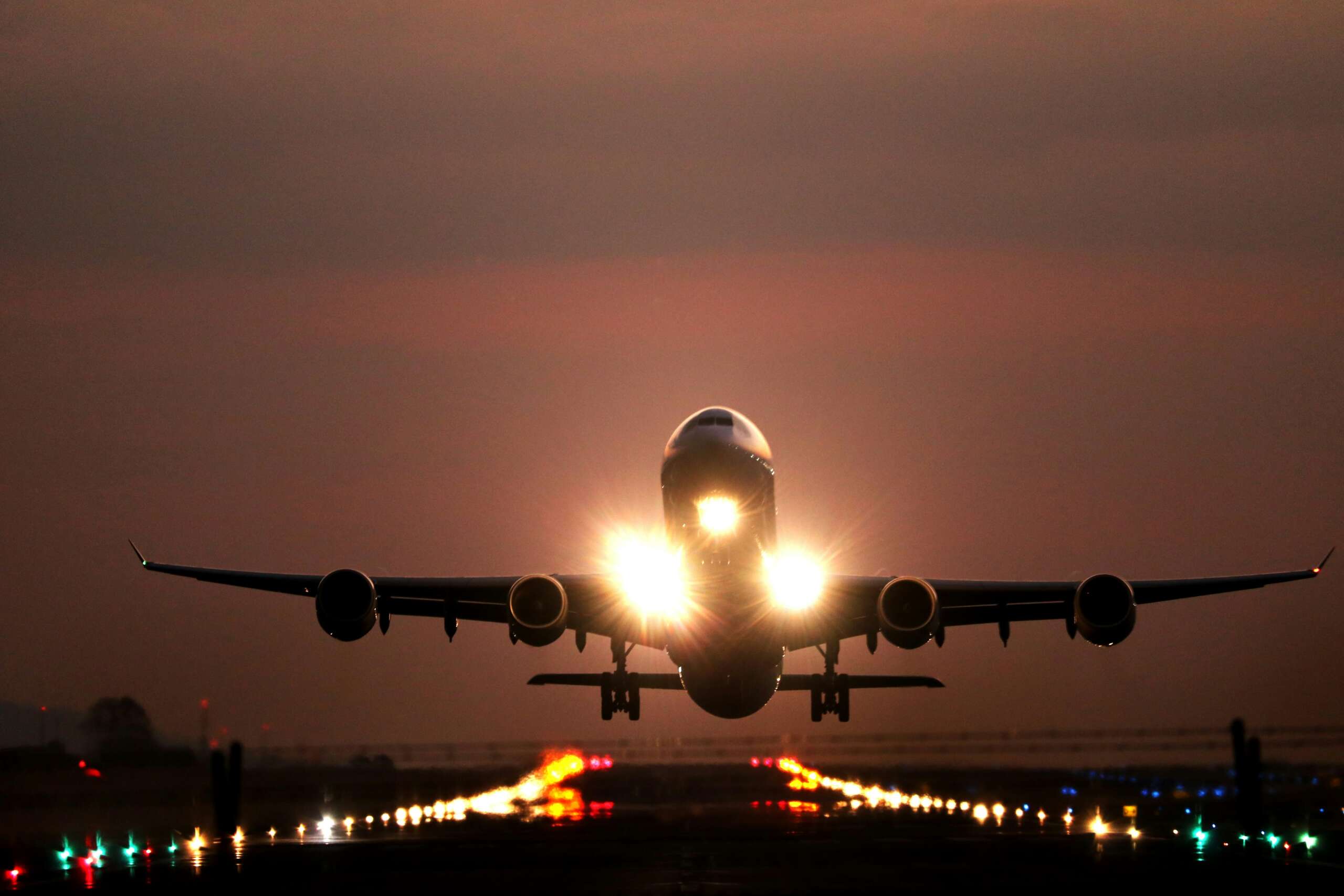
When I hugged my family goodbye, said I love them, stood aside—me on one side, all five of them on the other side—my youngest sister crying, my dad saying, “Go, go!” and I walked into the airport, the icy hands of alone cuffed me. Even the metal chair by the departure gate, on which I sat, felt cold to the touch.
When I settled into one of the window seats on the large airplane, I was still praying that the plane would encounter difficulty and be unable to take off. Because am I actually leaving Nigeria? It would not be my first time, but the United States seemed so far away. The twenty-two-hour flight scared me. No, that’s a lie. It was more than that. It was the realization that I would be in the United States for a long time, that this was not the usual writers’ residency or quick dash in and out of a country; this was school. School! Out the window was the asphalt, the airplanes, the car park far from the runway, and I imagined my family parked there, maybe waiting for me to take off. There’s still time, I told myself. There’s still time to get off this airplane, join them, and go home. There’s still time to save myself the pangs of American weather. There is still time. What was I doing in the United States, by the way? My prose and poems are scattered in more literary journals than I care to count. My book would come out in November in that same country. And I achieved all these while based in Nigeria. Why, then, did I need a Master’s of Fine Arts in creative writing? There’s still time to end all this. But I sat put.
When I bleached my bank account applying for the MFA programs, I knew exactly what I was doing. Nobody forced me. Though Home was a red-hot pot of roses, I leaned on my second reason for applying for an MFA, which was, “If you want to compete in the dance, go to the dance hall.” My admission came on April 14, 11 p.m. I was given twenty-four hours to accept or lose the spot. Ha! How kind! I accepted in two minutes. I was surprised, not joyous. I was drained from waiting.
When I recalled how I broke the news to my sisters, I smiled. My younger sisters were in the sitting room, watching TV. My elder sister was in our dark room with me, pressing her phone. I just said, “Adaobi, it has happened.” She sat up immediately. Her phone landed on the floor. Her palms flew to her mouth, and her tears bounced off them to the floor, to my foot. I had, as I said, grown too tired of waiting for admission, so I felt nothing. But when she started crying, I felt something. I sent a message to my best friend, Frances, who called. “Ummm! Why did you give me this news this night when I cannot scream nau?” she protested. I harvested my three younger sisters from the sitting room to the bedroom I shared with my elder sister, and I told them. The youngest started crying. They knew what getting an admission meant for me. They knew that Nigeria was no longer home, and I needed a fresh start.
When it dawned on me that the possibility of going to the US was high, I became the Titanic, alone at sea, destined to crash. I took steps to self-sabotage. I’d keep quiet when I should have sent a reminder on important emails; I did not bother myself when I could not find anyone in the US to help pay my SEVIS fee, which I must pay before I apply for an F-1 visa. Strangely, very strangely, Roy, whom I had never spoken to before, called me up in the middle of the night and offered to help me pay the SEVIS fee. It was as if while I dragged my feet, God worked overtime.
When I applied for a US visa, I was indifferent. That’s why on the day of my visa interview, I went there, unafraid. I told myself and God that I would not be the reason my impending trip to the United States would fail. But I would not work too hard either. I would not answer any question I was not asked. If I failed, so be it. I sat there and waited. Going for a USA visa interview in Nigeria is akin to lifting a pot of boiling soup, pouring it into your mouth, and swallowing simultaneously. So, I knew my chances of getting a visa were slim. When they called my name, I went to meet the American. “What do you do for a living?” I told him I’m a writer. “And how do you intend to pay your school fees with your earnings as a writer?” He looked at me. It was the first time he would look at me. His eyes had been buried behind his glasses, buried in my files, buried on his monitor. He returned his gaze to my files, and said, interrupting me, “Oh, you have a scholarship.” I said yes. “Congratulations.” I thanked him. He asked me if I had travelled outside Nigeria before. I said yes. A normal human being would immediately start listing where they’ve been and why, but I would not answer any questions I was not asked. He asked where. I rolled off the names of countries in Africa, Europe, Asia, counting one finger per country. “What for?” he asked. I said, “Writers’ residencies.” He looked at me again, for the second time, very briefly, but more intensely, as though he wanted to mentally snap my face, as though he wanted to see the full length of my body. “Do you have any relatives in the United States?” I said no. He punched his keyboard for a while, and he handed me the white slip with instructions. Two days later, I picked up my passport with a United States visa in it!
When the Nigerian airport officials said I had “excess” luggage, I was forced to unpack my bags and send some things home. I chose my books over foodstuffs. The airport official asked me if I was sure I wanted to leave my foodstuffs. “I cannot leave my books,” I said, relieving my bags of noodles, ụlọ, garri, fried groundnut, crayfish, grounded pepper, sachet tomato. “When I reach there,” I added, “anything I see, I eat.”
When I looked out the airplane window and saw Miami below, realization struck me. Do you have any relatives in the United States? It was only then, two months after I was asked that question, that I honestly answered it, and felt the answer. Throughout the fifteen-hour flight, I managed to contain myself in my skin, while blood pooled in my pants. I said hello at least three times to the toilet to change my bloody, soaked pad to a dry white one. The elderly American sitting beside me, an empty seat between us, was very kind and very quiet. The only thing he said to me was, “Please if you need to use the bathroom, don’t hesitate to wake me up. This is a long flight, and I understand you might need to make many trips to the bathroom.” I wondered, still wonder, if airplanes have bathrooms. There’s ignorance somewhere, of this I am certain, but I’m not sure if it’s of my knowledge of an airplane structure or of American English. Because isn’t a bathroom where you bathe, as in where you pour water on your body and scrub and pour water on your body? I would later learn to say “bathroom,” not “toilets,” whether I wanted to bathe or piss or shit.
When other passengers deplaned, I sat put. It dawned on me that I had not just left, I had arrived. Outside this massive bird’s stomach, in which I sat, was the United States; the same United States I watched on TV since I was a child; the same United States I read in books. Behind me were chairs; before me, chairs; outside, Miami. Nigeria was nowhere close. One of the air hostesses passing by saw me still sitting. She stopped and looked at me. I jumped up, grabbed my backpack from the overhead compartment, and deplaned. Everyone walked very fast. But had I not been told that Americans walked very fast? I did not need to walk-run to keep up, but I did anyway so that nobody would look at me again.
When I joined the long immigration queue, I kept my eyes on the corridor whence I came. If I go back that way, I’d be going back home. But how? As in the plane would take off because of me and take me home? Or I would swim the ocean? Okay, if I wanted to swim, how many hours would I swim before I reached home? Impossible! Impossible burned my eyes, turning them red and misted. I drew in air. The US flags were draped like curtains on the wall. The almighty United States, the change I asked and prayed for. My legs were on her soil. But in my palms were the straps of my bags and not the palms of my family. That was when I started crying, right there in the queue. I was torn between gratitude and unease. Many applied for this scholarship, but I was one of the three selected. Yet, there I was, crying for home. I wiped my tears. I did not want anyone to catch me crying, because I did not know the answer to “Why are you crying?”
When it was almost my turn to be interviewed by the immigration officer, I reminded myself only to answer, not offer. He was my last hope. He’ll send me home. My illusion! He looked through my documents, told me congratulations, wished me all the best in school, and sent me on my way. I crossed that line, stopped, and looked back. My heart burned, churned. I closed my eyes, breathed in, and walked into the United States.
When I entered the flight to Cincinnati, I encountered my second introduction to America’s kindness. The woman sitting beside me, an Ohio native, asked me where I was from. “Nigeria, hmm. You’re so far away from home.” I feigned laughter and said yes. “Welcome to America.” That was when I looked at her. All I saw were her eyes. Her nose mask wouldn’t permit any other viewing. But her eyes were enough. She understood. I murmured thank you, turned away from her, and resumed crying. I still had no answer to “Why are you crying?”
When I entered my dorm room a few minutes past midnight, after one full day plus of travelling, my shoulders fell. There was nobody to say welcome, are you hungry, take a shower. Nobody. The most painful reality is that it’s not just how it is, it is how it will be. I wanted to scrub my vagina clean of blood, my armpit clean of sweat, my heart clean of soreness. But I climbed onto the unmade bed, squeezed myself, and slept. A part of me rejoiced that I was here now; a part of me feared being here now. Calls from home woke me up by nine. I guess they calculated the time. Everyone wanted to talk to me. Everyone wanted to know how I was. Everyone wanted to know if I was cold. I laughed. Told them I was okay, excited, so happy to be here. “Can you believe it? I am in America!” Yet when they rang off, I hugged myself, shivering from cold and from loneliness. I managed to increase the temperature of the room, but it was still so cold. To remove my clothes was war. Lord, God! It was so cold! But that blood, that blood that did not know another time to rear its drippy head! I said I would count to ten, pull off my clothes, and take a bath. I counted to ten three times, and I was still unable to strip. I decided to start small. Socks first. What next? Trouser or cardigan or what? I counted to ten again for the fourth time. Take a deep breath. Maybe ten was too long. Let’s make it three. I counted to three, and with amazing, utterly amazing speed, I removed everything on my body except my pants, for fear of repainting their ash carpet.
When I went to bathe, I did not know how to operate the shower. I turned the nuzzle to the red mark, but the shower vomited cold water that fell on me like pins, stinging, hurting. I did not dare change the nozzle to blue before ice would fall from the shower and break this my coconut head. I washed my body quickly and, this is no exaggeration, ran out of the bathroom. My body danced to the tone of my clapping teeth. I lumped Vaseline on my skin, wore as many clothes as I could touch, laid a blanket on my bed, climbed the bed, covered myself up to my head, and returned to sleep. Home was in my dream. Home was better than this cold reality.
When I went to school for the first time, a day after my arrival, for the graduate international students’ orientation, the hall was freezing. But nobody seemed to be cold. Some were not even wearing sweaters. There I was, well-kitted and still freezing. The cold seeped into the bare skin on my head. No! No! No! I did not come here to turn to stone. No! I went to the facilitators and begged them to please turn up the temperature, that I was freezing. “It’s cold in here, isn’t it?” “Where are you from?” “When did you arrive?” “Oh, you arrived only yesterday? You must be jetlagged.” Jetlag was not my problem. Cold was! There was nothing they could do about the AC. They asked me to take a walk in the August Sun. Which Sun, I wondered. Surely that thing up in the sky cannot be called Sun. Nigeria’s Sun was Sun. If it hits you, you will know that something touched you, that power left you. Here, Sun was just a yellow eye in the sky, bringing only daylight minus heat.
When I went to Starbucks to ask for water, the man promptly served me. I asked him how much. He said, “It’s free,” and turned to another customer before I finished saying thank you. I touched the cup. I left the cup. Ice? Ice! Ice in this icy USA for goodness’ sake! Why would I need ice for anything in this country? How would ice add to the knowledge in my head or to the life in my spirit? Ice? God Almighty! I returned to the freezing orientation hall with thirst, a freezing cup of water, and a freezing palm. I did not take a sip of that water. Not one sip.
When hunger slapped me over the weeks, I regretted picking my books over my foodstuffs. I found American food to be so bland. Not like I could afford much food anyway (if I must confess). I decided to live and die on McDonald’s chicken burger and chips and ketchup. We had chicken burger at home, but not of the McDonald’s variant.
When I entered McDonald’s for the first time, nobody knew what the heck I was talking about. Someone finally showed me a menu. I’m sure they could tell, from my hairstyle and my accent, that I was jolly just come. I pointed at chips, and they cackled and said, “Oh, fries!” I pointed at chicken burger, and they chuckled and said, “Oh, you meant sandwich.” Sandwich? If the burger with ham is hamburger and the burger with beef is beef burger, why, in the name of all that is fair, is the burger with chicken not called chicken burger? But who would I ask? Did I have the strength to talk one million times before I was understood? Did I have the strength to talk slowly and loudly to be understood? No. I had hunger and some coins. I carried my package and went home.
When I spent one month in the United States, I crumbled. It was on a cold weekend. I remember. I missed home. I missed my loved ones. I missed Nigeria. How could it be that I was now alone? Fear of being alone has made me make injurious decisions. In my life, I have made bad choices to crumble and diminish into shapes, places, and despicable situations, all just to avoid being alone. Loneliness is like being out in Antarctica, wearing nothing but your wet body. How could it be that I was now with neither the warmth of my family nor even the common heat? This loneliness brought darkness. It pinned me to the floor in my room, my legs spread to full capacity, my head lowered, my hands between my legs, my body fully kitted in warm clothes, a blanket wrapped around me, and I cried as if I’d just heard the news of demise. I cried and cried and cried out, “Eli! Eli! Lama sabachthani!” My mind asked me if indeed Eli had “sabachthanied” me. Was I not the one that bugged God that I wanted to come to the USA? Instead of being grateful to Her, I am busy Eli(ing) up and down the place. But I cried the more. “My God! My God! Why have thou forsaken me!”
When winter came, my gait was weighed down with pounds of clothes. I wore two nose masks and pulled my beanie down to my forehead. The only visible skin on my body was a vertical line, running from one ear, past my eyes, to the other ear. But one day, on a freezing winter morning, when I was shivering under layers of clothes, running into a building, I ran past a man, strolling. That was not the turning point for me. He walked slowly, very relaxed, his hands in his pocket, his lips flattened a little as though he was about to smile. That was not the turning point for me. His head was a peeled, boiled egg. That, my friends, was the turning point for me. I stopped running, turned back, and looked at him. How, in this world of the Almighty, was this man able to move about without covering his nose and without a cap or even a nano strand of hair! Yet, there was I, dressed in almost everything in my wardrobe, with a shrub for hair, two nose masks, and still freezing. No. No. This was not balanced. If that man could stroll under that cold without any hair on his head, then so could I. I got home, loosened the disaster under my beanie, washed, steamed, and combed out my hair. I packed it up. I shed some of the clothes too. If that man can survive, well, why can’t I?
Now, I am no longer so cold. I no longer feel like a sailor who slept in their ship only to wake in a desert. I have made friends—few friends, but friends. I no longer look to Sun for warmth. I still operate on Nigerian time. I sleep when Nigeria sleeps and wake when she wakes. No, it’s not jetlag; it is my spirit refusing to unclench from the bars of home. I now eat American food. I have no business with bland. Food is food. Period! I still suffer bouts of loneliness. But now, I know I am not alone, never was, never will be. I have knowledge, love, faith, hope, prayers. I have Chukwu m, Chi m, my guardian deity, my ancestors, my guardian spirits. When I step out, they go with me. When I’m alone, I converse with them. They sustain me, every day, they sustain me.
Kasimma is from Igboland—obodo ndi dike.
website: https://kasimma.com/read-online/