
Reviewed by Betty Fall
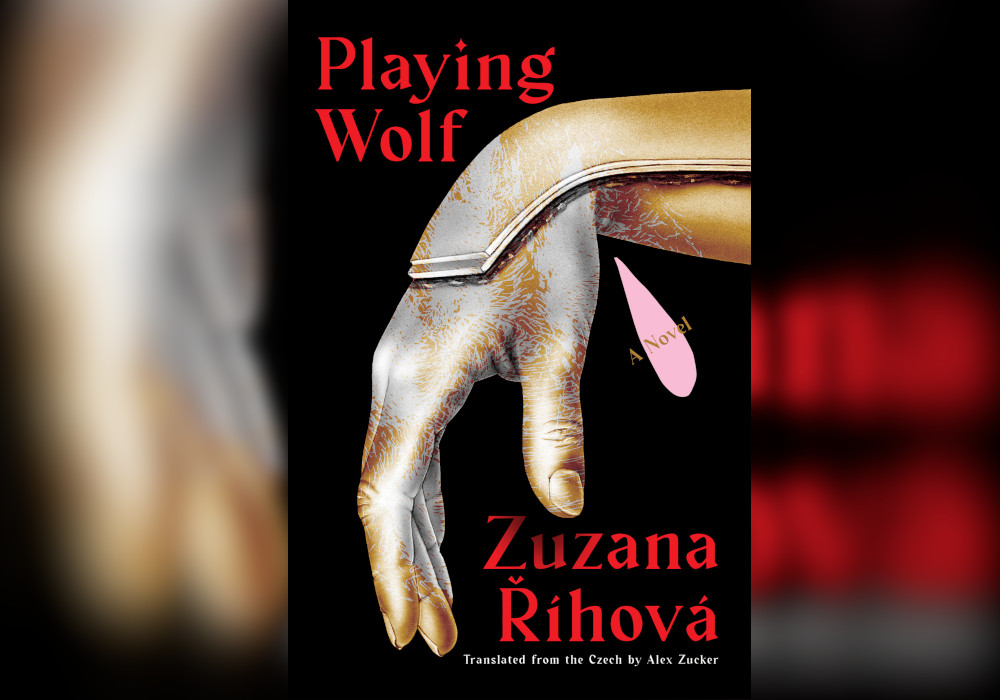
Zuzana Říhová’s Playing Wolf is an at times elusive yet consistently dread-inducing fairytale that challenges its readers to unravel the chaotic mess of motivations, emotions, and intentions of its characters to better understand the misery that is soon to transpire. Translated to English by Alex Zucker, the story follows husband and wife Bohumil and Bohumila Novotný as they move their family from Prague to a pastoral village named Podlesí, only to find that the citizens are hiding something from them. With this deceptively simple premise, Říhová lays purposefully shaky groundwork to blindside readers with a disorienting, unsettling story to ensure that audiences will feel, like the Novotný family, all-too vulnerable to creatures that prowl in the night.
Playing Wolf is a story about miserable, lonely people and the ways they hurt each other, no better represented than by its principal characters. Bohumil Novotný is an emotionally volatile man trying to mend a strained relationship with his wife and provide a sense of stability for his mentally disabled son, the latter of whom is only ever referred to as “the boy.” At the same time, Bohumila struggles with finding happiness in Podlesí and in her role in the Novotný family. She worries what the townspeople might think of her (not knowing of their more ominous intentions), experiences neurotic desires to scratch at the wound on her hand, and struggles to suppress the resentment that she feels towards her husband and son.
Říhová quickly establishes that the Novotný parents are not traditionally “good” people, however, and that they are not as easy to judge as it may initially seem. Bohumil projects his bitterness about the current state of his life onto other people, including the villagers, showing disdain for their mundane way of living, while Bohumila has an implied past infidelity and avoids truly expressing her feelings in favor of stewing in “a swelling feeling of victimhood.” Both characters grapple with loneliness, their relationship issues, and resentment towards their situation, with no easy solution in sight. As Říhová so succinctly states when Bohumil considers his son’s struggles during school: “Everyone’s having a hard time living for some reason nowadays.” This sentiment extends to the rest of the characters beyond the family.
Within Playing Wolf’s first pages, Říhová presents a story interested in not just its protagonists, but the perspective of everyone involved (and even some animals). The third-person omniscient narration hops among various perspectives with little warning, illuminating the thoughts and feelings of Bohumil, Bohumila, their son, and the people of Podlesí. This ever-shifting approach to perspective allows Říhová to build dramatic irony throughout the story, letting the readers know that the villagers are planning something for the family without revealing exactly what that is too soon. When the Novotný son encounters an older villager named Sláva early on, Říhová builds dread during the sequence through the contrast in Sláva’s outward performance as a friendly neighbor and internal assessment of the boy. He studies the boy, mentally judges and dehumanizes him for his disability, and convinces the boy to accompany him to a mysterious corral in the woods. The boy is unaware of Sláva’s thoughts, and unaware of the dangers the village might pose to his family; all he feels is discomfort and fear when they finally arrive at the corral. There is no resolution or simple answer to the meaning behind the scene, however. Sláva decides to let the boy go, and the boy, like the reader, “has no comprehension of what happened, but he knows something is wrong.” This sense of confusion is both a strength of the novel and a possible barrier to entry for all but the most engaged readers.
Říhová does not hold her reader’s hand when describing the events of Playing Wolf. The novel’s structure requires effort to keep track of the characters and their motivations, and to draw conclusions from the hints provided. Scenes shift perspectives, times, and locations abruptly. Sometimes, the novel provides iterative takes on wolf-related fairy tales, describing them in short to the reader, with little explanation as to how they fit into the wider narrative. Moments of violence are highlighted indirectly, describing surrounding scenic details rather than the actions of the characters, leaving the reader to imagine the exact horror that is happening. While the vagaries inherent to Playing Wolf do not provide a solid enough foundation for the later revelations in the novel to be effective, this approach to storytelling makes for a compelling read in the moment. The same goes for the prose and tone of the story.
Playing Wolf is callously playful and dense with a sense of dread and viciousness that, for the most part, avoids needless cruelty. Often, characters’ thoughts and the narration blend together with little distinction, strengthening the novel’s dreamlike quality. Sometimes, to better establish and represent a character’s feelings, Říhová turns to personifying concepts, such as the night, which taunts Bohumil when he’s scared: “the anxiety I [the night] blow over the farms and cottages after dark is soft and tender as silk.” Prose which takes a near-florid approach to representing and rendering the struggles of the characters is often juxtaposed with crass and harsh language that returns the readers to the tangible reality of life in Podlesí. This stark contrast risks tonal dissonance, but it mostly succeeds in highlighting the strengths of both approaches to writing. On a few occasions, however, the language used to express the ignorance and biases of the characters can be jarring, especially when it comes to moments where characters refer to the Novotný boy with pejoratives. The novel straddles a line between character-driven malice and crude offensiveness that, while effectively intensifying the brutal and severe tone of the story, can be off-putting.
Playing Wolf is a novel uninterested in making things easy for anyone, asking the reader to instead follow its prowling narrative to the end to see what fate befalls the Novotný family. Though Zuzana Říhová’s winding tale of loneliness and strife might discourage some readers due to its dreary tone and lack of easy closure, the painfully empathetic narrative and uniquely crafted prose make for a compelling journey, even without a clear destination in sight.
 Betty Fall is a fiction editor at The Coachella Review and a lover of all things genre fiction and format fuckery. When not reading or writing, Betty can also be found drawing, sewing, and thinking about writing, the latter of which can be an endeavor in and of itself.