I Cannot Dwell in Possibility There is a theory that states there are an infinite number of parallel universes, each a mirror of our own, but slightly different. Each choice made creates another universe: In this one, I went back to college, in another, I stayed in the army. Here, my mother picked up her first cigarette at 14 in…
BY ELI RYDER If this were a typical review of a typical book, it’d start with a few catchy lines, maybe a summary of the text, providing skim-reading literati enough information to decide whether the review, and by extension, the text being reviewed, is their cuppa or not. Genre words like horror, bizarro, surreal, and suspense would attempt to box…
by scott morris

I am at the exact furthest point from home possible—zenith or nadir, depending on perspective—standing at the immigration counter at the Indira Gandhi International Airport, body wracked with some stewing South Asian pestilence stirring up the worst kind of hallucinations, trying to get the fuck out of India.
Earlier that night the proprietress of the hostel had given me some expired medication. She assured me it would fix me right up, quiet the internal motion of unwell, that she had seen all this before, but the only difference it made was that I had started passing out periodically, the first time while walking into the train station. I had to lie on a bench for a while to regain enough strength to get through security, all while a circle of Indian men crowded around, shouting offers of every type of service imaginable at this prone and seemingly dead American man. The modern train was built for western tourists, and I was the only passenger, thankfully alone to save myself the embarrassment of having others watch me vomit into a plastic bag.
Translation in the close dark causes tongues to catch on knobbed spines. Unzippering mouthfuls along the length of secret sentences. One language to another opens in a grin, a stutter to a tentative translation of this alphabet of four. Now see, her jaw lit. Why sew ivy cut for the sun? Let barrel-folded fingers wring the kinks straight: Staircased helices,…
BY tracy granzyk

Zoe Zolbrod’s memoir, The Telling, was published in May of 2016, and it will undoubtedly remain a “go to” book for both survivors and family members of those who have experienced childhood sexual abuse. In The Telling, Zolbrod comes to understand and accept the grey her own experiences have equated to within, while at the same time gives readers an example of how trauma and tragedy might be assimilated and used to empower one’s self. Especially poignant and game-changing in the memoir are her experiences as “Mama Bear”; a new parent with an immediate need to protect not only her children, but all kids from suffering the same experience she did. While Zolbrod never takes refuge in the title of victim, her honest pain exposes the depth to which she is still able to feel, never seeming to shut off and others out as a result of what was done to her.
As a writer, Zolbrod’s voice is both authoritative and accessible, and the narrative flows smoothly through different time periods of her life. She serves as both teacher of topic and craft by threading four Research Shows chapters within the story’s framework, allowing her to break off from the narrative, which she described during our conversation as a respite from the emotion inherent in diving back into such a painful experience. As a person, Zolbrod’s warmth and kind soul are what I was first drawn to during the interview that follows.
By Geneveive Newman
A Note from the Editors
This week, The Coachella Review presents a stand-alone episode of the podcast Open Ivory Tower, written and produced by Geneveive Newman. In this episode, Newman looks at Mike Flanagan’s 2016 film Hush, a horror film about Maddie, a young writer who is deaf and mute and who has recently moved to a secluded cabin in the woods. The film details one harrowing night when a serial killer arrives at her home. The episode is a critical examination instead of a review, looking at the ways the film conforms to and subverts common horror tropes. We are excited to present it here.
Content Notice: This podcast contains discussions of rape, gendered violence, graphic depictions of injury and physical/mental harm, ableism, and imprisonment, as well as audio clips from the film. Some listeners may find it disturbing.

by F. C. Brown Cloud
Despite his $90k/year coding gig in Silicon Valley, Nate dressed for work in the dark.
This was Classic Nate, mind you. Pre-sex-cult, depressed and reckless and bizarre. Always more than a little tense because, like most of us, he wanted to be loved, but lamented that he’d gotten laid only twice in the last five years. Once by Angela, bipolar friend of a friend who seemed to be bedding somebody almost every night during her episodes. And once by a visiting Israeli his parents arranged for him to meet. He drove her around aimlessly through night, punched the roof of his car when she asked for a cigarette (his pack fell from its perch above the passenger-side sun visor to land in her lap), and regaled her with stories about the United States. I like to imagine that some of those stories were about me. Then, in a parking lot alongside Half Moon Bay, he was shocked to find her climbing over the central console to unbutton his jeans and straddle him. Shafts of sunlight stabbed over the bluffs behind them.
A few hours later, Nate dropped her off at the airport. His life was back to nothing.
BY Natalie Crick
See
The moon hangs in utter darkness,
A smoldering black,
A crack of light
Disappearing almost,
The world paused outside.
By eli ryder
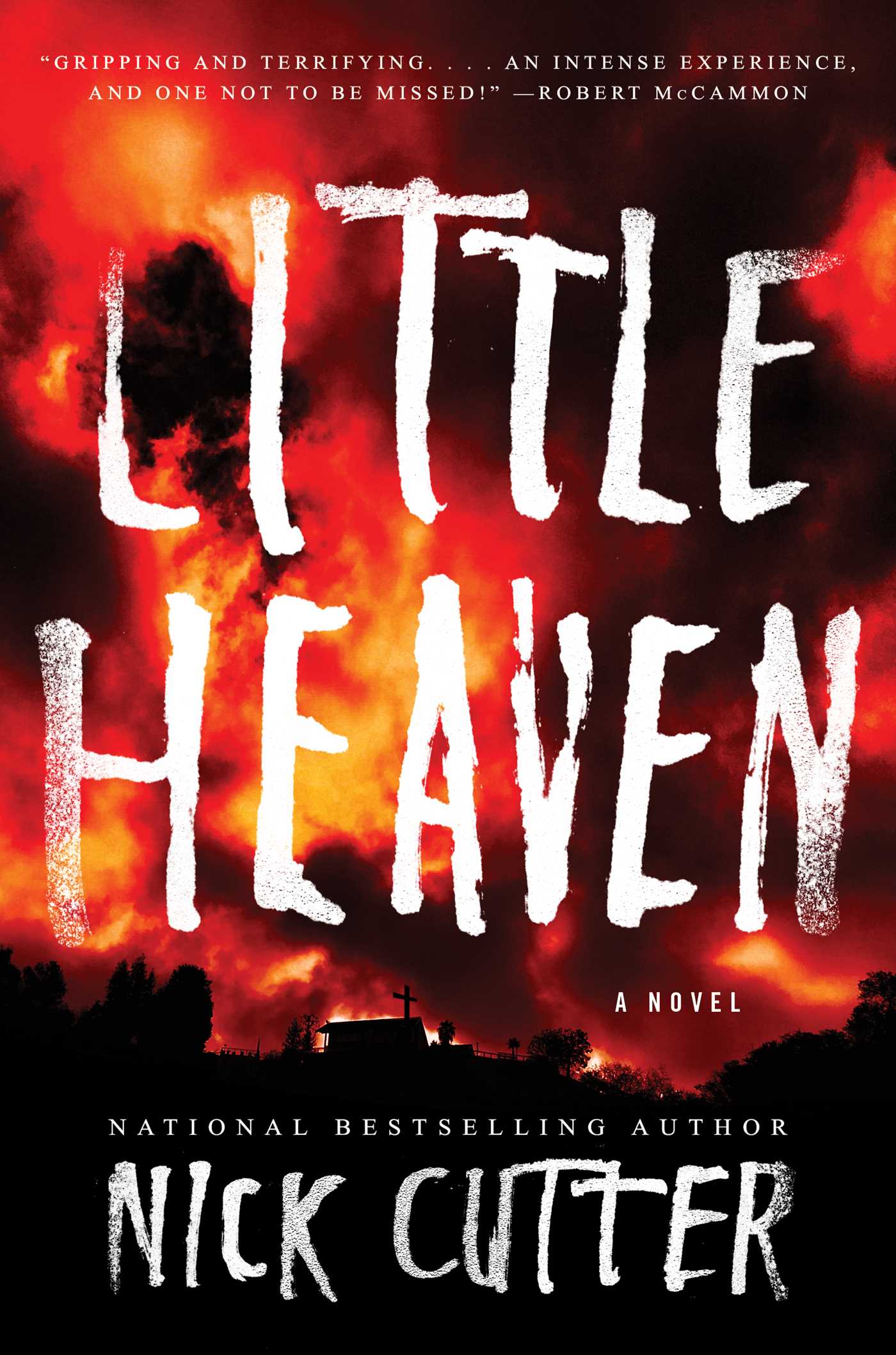
New Mexico, 1965. Three seasoned killers converge on each other, then on a cult leader and a consuming force of darkness that threatens to overtake the world. Fresh, unflinching horror ensues. This is Nick Cutter’s Little Heaven. New Mexico is the perfect sparse setting for this modern take on classic westerns; outlaws, revenge, a maiden in distress, and a reverend that makes the most unhinged Pentecostal tongue-speaker feel perfectly sane all combine in a series of story beats Louis L’Amour would have found comfortably familiar, if he could stomach the visceral punches Cutter weaves throughout, a la Cormac McCarthy. Little Heaven’s New Mexico has “scratch-ass” towns with “straggle-ass” streets in which hired guns ask their targets, “Are you square with your creator?” before dispatching them to what lies beyond.
By Chih Wang
T. Greenwood’s new novel, The Golden Hour, is a beautiful, haunting mystery folded into the personal drama of a woman finding her artistic truth. When she was thirteen, Wyn took a shortcut through the woods on her way home. What happened there would send Robby Rousseau to jail and forever mark her as a cautionary tale to other girls. Twenty years later, living next door to her ex-husband, Wyn is unhappily painting generic landscapes to pay the bills when she learns that new DNA evidence might set Robby free.