TCR Talks with Ben Blatt

By: A.M. Larks

In his latest book, Nabokov’s Favorite Word Is Mauve, Ben Blatt uses his data journalism skills to tackle writing’s lingering questions and examine adverb usage, gender pronoun tendencies, reading levels, and writers’ favorite and fallback words.

Although Blatt uses statistical analyses to show that writers generally follow their own writing advice, word counts grow in size after the first publication, and co-authors rarely get equal title space on book covers, his work isn’t a math book disguised as a creative writing book. Blatt uncovers interesting insights into style and writing tendencies by looking at rule breakers and followers, including best sellers, critically acclaimed works, and fan fiction, to give the reading public and would-be authors a comprehensive view of what writing looks like by the numbers.

Read more

TCR Talks with Jean Hastings Ardell

BY: Nathania Seales Oh

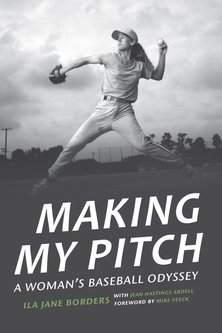
In Making My Pitch: A Woman’s Baseball Odyssey, Jean Hastings Ardell co-authors the deeply moving memoir of Ila Jane Borders, a woman shattering gender stereotypes in a male-dominated profession while navigating her secrecy, shame, and eventual acceptance of her sexual orientation.

Throughout the book, Ardell points to transformative moments of struggle in Borders’ life: as a child at home and in the church, as a young woman on the baseball field and in male locker rooms, and at a Christian university where she played before being signed to play professionally. There are moments of levity alongside anecdotes of profound loss and rejection that show the reader Borders’ path to authenticity and success.

Read more

TCR Talks with Gayle Brandeis

By: Angela M. giles

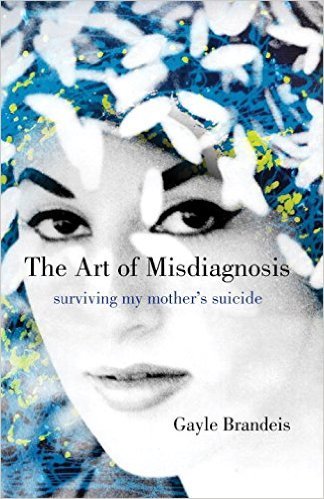
I am not sure when I first became aware of Gayle Brandeis and her work. It was a few years ago, and truthfully, it was the story of her mother’s suicide that drew me to her. There is a strange bond between survivors of suicide, a shared understanding of that particular kind of loss and the way in which our kind of grief is often messy. I read a few of her essays online and was hooked. I poured through whatever I could get my hands on by her, and her poetry is amazing, by the way. I knew she was writing a book about her mother’s suicide, and whereas saying I was looking forward to it sounds a bit morose, I was. So, when the opportunity to speak with her about writing the book was presented, I was thrilled. It turns out, Gayle is as brilliant and kind in person as you hope she is, and she has an amazing ability to distill grace from even the most painful moments.

Read more

TCR Talks with Helena Echlin and Malena Watrous

By: D.M. Olsen

When I found out that Helena Echlin and Malena Watrous, two instructors I’ve taken classes from at the Stanford Online Writer’s Studio, were collaborating on a YA novel, I was curious about their work. When I heard what their book was about, I was even more intrigued. A book about “mean girls with superpowers,” sounded entertaining and original. The protagonist, fifteen-year-old Laurel Goodwin, wakes up to find her older sister, Ivy, missing from their shared bedroom and is forced to team up with mean girls from Laurel’s high school to find her.

After reading the book and seeing all the amazing reviews online, I caught up with the authors, who graciously agreed to do a brief interview for The Coachella Review.

Read more

TCR Talks with Ragnar Jónasson

By D.M. Olsen

On a recent visit to Reykjavik, Iceland, I found a great little bookstore in the downtown area. Eymundsson was a three-story establishment with a coffee shop on the third floor. I sought out the section by Icelandic authors and came across an impressive display for Ragnar Jónasson and his Dark Iceland Series. I knew that Nordic noir was very popular throughout the European zone, so I purchased a copy of Jónasson’s bestseller Snowblind. I read the first chapter that night, and tore through the rest of the book in a few days. Needless to say, it’s a gripping read. It tells the story of Ari Thor, a rookie police officer in an isolated Icelandic village investigating the mysterious death of a writer. After I finished it, I emailed Ragnar to see if he would be interested in doing an interview, expecting never to hear back. To my surprise, he responded, so I asked him a few questions about his books and his writing process over email.

Read more

TCR Talks with Jenny Forrester

by dein sofley

In her debut memoir, Narrow River, Wide Sky, a heart rendering portrayal of small-town life, Jenny Forrester vividly evokes the landscape and culture of the conservative Colorado town where she grew up surrounded by narrow-minded churchgoers, ranchers, Native Americans, and strident
patriots. The book explores the complex forces of family, politics, and religion that served as catalysts for the author’s feminist awakenings. Throughout the memoir, Forrester navigates feelings of isolation, loss and grief with sensitivity and resilience. It’s a breathtaking, story about one woman’s search for identity within the mythology of family and America itself.

Forrester is the force behind Portland’s Unchaste Readers—a quarterly reading series for women, now in its fifth year—and an award-winning flash fiction writer. Her stories have been published in Seattle’s City Arts Magazine, Gobshite Quarterly, PomPom Lit, Nailed Magazine, Hip Mama, The Literary Kitchen, Indiana Review, Columbia Journal and in the Listen to Your Mother anthology, published by Putnam. Her latest writings and photos can be found at www.jennyforrester.com.

The Coachella Review: The title Narrow River, Wide Sky reflects the Western pioneer mythology that, as a child, you struggled to navigate. In its injustices and contradictions is your genesis story.  You forged your identity through the uncharted terrain of your upbringing. As a result, the word navigate emerges throughout your memoir. In your stories, you navigate the vast landscape of your western Coloradan heritage, along with your mother’s contradictions and feelings of isolation. As a child, you weren’t given the tools to navigate. Was writing a way for you to map your feelings?

Jenny Forrester: Writing became the way to deal with my feelings, with my moral core, with my desire to come to terms with loss, but also with many other things in life. I’d kept a diary and actually quoted from it in the book—it was a coming together of different sorts of writing I’d always done, but writing a book to be published was a dream. An ambition. Something I wanted, but wasn’t sure I could do for many reasons, ranging from the impact it could have on my family members to the artfulness and the how-to to the actual finding a publisher and then what.

Read more

TCR talks with Zoe Zolbrod

BY tracy granzyk

Zoe Zolbrod’s memoir, The Telling, was published in May of 2016, and it will undoubtedly remain a “go to” book for both survivors and family members of those who have experienced childhood sexual abuse. In The Telling, Zolbrod comes to understand and accept the grey her own experiences have equated to within, while at the same time gives readers an example of how trauma and tragedy might be assimilated and used to empower one’s self. Especially poignant and game-changing in the memoir are her experiences as “Mama Bear”; a new parent with an immediate need to protect not only her children, but all kids from suffering the same experience she did. While Zolbrod never takes refuge in the title of victim, her honest pain exposes the depth to which she is still able to feel, never seeming to shut off and others out as a result of what was done to her.

As a writer, Zolbrod’s voice is both authoritative and accessible, and the narrative flows smoothly through different time periods of her life. She serves as both teacher of topic and craft by threading four Research Shows chapters within the story’s framework, allowing her to break off from the narrative, which she described during our conversation as a respite from the emotion inherent in diving back into such a painful experience. As a person, Zolbrod’s warmth and kind soul are what I was first drawn to during the interview that follows.

Read more

TCR Talks with T. Greenwood

By Chih Wang

T. Greenwood’s new novel, The Golden Hour, is a beautiful, haunting mystery folded into the personal drama of a woman finding her artistic truth. When she was thirteen, Wyn took a shortcut through the woods on her way home. What happened there would send Robby Rousseau to jail and forever mark her as a cautionary tale to other girls. Twenty years later, living next door to her ex-husband, Wyn is unhappily painting generic landscapes to pay the bills when she learns that new DNA evidence might set Robby free.

Read more

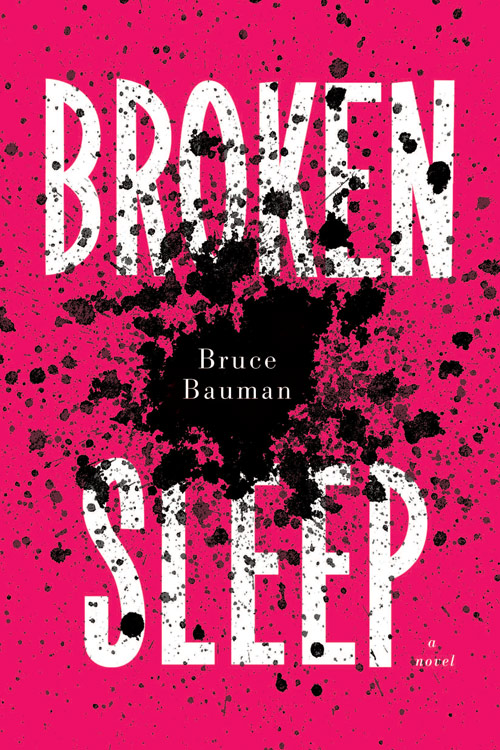
TCR talks with Bruce Bauman

Cover-Broken-SleepBy Heather Scott Partington

Bruce Bauman’s novel Broken Sleep is six hundred pages of madness. But it’s madness with intent. The author’s postmodern rock and roll saga takes on politics, art, and the idea of inheritance. Moses Teumer, a professor suffering from leukemia, goes looking for his real parents to find a bone marrow match. He discovers his mother, Salome Savant, was a young artist impregnated by a rumored Nazi; Salome was told after Moses’ birth that he was dead, while he was skirted away in a quick adoption. When Moses finds Salome, he also discovers he has a half-brother, Alchemy Savant, who is a star in the most famous band in the world, The Insatiables. But in a book where characters believe they can time-travel through their DNA, nothing is as simple as it seems.

Bauman, senior editor of the well-respected but recently defunct literary magazine Black Clock, is a professor for CalArts’ MFA and Critical Studies programs. His work in Broken Sleep is unlike anything I can remember reading. Its multi-layered plot, titles, character names, discography and puns operate on a level unlike most contemporary fiction. Bruce and I caught up recently by email after our panel at the LA Times Festival of Books (“Fiction: Finding a New Normal”).

Read more