by Briana Weeger
Only a few hours after Jennifer Spiegel is diagnosed with breast cancer, she is immediately on the page, sorting her thoughts and emotions through writing. “At this point, I have no clue what stage it is, if I’m going to die, if I’ll have one or both breasts cut off, or if nothing will be removed at all. I will tell you this: I instantly feel that my body is the enemy.” The result is a candid and compelling debut memoir by novelist Jennifer Spiegel, Cancer, I’ll Give You One Year: A Non-Informative Guide To Breast Cancer, A Writer’s Memoir In Almost Real Time.
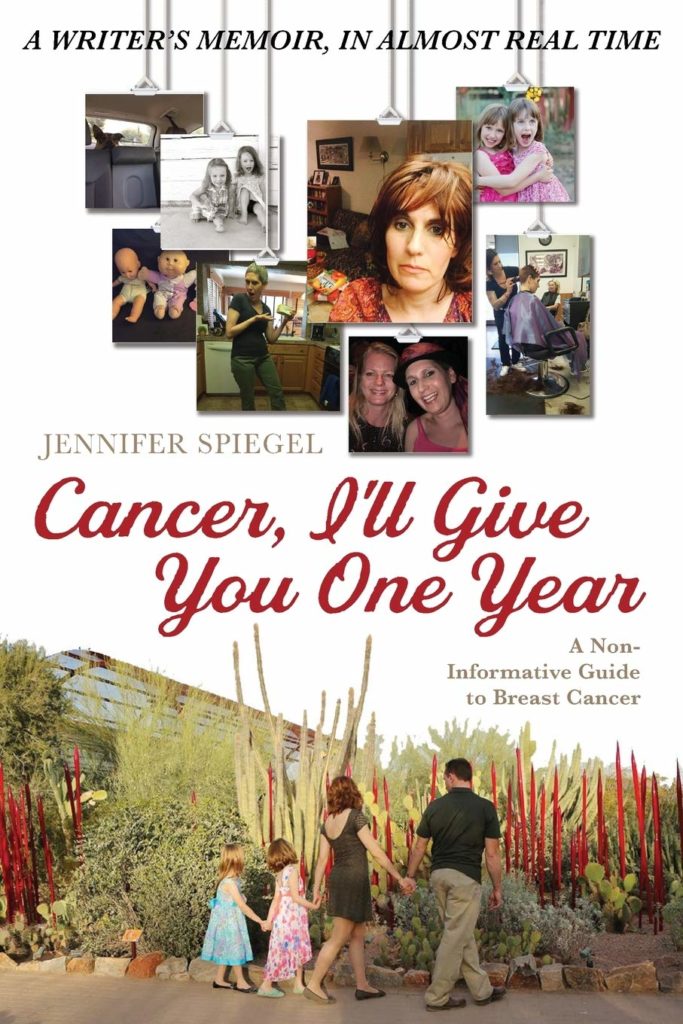 Spiegel’s memoir in “almost real time” reminds me of a story I once heard about a man suffering from Alzheimer’s. The man was due to give a presentation to a large gathering of people and had only recently been diagnosed. Right as he walked on stage, he forgot why he was there and what he was presenting. Looking out to a silent crowd, and not knowing what to do, he started to name out loud the emotions he was feeling. Frustrated, confused, frightened, alone. It was a method his psychiatrist had recommended that could help him to calm down when he had a memory lapse and began to feel anxious. Standing on that stage, it helped. He started to relax and remembered why he was there. After the event, many of the audience members approached him and told him that was the most powerful part of his presentation. Spiegel’s memoir has a similarly powerful effect.





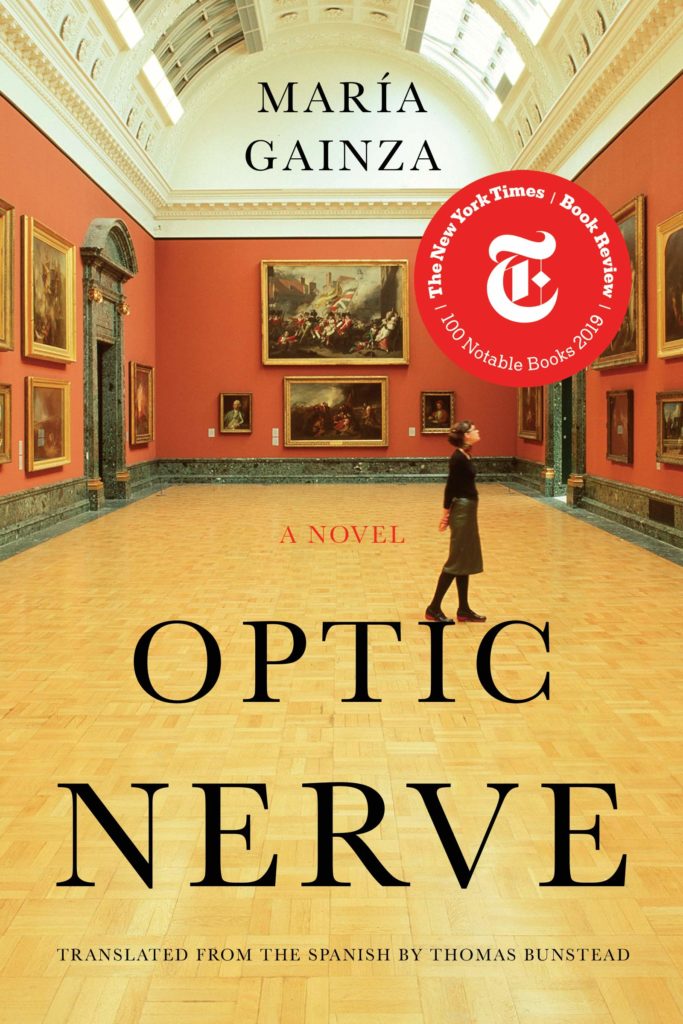 Several years ago I visited the Picasso Museum in Malaga, Spain. At the time, each gallery was arranged by theme rather than chronology, so that as you made your way through, you weren’t seeing Picasso’s works in the order they were —created—you would see a ceramic he created in the 1930s next to a drawing created at the end of his life next to a painting he made in the 1920s, all seemingly random until you realized that they focused on the same theme or subject. María Gainza’s debut novel Optic Nerve reminded me of this museum from the very first page. The story doesn’t proceed chronologically through the narrator’s life, but rather thematically. Beginning each chapter feels like stepping into a new gallery, perhaps especially because the book deals directly with the history of visual art.
 The brain often holds onto distinct and unexpected images and memories at the time of traumatic events. These memories may not make sense on their own, and they may seem disconnected from what actually happened.