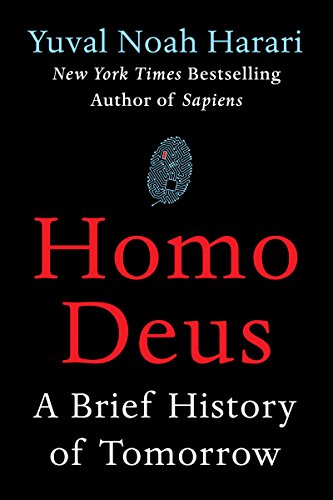
Book Review: Yuval Noah Harai’s “Homo Deus: A Brief History of Tomorrow”

By: A.E. Santana

Who would like to know the future? To know and understand the coming changes to our environment, society, and the individual? Whereas Yuval Noah Harai doesn’t claim to be omniscient or a fortune teller, his book Homo Deus: A Brief History of Tomorrow paints a picture of what may be in store for humanity in the next fifty or a hundred years. Harai does this not by making psychic predictions but, instead, by carefully examining history, biology, psychology, and technology. With a copious amount of research to back up his claims, Harai gives a detailed hypothesis on the next steps of human evolution—taking people from Homo sapiens to Homo deus. Whereas Harai gives intelligent, thorough explanations, it is through his clear, clever, and often humorous writing that he connects with readers.

Homo Deus: A Brief History of Tomorrow is broken up into an introduction and three parts: “Homo Sapiens Conquers the World,” “Homo Sapiens Gives Meaning to the World,” and “Homo Sapiens Loses Control.” Each part delves into the rise and fall of societies, provides an intimate look at biology and psychology, and discusses the growth of technology as it pertains to Harai’s claims. It is by understanding these topics, Harai suggests, that people will be able to understand how society may progress into the next stage of human evolution.

Read more

Book Review: Megan Stielstra’s “The Wrong Way to Save Your Life

By: A.M. Larks

Nothing other than fate can attribute to my review on Megan Stielstra’s book, The Wrong Way to Save Your Life, which took place a week after the events in Charlottesville (which occurred on August 12, 2017), when I was supposed to have received it a month prior. During the last week, the fear for our country has increased, it is undeniably pervasive and palpable. This fear is in every conversation, every communication, and every action or reaction. Fear is exactly what Stielstra tackles in her book. Stielstra ties the broad and the specific by examining fear at its roots, fear in her own life, and fear in everybody’s lives. Written before the November 2016 election, she comments on the fear rhetoric building at that time (which seems to have reached a violent pinnacle with Charlottesville), claiming that we must work through fear by confronting that which lies on the other side. Her words are startlingly prophetic:

Read more

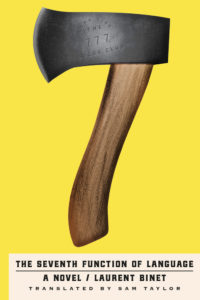
Book Review: Laurent Binet’s “The Seventh Function of Language”

By: John Flynn-York

Laurent Binet’s first novel, HHhH (short for “Himmlers Hirn heisst Heydrich,” which, translated, means “Himmler’s brain is called Heydrich”), was a fictional reconstruction of the assassination of the Nazi Reinhard Heydrich. The novel’s narrative fluctuated between past and present, history and story. In the past, Heydrich rises to power in the Third Reich, committing unspeakable atrocities along the way, while two operatives—the Czech Jan Kubiš and the Slovak Jozef Gabčík—plan to kill him. In the present, the narrator grapples with this story and how best to write it, drawing on books, museums, and other references to recreate it in detail. The brilliance of the book came from the tension between these perspectives. What does it mean to recreate history? Can we understand the way historical figures understood things—that is, can we get inside their heads? Can we ever know the truth? In other words, HHhH was as concerned with what it means to tell a story about history as it was with the historical events themselves.

Binet’s new book, The Seventh Function of Language, similarly takes its inspiration from a real event: the accident that claimed the life of the semiologist Roland Barthes. Out of this incident, Binet spins a madcap tale of intellectuals run amok that is by turns wildly entertaining, mildly frustrating, and intellectually captivating—and only sometimes faithful to the historical record.

Read more

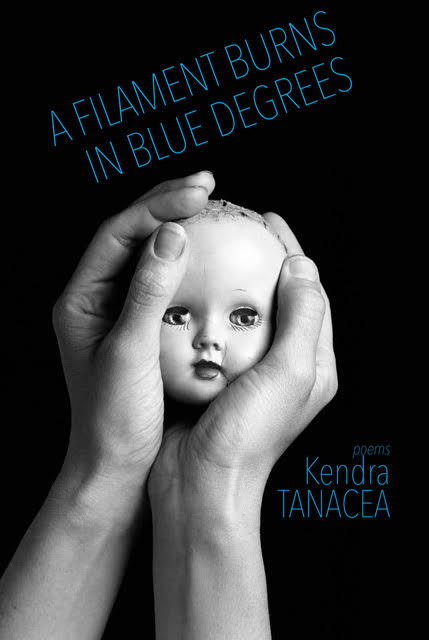
Book Review: Kendra Tanacea’s “A Filament Burns in Blue Degrees”


BY: Catherine M. Darby

A Filament Burns in Blue Degrees by Kendra Tanacea is a haunting first collection of poems released this year by Lost Horse Press. Tanacea is a master of the moment—not straight-on moments, but rather, ones full of visuals and emotions that transport the reader into Tanacea’s world. In this world, the reader becomes a lover, beloved, betrayed, friend, child, and want-to-be-mother, all while ruminating about life and the fullness it can offer.

Her poems intelligently meander on corners of braided rugs and peep through keyholes to see what life is beyond that usual existence of life, her words intoning the mysteries and science of the universe.

In “Keyhole,” the narrator looks through the keyhole of a locked door, straining to see “what is out of sight.” The words deliver full sensory experiences of an ever-widening life:

There is the scent of man, of woman, of cedar.
The eye shifts, straining in its socket.
French doors open onto a veranda
overlooking an ivy-walled garden.
The round moon is rising, giant and yellow.
Star jasmine, star jasmine!
An eye can see far beyond
its scope: solar systems, galaxies,
the Milky Way’s skid of stars.
All atoms, revolving around one another.

Read more

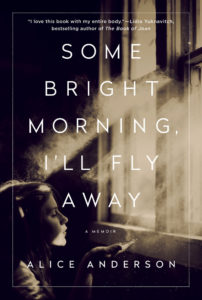
Book Review: Alice Anderson’s “Some Bright Morning I’ll Fly Away”

By: Kaia Gallagher

In Some Bright Morning I’ll Fly Away, Alice Anderson proves she is a survivor no matter what life throws at her. Her memoir recounts a decade-long battle to protect her three children from a vengeful, violence-prone ex-husband. The courts provide little help, encouraging family reunification rather than assuring the safety of an abused spouse.

Anderson is no stranger to hardship. Early in her writing career, she recounted her determination to overcome her father’s sexual abuse in an award-winning book of poetry. Human Nature is a harrowing description of a young girl’s fight for a future despite a childhood filled with incest and violence. It won the 1994 Elmer Holmes Bobst Award for Emerging Writers.

Despite her early success as a poet and international fashion model, Anderson is haunted by her past: “Something about [being a model] made me feel used up, consumed, like I was the little girl my father gobbled up all over again, his sexual abuse consuming in a drunken, hungry rage all the best parts of me until I was nothing, but a pretty, performing doll.” She becomes ripe for a relationship with Liam, her ex-husband whom she sees as someone trying equally hard to escape his family demons. Her spiral down into acquiescence is gradual, with an ever-tightening noose that threatens to erase not only Anderson’s very identity but also her life.

Read more

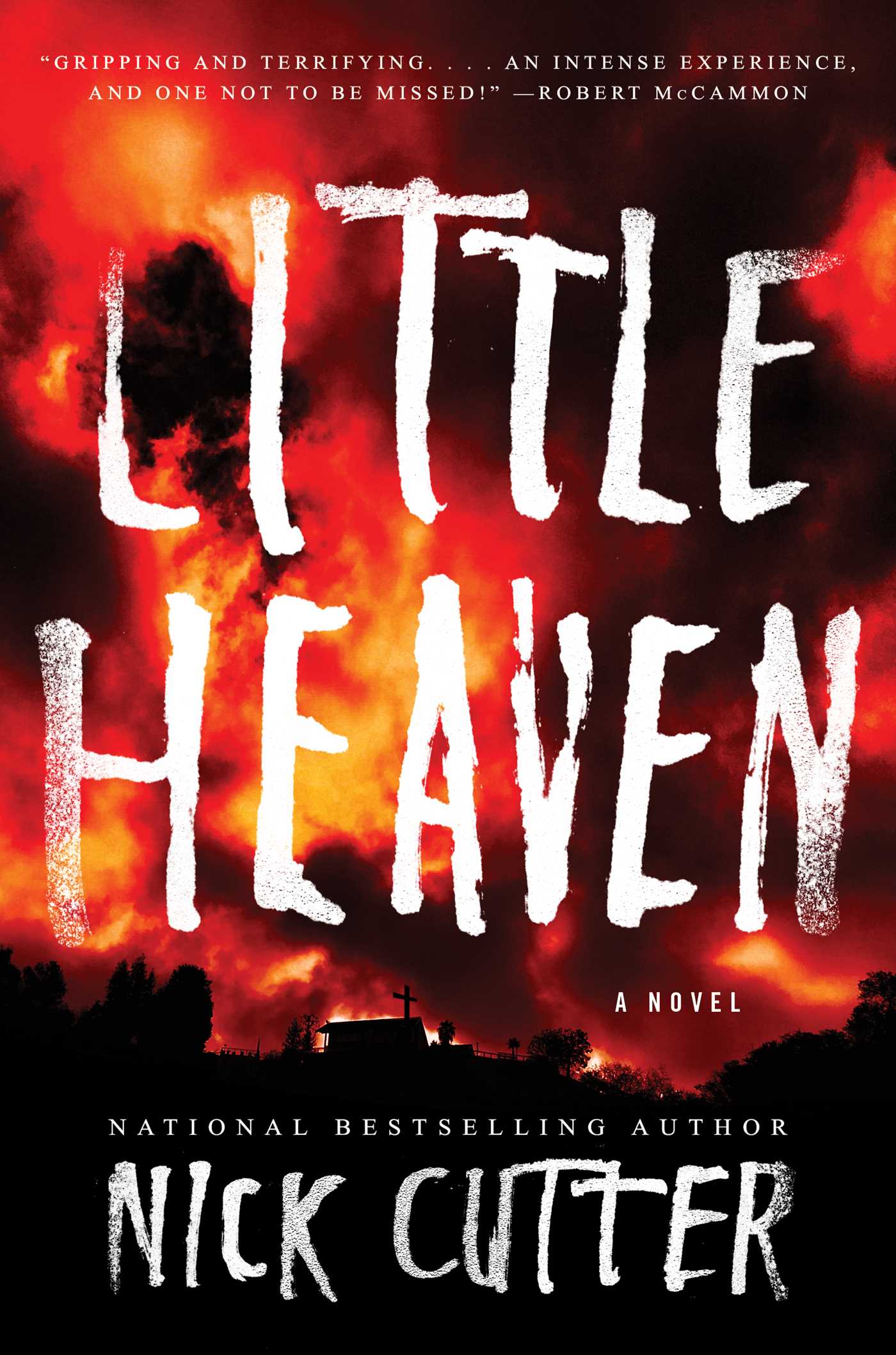
Book Review: Nick Cutter’s “Little Heaven”

By eli ryder

New Mexico, 1965. Three seasoned killers converge on each other, then on a cult leader and a consuming force of darkness that threatens to overtake the world. Fresh, unflinching horror ensues. This is Nick Cutter’s Little Heaven. New Mexico is the perfect sparse setting for this modern take on classic westerns; outlaws, revenge, a maiden in distress, and a reverend that makes the most unhinged Pentecostal tongue-speaker feel perfectly sane all combine in a series of story beats Louis L’Amour would have found comfortably familiar, if he could stomach the visceral punches Cutter weaves throughout, a la Cormac McCarthy. Little Heaven’s New Mexico has “scratch-ass” towns with “straggle-ass” streets in which hired guns ask their targets, “Are you square with your creator?” before dispatching them to what lies beyond.

Read more

Book Review: C. W. Cannon’s “French Quarter Beautification Project”

By John Flynn-York

Wild, beautiful, bawdy, and vivid, C. W. Cannon’s new novel, French Quarter Beautification Project, is the song of one night on the streets and in the bars of New Orleans’ French Quarter, circa 1986. Waveland Rogers, known as “Buck” by all—“they call him Buck Rogers because of his repute for epic spaciness, a grand, sweeping, tremendous, but detailed spaciness”—is an aspiring composer who frequently drifts off into music-inspired reverie. He’s a server at Everybody’s Happy, a restaurant with themed tables and a costumed waitstaff, who jocularly call it “Nobody’s Here” due its lack of clientele. Buck wears a fedora and carries a whip, earning him another nickname, Louisiana Jones; his fellow servers include the buxom, randy Glory Ann, who dresses as Tinkerbell; a young guy known as Scrunge, who parades around as a lion; and Marciss, the manager, who takes his responsibilities lightly and is the occasional object of Buck’s skittering lust.

Read more

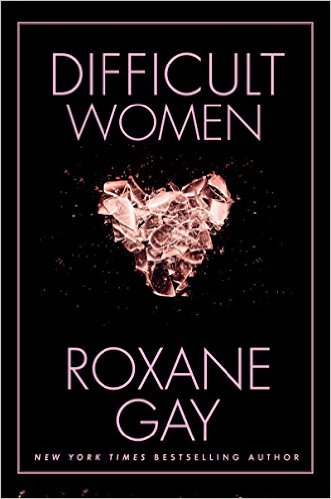
Book Review: Roxane Gay’s “Difficult Women”

By Jenny Hayes

difficult-womenRoxane Gay’s Difficult Women is a relentless and thrilling read. As in much of Gay’s other work, particularly her novel An Untamed State, there is no looking away from brutality, yet moments of grace, beauty, and humor serve as striking counterparts to the more unsettling passages.

In these twenty-one stories, women negotiate problematic relationships, search for love and comfort, and try to cope with pain.

Read more

Book Review: Rich Ferguson’s “New Jersey Me”

By Jenny Hayesnew-jersey-me-cover

Rich Ferguson’s debut novel New Jersey Me is a coming-of-age tale set in an intriguingly dysfunctional ‘80s South Jersey town. The narrator, Mark, has a chaotic home life. His mother moved out of the house when he was fifteen, leaving him alone with his dad, a tough-talking, somewhat shady police chief, and the good things in his life are few and far between. He and his best friend Jimmy are even convinced they’re cursed by a “pet jinx” that causes all animals in their care to meet a premature demise. The two teens spend most of their time listening to music, getting wasted, and trying to have as good of a time as they can in Blackwater, a town Mark describes as “just strip malls, gun shops, radiation, and funeral homes.”

Read more