Book Review: LaTasha “Tacha B.” Braxton’s “Dark Chains”

BY: A.M. Larks


Dark Chains by LaTasha “Tacha B.” Braxton is a self-published spiritual autobiography of a girl’s journey through abuse to religious conversion. At its high point, Braxton’s story connects the reader to the experience of growing up in an abusive environment. 

We children were suffering the most, having to constantly hear that yelling and bad language influenced by drugs and alcohol through our locked bedroom door. We dealt with the trauma our mother felt from having a gun put to her face by my father. We dealt with the fear after my father threw a big concrete block through their bedroom window, shattering glass everywhere, with the brick barely missing my tiny head as I innocently slept in my mother’s arms. We were succumbing to this dysfunctional curse that would negatively impact too many generations to come.

Read more

Book Review: Adam Nemett’s “We Can Save Us All”

By David M. Olsen

We Can Save Us All is an ambitious debut by a very talented Adam Nemett. The book begins with a chance meeting of our rather nerdy protagonist, David Fuffman, in an odd, drug-enhanced damn-building exercise where he meets the charismatic and wealthy Mathias Blue—in a frigid river, at Princeton. This clever scene is a fun springboard into the witty, satirical, and nihilistic novel that is to follow. The story is set in the near future where all-too-realistic issues of war and climate change combine with a phenomenon called “Chronostrictesis,” where time itself seems to be coming to an end as though through a funnel: human existence as we know it is no longer, as the characters have to stockpile food and supplies for the severe weather and the impending superstorm.

Read more

Book Review: Micah Perks’ “True Love”

BY: A.M. Larks

Everyone I know is looking for a way to escape, hit pause on reality, and just take a breath; get immersed in something else, someone else, anything else because the real world seems too much to bear. And I am no exception. I do it too. Because at its heart, that’s what reading is: a way to escape the world around you, which makes it ironic that my escape would be reading about characters who are trying to escape their own complicated fictional lives in True Love And Other Dreams of Miraculous Escape by Micah Perks.

Read more

Book Review: Nicole Chung’s “All You Can Ever Know”

BY: A.M. Larks

It is our origin stories that shape us. How we came to be in this world matters almost as much as what we do in it. There is a natural and innate curiosity to know the facts that happened before our consciousness, that ties us to our personal histories, to our culture, and to a larger family history. “Family lore given to us as children has such a hold over us, such staying power. It can form the bedrock of another kind of faith, one to rival any religion, informing our beliefs about ourselves, and our families, and our place in the world,” Nicole Chung writes in All You Can Ever Know. These stories are often simplified down to almost anecdotal summation, like my spouse who blames his perpetual tardiness on being late for his own due date. He came out a month late but only by inducement. He was late in the beginning and therefore will always be late.

Read more

Book Review: Kim Brooks’s “Small Animals: Parenthood in the Age of Fear”

By: Felicity Landa

Kim Brooks’s book, Small Animals: Parenthood in the Age of Fear, begins with a flurry of emotions that I suspect will be as familiar to other parents as it was to me. In a rush of stress and worry mixed with the impulse to placate her child in a tense situation, Brooks made a split-second decision to leave her four-year-old son in the car while she ran into the store. She was gone for five minutes. She could see the car from the front store windows. And while her son was perfectly fine when she returned, this seemingly trivial decision led to one of the most monumental consequences of Brooks’s parenting years. Someone had filmed her, and sent the video to the police.

Read more

Book Review: “Writers Resist: The Anthology 2018”

BY: J. Markowitz

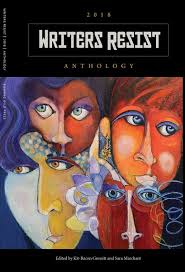
Writers Resist: The Anthology 2018 (Running Wild Press) edited by Kit-Bacon Gressitt and Sara Marchant is a compilation of fiction, poetry, and essays originally published on WritersResist.org, an online literary journal established in the aftermath of Trump’s election. The Resistance is a decentralized activist movement against the powers that led to Trump’s election; the Anthology is a response to the question of the role of the writer in that movement. The book is activism in writing; its pages, a space for debate, confronting oppressive paradigms, and expressing solidarity.

Read more

Book Review: Sandra Gail Lambert’s “A Certain Loneliness”

 by Annette Davis

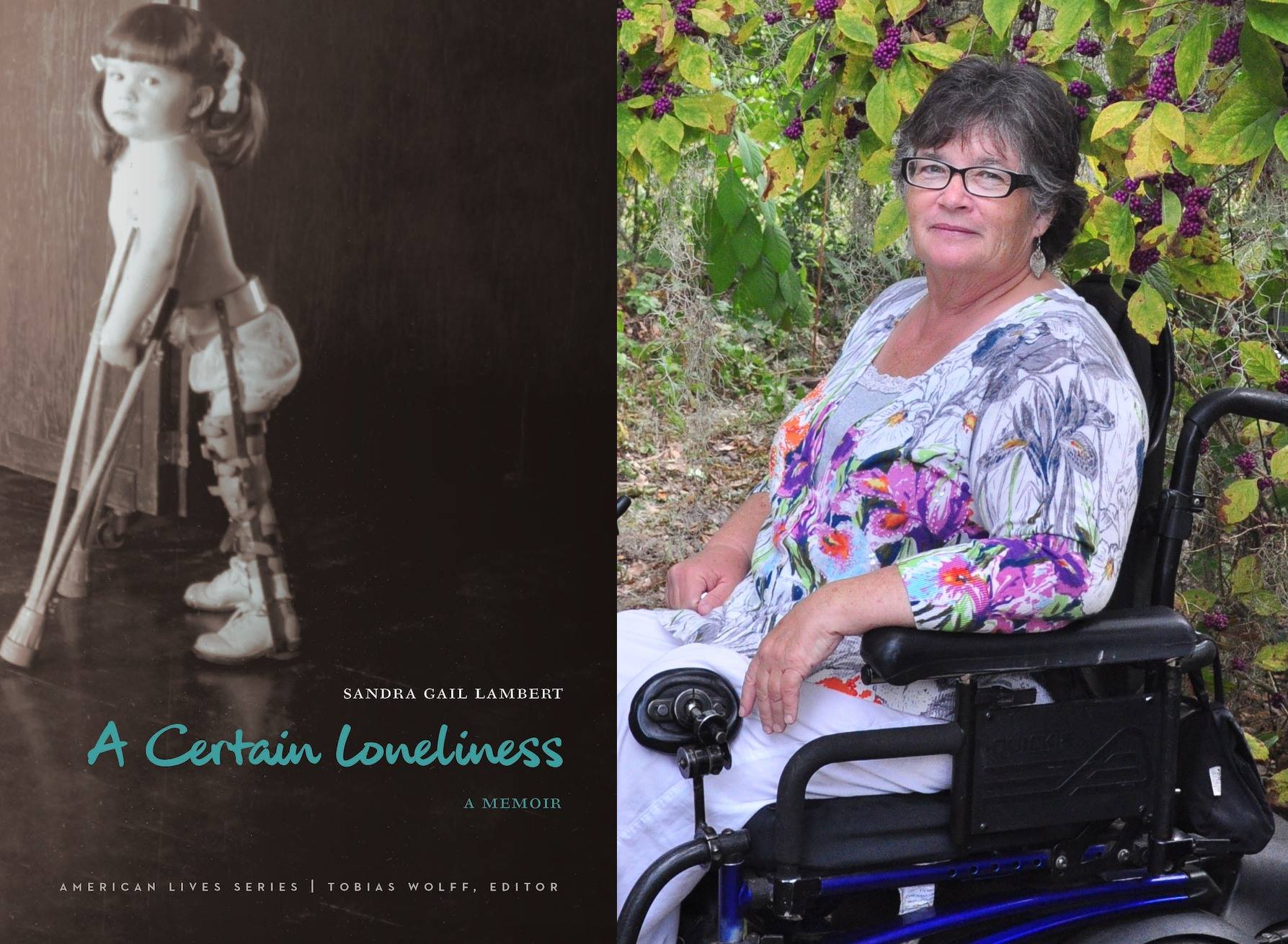
In her touching memoir of life as a disabled lesbian, Sandra Gail Lambert probes the issue of what quality of life really means. Throughout the series of short essays, Lambert takes the reader on a journey from the author’s childhood, where we learn Lambert is stricken with polio, to an adult struggling to maintain her independence in the face of the disease that wracks her body with pain and limitations. In equal parts, the memoir is a story of self-love and the search for Lambert’s one true love—a life partner.

Read more

Book Review: Dallas Woodburn’s “Woman, Running Late, in a Dress”

BY A.M. Larks

Dallas Woodburn’s debut collection of stories, Woman, Running Late, in a Dress, is characterized as interwoven stories, interlinked stories, and, in her own words, “a short story cycle.”
A short story cycle is a curious beast. It is the narwhal of the literary world, a being so odd the Internet could have made it up. But narwhals and short story cycles do exist, and both are rare.

Read more

Book Review: Kristi Coulter’s “Nothing Good Can Come From This”

By Charli Engelhorn

If there was a warning label on the cover of Kristi Coulter’s debut book of essays, Nothing Good Can Come from This, it might read, “This book will cause you to interrogate your life, habits, and doctrines and challenge any previous assessments made about your relationship with alcohol.” That is not to say Coulter’s essays presume to convince the reader of a closeted drinking problem; rather, her heart-rendering prose ladled with sardonic wit create a rumination on the mundane persistence of time, the dichotomy of who we are and who we pretend to be, and the nature of society and compromises required therein, which, if one is not careful, can accumulate into addiction. With a quick and often dark cadence, Coulter weaves her essays to create a remarkable story about the unremarkableness of her journey to sobriety, not in the feat itself, but in the banal scenarios that led to her drinking and decision to stop. There is no melodrama infused in the stories of her alcoholism or sobriety, no sensationalism about addiction, no wringing hands or desperate pleas to the gods. As Coulter explains, after years of massages, yoga, therapists, and other attempts to trick her into wanting to quit, she woke up one day and realized, “what I wanted was no longer important. I would just have to wait and hope that eventually I would want something else.”

Read more