BY MATT ELLIS
With seven Law and Orders, four CSIs, and crime thrillers ranking among the top-selling genres of fiction, it is no mystery that America has an addiction to police procedurals and court drama. Networks and publishers have made an industry out of true crime re-creation and documentaries for those with a more discerning bloodlust that want to know that the murder and mayhem they consume is the real deal. In this environment, it should come as no surprise that Kate Winkler Dawson’s newest book, American Sherlock, with its equal parts biography, true crime facts, forensics science history, and social commentary, is primed to be a shotgun blast of mass appeal into the face of the nonfiction marketplace.
 At first blush, American Sherlock is a biography about Edward Oscar Heinrich, a man Dawson identifies in the prologue as “a forensic scientist and criminalist from the first half of the twentieth century, a man who changed how crimes were solved before forensics became the foundation of most criminal cases – America’s Sherlock Holmes.”
Dawson tackles Heinrich’s illustrious career by walking the reader through his most famous cases. The chosen series of vignettes reads like the lead plots of the best crime fiction—a Hollywood mogul accused of sexual assault and manslaughter; a devout husband charged with the murder of his wife; a manhunt after a boy finds a body part; and quite possibly the last great American train robbery. That’s not all, but you get the idea.
 The Witches Are Coming is a collection of essays by Lindy West, some brand new, and some previously published in various online and print magazines and updated for the book. West has been around for a long time. Her work has been featured in publications like The New York Times, The Guardian, and Jezebel. As I read The Witches Are Coming, I recognized a couple of the essays, having read them when they were originally published, but I’ll admit West’s name didn’t become familiar to me until I binge-watched Season One of Shrill, a Hulu original television series starring SNL’s Aidy Bryant. I was impressed and intrigued enough to look up Shrill’s writers, including West, the author of the memoir which inspired the television show. When I read that West had a new collection of essays, The Witches Are Coming, I got my hands on a copy as quickly as I could.
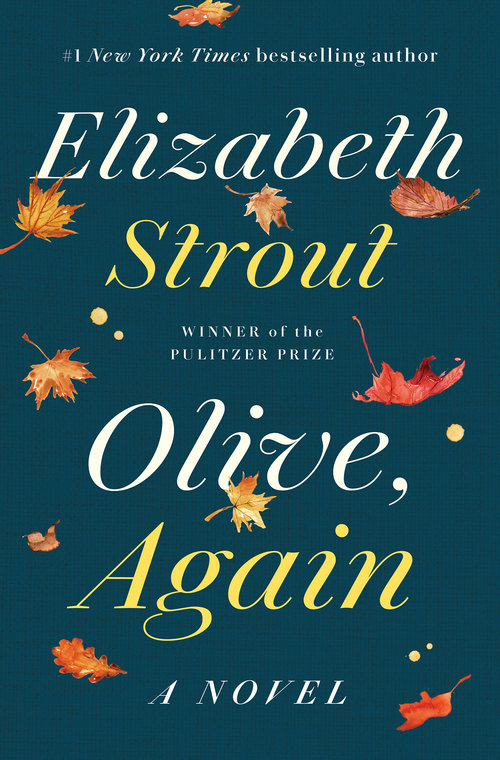 Elizabeth Strout’s third novel, Olive Kitteridge
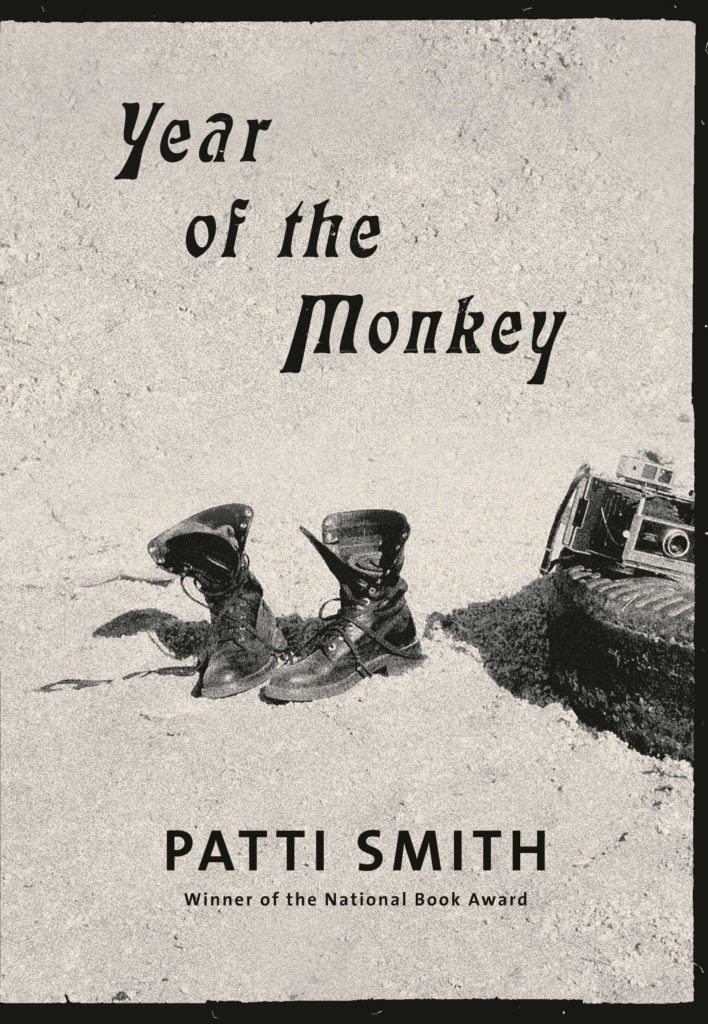 In the first days and weeks of 2020, the season for past reflections and future resolutions is upon us—if you’re into that sort of thing. In Patti Smith’s newest memoir Year of the Monkey, the writer, photographer, and musician takes a surreal look at her life in 2016, the year of the trickster monkey in Chinese zodiac. But Smith doesn’t seem to be a fan of New Year’s resolutions. Instead, in a tumultuous political and personal landscape, Smith is beautifully open to the lessons, connections, and hidden meanings within dreams that the year offers her. Her writing is a surreal mix of fiction and nonfiction as she contemplates what is real and attempts to absorb the absurd truths of living and dying.
 Are you Asian? Queer? Mixed race? A twin? No? Then Addie Tsai’s debut novel Dear Twin isn’t for you—emphasis intentional.
 The Butterfly Girl, Rene Denfeld’s second offering in her Naomi Cottle series, explores what it is to be lost versus invisible in a gritty thriller set in Portland’s Skid Row. Denfeld does a masterful job creating a compelling narrative by alternating views between two main characters—Naomi and Celia.
 Know My Name by Chanel Miller (Viking, 2019) is the untold story of the person who the world came to know as Emily Doe, the victim of a widely reported 2015 sexual assault on Stanford’s campus. Though Know My Name is a memoir, the book is many other things—a victim’s manifesto, a story of love and loss, and a close examination of the broken systems that protect perpetrators and betray victims. Chanel Miller, the woman we meet in the pages of this book is many things too. She’s an activist, a victim, a writer, an artist, a comedian, a daughter, a sister, a visionary, and more.
 Leave it to the generation that enjoyed a privilege and abundance fueled by post-WWII government subsidies to close the door behind them, handing their children an earth destroyed by greed, a democracy gone off the rails, and crushing student debt. Leave it then to a mind like CJ Hauser’s to capture what happens next: how the children abandoned in a dry well must set to work building for themselves a stairway of hope before they can climb out and face the serious work of healing the planet.
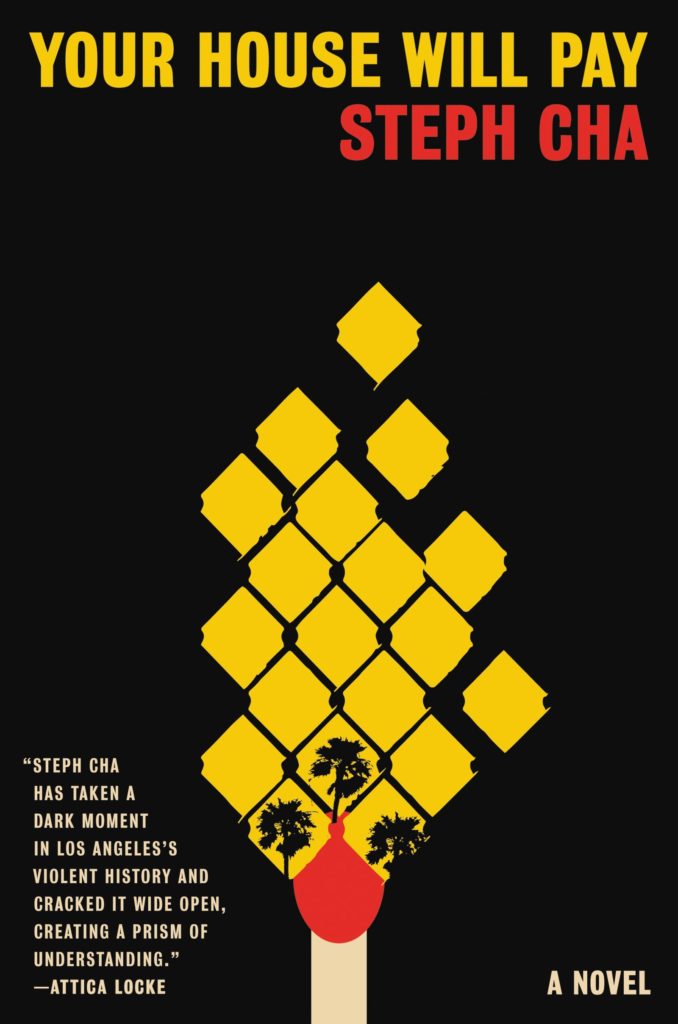 Ripples from the past resurface in Steph Cha’s new novel, Your House Will Pay.