
By Rachel Zarrow
 Know My Name by Chanel Miller (Viking, 2019) is the untold story of the person who the world came to know as Emily Doe, the victim of a widely reported 2015 sexual assault on Stanford’s campus. Though Know My Name is a memoir, the book is many other things—a victim’s manifesto, a story of love and loss, and a close examination of the broken systems that protect perpetrators and betray victims. Chanel Miller, the woman we meet in the pages of this book is many things too. She’s an activist, a victim, a writer, an artist, a comedian, a daughter, a sister, a visionary, and more.
 Leave it to the generation that enjoyed a privilege and abundance fueled by post-WWII government subsidies to close the door behind them, handing their children an earth destroyed by greed, a democracy gone off the rails, and crushing student debt. Leave it then to a mind like CJ Hauser’s to capture what happens next: how the children abandoned in a dry well must set to work building for themselves a stairway of hope before they can climb out and face the serious work of healing the planet.
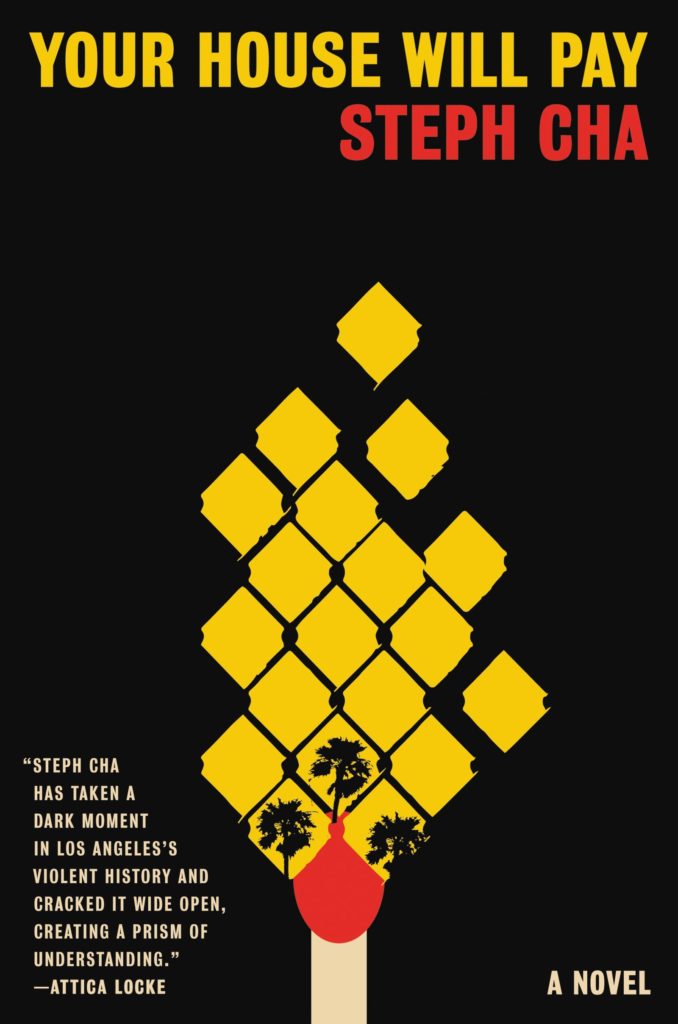 Ripples from the past resurface in Steph Cha’s new novel, Your House Will Pay.
 Banshee opens with a moment of bodily violence and tragedy. Not the personal tragedy of Samantha Baxter, sitting in an oncologist’s waiting room, moments from the cancer diagnosis which will unravel her, but the tragedy of a stranger:
 Karen Stefano’s What A Body Remembers is a timely and moving illustration of how our bodies instinctively tie our senses and memories together. It is a compelling book that reads as much like true crime as it does memoir, while delving into heady topics like trauma, PTSD, and victim blaming. Stefano manages to approach these subjects with a sensitivity that invites the reader to a deeper understanding of the after-effects of trauma while evoking empathy over pity.
 “How we slice the skin: Carefully, that’s a given.” So opens Mostly Dead Things, Kristen Arnett’s debut novel about Jessa-Lynn Morton, a grieving taxidermist living out a less-than-satisfying life with her dysfunctional extended family in Florida. I’m a sucker for a killer opening line, a killer opening scene, and I knew right away that I was in for something special. As the novel opens, we watch as narrator Jessa-Lynn Morton recalls her father teaching her taxidermy in his workshop. The scene is vivid and engaging. Right away, we begin to see what Jessa has been willing to do, ignore, and give up, all in an attempt to preserve or create the life she imagines for herself.
 Since the publication and instant success of her debut nonfiction book, Three Women, Lisa Taddeo has stated that she set out to tell a story about human desire. She spent eight years researching and writing the book, and as the years progressed, the story narrowed: she went from writing about human desire to writing about female desire. She went from writing about hundreds of women to writing about dozens, and then less than a handful, and then, finally, three. She went from denying any requests for anonymity to shielding the identities of most people featured in the final book. The resulting story feels, at first glance, too specific to be universal: three women, living in small American towns and entangled in various phases of heterosexual relationships.
 Trick Mirror: Reflections on Self-Delusion is the debut essay collection from The New Yorker staff writer, Jia Tolentino. In each essay she examines the ever-growing quagmire of self-delusion that faces us, humans living in the age of the internet.
 Celeste Ng’s first novel, Everything I Never Told You, was a national and international bestseller, and her second novel, Little Fires Everywhere, now available in paperback, does not disappoint. The novel is set in Shaker Heights, a community planned so specifically that there is a siren on Halloween announcing the start and end of trick-or-treating festivities. Trash is picked up from each resident’s backyard to avoid the unsightly appearance of trash cans on the curb, and the city’s motto is “Most communities just happen; the best are planned.”
 In a time filled with terms like “fake news,” when it can be hard to tell what’s true, Liliam Rivera’s Dealing in Dreams reminds us to be aware of the rhetoric that shapes our society and to be mindful of its effect on us.