By Zach Semel
A few months after I get back from Europe, I’m in the back seat as my dad drives down East 72nd Street toward 2nd Avenue, luxurious building lobbies flashing by in golden blurs.
Thirteen floors up, we knock on their apartment door. My heels tap anxiously on the hallway carpeting. The door opens, letting out a dull glow.
“Hi, sweetie,” my grandma says, strained, wrapping me in a warm Columbia-sweatshirt hug. I kiss her on the cheek. We put our coats down in the corner. The living room and dining room are one open space furnished with a long, maroon, leather couch and a wooden coffee table streaked to appear aged.
“How’s Grandpa?” I ask.
“He’s asleep,” she says.
Past the closed door of the quiet bedroom, the bathroom smells barren—no more of that familiar shaving-cream air. As far as I’m concerned, his lifelong brand was classic Barbasol in the stubby navy-blue bottles—the ones you trip over in the street the day after Halloween. He had always smelled like it, as if he had just gotten back from a 1980s barbershop. But he doesn’t use that stuff anymore; my dad got him an electric razor because he’s been cutting his cheeks up so badly. I see the shampoo he used to use, too—Pert, those bright green bottles like apple-scented cleaner. The mirror seems dirty now, and they don’t keep many pills in the medicine cabinet, “or he’ll hide them.”
In all the stories I read about Alzheimer’s or Parkinson’s or whatever—the disease makes people forget these peripheral things. Where they put the electricity bills, bank statements. Where their favorite restaurant is. Who their children are. But what I was not prepared for was how he forgot how to take care of himself.
 Artist Mario Loprete has been inspired recently to work with concrete, both as a canvas for his paintings and as a transformative material for creating sculptural objects.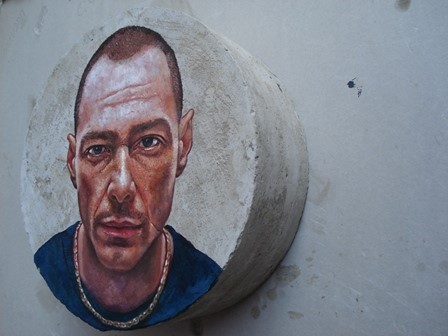
 The Butterfly Girl, Rene Denfeld’s second offering in her Naomi Cottle series, explores what it is to be lost versus invisible in a gritty thriller set in Portland’s Skid Row. Denfeld does a masterful job creating a compelling narrative by alternating views between two main characters—Naomi and Celia.
 Hailed as one of the fifty best memoirs in the past fifty years by The New York Times
  helped make the film 10 X Murmuration with Sarah Wood. In 2017, she narrated a BBC Natural World documentary which followed her as she trained a goshawk named Lupin. A passionate environmentalist and bird enthusiast, Macdonald is currently researching a new book on albatrosses. In this interview, she describes her writing process and her views regarding falconry, environmentalism, and the importance of maintaining a connection to the natural world around us.
 Know My Name by Chanel Miller (Viking, 2019) is the untold story of the person who the world came to know as Emily Doe, the victim of a widely reported 2015 sexual assault on Stanford’s campus. Though Know My Name is a memoir, the book is many other things—a victim’s manifesto, a story of love and loss, and a close examination of the broken systems that protect perpetrators and betray victims. Chanel Miller, the woman we meet in the pages of this book is many things too. She’s an activist, a victim, a writer, an artist, a comedian, a daughter, a sister, a visionary, and more.
 Leave it to the generation that enjoyed a privilege and abundance fueled by post-WWII government subsidies to close the door behind them, handing their children an earth destroyed by greed, a democracy gone off the rails, and crushing student debt. Leave it then to a mind like CJ Hauser’s to capture what happens next: how the children abandoned in a dry well must set to work building for themselves a stairway of hope before they can climb out and face the serious work of healing the planet.