Voice to Books: Disability in Full View

According to the CDC, one in four people in the United States live with some type of disability, whether visible or less apparent. Without respectful discussion and proper representation in the media, those living with disabilities are often stereotyped and misrepresented. This is also true for people who don’t always consider themselves disabled, such as Deaf and Blind folk. This…

Read more

Voice to Books: See It, Read It, Love It

Graphic novels intertwine words and illustrations to allow their authors to say what they need to without descriptions. Their audiences don’t need to imagine their worlds; they can see them. Art and words are used strategically to tell stories. Simplicity and silence, lavish details, and verbose prose, or vice versa, tell these histories. The Black Panther Party: A Graphic Novel…

Read more

Voice to Books: Sharing Personal Experience Through Poetry

Poetry speaks to our souls. From songs to spoken word, sonnets to free verse, there’s poetry for any mood or moment. Poetry is a form that can take on many shapes, tackle any subject, and help people express themselves. All of the collections in this column revolve around poets sharing deeply personal experiences. The poems found in these collections move…

Read more

Voice to Books: Memoirs on Overcoming Struggles and Trauma

In this episode of Voice to Books, our readers review memoirs written by people from a variety of backgrounds. Everyone has a story to tell, and firsthand accounts of struggles are powerful instruments of change and understanding. Reading underrepresented voices, especially in memoir, helps to cultivate compassion and awareness for cultures and experiences that are not our own. Consent: A…

Read more

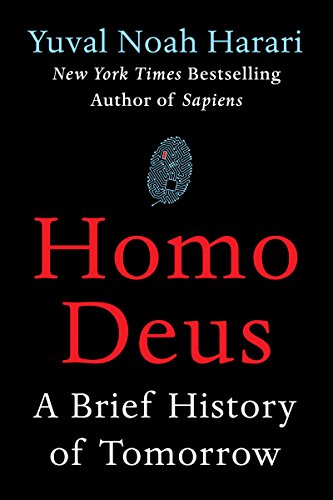
Book Review: Yuval Noah Harai’s “Homo Deus: A Brief History of Tomorrow”

By: A.E. Santana

Who would like to know the future? To know and understand the coming changes to our environment, society, and the individual? Whereas Yuval Noah Harai doesn’t claim to be omniscient or a fortune teller, his book Homo Deus: A Brief History of Tomorrow paints a picture of what may be in store for humanity in the next fifty or a hundred years. Harai does this not by making psychic predictions but, instead, by carefully examining history, biology, psychology, and technology. With a copious amount of research to back up his claims, Harai gives a detailed hypothesis on the next steps of human evolution—taking people from Homo sapiens to Homo deus. Whereas Harai gives intelligent, thorough explanations, it is through his clear, clever, and often humorous writing that he connects with readers.

Homo Deus: A Brief History of Tomorrow is broken up into an introduction and three parts: “Homo Sapiens Conquers the World,” “Homo Sapiens Gives Meaning to the World,” and “Homo Sapiens Loses Control.” Each part delves into the rise and fall of societies, provides an intimate look at biology and psychology, and discusses the growth of technology as it pertains to Harai’s claims. It is by understanding these topics, Harai suggests, that people will be able to understand how society may progress into the next stage of human evolution.


Read more