Book Reviews

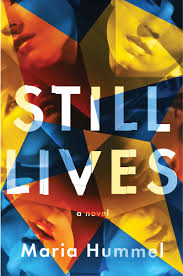
Book Review: Maria Hummel’s “Still Lives”

BY D.M. Olsen

It’s the opening night of Still Lives at the Roque Museum and it’s the buzz of the art scene in Los Angeles. It’s also the wildly anticipated return of Kim Lord, who has conjured up a twelve-piece exhibit portraying the murdered bodies of famous victims including Elizabeth Short, Gwen Araujo, Chandra Levy, and Nicole Brown Simpson. The only issue is, Kim Lord never shows up.

Read more

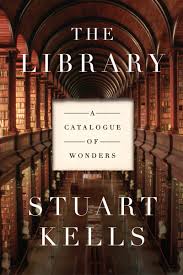
Book Review: Stuart Kells’s “The Library”

BY A.M. LArks

It’s hard to say that The Library by Stuart Kells is about a single library, or even the idea of a library as we have come to know it—a collection of books that the public can borrow. Stuart Kells’s library is both a historical compilation of well-researched facts that informs the public about the origins of our notion of the “library” and the examination of those assumptions.

Read more

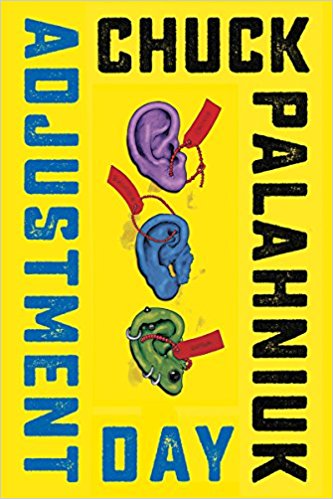
Book Review: Chuck Palahniuk’s “Adjustment Day”

By: D.M. Olsen

As a big Fight Club fan, I came to this book with high hopes for the type of enthralling narrative interspersed with social satire—often bordering on the absurd—that Chuck Palahniuk is known for. Adjustment Day seeks to deliver the same impact—as Fight Club did in the 90s—in a sort of Version 2.0 escalation of the cult concept. Palahniuk uses the novel to introduce what the title suggests, an “Adjustment Day.” A day where a group of men, who have been reading a blue black book by Talbott Reynolds, gather to take down the men in power. They know who to target based on a secret list that has been circulating on the internet and gaining votes. The ear of a person on the list will garner the person who harvested it power in the new world order that is to form after Adjustment Day.

Read more

Book Review: Susan Henderson’s “The Flicker of Old Dreams”

BY: A.m. Larks

Isolation and ostracization feature heavily in Susan Henderson’s latest novel, The Flicker of Old Dreams. The setting is Petroleum, Montana, population 182 and decreasing, “Those who’ve heard of Petroleum are often surprised it’s still here. The town is primarily known for what it no longer has: oil.”  In a town this small, the people of Petroleum are required to be interdependent upon one another because the trains have stopped running, there is no cell service, and the winters are long and harsh.

Read more

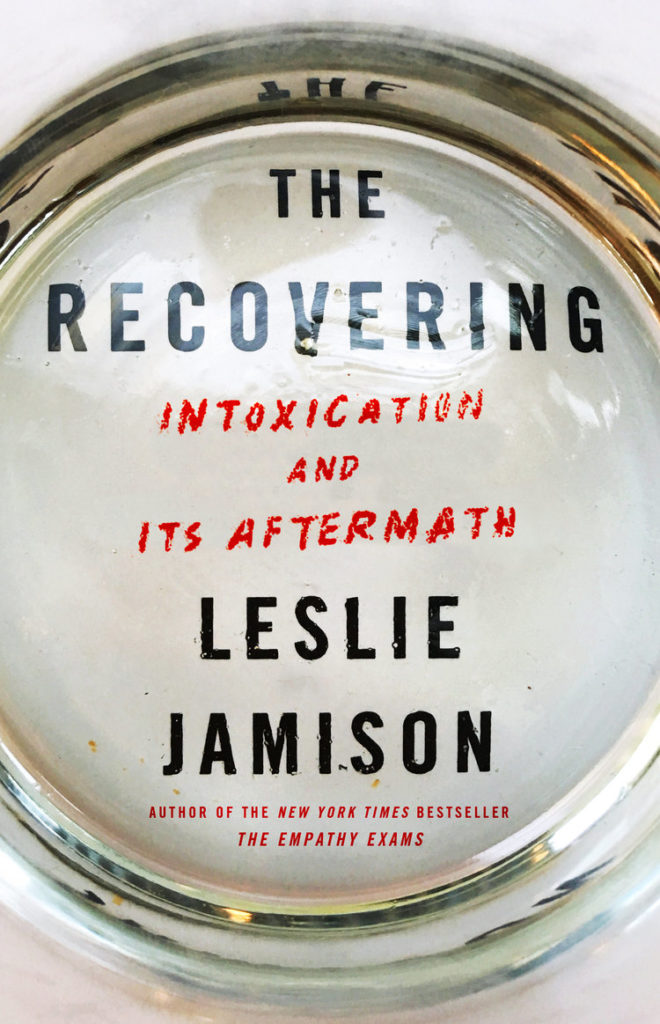
Book Review: Leslie Jamison’s “The Recovering”

By: Heather Scott Partington

Leslie Jamison wasn’t a stereotypical drunk. She wasn’t a stereotypical student, either. Even at the peak of her alcoholism, Jamison held down a job, published a novel, and attended the Iowa Writers’ Workshop, Yale, and Harvard without hitting a conventional bottom. If you read Jamison’s 2014 essay collection, The Empathy Exams, you know her unique voice, her elegant syntax, her capacity for listening to another’s pain and rendering it on the page as something unnervingly fresh. The Recovering is the story of Jamison’s journey to get sober, told through the filter of her research about the lives of other artists and writers.

Read more

Book Review: Geoff Nicholson’s “The Miranda”

By: D.M. Olsen

Some might consider Joe Johnson’s situation a crisis. He just quit his job as a torture expert for a covert government agency called the Team. Joe also just divorced his wife and moved into a remote home three hours north of London, where he intends to walk the circumference of the earth from the privacy of his backyard. He plans to walk a small, circular path twenty-five miles a day for one thousand days. However, as Joe quickly finds out, and as the compelling narrative unfolds, privacy is the last thing afforded by Joe’s new house. He is surrounded by nosy neighbors, a philosophical mailman, and a band of skinheads who invoke a turf war with the veteran torture artist. And, of course, Miranda.

Read more

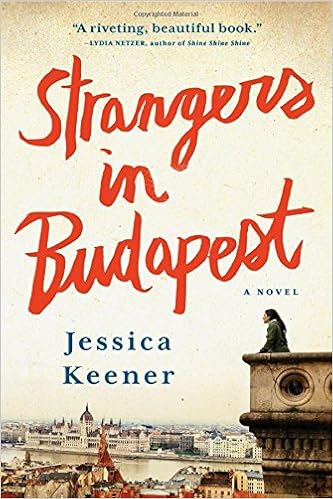
Book Review: Jessica Keener’s “Strangers in Budapest”

by John Flynn-York

Image result for strangers in budapest

In Jessica Keener’s new novel, Strangers in Budapest, the lives of two ex-pat Americans become intertwined in the titular city in the 1990s. Annie is unhappy and shiftless, at loose ends after a move to Budapest with her husband and their young son. Meanwhile, Edward, an elderly man, is in Budapest for one reason only: to find the man he thinks murdered his daughter. When they cross paths, they find common ground in this quest. Edward is a cause Annie can invest her energy into—something she’s been lacking since moving to Budapest. But when she is drawn deeper into Edward’s scheming, she begins to question whether she’s merely helping an old man or abetting his delusions.

Read more

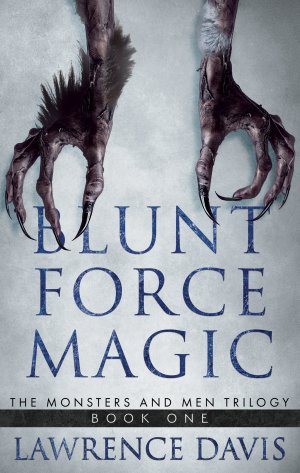
Book Review: Lawrence Davis’ “Blunt Force Magic”

By: A.E Santana

Janzen Robinson has been trying to forget his past and move forward with a boring, mundane life as a delivery man. This intention is interrupted when he saves a young woman from a Stalker—an evil from the Abyss—and is thrown back into a life of magic, monsters, and the pain he was trying to forget. With help from old allies and new companions, Janzen does his best to save the life of an innocent while not getting everyone killed in the process.

Blunt Force Magic is the debut novel of Lawrence Davis, a U.S. Army infantryman who served three tours overseas. This novel is the first in the Monster and Men

Read more

Book Review: Joe Hill’s “Strange Weather”

By: Xach Fromson

Joe Hill is no stranger to short fiction. His short story credits go back twenty years and includes the 2005 collection 20th Century Ghosts. After last year’s incendiary success with The Fireman, Hill returns to the form with Strange Weather, a collection of four short novels offering a panoramic view of humanity in scenarios that range from the fantastical to the all too real. Across all four stories, Hill excels at immersing readers in a full sensory experience that takes readers on unique journeys. The tightly written prose wastes no time in ratcheting up the tension, foregoing any trappings of the slow-build, existential horror in favor of rapid-fire pacing that never lets up.

Read more

Book Review: Yuval Noah Harai’s “Homo Deus: A Brief History of Tomorrow”

By: A.E. Santana

Who would like to know the future? To know and understand the coming changes to our environment, society, and the individual? Whereas Yuval Noah Harai doesn’t claim to be omniscient or a fortune teller, his book Homo Deus: A Brief History of Tomorrow paints a picture of what may be in store for humanity in the next fifty or a hundred years. Harai does this not by making psychic predictions but, instead, by carefully examining history, biology, psychology, and technology. With a copious amount of research to back up his claims, Harai gives a detailed hypothesis on the next steps of human evolution—taking people from Homo sapiens to Homo deus. Whereas Harai gives intelligent, thorough explanations, it is through his clear, clever, and often humorous writing that he connects with readers.

Homo Deus: A Brief History of Tomorrow is broken up into an introduction and three parts: “Homo Sapiens Conquers the World,” “Homo Sapiens Gives Meaning to the World,” and “Homo Sapiens Loses Control.” Each part delves into the rise and fall of societies, provides an intimate look at biology and psychology, and discusses the growth of technology as it pertains to Harai’s claims. It is by understanding these topics, Harai suggests, that people will be able to understand how society may progress into the next stage of human evolution.

Read more

Book Review: Megan Stielstra’s “The Wrong Way to Save Your Life

By: A.M. Larks

Nothing other than fate can attribute to my review on Megan Stielstra’s book, The Wrong Way to Save Your Life, which took place a week after the events in Charlottesville (which occurred on August 12, 2017), when I was supposed to have received it a month prior. During the last week, the fear for our country has increased, it is undeniably pervasive and palpable. This fear is in every conversation, every communication, and every action or reaction. Fear is exactly what Stielstra tackles in her book. Stielstra ties the broad and the specific by examining fear at its roots, fear in her own life, and fear in everybody’s lives. Written before the November 2016 election, she comments on the fear rhetoric building at that time (which seems to have reached a violent pinnacle with Charlottesville), claiming that we must work through fear by confronting that which lies on the other side. Her words are startlingly prophetic:

Read more

Book Review: Laurent Binet’s “The Seventh Function of Language”

By: John Flynn-York

Laurent Binet’s first novel, HHhH (short for “Himmlers Hirn heisst Heydrich,” which, translated, means “Himmler’s brain is called Heydrich”), was a fictional reconstruction of the assassination of the Nazi Reinhard Heydrich. The novel’s narrative fluctuated between past and present, history and story. In the past, Heydrich rises to power in the Third Reich, committing unspeakable atrocities along the way, while two operatives—the Czech Jan Kubiš and the Slovak Jozef Gabčík—plan to kill him. In the present, the narrator grapples with this story and how best to write it, drawing on books, museums, and other references to recreate it in detail. The brilliance of the book came from the tension between these perspectives. What does it mean to recreate history? Can we understand the way historical figures understood things—that is, can we get inside their heads? Can we ever know the truth? In other words, HHhH was as concerned with what it means to tell a story about history as it was with the historical events themselves.

Binet’s new book, The Seventh Function of Language, similarly takes its inspiration from a real event: the accident that claimed the life of the semiologist Roland Barthes. Out of this incident, Binet spins a madcap tale of intellectuals run amok that is by turns wildly entertaining, mildly frustrating, and intellectually captivating—and only sometimes faithful to the historical record.

Read more