By Jessica Ribera
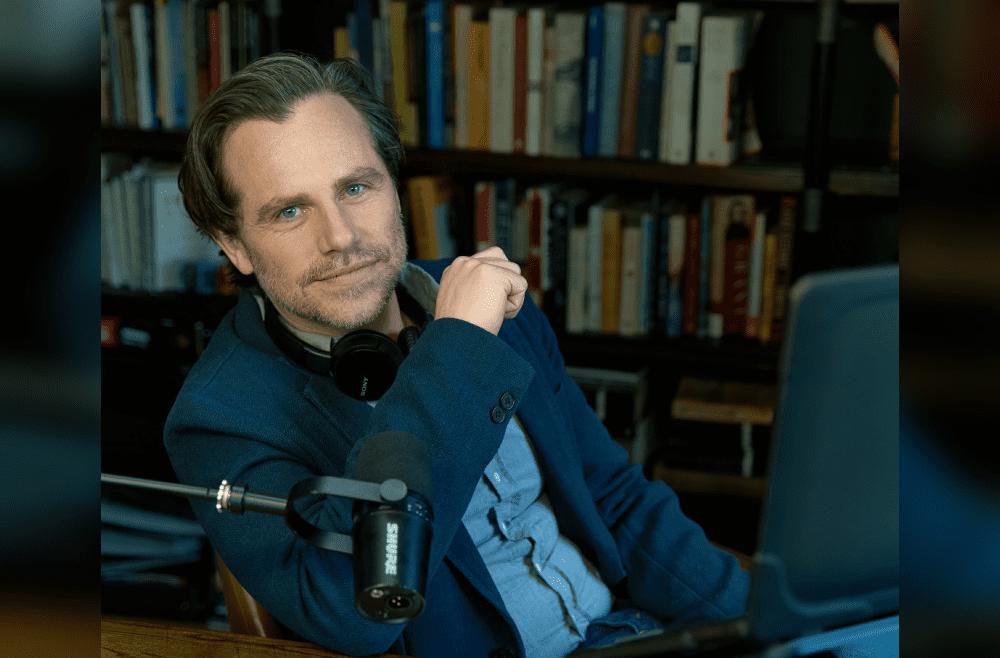
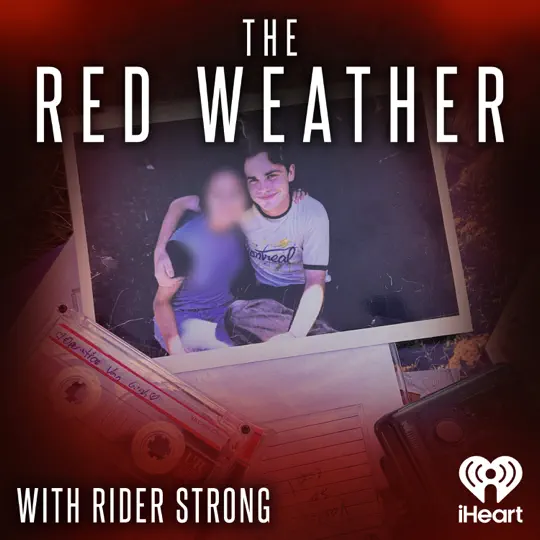
For decades, Rider Strong has been known for his role as Shawn Hunter on the TV series Boy Meets World, and the podcast he makes with his co-star friends, Pod Meets World, is one of the most popular in America. But Strong has always been more than just “that guy from TV.” His new fiction podcast, The Red Weather, is an opportunity for audiences to meet him as a thoughtful storyteller while hearing firsthand how his teen fame shaped his life. The setting and many of the characters are his real-life town, family, and friends, but the story is fiction. In it, he investigates the 1995 disappearance of a teenaged girl from a commune near his hometown while also revisiting and challenging his previous views about how he grew up. The work is literary, tender, and totally binge-worthy.
The Coachella Review talked with Rider about the advantages and challenges of autofiction, character writing, episodic momentum, and personal integration in his work.
The Coachella Review: The Red Weather is real events, people, and experiences, with connective fiction tissue holding them together. Is that a good way to understand it?
Rider Strong: Yeah, for me, the best parts about mysteries are settings and characters, and mystery stories are a great way to get into a world. I had a lot of interesting material about the world where I grew up, the people, and general vibe. The fictional elements became the best way to dive into the material and interrogate it. But I didn’t want to just be sentimental. I really wanted to show the dangers of nostalgia, the feelings of growing up, and complicate those things in a fictional way.
TCR: It took me a minute to turn off the part of my brain that was in ‘hot goss’ mode, wondering constantly: Did that really happen? But as I listened, that impulse died off because I was drawn into the story, and the themes became more compelling than the “facts.” Two questions: 1) How do you respond to people saying, “But what really happened?” And 2) Did writing it as fiction help you tell the truth in a different way?
RS: I think probably the most uncomfortable parts are the truest parts. I love to hear that you had that reaction because that’s exactly what I was hoping for. Suspension of disbelief is hard in any form—but especially in audio form. Because our ear can tell when the acting or sound design is bad. So, I knew I needed—for as long as possible—to keep that question going. I’m hoping that it helps the suspension of disbelief, that by the time you’re already involved in the story enough you stop caring whether it’s real or not and then just get into it. My goal is that by episode three or four, that [concern is] less interesting than just wanting to know what is going to happen. I keep inserting real stuff, so there is a lot of truth there, uncomfortable truth. I want the themes to become meaningful enough and truthful enough that people get something out of it.
TCR: If, in personal storytelling, we have the three ‘I’s—the writer, the narrator, and the character—then you’ve done that on steroids, because you’re also performing and including people in your real life. You’re a person who’s been in the public eye for such a long time, but does this feel different? Is this you putting yourself in the world in a new way?
RS: Definitely. When I came up with this project and started doing the interviews, I didn’t think of it as an acting job at all. And that worked out well because I am not acting. I’m playing a version of myself. I haven’t acted for a long time, but it was interesting to be working with actors and doing scenes and be like, Oh right, I’m part of this scene, too. I’m playing a role here.
Because I was famous as a teenager, the kinds of interviews I would do were the whole teen idol thing. I was set up as a fantasy boyfriend for people. And that was a weird type of fame that I don’t think an adult [actor] goes through. If you’re a famous actor as an adult, you know that maybe people find you attractive, but they respect you for the characters you play and can make that distinction easier. I’ve always felt that it was harder for people to distinguish [between me and] my role because [my fans] were younger, and I had been marketed in this teen idol way.
The kinds of questions they ask in those teen magazines are not, “How do you approach your craft as an actor?” They’re: “What do you like as your pizza toppings?” “Where would you take a girl on your first date?” I hated it so much at the time, but it’s interesting because it’s created somewhat of a mystique around me. I decided to lean in, not shy away from that and instead capitalize on it as a way to invite people in. If that’s what I’ve got—fame from a TV show and an interesting background growing up near these communes—if that’s my public persona, then I’m going to use it and tell the best story I can, hopefully drawing listeners beyond the fan fiction-y versions of my life. I wrote my own fan fiction version of my life where I’m a pretty hapless detective. I hope that people can recognize that I’m a writer, not just a teen actor, somebody who hopefully can craft an engaging story.
TCR: It’s so smart. You’ve stepped into the stream that’s available to you, but you’re diverting it to take back the narrative.
RS: Right, because I’ve spent my life wanting to be a writer, thinking of myself as a writer. And yet—for instance, I spent ten years doing the podcast Literary Disco with Tod Goldberg and Julia Pistell, which was so much fun and such a passion because I care about books, and never made a dime, but had a small following—but the second I started talking about Boy Meets World on a podcast, it becomes one of the top podcasts in the country. And it’s like, Right, this is what people want to hear.
It’s been slightly uncomfortable because, yes, Boy Meets World is a wonderful part of my life. But it’s a sliver of my life. There are more parts to talk about and use in storytelling. So, I’m kind of taking advantage of that stream and saying, You might be listening for this, but look at this other stuff, too.
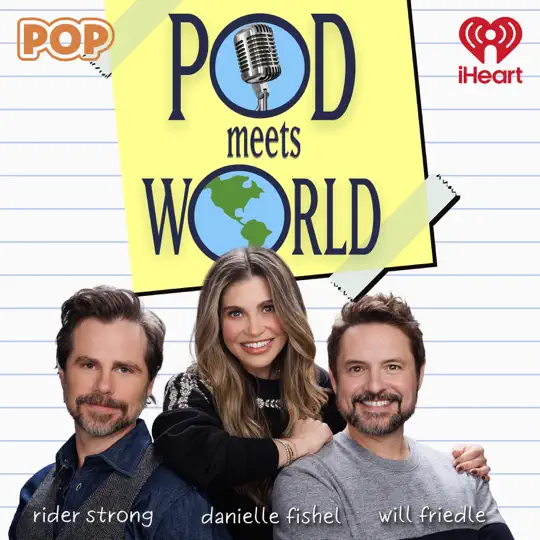
Pod Meets World really taught me to not run away from those things. I spent my twenties and thirties running away from my adolescence and the fact that I was an actor in an unhealthy way. It’s a defense mechanism. But, at a certain point, I was able to turn around and be like, Actually, this is a pretty cool thing. I should probably be proud of the fact that I had the successful teenage acting career. Like, why not? The second I did that with Pod Meets World, I felt so much better. We all grew up, and we’re all able to be grownups now, right? This TV show affected people, and they still care about it. That’s great, and I shouldn’t feel bad about that. They shouldn’t feel bad about that.
TCR: It’s a kindness to your younger self.
RS: Right. Having that midlife crisis with a podcast was great. Red Weather is me taking it to the next level, inviting people into even weirder parts of my life they might not know.
TCR: Whether to use your fame to your advantage or not—and knowing when it will be a hindrance—comes up often in the work. Even though we listeners weren’t all teen stars, you’ve created a moment for self-reflection because we do understand what it’s like to have a label slapped on us or to have to choose which version of ourselves to show up as.
RS: Oh, good. I hope so. It’s that classic writer thing: Lean into what’s specific or personal, and it ends up being more universal. I realized the fame factor had to be part of the story. And in a weird way, I hope that invites listeners in, even if they… might only be listening because I’m the guy from Boy Meets World.
TCR: When you have an artist-writer soul and your livelihood is also based on your creativity, how do you balance using your creative resources to live, with taking risks making art? The Red Weather seems like a meeting of those.
RS: Yeah, Red Weather is basically me taking what I have available—which is not only my platform as a podcaster and my fame, but also all the amazing actors that I’ve been able to know over the years—and creating characters for them. I have been—and it’s the way I present myself in the podcast—a frustrated screenwriter. I studied fiction at Bennington [College] for my MFA, and then when I graduated, I started selling screenplays with my brother. We spent ten years writing scripts and having a good time, but it’s also very frustrating when nothing gets made. Screenwriting is tough that way because you could sell scripts, you can write twenty specs, and they pile up. They don’t count as anything. Nobody’s running around reading screenplays for fun. They only exist as blueprints for an eventual product. So Red Weather was a way for me to take that skill, write something that I could produce for very little money. All it costs is a couple of microphones and my time.
I didn’t realize how much time it would take. I started this with some interviews and a pitch—a fifteen-minute demo of the first fifteen minutes of the podcast. Then I realized I had to write an entire series of television by myself. Eight episodes, thirty to forty-five minutes long each. And it’s crime, which is complicated[and] includes lots of facts. And I was giving myself the double challenge of using real stuff. When my character is waking up at four-thirty or five in the morning and making a pot of tea to work, that was me waking up to write Red Weather.
TCR: For something so retrospective, what choices did you make to keep that feeling of propulsive motion people expect from this kind of story?
RS: To always maintain the present tense. The memories only have value in terms of how they are affecting the current situation. I began constructing elements of the past, based on real stories and real experiences. I thought, Oh, I’ll get to interview friends and get all these backstories. But the backstories only have meaning— especially in an audio drama or in a true crime context—in the current investigation. Way more of the story became about Rider as a horrible detective than I originally planned. Every time that I step on a rake, that’s a story point. That’s more interesting than what happened in the past—even though [the past is] the stuff I think I care the most about. Setting and characters—that’s [what] makes for interesting listening. The current suspense is always going to be the current investigation. I had to be a much bigger part of this than I originally thought.
TCR: How did that feel, to have to put even more of you in a story about you?
RS: Great. Because that made it more fun, to really explore, What would make me the most uncomfortable? I’d be uncomfortable walking into a police station and talking—so, great, that should be a scene. And, sure enough, I’d walk into the wrong police station. So, I wrote into those places, and the material started building on itself once I realized I’m a character in this and a pretty bad detective—which is fun.
TCR: This podcast is very novelistic. I can’t think of any threads that don’t tie up. It’s cohesive, whole. But you also had to make each episode a “complete” story. You said it was like writing eight episodes of TV, and that’s very different from writing a novel chapter. I kind of feel like Chris Farley interviewing Paul McCartney, but how’d you do that?
RS: I now think of it as a mystery audiobook with scenes interspersed throughout; that’s the way it ended up. But the way I structured it, and the way I thought about it while writing it was very screenplay-like. Act breaks, turns, making sure that every commercial break has a big question mark leading into the next one. I don’t think I would write a novel this way. I love podcasts so much. I listen to all the true crime podcasts. And I really wanted to mirror their form in the way that they have cliffhangers and suspense. Structurally I made sure there’s always a lingering question to bring you back.
One of the things that I prioritize to screenwriting students is: It’s different than an essay, a TED Talk, a novel. It is an experience in time that you’re writing. You’re taking somebody’s time. A novel can be interesting because of the way the language is or the facts are released, and the person reading it can set the pace themselves. An audio podcast, a movie, or television—you really have to be conscious of people’s time. And that means making it suspenseful, making it exciting, keeping [the audience] asking questions, so they come back for more.
TCR: Let’s talk more about vulnerability, because it comes up in a lot of episodes. It’s easier for me as a writer to write non-fiction because I’m responsible for how I tell the story, but not necessarily the story itself. Whereas the exposure of my imagination when I write fiction feels—for me—way riskier than sharing real, even if intimate, detail. But in auto-fiction, you’re taking both of those risks. Did you set parameters for yourself or choose places you would protect?
RS: No, I tried to go there. And I think the most uncomfortable part about it was interviewing the real people. They were very uncomfortable at times because I interviewed old friends and pushed them to talk about some dark stuff, especially when it comes to girls we knew and dated—I always knew that was going to be my character’s Achilles heel—so I didn’t really think it through. But I’d be in these four-hour interviews with friends, making them talk about awful things that they didn’t want to think about, that we had avoided. When I had opened that door and realized it was what I wanted to confront and what I wanted to write about in this context, that was fine. But it was pressuring my family and friends to also do that that was very uncomfortable.
I was glad when my dad heard, because he tells this personal story that I used to open the second episode. I was really nervous to play him the episode. Luckily my dad just laughed the whole time. He and my mom thought it was hysterical and loved the way I contextualized his story. I was so grateful because I was worried that he might feel judged. I am judging him, but I’m also judging myself, you know?
It’s also kind of a darker version of my town than my town really is. I was pushing my friends, like, Yeah, wasn’t she really “slut-shamed” for a while there? And they’d be like, I don’t think it was that bad. I was pushing a dark version. It makes a better story. I felt pretty bad about that, but they were cool.
TCR: For writers who are working on memoir or autofiction, can you share how you gave yourself permission to put it all out there with this kind of work that does affect other people in your life?
RS: I’m still experiencing how it affects others. Because I was so in control of this whole project, obviously it never felt like a violation from my perspective. My brother listened to all eight episodes and in early cuts was concerned for my parents and our hometown. He said, “Maybe you should change some things more because it’s starting to get so close to the truth.” It’s partly why I start every episode with a huge fiction disclaimer, because I want [listeners to know] it’s fiction.
I think the strangest thing is that my son’s school friends and a couple of their parents who are my friends have been listening to it with their kids. I started getting texts from parent friends: “I’m having to explain what a commune is.” “They keep asking if that’s really your brother, if that’s really your parents.” So, there’ve been some confusing messages, even within my friend group, about what’s real and what’s not. And I’m still experiencing that.
Here’s something that I didn’t expect: For people to like me as much as they do. I’m surprised by how much goodwill the listeners are giving me. For instance, a lot of people on the first episode or two are critical of Chris [Wylde], my friend, who for me is the comic relief, who is good at taking the piss out of me, which I feel like I needed. But people are defensive of me. That’s so sweet—people assuming I’m a good person. I always intended the Rider of the podcast to be a pretty bad detective. And people are really giving me the benefit of the doubt.
TCR: How much detective work was actually involved here?
RS: There were a lot of discussions with friends. My one friend who I interviewed early on, who really did grow up in a commune—I didn’t know the extent of that story. I’d been there with him a bunch, but I didn’t know the arrangement. It was more like building than solving.
The real material was always more interesting to me than whatever I could come up with. There was a lot of research, but no, there wasn’t much to solve in real life.
TCR: The way you write Chris and you as counterpoints works so well. “Sherlock Homeschooled” might be my favorite thing I’ve heard in a long time. In my household, we’re already using it as a replacement for “No shit, Sherlock.”
RS: I can’t wait to tell him that. He came up with it. He’ll be so stoked.
TCR: What was that like with him? How much of that was improv?
RS: I’ve known Chris for twenty years, and he’s one of the most talented comedian actors I know. I wrote for his voice, his sense of humor, and our genuine friendship. He’s one of these guys who cannot speak without making it something funny. And I am such a sentimental, nostalgia-obsessed, mopey person that it created balance. He’s the sidekick that I need, because I’m going to take everything way too seriously.
A lot of my short stories that I wrote in grad school were of some of the same material inspired by my life or people I knew growing up, saying a lot of Northern California stuff. And a lot of it was bad writing—or just young writing—and very sentimental. As I’ve gotten older and learned how to write better, I knew it wouldn’t be good to just have my voice. I need somebody like Chris to lighten it up.
It was fun, too, because he’s an actor who I don’t think has quite gotten his due. And not only for him, but a lot of the roles I wrote for people specifically. It was fun to turn to these great actors I’ve known and befriended and say, I’ve got the perfect part for you. I know exactly what your voice sounds like, and I know how to make it work.
For my friend Heidi Sulzman, who plays a tough part with an uncomfortable confrontation, I spent time with her, and I didn’t record conversations with her but just spent time. She’s from a theater background, so she’s the type of actor who never improvises. It’s word for word. So, I knew I had to really craft those sections and get her rhythm, her voice down for the character. And she never changed a word.
Whereas somebody like Chris [Wylde] never said a line as it was written. And I knew that going in.
My favorite was my friend Chris Lemke, whom I always thought could be a great cult leader. So, I wrote a series of mini lectures, like maybe five pages of dialogue. And then I gave him a tape recorder and a microphone. About a month later, I got four full tapes in character. And then I got to do research as if I were really finding these tapes, and I pulled and built the episode around what he had improvised, which is incredible.
TCR: That’s thanks to your great casting, too, right?
RS: One of the best pieces of writing advice I ever got was this: Think of every character you create as a gift you get to give the actor in order to get away from their functionality in the story, and stop thinking of them as a mouthpiece for an idea or a plot point. And that was my approach. Who do I want to give what? What’s going to make them feel good about jumping on board and committing to this project?
TCR: You mentioned circling this material earlier in your life. Was this a project you had to do? To get out of your system?
RS: Yeah… it was inspired by true events, the idea of a suicide letter as the start goes back to my twenties, so even as an undergrad I was already using that story as a launching point for this material.
I think this started with the idea of, Making movies is really expensive. I’m always writing scripts and then begging for money and not getting it. What if I did a podcast that’s a movie where I could run around with actors and do it myself? And the best way to do that is to make it as personal as possible. All this material had been waiting for me to channel put into this context, which does feel like the best [vehicle] for it. My meandering short stories, my bad poetry—I don’t think they’re as good. This is the best version of that material, and it’s fun to have it finally find its form.
TCR: I’m picturing a Venn diagram of converging ideas, opportunities, and context, and you being able to take advantage of that central place. Gen Xers and Millennials are hitting midlife and doing this retrospective unpacking and re-examination. It’s trending, so you’ve hit a sweet spot in time and culture for this material.
RS: I hope so. I think it’s cool because I’ve loved audiobooks and podcasts. But like I said, the suspension of disbelief is a little hard. Like radio dramas from the 1930s—so hokey, right? I’m just hoping that I can thread that needle and have people buy into this world. Because there is a lot of truth here, real interviews, real stuff crafted into a fun mystery story.
TCR: Is there anything different about you now, having created this and put it in the world?
RS: Taking this whole question of conformity/nonconformity, this exploitative idea of communes as these creepy places, and alternative living and alternative parenting as something dangerous, and going into the truth of the stories, then fictionalizing a lot of it, thinking it through, shifted something. The biggest realization through this whole process is, I’m actually a pretty boring person. I haven’t taken that many risks in my life or stepped out of the bounds of mainstream life, though I thought I had.
But being boring is great. My parents, for instance, considering all the people around them and the community, were very straitlaced. They gave us weird names and grew some pot at some point, but otherwise were awesome, supportive, loving parents who loved each other.
On the flip side, I’m still wrestling with those ideas I talk about in the third episode when I go into the whole commune thing. Those conversations near the end of that episode are very real. Why aren’t we living in a communal space? It sucks that my parents are so far away from their grandson. So many people don’t get to have the intergenerational thing or have that sense of community with their friends. I would totally love to live on a commune.
TCR: Doesn’t Chris say, “But you have to live with everybody, not just the ones who are fun?”
RS: It’s true, and that’s what’s scary. But I think the alternative right now of everybody being on their own screen in their own world… [there’s] less friction, but it’s also bad for us to be this isolated. In part, that’s why podcasts are so popular; they’re so intimate. They’re in your ear, in your head. I fall asleep every night listening to podcasts and audiobooks, and it’s comforting to feel not alone. There’s something an audio format gives us that visual entertainment does not; that imaginative process of hearing somebody’s voice, engaging in the story, and putting yourself there with them.
Or in the case of most talk show podcasts, it’s just being in a room with a group of friends talking. We’ve realized with Pod Meets World that we’re discussing Boy Meets World and telling stories about our childhood, but mostly what people like is that we’re friends. [By] listening, they’re part of that friend group. I think that there’s a longing for community that we’re not activating in our culture right now.
TCR: What do you think makes murder shows and cult shows so popular in this cultural moment?
RS: [Cults] in particular, I think a lot about. I’m reading Jane Borden’s Cults Like Us. Her [argument] is that the Pilgrims were cultists. The idea of escaping to start a religious community—isolated, enforcing strange cultural practices that break away from the mainstream—is built into the fabric and the experiment of America and created cult-like thinking. I think there’s a lot to that.
I also think that we’re fascinated with more information. Everything is available at our fingertips—the Internet and AI or whatever—and information is so overwhelming. I feel like we’re all seeking a simpler way to minimize that information because it’s terrifying and overwhelming. So, we’re forming cult-like thinking among our friend groups or political affiliations, our states, cities, towns. We’re all consciously or unconsciously protecting ourselves.
TCR: Like, creating boundaries?
RS: Yeah, and community. It’s helpful to [think], Oh, you hate those people, too; therefore, we must like each other. We’re seeking that tribal thing, but it so easily becomes delusional and negative. When I watch cult documentaries… the most basic question is, How could these people fall for this? But right on the heels of that, we can see that they wanted love or something else, and we all have that [need] in us. We all have the capability to join a cult. That fascination and revulsion in equal measure are maybe why we’re drawn to cults.
Murder [podcasts]? It’s hard for me to know because I’ve been listening to them forever, and often it’s research- or creative-based. It’s interesting that a lot of women listen to true crime stuff, which seems terrifying [for them]. And the sad thing—that we talk about in the first episode—it’s always the husband, right? It’s never that big of a conspiracy. It’s always a woman who was murdered by her lover or husband. That’s the sad truth of Dateline or the murder podcasts. I’m not sure what that is. I don’t know if it’s dark fascination, morbid curiosity, or if it makes you feel better about your life, that you’re not in a horrible relationship, or you are able to see the signs and piece this mystery together so that you can avoid it.
TCR: To close: right now, what are some of your favorite moody, whiny, white-boy songs?
RS: Well, I’m writing an essay because one of the big inspirations for The Red Weather is an album by an artist named Henry Jameson called Gloria Duplex. That is definitely worth looking into. Also, I have discovered Dove Ellis. He’s Irish, twenty-three, and has blown my mind. And Petey USA. He’s a very interesting singer-songwriter with some raw lyrics, but cinematic in some ways. So, check those out.
 Jessica Ribera is Seattle-based writer and the Nonfiction Editor for The Coachella Review. Learn more about her writing at jessicaribera.com.