
By Angelo A. Williams
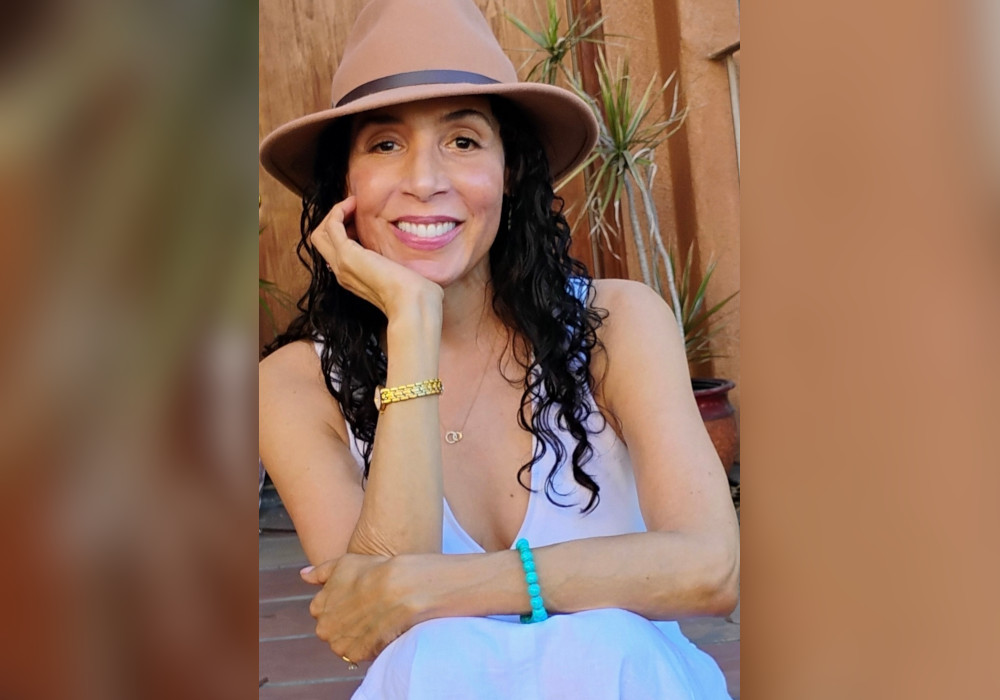
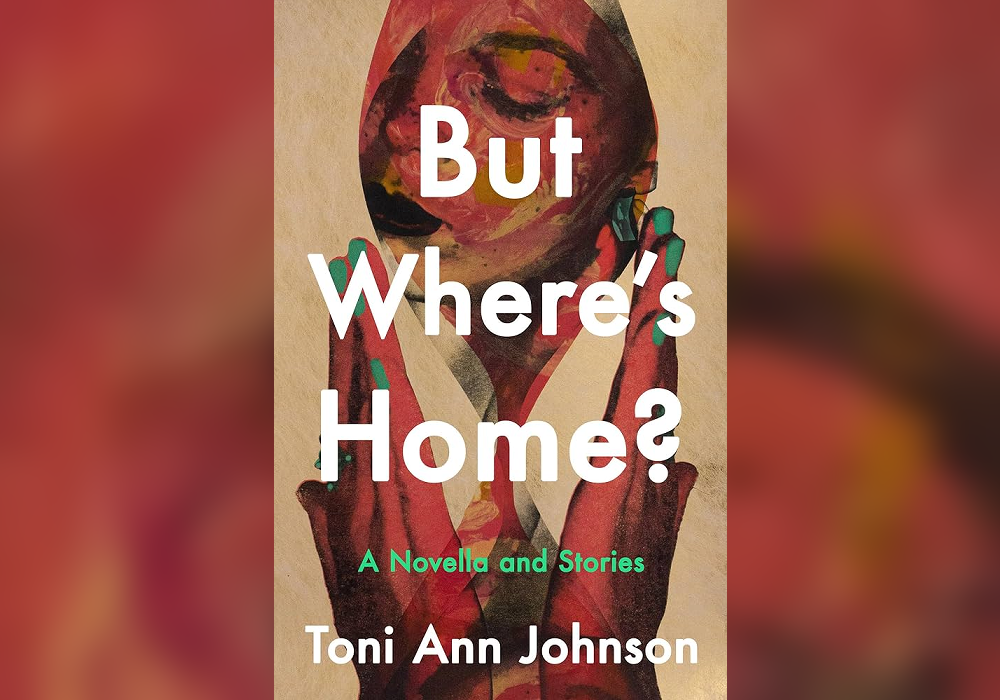
Toni Ann Johnson is a writer The Coachella Review has championed since we published her short story “Daughtered Out” and nominated it for a Pushcart Prize. An award-winning television and film writer and the author of the Flannery O’Connor Prize–winning collection Light Skin Gone to Waste, Johnson has built a career exploring Black family life with psychological precision, humor, and unflinching honesty. Most recently, she won the 2024 Screen Door Press Prize for Fiction for her newly released linked-story collection, But Where’s Home?, which includes “Daughtered Out.”
The new collection returns to Light Skin Gone to Waste’s Arrington family—Maddie, her sister Livia, their mother Velma, and the formidable, charismatic, and deeply flawed patriarch Phil. Moving across decades and points of view, the book inhabits each character’s interior life: a daughter trying to reconcile love and betrayal, a sister nursing resentment, a mother who does not see herself as the villain of her own story, a father whose arrogance masks insecurity. The stories braid class aspiration, racial navigation in predominantly white spaces, narcissistic family systems, sexual trauma, and the search for psychological sanctuary. Home becomes less a place than a shifting emotional contract—sometimes a house, sometimes a wound, sometimes an invention.
In this conversation with The Coachella Review, Johnson discusses her artistic evolution, the craft of linked narratives, humor and harm, and what it means to write toward healing.
The Coachella Review: Your career moves fluidly between screenwriting and literary fiction. How has working across these mediums shaped the way you approached But Where’s Home?, especially in terms of character and dialogue?
Toni Ann Johnson: What’s less publicized about my career is my acting background. I feel like my work as an actress and playwright has more to do with the way I write than even screenwriting does. Acting taught me empathy. When I write Livia or Velma, I become that ten-year-old girl, that resentful teenager, that lawyer in her twenties. I understand why Livia blames Maddie instead of her father. A child doesn’t have the sophistication to blame the adult.
In terms of voice and interiority—who the person is, how they talk, how they think—I become them. When I sit down to write, I’m acting. I’m typing out my thoughts as if I’m playing that character. Becoming my mother, my father, my sister—that’s been wild. I’ve had to sit in their childhoods, their wounds, their disappointments. It doesn’t mean I necessarily have better relationships with them, but I have empathy for their experience. I understand why they think the way they think.
Screenwriting taught me about visual craft and the theatricality of a scene. But the character work? That comes from acting. I am inside them.
TCR: But Where’s Home? is structured as linked stories rather than a traditional novel. What did that form allow you to explore about family, memory, and belonging that a singular narrative wouldn’t?
TAJ: It’s really just my curiosity. If it’s a pie, I don’t want one slice—I want the whole pie. If Livia feels one way, what does Velma feel? If Maddie sees something one way, how does Phil justify it?
The book grew over years. Originally, all three of my last books were one project that started in my MFA program at Antioch. I didn’t know how to write short stories—I came from screenwriting. But I loved linked collections like Drown and The Lone Ranger and Tonto Fistfight in Heaven. They felt like novels to me.
I started writing the Maddie stories from memories I couldn’t let go of—incidents that stuck. Over time, I kept asking, “What about the other person?” The agent I worked with told me to bring in more points of view. That manuscript ballooned to almost 500 pages. It didn’t sell—it was unwieldy. Eventually, I stripped it back down and submitted the Maddie-focused collection to the Flannery O’Connor Award, and it won.
Then I had leftover stories. Those became But Where’s Home? My editor, Crystal Wilkinson, helped me see that it needed a stronger opening and more cohesion. She asked me to separate timelines and create bridges. That’s when adult Maddie began “whooshing back” in time to eight-year-old Maddie. The linked structure allows me to show how everyone is wrong and everyone is right at the same time. It’s about scope.
TCR: In several pieces, you depict characters who are economically comfortable yet emotionally precarious in their predominantly white communities. How does class intersect with race and belonging in this work?
TAJ: Phil sees the house as arrival—“Look at me, I’ve made it.” But [on a daily basis] he doesn’t want to go home. The neighbors want to preserve their idea of community. They’re congenial, but they don’t want too many Phils and Velmas. Livia doesn’t feel at home in the house. Maddie doesn’t feel at home in the town. Phil doesn’t feel at home in his own marriage. Home becomes a symbol with different meanings depending on who you ask. Class doesn’t solve belonging. It complicates it.
TCR: Your writing balances painful realities with humor. How do you think humor functions in your narratives?
TAJ: I love writing things that are fucked up and funny. That’s my favorite aesthetic. If something is all dark, all sad, I can’t maintain my attention. There has to be something else there. Sometimes the character doesn’t even realize they’re funny—but the reader does. Humor helps me process darkness. It gives relief. It gives dimension. Even Phil—he’s arrogant, clueless, kind of awful—but he’s amusing. I don’t agree with him, but I’m fascinated by how he justifies himself.
TCR: Revision can be long and layered. What do you listen for in revision?
TAJ: Time. Weathering. Some of these stories started when I was nineteen. The novella that became But Where’s Home? was my first screenplay at NYU. I didn’t even have a computer—I had two hard copies. Back then, my classmates pointed out subtext I couldn’t see. My father’s character was using the daughter emotionally. I wasn’t sophisticated enough to understand that yet. Years later, I reread it and thought, Oh. They were right.
Revision isn’t just craft—it’s maturity. It’s distance. It’s letting time reveal what you couldn’t see before.
TCR: Many of your characters navigate gentility and subtle surveillance. Was that intentional?
TAJ: In fiction, I can write the subtlety. The surveillance. The dual consciousness. The ways people perform composure. When I was a screenwriter… Hollywood wanted Black anger. They wanted simplicity. They didn’t want complexity. I once worked on a film where a Black teenage boy was abused by police, and the director said, “Make sure you show how angry he is.” I said, “He’s fifteen. He might be scared. He might be humiliated. He might feel a thousand things.” But complexity wasn’t what they wanted.
That’s why I left screenwriting. I couldn’t keep writing what white executives wanted Black people to be.
TCR: How would you describe the emotional landscape of But Where’s Home? What do you hope lingers?
TAJ: For readers from narcissistic family systems, I hope they see that it’s okay to prioritize themselves. It’s okay to stop trying to fix something that won’t change.
For writers, I hope they appreciate the craft.
But ultimately, I think the book is [an exercise in] writing toward healing. Home is a place, a feeling, security, family, community. I never felt like my hometown or my family was home. I had to make home for myself within myself. Every character in this book is trying to get back home—whatever that means to them. Eventually, there has to be peace. You’re not done until you can let it go.
 Angelo A. Williams is a nonfiction writer, professor of Ethnic Studies, former political staffer, and MFA candidate in Creative Writing at UC Riverside, working on a memoir about fatherhood, ACES, CPTSD, and generational inheritance. A former staff writer for the Sacramento Observer, he has published in The Source, Rap Pages, Word in Black, and the Los Angeles Sentinel, and authored “Crossroads Traveler” in Tough Love: The Life and Death of Tupac Shakur. He narrated Discovery Channel’s The Crimes That Changed Us: Rodney King and hosts the fatherhood initiative podcast This Is How Dads Do It.