
Edited by Cambria Matlow and Angelo A. Williams
Voice to Books, meet Voice to Scripts! For this edition we decided to look closely at screenplays as literary documents possessing their own styles, shapes and textures. What kinds of literary choices can screenwriters make to elevate the impact of their stories? What role do craft elements like structure and word choice play in creating uniquely memorable characters and emotionally resonant moments? The screenplays covered in this article employ a wide range of tools; examples include selectively unhinged dialogue, the restraint of silence, strategically deployed voiceover, intentional scene pacing, visual repetition, escalation, and surprising interjections of sound. Each of these scripts develops a lexicon of its own. Screenwriters here go beyond sharing their stories, teaching their audiences how to read them.
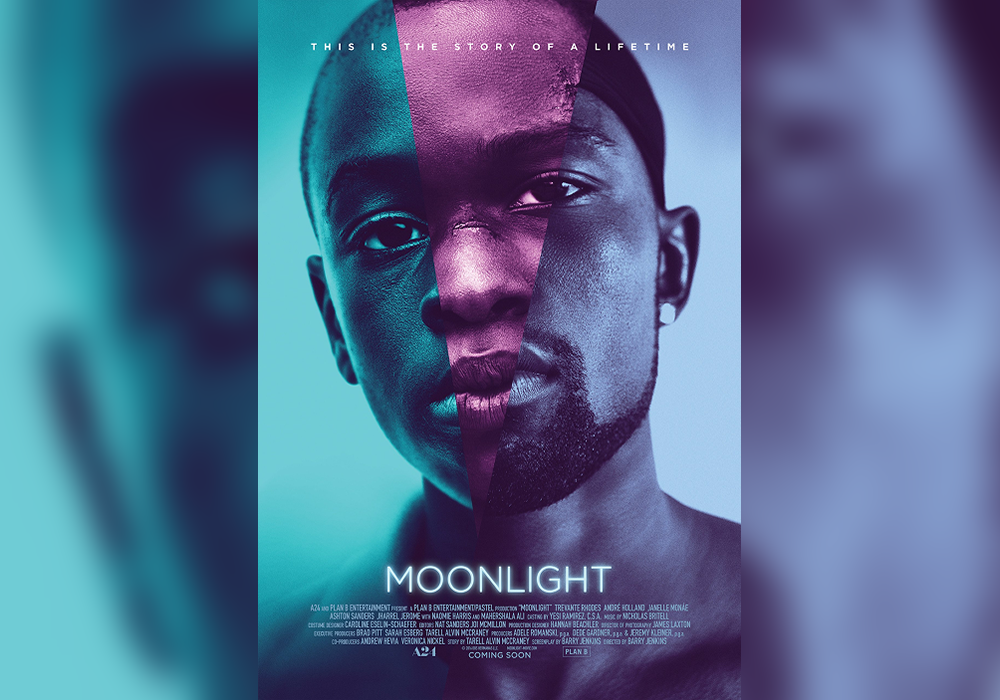
Moonlight
Screenplay by Barry Jenkins
Reviewed by Angelo A. Williams
As a literary text, Barry Jenkins’s screenplay succeeds through its structure, diction, and characterization, using craft to render the experiential transformation of its central figure.
Jenkins structures the screenplay as a triptych—three names for the same man; “Little,” “Chiron,” and “Black”—in an odyssey following one boy across childhood, adolescence, and adulthood. Identity is not treated as a linear evolution but as a fragile duration: something shaped gradually through experiencing the environment. Character accrues through repetition and variation rather than revelation. This structural choice shapes the reader’s understanding of selfhood as something formed slowly, under pressure, through encounter and constraint.
Nowhere is this clearer than in the characterization of Juan, a temporary father figure whose influence far exceeds his screen time. Jenkins introduces Juan sparingly, offering just enough physical and cultural detail to resist stereotypes while leaving space for action to define him. In the beach scene, where Juan teaches Little how to swim, the diction is instructional rather than sentimental: “Trust me, I got you… smoother, more easy-like.” Care is expressed through action. The scene functions as pedagogy: how to breathe, how to float, how to be held.
The screenplay consistently pairs tenderness with moral complication. Juan offers clarity when Little asks about slurs used against him, yet the script refuses to absolve Juan of his complicity in the systems harming the child. This tension is held rather than resolved, and that refusal is part of the screenplay’s ethical intelligence.
As a literary document, Moonlight stands out for its restraint. Jenkins trusts silence and recurrence to accomplish narrative work often carried by exposition. The screenplay succeeds because its craft choices—measured diction, deliberate structure, and morally complex characterization—are inseparable from its vision. The form does not decorate the story; rather, it teaches the reader how to experience it.
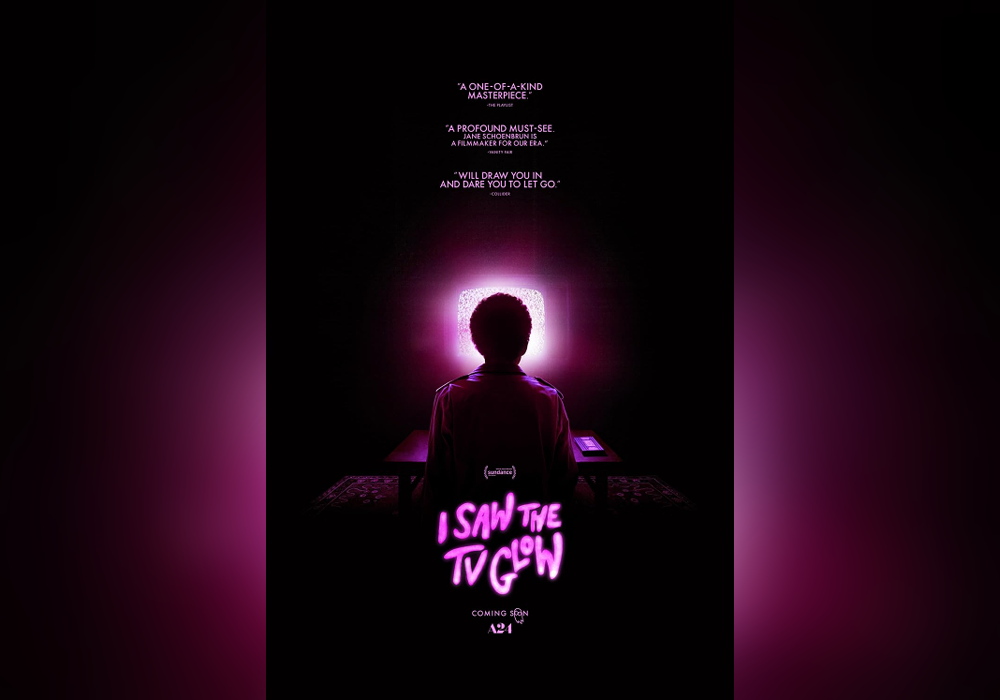
I Saw the TV Glow
Screenplay by Jane Schoenbrun
Reviewed by Aron Cleary
Allegories are difficult to pull off. They often collapse under the weight of their own meaning, resulting in portrayals that are too on-the-nose or too cryptic. Schoenbrun’s I Saw the TV Glow succeeds on its own terms by using deliberate craft choices—structure, framing, and tonal restraint—to sustain its allegory and emotional engagement.
The film follows Owen and Maddy, who, as teenagers, become obsessed with a 1990s television show, The Pink Opaque. The show is loaded with meaning, functioning as a vehicle for ideas about escapism, identity formation, and the instability of reality. Yet Schoenbrun avoids didacticism by grounding these themes in pleasure. A pastiche of Buffy the Vampire Slayer, the fictional series’ plotlines and dialogue are pitch perfect. Isabel’s voiceover in the title sequence—“Tara is my imaginary friend…”—captures the tone precisely: playful, sincere, and vaguely unhinged.
What distinguishes the screenplay is how these references are deployed structurally rather than nostalgically. Schoenbrun makes the bold choice to present The Pink Opaque full screen rather than framed within a television, collapsing the boundary between fiction and reality. This formal decision mirrors the way Owen and Maddy’s identities are shaped—and distorted—by what they consume.
Each craft choice feels intentional. Unsettling figures like Mr. Melancholy, the repetition of scenes from The Pink Opaque, and the careful pacing of revelation all work together to cultivate a specific emotional response. Particularly effective is the use of voiceover, as an adult Owen narrates his adolescence in a flattened, monotonous register. The diction captures the ache of repression and the exhaustion of a life deferred.
While I Saw the TV Glow is undeniably an allegory—about trans identity and the cost of denial—it transcends its symbolic framework. The screenplay succeeds because it does not merely explain Owen’s isolation; it makes that isolation palpable. That visceral experience remains after the credits roll.
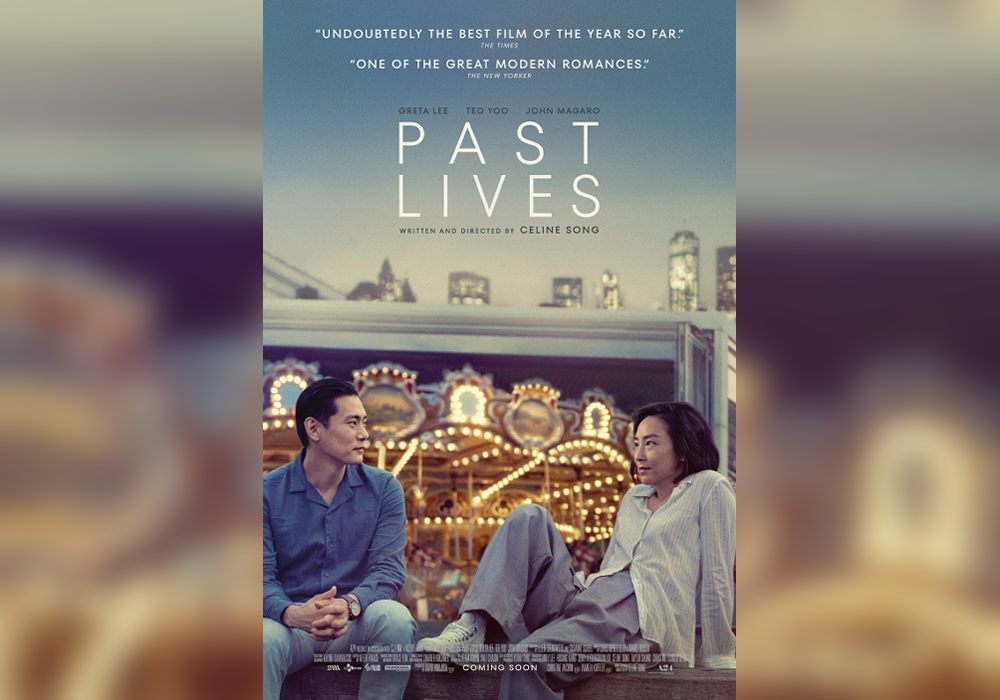
Past Lives
Screenplay by Celine Song
Reviewed by Jessi Cook
Song’s directorial debut is an artful reflection of the internal challenges immigrants face. Through Na Young, a South Korean woman who emigrates as a child to an unfamiliar western world, we see a persistent struggle to reconcile the past and present, represented by Na Young’s relationship with her first love and childhood friend, Hae Sung, who stayed in Korea.
Song expertly uses screenplay craft to amplify the themes of identity, immigration and fate. Early on, as Na Young lands in Canada, a script direction states that for the rest of the story she is to be referred to by her western name, Nora Moon. The subtext of this choice directs the reader to leave behind the South Korean child we met at the beginning.
Later, while in graduate school, Nora reconnects with Hae Sung through social media. Screenwriting choices throughout this section accentuate the stark differences between their two worlds. Scene headings show that Nora’s day is Hae Sung’s night and vice versa. While Nora calls him from relaxed locations like a dorm or library, Hae Sung communicates from buses, coffee shops, and cable cars. The variety of locations and the writer’s use of short punchy scenes create a pace of excitement and ease in the characters’ ability to pick up the past.
By the midpoint, Nora becomes further engrained in her western life through a new love interest, with whom she reflects on the Korean word ‘In-yun’, meaning providence or fate. Song contrasts Nora’s voiceover in this scene over Hae Sung’s life in Korea, leading us to question Nora’s future with Hae Sung throughout the rest of the script.
Past Lives is a story exploring the emotional struggles of the roads unable to be taken — a heart-wrenching reality for anyone whose past life lives inside of them.
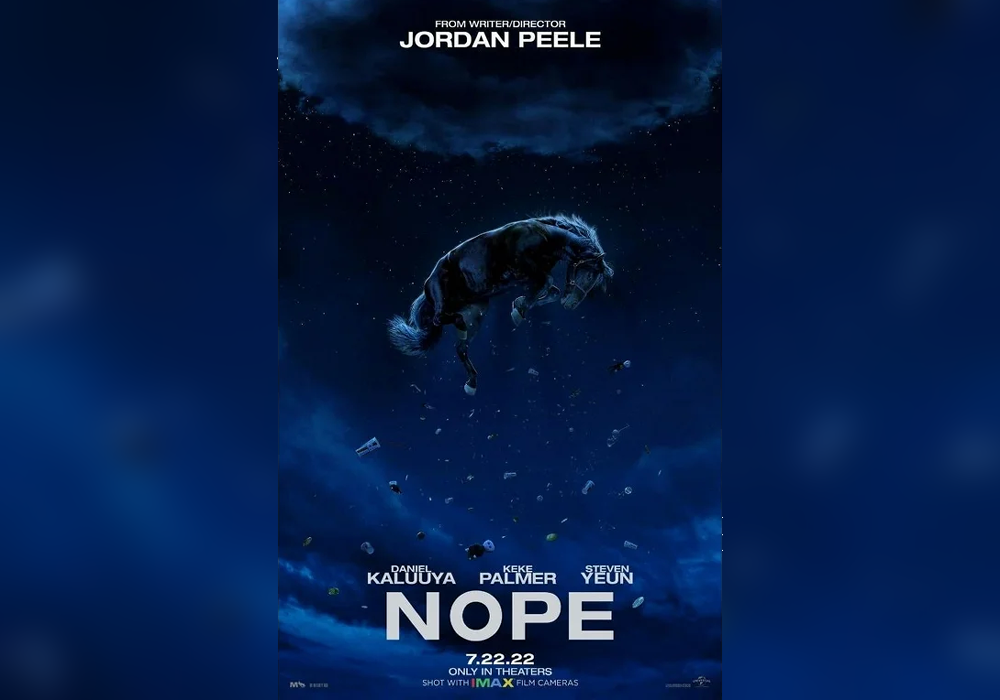
Nope
Screenplay by Jordan Peele
Reviewed by T.J. Tranchell
As a literary document, Jordan Peele’s Nope succeeds on its own terms by using escalation, restraint, and repetition to transform spectacle into threat. The screenplay is a multilayered tale about siblings, racism, and the expectations placed on entertainment workers, but it is also a surreal meditation on how danger grows when it is watched, ignored, and monetized.
The story follows siblings OJ and Emerald Haywood as they struggle to sustain their family’s ranch while confronting an unknown entity that appears as an ordinary cloud. Peele’s craft choice is to begin small: “Nothing. Just a large cloud floating overhead towards the West… OJ continues towards his ATV. Otis Sr. keeps lookin’ up. By the look on his face, you can tell something’s not right with the sky… THIP.” The diction is restrained, and the interruption—“THIP”—does the narrative work. Sound signals rupture before threat is named.
As the cloud grows, so do the screenplay’s stakes. A shadow crosses the valley “accompanied by a distant horse’s scream,” and OJ glimpses “a large, blimp-sized circular object” that vanishes. Peele keeps the language observational rather than declarative, allowing dread to accumulate through pacing. When OJ is described as “shook to his core,” the line trusts the image.
When the cloud later reveals itself as a consuming force, the screenplay makes clear that its expansion mirrors pressures bearing down on the characters; the screenplay’s ideas are grounded in recurring images that emerge through pattern.
At 107 pages, the script uses space deliberately. Repeated moments of looking at the sky become formal devices, illustrating how spectacle distracts even as it threatens. Nope stands out because its craft choices—measured diction, delayed disclosure, and visual repetition—work together to make escalation itself the subject. The screenplay does not explain danger; it teaches the reader how to feel it.
The Farewell
Screenplay by Lulu Wang
Reviewed by Kevin T. Morales
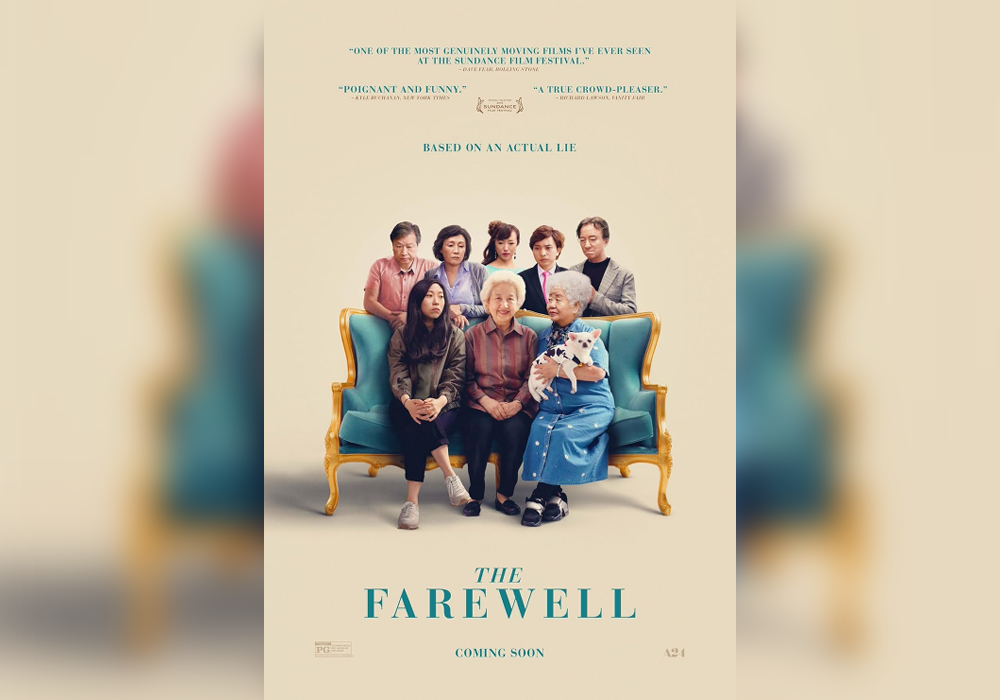
The struggle between East and West is delightfully and movingly explored in Lulu Wang’s 2019 dramedy. The screenplay, written in English with brackets indicating lines spoken in Mandarin, tells the story of a Chinese American aspiring writer, Billi, who maintains a close relationship with her Nai Nai (paternal grandmother) who lives in Changchun, China. Billi learns that Nai Nai has been diagnosed with terminal lung cancer and given only a few months to live.
Billi experiences a crisis of identity when her family chooses to deliberately keep the diagnosis from Nai Nai by planning a wedding for Billi’s cousin as an excuse to bring the family together. Guilt-ridden, Billi is torn between her Chinese roots and her American sensibilities. Wang makes this cultural struggle more broadly relatable by framing it, as Billi does, as a matter of honesty vs. dishonesty. From the opening scene, Billi and Nai Nai lie to each other over the phone, setting the stage for the dramatic action to come. Billi lies to Nai Nai about staying warm, and Nai Nai lies to Billi about being in the hospital, both to keep the other from worrying.
Billi’s Western sensibilities see this deception as wrong. Billi’s guilt is written with humor as she struggles with doing what she perceives as the wrong thing. When Billi helps maintain the lie by intercepting a medical test from the hospital, she feels she has compromised her moral compass in a profound way.
In contrast, Billi’s Eastern family believes sparing Nai Nai is a noble act. As Billi’s uncle, Haibin, tells her in Mandarin, “We’re not telling her because it is our responsibility to carry this emotional burden for her.” The suggestion is that when the community acts together, the individual benefits. Via the emigrant experience of revisiting one’s homeland and saying farewell to it, the screenplay asks the reader to consider what generosity really means. It suggests value in reconsidering Billi’s family’s collective decision to tell “a good lie,” an act that separates a Western emphasis on the individual from an Eastern priority of the community.
Voice to Books is a periodical short list of reviews focusing on writers from marginalized or underrepresented groups. It is edited by Cambria Matlow and Angelo A. Williams.