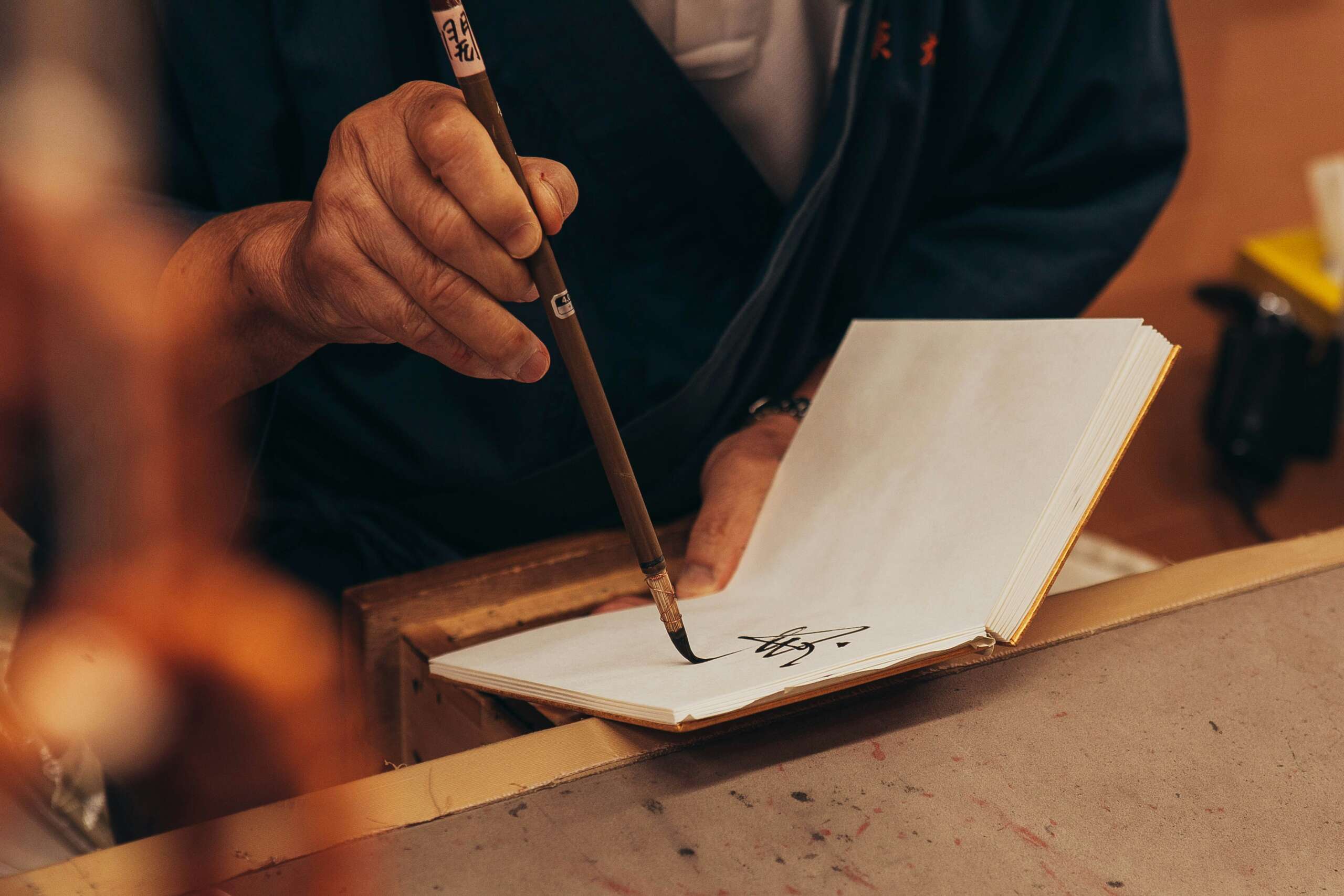
Calligraphy Lesson
I press my elbows
into the edge of the mahogany table.
Grandpa spreads bleeding characters
across the chapped paper—
each stroke a tucked pocket.
On afternoons like this, the sunlight
warms the cold black ink. While
we sit in the room, framed by photo
albums and paperweights, Grandpa
follows his shadow through a brush.
The characters unravel my body
into lines—my arms winding into their own
calligraphy, a music box tightly wound.
Air trembles. Music overlaps. I listen
for the breath inside the ink, between the lines.
Fifty years after Grandpa approached
the regime with knitted brows, he mutters
how in his brazen youth, he found
slippery footing: one man against a country.
Who asked him to place a letter
at an official’s leather boot? Why plead
for the guiltless when the guilty wear
the polished heels of educated men?
Four door knocks later, the boots pressed back
into the lap of the door. They stamped
his education red, the whole schoolhouse
stamped rubberstamp red. In the snowfield
of his characters, he knelt elbow-deep.
When the guards finished their rhythm, there was
no language to hold in his snow-bitten hands. He had
no memory—only the drip of his melting name.
Square Tomb
A daughter and son were born in America.
A father swept laundromat floors and rubbed his eyes
until his dreams molded into his way of life.
In photographs, his nails shine dark as soy sauce.
His back is translucent, thin as glass noodles. When
he’s supposed to be sleeping, once the ceiling fan stills
and his children’s breaths even their tide, he wheels
his bicycle onto the street, beneath the streetlamp.
He turns the handlebars just so, watches the shadow
dance, sideways through the pavement’s artificial sun.
He recalled the day before the square was sealed.
When the city smelled bright and restless, burnt to dust.
His classmates squinted against the heat, panting through
the scorching summer, tongues out to taste
the coming gunpowder. They raised their fists, sharpened
their chants. Fastened headbands the color of their own
blood. Even he had worn one—once, red ink still glowing
wet, before he tore it off, tossed it through the square’s
open mouth. By the time he found his bicycle, soldiers had
sealed the square like a tomb. He pedaled, past backpacks
split open like fruit, headbands torn, footprints left to drink
the blood. He pedaled, all the way to the airport—toward a night
of full sleep, a simple parcel of land where he could
raise a son and daughter born in America. Until he could
no longer hear the tanks grinding asphalt into bone.
Ruiyan Zhu is a high school senior from Saratoga, California who currently serves as the editor-in-chief of her school newspaper and literary magazine. Her work has been recognized by JUST POETRY!!! and the National Scholastic Art & Writing Awards.