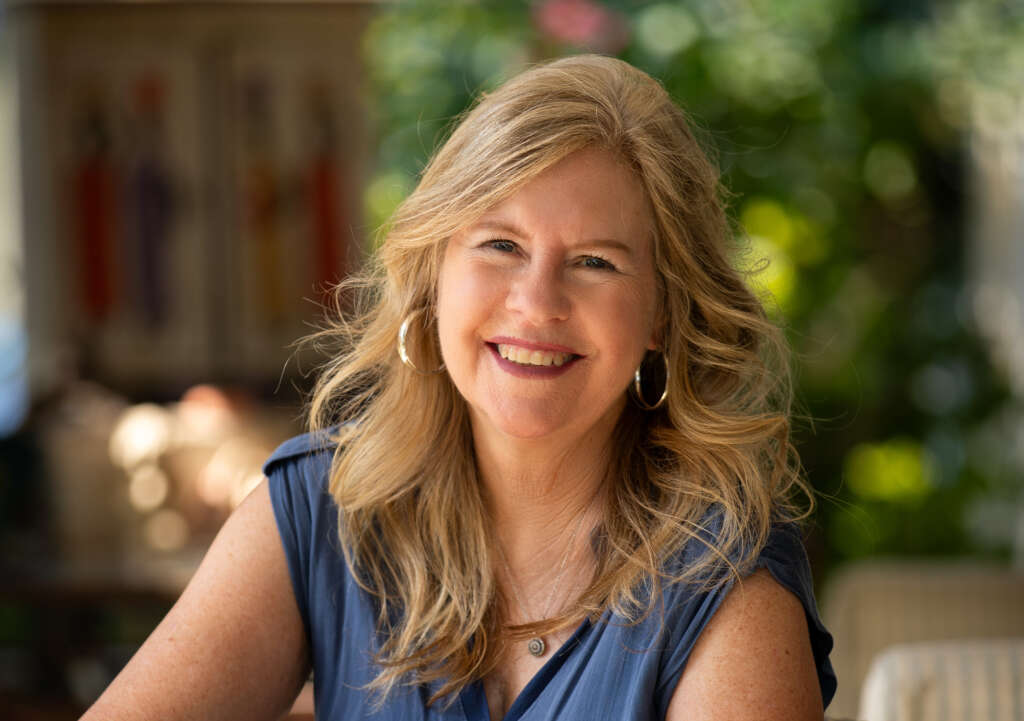
By Kevin T. Morales
Researchers will continue to study how much we’re shaped by our surroundings versus what we’re born with. But without question, environment has a profound influence on the creative identity artists develop. Growing up and continuing to live in tough neighborhoods in Riverside has made National Book Award finalist Susan Straight’s stories unique and compelling, drawing readers into her streets, schools, deserts, and hospitals with unforgettable characters in difficult situations.
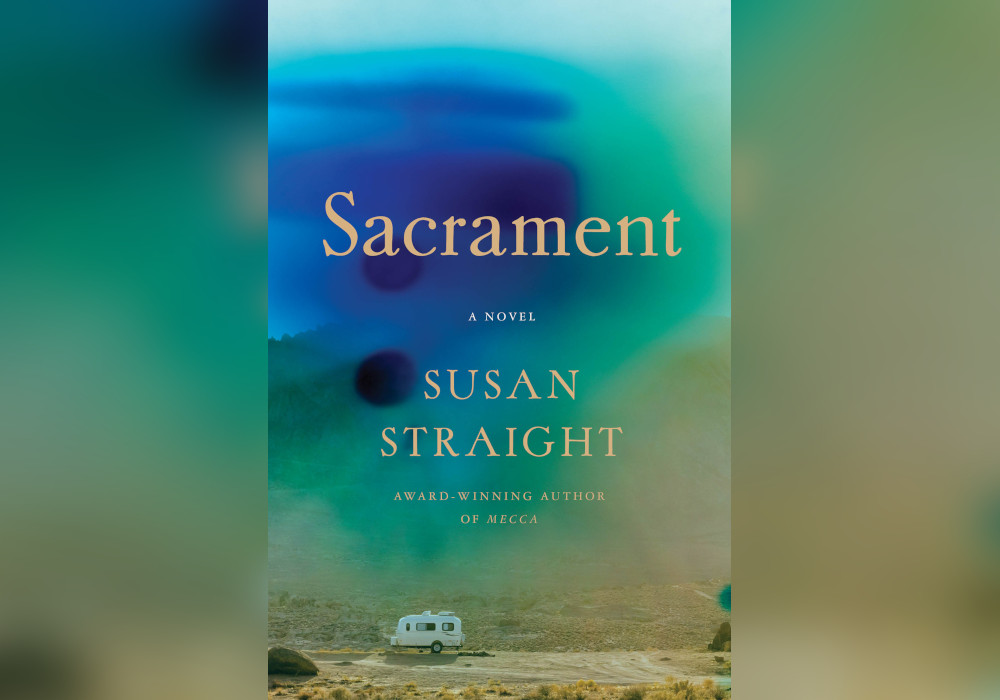
Straight didn’t intend to be a writer when she began attending community college while still a high school student. She was told no one would read about places where the land values were low and the cars were lower. But living in these communities has given her insight into people everyone can relate to—from nurses to lowrider biker gang members. In her incredible new novel Sacrament, Straight draws from her own neighbors to pen a story about three nurses working through the COVID pandemic, and in doing so, she reveals how her tough but vibrant community was not only brought to its knees, but how, in the face of this great equalizer, our desire to protect our children and our homes unites us.
The Coachella Review: Your fiction takes place in San Bernardino, LA, and other parts of Southern California. What draws you to telling stories here?
Susan Straight: This is just where I live, and I wouldn’t want to live anywhere else. And I think it’s funny because people in New York are always like, Oh my god, you live, like, in Riverside? What’s it like?
And I’m like, It’s cool.
[They say,] But how long have you been there?
And I’m like, Since my parents had sex?
They’re like, Oh my god, you’re, like, from there? Isn’t it super poor?
Uh… Yeah.
People who love New York, they’re from New York, right? People who love East LA are from East LA. People who love Minneapolis are from Minneapolis. People don’t know where Apple Valley is. Apple Valley’s no joke, man. Stuff goes on out there.
TCR: Did you always want to tell the stories of the people you grew up with and the surroundings?
SS: My mom said I learned to read when I was three. My dad left. We were in Rubidoux, which isn’t even Riverside, it’s… out there. My dad left, and my mom was eight months pregnant with my brother. My mom’s joke was that I taught myself to read in one day because I had to go to the babysitter. The babysitter was drunk and really grumpy, and she told me to sit in the corner and shut up, so I was like, “Fine, I’ll just read.” Then I read.
By the time I got to kindergarten, I was reading A Tree Grows in Brooklyn. I think, for me, these books were seminal. A Tree Grows in Brooklyn is so deeply Brooklyn. I thought, well, this person knows this place so well, right? Even when I was six, I thought that. Then I read Anne of Green Gables. That’s so deeply Prince Everett Island that you could smell it and taste it and feel it. And then in classic American fashion, I read Little Women, which is so very specifically Massachusetts, right? Those three books are a big deal. Then I read Sula when I was eleven, and that is Lorain, Ohio—that’s Toni Morrison. That’s the lodestar for all of her fiction, [the fictional town of] Medallion.
So somewhere in my lizard brain. I was like, Okay, these women were writing about these particular places. And then the last one was Louise Erdrich. I read a short story by her called “Scales.” I was in college. I found it in the library. It was in the North American Review.
I thought, Wow, this is North Dakota… These people are super hardcore and they’re, like, crazy, and they’re riding motorcycles and doing bad shit, and I was like, Wow, I could actually write about my people like this?
That was a huge deal for me, so… that’s when I wrote my first fiction. I was probably sixteen and then didn’t show it to anybody. But, truthfully, when I was in graduate school, everyone said, If you don’t write about New York, you’ll never get published. You have to move to New York, and you have to write about something different from what you’re writing. No one’s going to want to read about those people.
Okay, but I was already married to the guy I met on the bus freshman year. So, we just came back [to Southern California], and I was like, I’m gonna keep writing about this because that’s what I want to write about. It’s just stubbornness, you know?
TCR: It’s crazy to me that people would tell you that when literary giant William Faulkner wrote so much set in his fictional county in Mississippi.
SS: That’s what it is. I’m glad that you said that, because this is what I say to people all the time. I didn’t know about Faulkner’s fictional postage stamp of soil until graduate school [through] this really great teacher I had, Joseph Skerritt. He taught regional literature, which was shocking. Nobody really called it that, and that’s been my greatest love of all time: regional literature. I want to read [about] Driftless, Wisconsin. I want to read about Chicago. I want to read all those things, and so, for me, this is my place. There is no one else who could write about this place. They can’t because they don’t live here. Like, they could try. But they’re not gonna hang out with [my neighbor] Mario because they would be too scared.
TCR: The location of your stories reminds me of how August Wilson uses location as a kind of character throughout his cycle of work, which I see you doing. What makes this part of California distinct from other parts, and what regions do you fictionalize?
SS: I love August Wilson, and I love that you pick him. So, my first book, Aquaboogie, came out when I was twenty-nine. It was a novel in stories, and it had two stories in LA [and] a bunch of stories in a fictional Riverside called Rio Seco. But LA stories were LA stories.
The other stories were in Rubidoux, which I made a fictional name for. But I always call San Bernardino, San Bernardino. Palm Springs is Palm Springs. There was one story, “Buddha,” about a kid who escapes from a juvenile detention facility and is walking in a desert that was out there by Cabazon. The second book was a novel, I Been in Sorrow’s Kitchen and Licked Out All the Pots. It started in South Carolina but ended in fictional Riverside. And there’s some LA in there, too. The third book, Blacker Than a Thousand Midnights, the character is a firefighter for California Department of Forestry, and it’s set in the San Jacinto Mountains as well as Riverside and San Bernardino. Fourth book: Riverside and San Bernardino. So those were the first four.
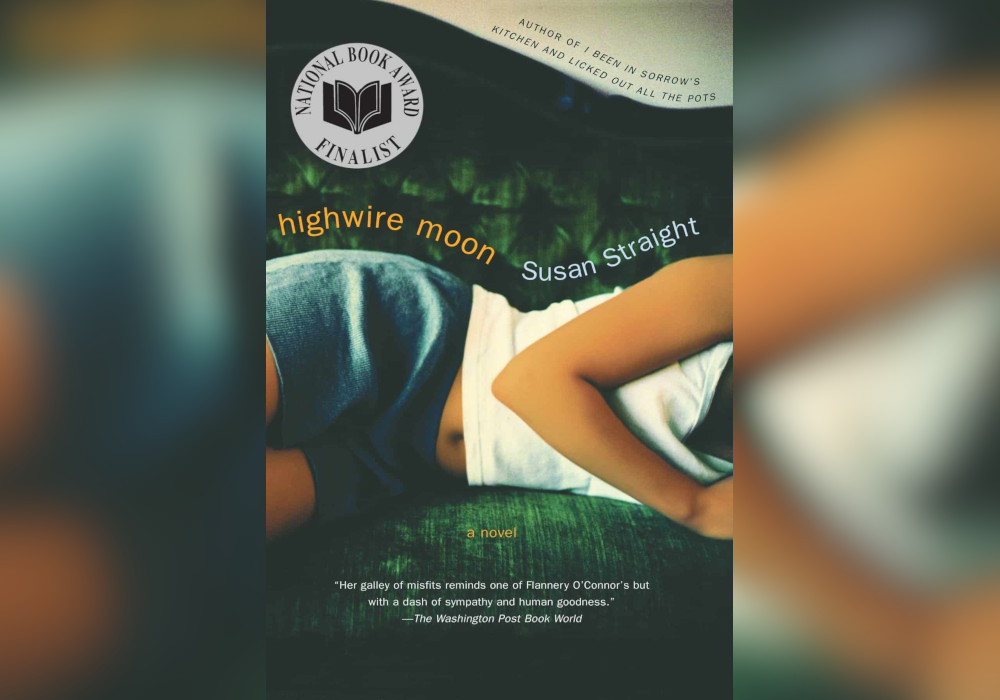
Then I wrote Highwire Moon, which was a National Book Award finalist. That book is set in a fictional Riverside and a fictional Cabazon. But one of the main characters immigrates from Oaxaca, and she’s in a fictional Riverside-Colton area. She has a kid. She’s deported. I mean, I grew up watching people get deported because I lived by the orange groves. I started this book when I was nineteen. I didn’t finish it ‘til I was thirty-five. That character makes her way back from Oaxaca and crosses the border.
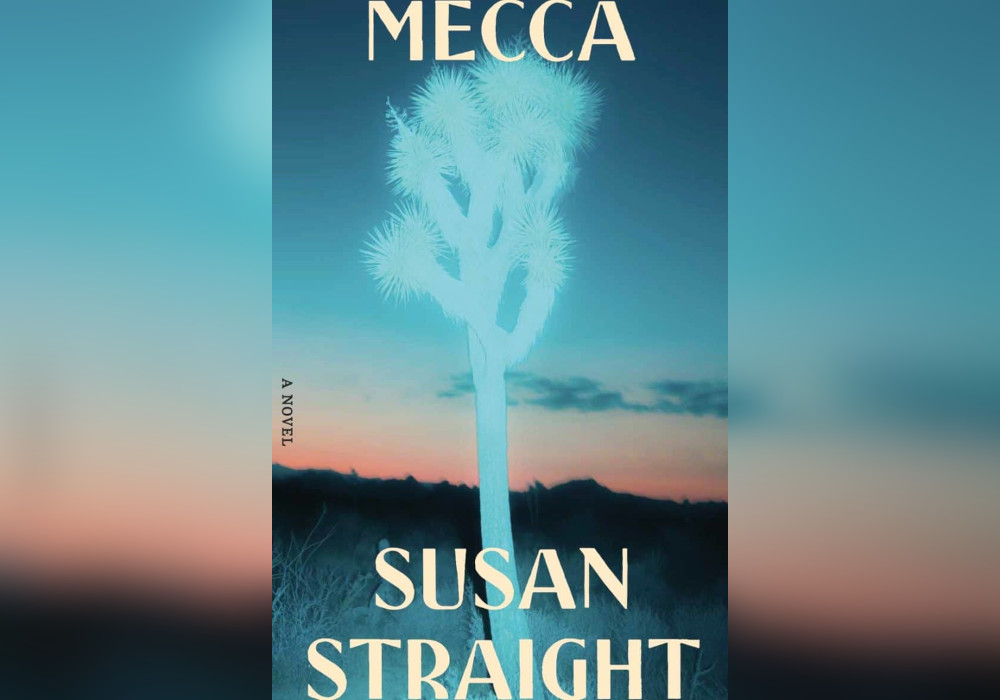
After that, I did a trilogy. It starts in Louisiana, and the descendants of the people from Louisiana end up in Riverside and San Bernardino. But they’re all related to people from the first book. So, I just kept circling around. In Mecca and Sacrament, many of the characters are descendants of the same formerly enslaved woman from Louisiana. But they’re all in San Bernardino, LA, Riverside. Then Johnny Frias, one of the main characters in Sacrament, I introduced in Mecca; he is my version of the Trujillos [a historic family in Riverside]. He’s somebody whose mom came with the De Anza Crossing in 1774, right? The Santa Ana River is like three blocks from me. If you walk down the Santa Ana River for about a mile, you’re at the actual historical landmark where De Anza crossed in 1774 with those people. So, I’d just like to remind people [that] it’s not like everything was brand new and nobody was here. Johnny Frias, that character, came to me from that idea.
I have a friend named Leti—she’s from Santa Ana [California]—and back in 2008… my daughter played tennis with Leti’s daughter. They were the two brown girls on the tennis team. Somebody said to Leti, “Why don’t you go back to Mexico?” She looked at this person, and she was like, “I’ve never been to Mexico. I’m from Santa Ana. My people came in the 1880s… Where are you from?” The woman was so surprised, because Leti was so mad, that she was like, “Wisconsin…” Leti was so angry that somebody would say that to her back in 2008. Johnny Frias kind of came to me from this idea of people saying, “Why don’t you go back to Mexico?” And he’d be like, “Because I’m from Chino.”
TCR: Your characters’ occupations are very important to their DNA. Do you come up with characters first and decide they’re a nurse, or do you start with a nurse? Or are you inspired by your research or interactions with real-life people? What part of a person’s occupation fascinates or intrigues you?
SS: Well, the funny thing is, for years American fiction was not about people who worked.
Right? There was this huge deal [with] Zoetrope Magazine. It was so funny because they [told me], Yeah, yeah, we read your story in whatever other literary journal, and this editor said, “We just really want stories about people who work.” I remember thinking distinctly, Oh, that’s right. No one works in fiction, and they don’t, again, now, do they? Now it’s autofiction, so the main character’s always a writer or, like, a painter or a poet, and they’re just chilling in their house. But everyone I know works. I don’t know anyone who doesn’t work because of where I live. Everyone works.
So, they don’t come to me that way [not working]. That’s a really interesting question. People usually show up fully formed. I know everything about them. In some odd way [In Sacrament] there’s Chencho Sotelo and his friend Rudy Magana. I don’t know, I knew all of a sudden how they got COVID, and I knew everything about them, and I can’t even say how. I just did.
TCR: Sacrament follows a few nurses, which you captured in a way I’d never read before. Did you decide you want to write a story about nurses, or were you first inspired by the times?
SS: Everything I write is out of abject terror and fear. If I’m writing… it’s because everything is awful and terrible and horrible. And I would like to make some sense of it by having some control over it. So, like I said, COVID. Mario was standing on my curb in the morning. His wife, Nancy, was on her porch. I was on my porch, and we couldn’t go touch him. He was swaying, and he was about to fall, and he was wearing sweat. He’s a big guy, and we had to just watch the ambulance pull up. They had hazmat suits on, and they wouldn’t touch him either. It took everything we were as humans not to go make sure he didn’t fall. That was awful. That was terrible. I don’t have that in the book, but part of it was that notion that you couldn’t help somebody, and then again, I lost people… I had a lot of friends die of COVID.
But the nurses part—that’s a good question. That’s very specific. I have four neighbors who are nurses. It’s a dead-end block, so everybody comes past my house. I live on the corner. On that street were two nurses and a social worker. Jennifer’s a social worker for the hospital. It’s just nurses everywhere because the hospital’s right there. My neighborhood is full of electricians and nurses and teachers. So, all my nurse friends start talking about COVID. And there’s only one explanation: I’m a good listener.
But I’ve always hung out with nurses. I’ve always had friends who were nurses. And I’ve always had a ton of friends who were Filipino, too, because there are three Air Force bases near and my mom was the bride of a military guy. Like, everyone I grew up with, their dad was in the military, and their mom was from another country, literally. I had a ton of friends who were half Filipino and half white.
Nursing was a big deal, so I wanted to write about Marisol Manalang and the way Filipina and Filipino people have been integrated in nursing in California for decades. That’s not new. But during COVID, everybody noticed it. Did you see that? During COVID, everyone was like, Oh my god, look at all the Filipino nurses, and we were like, There always have been; you just didn’t pay attention to nurses.
TCR: When listening to nurses during COVID, what were the big surprises to you?
SS: I’ll be like, So why’d you put them [patients] on their stomach? [They’ll say,] You have to put them on their stomachs because this, that, and the other [reason]. [When] you see the soles of a man’s feet, you realize it doesn’t matter how big he is. He’s just a baby. And I’m like, That was crazy.
Doesn’t that sound crazy? They’re telling me that at the fence. I’m standing out there watering, and they come by because they’re walking to work. We had four traveling nurses, just like the ones in the book. Two of them live down the street from me. One of them lives in an RV in front of my friend Jerry’s house. Every night they would walk past my house. I would always be out there with the dog or the kids or whoever. I would always bring them Rice Krispie Treat bars or whatever. They would always stop at the fence and tell me how crazy it was. These twelve-hour shifts. They were going for the seven o’clock shift. And then I would see them coming back.
My stepdad and my mom both had gone into assisted living, and I had to take them to the hospital all the time, but that’s the only time I could actually be with them. My whole life was either assisted living, the hospital, or watching people die. Losing people, not being able to have funerals. We had two secret funerals. We had a big ol’ secret funeral for somebody; we weren’t supposed to go to, but I had to go. If I told anybody that, oh my god, they would die, wouldn’t they? They’d be like, Oh my god, you’re, like, anti— And I’m like, No, I’m not anti-anything, but… if I didn’t go, these people would have never forgiven me.
So, there was all this secrecy, which is part of what I wanted to write about. The funerals, too. It’s about how sad people were that they couldn’t be with their loved one when they died. I helped my real dad die. I was there when he died. So that’s where that scene came from, with Stanley. Because that happened in 2019. He didn’t have COVID; he died of the flu. But this is my real dad. Everything in a writer’s life maybe works toward trying to put some kind of control over something, don’t you think?
TCR: For me, it was fascinating reading what lockdown was like in Riverside versus being in New York City.
SS: Yeah, totally different. You guys did the pots and pans [referring to New Yorkers going to their window every evening during lockdown and banging pots and pans to thank essential workers]. Everyone always brings up the pots and pans, and like nobody here would ever do pots and pans, because we’d be like, What the fuck is that? You know what I mean? But people play music. They would all play the same song or something, but you guys were in this horrible… like, terrarium. That’s the way I look at it. You were in a terrarium.
TCR: I love the details that you include that connect you as a resident of the place you write about; for example, you described the lesser intensity of sunsets during the lockdown because of the reduced smog. Do you remember that detail, or did you make a note of a detail like that for future use?
SS: I never forget anything. Okay, so there’s the lowrider funeral in Sacrament, right? COVID was hard. COVID was bad here. Fucking Mario was in the first hundred people in Riverside County to have COVID. My dad had Parkinson’s, so I had to take him to the hospital, and I got COVID, and he didn’t. My neighbor Jim Calderon died of COVID in his house. My other neighbor, Johnny, texted me. He said, “Come outside,” and we went outside, and they took Jim out of the house in a body bag. You just don’t forget that shit, you know? His widow, Kristen, they’ve known each other their whole lives; she’ll never get married again. He was a groundskeeper for Pomona College. Grew up in Montclair. So, I remember how that felt, and part of what I do—I’m writing.
The lowrider funeral came by my house one day during COVID. I was in the kitchen, and I heard a horse. I went out on the porch, and I’m like, What the fuck? There were four white horses and a carriage. And then all the lowriders, and they were all blasting Art Laboe, and I was like… Oh. Because three blocks from my house is the hospital where everybody was dying, and four blocks past that is the cemetery. COVID was very specific on my block. I heard ambulances twenty-four hours a day, constant.
So the lowrider funeral, I just remember it. That’s just how my brain works. I mean, I’m not a basketball player, and I’m not a nurse. I’m not a politician, and I’m okay at math. But I’m saying I can remember. I remember the sunset because it was so… jarring, and the empty freeways.
Being a fiction writer, you’re constantly cataloging everything in your brain. But you don’t know you need it. So that character is driving in a car, and then doing that thing, and you’re like, He’s driving down the 91 [and] I know what it looks like. You know, the same way a doctor works, don’t you think? Or, a basketball player, if he’s a point guard, and he knows he goes this way, and then this is gonna happen, and then this can… Like, that’s just the way our brains work, isn’t it?
TCR: Did you mean to write the great COVID novel?
SS: I wasn’t trying to write the great American COVID novel. I just was sad, you know? I was sad—that all these friends of mine… we couldn’t have a funeral for them. Or people would just collapse and tell me, “I couldn’t be with him when he died.” Like, how could he die alone? Humans don’t die alone when you come from a place like here. You can’t die alone. I didn’t have any grand ideas. Mine were more… just… like, infinite shards of sadness that I was trying to figure out.
TCR: Were there details that you ended up having to cut because of their intensity?
SS: I did have to cut this part out. It was how many bodies had to go into refrigerated trucks. In my first draft, there was Norma Magana, who was trying to find her husband, Rudy, after he died. And she realizes he’s in a refrigerated truck just parked in a parking lot with all the other bodies, and I couldn’t go there, Kevin. Like, I couldn’t do it. It went down a road that I couldn’t quite figure out how to…
TCR: That starts to feel like horror.
SS: Yeah. And it was real. It was real, you know? My stepdad died during COVID. He didn’t die of COVID, but it was two months before we got his body cremated. Two months. Then I wanted to pick up the body, and I was way out. You won’t even know where this is, but I was in a place called Homeland, which is, like, super hardcore. And the mortuary was like, There were too many people twenty-four hours a day, seven days a week. We couldn’t keep up. And, yeah, we’re in horror territory. I couldn’t do that. That’s my true answer to that. I couldn’t go with the bodies.
TCR: How would you define the genre of SoCal literature, as you’ve proven over and over to be a master of it?
SS: I was going to tell you that in addition to August Wilson, my two favorite writers who write these same kind of cycles are Walter Mosley and Michael Connolly. Because Walter Mosley, with his Easy Rawlins character, he did decades of life in Los Angeles. Like, decades. Easy arrives in the ‘40s. But, you know, Walter Mosley takes them all the way up into the ‘70s and shit, right? And then Michael Connolly, who is a genius as well, writes about LA. I’ll never forget reading the very first Harry Bosch novel. The guy was a Vietnam tunnel rat, and my stepbrother went to Vietnam. My stepbrothers are ten and eleven years older than me. They grew up in Ontario and the Pomona area, and they told me some crazy stuff. I’m, like, ten, and they’re telling me stuff, and I’m just like, I don’t think I should know any of these things, but I do.
So, Michael Connolly has Harry Bosch be a tunnel rat and a foster kid from LA. He knows LA in a different way from anyone. So those two guys go along with August Wilson writing about decades of American life. You know, one place in America. So, to me, if I were going to name SoCal literature, I love those of us who write about the greater Southern California, like, Kem Nunn. His first novel, Tapping the Source, was about surfing culture. Very specific. And then you gotta love Janet Fitch. White Oleander is just so particularly an LA book, and then Carolyn See, writing about Topanga Canyon, you know? And my colleague Alex Espinosa—he’s writing about Colton. Michael Jaime[-Becerra]’s writing about El Monte. Tod Goldberg is writing about the desert like nobody else right now. I think of Southern California as that big. You know what I mean?
TCR: That not one writer covers it?
SS: That’s such a good question, because it’s massive. But yet it’s so specific, isn’t it?
TCR: So, what specifics set a book in the genre?
SS: So Southern California literature as a genre, to me, would have to encompass three things.
The landscape is absolutely key. Like, what’s the landscape? And people make fun of the freeways. Whatever. How are we supposed to get to work, right? So it’s gotta be the landscape.
It’s got to be the food, alright? I’m gonna get in a lot of trouble here, but my daughter used to live in Austin. I went to Austin, and they’re like, Oh, we eat breakfast tacos. You’ve never had a breakfast taco? I’m like, Are you gonna eat that in the fucking car while you’re driving to work? And they’re like, We don’t work. (laughs) But I was like, You eat a burrito, because you hold a burrito in your hand and you eat it; it doesn’t get all over you… because you’re going to your job. You eat a burrito, and then you wrap the rest in foil, and you put it on the dashboard, and then you have it for lunch. Can’t do that with the taco, especially with all that cheese and shit.
So yes, the landscape and the food. And of course, the last thing would be the language, right? Because people speak so specifically. I had a former student. He teaches English in Japan now, but he was a surfer from Huntington Beach. He wrote some killer stories back in the day. Jason Marks. I remember everything about him. He would write stories about surfers. And, like, they have their own language, and his fellow classmates would be like, What are they saying? And I’m like, You need to decipher that, because that’s their language. So, does someone speak Spanish? Do they speak California Spanish? Do they speak surfer? Do they speak Japanese but a Japanese learned from five generations of Japanese Americans, which is totally different?
So, I’d say landscape, food, and language.
TCR: What is the future of SoCal literature?
SS: I actually love teaching Station Eleven. I was really fascinated by people who colonize a Target, or they colonize a gas station. My students were fascinated by this idea, and I’m like, That is what’s going to happen. The first thing is people are gonna be like, This is my Target and my family’s Target. Then you’re gonna have to fight for it, and then you’re gonna have a limited number of goods at that Target, so, what are you gonna do? Are you gonna start selling them? I think that is kind of realistic. I think people actually like escapism—like zombies and stuff—because in a way, that allows you to emotionally be like, What will it be like? So I feel like [not just] Southern California literature, but all of American literature is headed toward zombie apocalypse. Then the other side is going straight into autofiction, where it’s like, I’m just gonna write about these two people in a room. It’s all autofiction, and then my characters are named for me, and it’s just about the implosion of my marriage. There’s, like, these ten books that were super famous last year, and it was all the implosion of these marriages, and I was like, Huh. Everybody I know is divorced or widowed, so I mean… I guess some people are still married. I don’t know. I kept thinking of The Hunger Games and how prescient The Hunger Games were. That’s such a great series, don’t you think? Look at who we are. Look at how we are dividing each other further and further, and it’s all geography and class. So, I think maybe literature goes one way or the other. What do you think?
TCR: I was talking to my kids about the level of greed that exists now. It’s hard to find historical parallels.
SS: It makes Louis XIV look like nothing, huh?
TCR: To me, the most prescient story that exists right now is actually the movie Titanic. You watch all the different types of personalities, and some people just keep playing music, even though the thing’s going down, and some people resign themselves and think they’re going down honorably, and some people disguise themselves as women to get into the lifeboats.
SS: Yeah. I think that’s a pretty good analogy. The Titanic is an excellent analogy. Because if we’re all on the Titanic, it’s gonna be fascinating to see how people behave. But I will say to you, it’s great to get to do art still, right? I mean, if I couldn’t write, I’d be pretty crazy. A lot of my friends took to the pharmaceutical route because stuff goes on in your brain, and I don’t have to use pharmaceuticals because I have fiction, so how lucky am I?
 Kevin T. Morales is a writer and filmmaker from California, working and living in New York. He is the former artistic director of two professional theater companies, has directed over thirty productions regionally and off-Broadway, and had several of his original plays and musicals produced. His first feature film, Generation Wrecks, played several festivals, winning the Audience Award for Best Narrative Feature at the Florida Film Festival. A graduate of NYU, Kevin is currently pursuing his MFA at UCR, and his next feature, Ghost Stories for Close Friends in Dark Times, comes out in 2026.