Cal didn’t know why he kept checking his phone. He was in the red. He knew that. Seventeen percent. He still had service for a little while. He would find a way to charge it. Soon. The percentage hadn’t changed in the last several minutes, and he told himself that was the last time he would check it.
When he dropped the butt of his cigarette and crushed it with his foot, he checked his back pocket to make sure his wallet was there. He fought the urge to count the bills again, the few that were in there. They had just returned the wallet to him not ten minutes ago, and he counted every bill before he signed their forms.
“You just get out?” asked a tall Black man leaning against the brick wall.
Cal nodded and dragged his shoe over the particles of tobacco on the concrete three times.
“Got another cigarette?” the man asked.
Cal pulled out the crumpled red pack and the lighter and handed them to him, checking his wallet once again.
The man nodded his thanks and took a long drag off of a Marlboro.
Cal watched the bus shelter across the street. A tiny barrel of a woman was ranting into her phone in Spanish. He thought it sounded better to get yelled at in Spanish. There was beautiful rhythm to it. It was almost melodic. He strained to listen when the traffic light changed and the cars started moving.
“Will you look at that,” the man said.
“Yeah, someone’s in trouble,” Cal said.
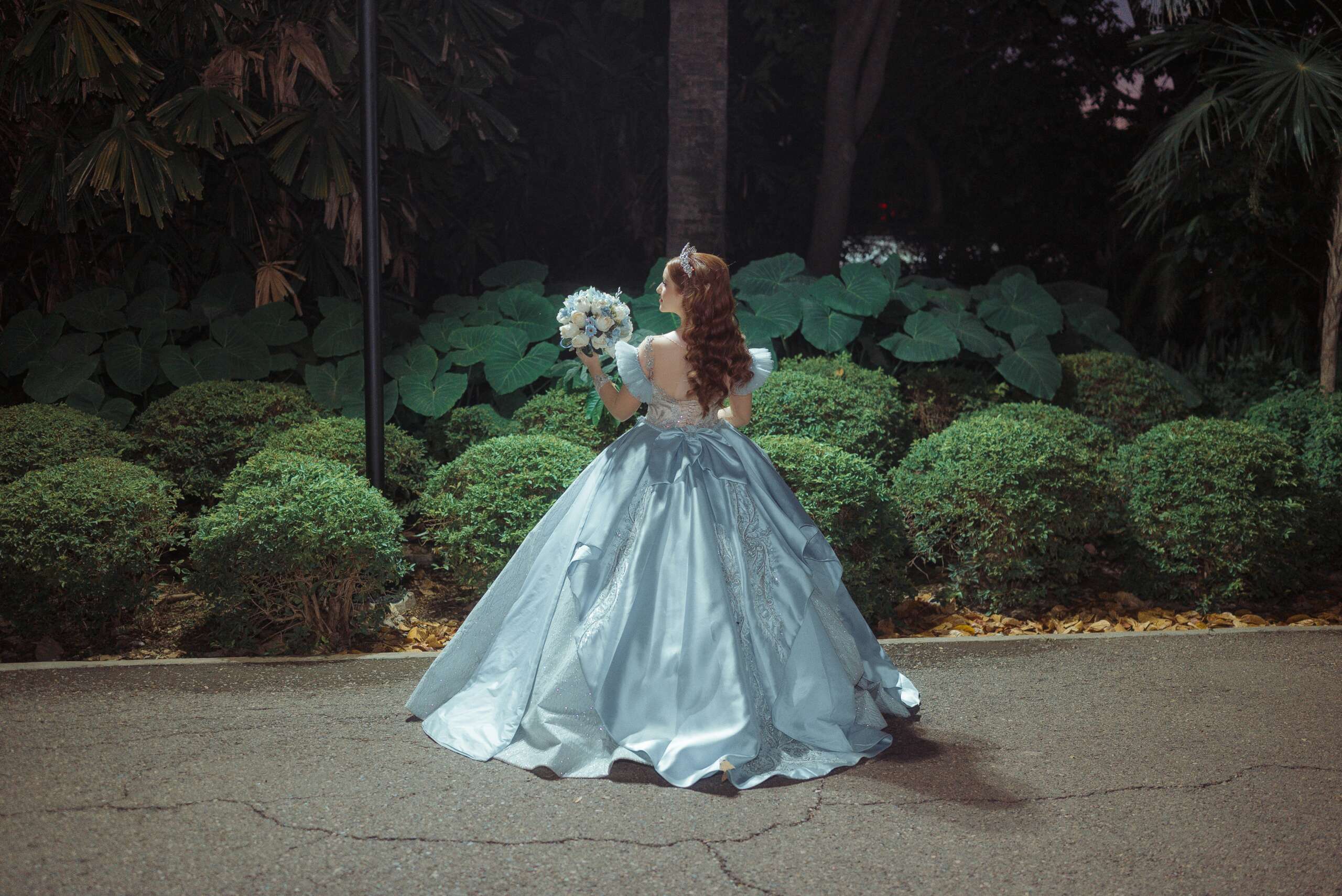
Cal didn’t realize what the man was talking about until the tiny woman looked down the street and made a disapproving face. He turned to see where she was looking. A blond girl in a blue gown was making her way up the sidewalk from the parking garage. She looked angry.
“It’s an angel,” the man said, exhaling smoke and smiling.
“Dammit,” Cal said and whipped out his phone. He had missed a text.
“Maybe I didn’t make it,” the man said.
“No, you’re fine,” Cal said. “It’s me who’s dead.”
The blue angel walked up to Cal. Maybe she wasn’t as angry as he was expecting, just out of breath.
“I don’t have time for this,” she said, jingling her keys. “If we hurry, maybe we won’t have to pay for parking.”
Cal nodded. “Let’s go.”
He was always impressed by how fast his sister could walk in heels. He followed her to her ancient Honda Civic in the parking deck.
“Get in, get in,” she said, throwing the car into gear before he had even closed the door. The tires squealed as they made their way to the kiosk. They didn’t have to pay. His sister let out a whoop as the parking barrier went up.
“Bonus,” she said as she pulled into the road.
“Hey, Char, thanks for picking me up. I owe you.”
His sister snorted. She kept her eyes on the road. “So what happened this time?”
“Would it be okay if I charged my phone?” Cal asked as they pulled up to the traffic light.
“Help yourself,” she said as she scrolled through her own phone.
Cal plugged the cable into his phone. Sixteen percent. He felt a rush of relief. He reached behind him and checked for his wallet. The dress Charlotte was wearing wasn’t an ordinary dress. It was some kind of fancy gown. A heap of blue material sat in her lap. Sparkly netting on the sleeve caught the sunlight when she turned the steering wheel.
“Why are you wearing that dress?”
“I have to work,” she said and turned the car onto Main Street. “Spill.”
“Public intoxication.”
“Seriously?”
“Seriously.”
“What did you do?”
“I fell asleep in Fairchester Park.”
“Jesus Christ,” she muttered. “How’d that happen?”
“I had been over at J. P.’s. I was walking home and got tired. I sat down on one of the benches. Just for a minute.”
“Like some fucking homeless dude? Do you still have that job?” She sounded disgusted with him, by him. He was older than she was, but sometimes he didn’t feel that way. She turned the air conditioning on.
“Yeah,” he said and looked out the window. Of course, he had the stupid fucking job. It was a dishwashing job. Any idiot could wash dishes. The old Vietnamese guy who owned the place liked him. Cal didn’t know why he did, but he was glad to have someone who approved of something he was doing, even if it was just the ability to move boxes off of high shelves and keep the temperamental dishwasher running.
“Good. You have to keep that job,” she said and pulled into a McDonald’s.
Charlotte ordered a bacon and egg biscuit, two sausage burritos, and a large Coke. Cal was trying to decide if he should get his wallet out. He pulled it from his pocket and opened it, but she ignored him and handed the cashier her debit card. He took the opportunity to count the bills inside his wallet.
“Stop,” she said and handed him the bag and the drink. “I have to drive. One of those burritos is mine.”
“Charlotte, I can’t…,” Cal said.
“Shut up,” she commanded.
Cal took a long drag from the Coke and felt a rush of well-being. It was cold, sweet, and Cal felt more awake. For a brief moment, it didn’t all seem so tragic. The steam radiating from the brown paper bag smelled heavenly.
“Where to?” said Charlotte as she pulled back onto the road.
“I was hoping maybe we could go to Mom’s.”
Charlotte chuckled.
“No way. Sorry. That’s not going to fly with Deb. She doesn’t like surprises. Where is Calvin Wilson the Third?” she asked about their father. “Gambling with some flight attendant in Atlantic City?”
“No, he is at a conference in St. Pete. He won’t be back until Sunday night.”
“I’ll just take you home,” she said, turning in the direction of their father’s house. They rolled to a stop at the next traffic light.
“Why don’t you just drop me at J. P.’s.”
“You sure? Wouldn’t you rather go home?” His sister was looking at herself in the mirror on the visor.
“Char, I can’t stay at the house if he isn’t there.”
“What do you mean?” Charlotte was looking at him now. He could see she had makeup on, a lot of makeup. And the dress made her eyes appear even more blue. He looked away.
“I can’t stay there. That’s why I was at J. P.’s. Then these assholes showed up and I left. I… I couldn’t be there.”
“Are you serious? That’s so fucked up. So you’re what… couch surfing? What did you do?”
“I didn’t do anything.”
The light changed, and she started driving again. “Fuck,” she said and punched the steering wheel. “Fuck!”
“Char, it’s okay. You can drop me at the library. I can walk to J. P.’s from there.”
“Too late,” she said. “What an asshole. Look, I have to get to work. You’re going to have to come with.”
Cal gently held the fragrant bag in his lap. He had so many questions. He was pretty sure he wasn’t the asshole but wasn’t positive. Where did she work? Could he eat a burrito in her car? He didn’t dare ask. Charlotte turned on some music, and he took that as a signal to keep quiet. Again, relief washed over him. The tightness in his chest loosened. He concentrated on breathing deeply and evenly like she had taught him: one, two, three, four, centering himself, and tried not to jostle the bag.
He recognized the song immediately. It was from the Broadway musical Jesus Christ Superstar. He realized he knew the words, all the words. “My mind is clearer now. At last all too well. I can see where we all soon will be.” It was like a premonition. He immediately thought, “Damned for All Time,” which is what he thought he was, but that wasn’t this song.
They pulled up to another traffic light, and his sister said, “Eat.” He obediently started unwrapping a burrito as his sister began singing along with the recording with gusto. Cal was used to these “concerts.” He remembered them from when they shared a car and rides to high school. Still, he glanced quickly at the car beside them to see if anyone was watching. They weren’t.
His sister was practically born singing. Charlotte literally sang the soundtrack to their lives. Literally, he thought and then smiled, yes, literally. Charlotte used to sing to keep the littles—their younger sisters—from crying during their parents’ knock-down-drag-outs. This one time, Charlotte couldn’t have been more than twelve, and she was upstairs trying to get the littles to sing “It’s the Hard-Knock Life” while his mother broke dishes downstairs.
“Knock that shit off,” their father had yelled.
“’Stead of kisses we get kicked,” Charlotte practically shouted. The littles were so distracted by stage directions they stopped crying and took their places.
Calvin Wilson the Third had stormed out and left with tires squealing. By the time their mother slammed her bedroom door and Cal began cleaning up the broken glass, the littles were singing about the sun coming out tomorrow with such clear hopeful voices that Cal would’ve sworn his heart was actually breaking, the pain in his chest was that real. That was one of the worst fights, near the end. Their father moved out not long after that. And that pain, that was the beginning of an anxiety attack, something he had to contend with regularly.
Charlotte pulled into the community center and parked at the very edge of the parking lot under a tree. She flipped the mirror down again and started twisting her hair.
“Finish eating, take a nap, whatever,” she said. “I’m going to be a while. I’ll leave you the keys—for air conditioning, if you need it. And for the love of God, do not move the car.”
“I thought you worked at Wegman’s,” he said, reaching into the bag for the biscuit.
Charlotte snorted again. She pulled a wig from a duffel bag in the back and situated it on her head. It was blond like her hair, but thicker and wound into a long braid. She tucked and tucked and then turned to look at him. “I can make more doing birthday parties than I ever could running a cash register.”
“Who are you supposed to be?”
“I’m Elsa, the snow queen. You probably don’t know this musical. Frozen? Yeah, well, she is very popular this year,” she said before she whipped out a tube of lipstick. “I’m going to have to hit the restroom for one final check.”
She got out of the car and started busying herself with stuff in the in the trunk. When it closed, he saw she had two color-coordinated balloons, a gift bag with a big snowflake on it, and a small blue satchel that went with the dress.
“You’re a goddamn magician,” Cal said, shaking his head. He took a long pull of the soda.
The snow queen turned to him and smirked. “Show time. Try to stay out of trouble?”
“You bet,” he said.
Cal finished the biscuit and watched his sister walk up to the community center. He checked his phone. Forty-one percent. That was better. It was a beautiful spring day, not too hot yet. He wanted to stretch his legs. He then decided a restroom was a good idea. He took the keys out of the ignition, carefully placing them in his right front pocket, and made his way across the parking lot and into the building.
He could make out the birthday party right away. It was in one of the meeting rooms—a bunch of little girls milling around in princess dresses with little plastic tiaras on their heads. Several kids had on dresses that resembled Charlotte’s.
Cal stepped closer to get a better look, but not too close. He didn’t want people to think he was a weirdo. He pretended to be looking at some paintings in a gallery space off of the atrium. He watched as Charlotte stepped into the room, a radiant smile on her face. He could immediately tell which one was the birthday girl because she burst into tears and tried to hide behind one of the women. Little girls, tears, Cal had seen enough. He looked for the restrooms. As he moved away, he saw the snow queen sinking down and talking to the girl, the gown fanning out around her.
Cal washed his face at the sink and dried it with a paper towel. His eyes were bloodshot. He looked like shit, and he wasn’t even using. The strange way the bathroom light hit the stubble on his chin made him look old. He felt as old as he looked. A shower and a change of clothes would be nice about now, he thought.
He was careful about his sister’s car keys. He checked to make sure they wouldn’t slip out. This birthday party couldn’t take that long. He knew that from when the littles had had them. Kids can only handle so much fun. He could be responsible for the keys for two hours. Two hours wasn’t long at all.
He decided he would get some air, maybe walk around outside the community center. He thought the fresh air would be good for him, calm his nerves.
As he stepped out of the restroom, he could hear the music and Charlotte’s voice full and clear. The door of the party room was being held open as there were more people than could fit in the room. People stopped and looked, even those who weren’t there for the party. Charlotte had always had that effect on people. It was hard to see past the crowd, but he could just make out the little princesses twirling and singing along.
A crowd of parents were against the one wall. Men, Cal marveled, actual fathers, at a little girl’s birthday party. He thought that was one of the strangest things he had ever seen.
Charlotte was beatific. Someone had once called her that in a review in the high school newspaper, and it was just the right word to describe his sister when she was performing. Cal made his way outside and walked a lap around the community center. He sat down on a bench in the shade of one of the trees and watched people coming and going through the center’s front door. He checked his pocket for the car keys. Still there. He checked his wallet again.
Some of the families looked happy—there seemed to be as many dads as moms, joking with their children. He could spot the families that were stressed, mothers with pursed lips talking to their children in sharp tones. His mother had been like that. Deb had a lot of migraines, which required drawn curtains and being quiet for hours.
He tries to remember a time she took them someplace like the community center and can’t. They had the pool at the country club, where Deb played tennis with her group of friends. His father, he mostly remembers him showing up at the right time, wearing the right clothes. Christmas and Easter at the grandparents’, graduations, occasionally a recital or a game.
He checks the keys in his right front pocket and then pulls out the cigarette packet, taking out a bent cigarette and straightening it with his fingers. He watches a father with two little girls on the center’s substantial playground. The girls quickly make it to the top of the small climbing wall. Cal doesn’t like to dwell on the past but sometimes he can’t help but wonder what it would’ve been like to be in a different family, a family like one of these.
“Excuse me, there is no smoking on the premises,” a voice says.
Cal looks up to see a security guard. He looks down at the cigarette in his hands. “Oh, sorry about that,” he says, putting it back into the packet.
“What brings you out to the Mott Center today?” the security guard says, and Cal knows this is no ordinary question.
“I’m waiting for my sister,” he says and puts away the cigarette packet to assure the man he has no intention of lighting up.
“She in a class right now?” The security guard is a Black man who obviously works out. Cal can tell by the way he fills out the grey shirt he’s wearing. The patch on his sleeves says “Park Authority.”
“She’s at a birthday party.” Cal realizes he was probably watching the families too closely, and now this Park Authority guy thinks he is some kind of a perv. He is worried about being asked to leave the grounds, and then what? Char would be pissed.
“A birthday party?” The man doesn’t sound convinced.
“She’s the princess at the party. She’s singing.”
The man’s flat expression changes. “Elsa’s your sister?”
“Yes,” Cal says relieved. “She has another party after this one.”
The man smiles. “Your sister is here a lot. Beautiful voice.”
“Elsa is very popular this year,” Cal says. He tried to sound like he knows what’s going on.
“She is, she is, and that Moana,” the man says nodding. “You sing?”
Cal shakes his head. “Not like that.”
The man chuckles. “Yeah, Elsa, she’s special.”
“She is.” Cal isn’t sure what to do. Should he go back to the car?
“You have a good day now, you hear,” the man says and walks over to a dark-haired woman who is trying to get his attention in the parking lot.
Cal relaxes a little. He stops watching families. Maybe he should head to the car and wait there, he thinks. Lord knows he does not want to doze off on the bench. He stands and stretches his legs, touching the keys once again.
A short time later, Charlotte emerges from the center with her blue satchel and walks right past him on her way to the car.
“I’m making my exit,” she says as she walks by. When Cal gets to the car with her keys, he realizes it is around the side of the center.
“Can’t have Elsa be seen getting into her ratty old Honda.”
“Not princess-y enough?” he asks.
“Not by a long shot,” she says, starting the car. She takes off the wig and blasts the air conditioning. She looks tired, and he says this aloud. She rolls her eyes.
“Being a princess is hard work,” she says. “You have to be animated and upbeat even if you have a hangover, or did really bad on a math test, or have a broken heart.”
“Do you have a hangover?”
She shakes her head and pulls out a metal water bottle, drinking deeply.
He realizes he really doesn’t know Charlotte that well, not like he should. “You should do this professionally,” he says.
“I am doing it professionally.” She flips the visor down and checks her make up.
“No, for real, like in New York,” he says, and she laughs at him. “I’m serious.” He looks at the brick of the community center’s loading dock and tries to find the words.
“You touch people…” he starts.
“Oh dear,” she says.
“Stop joking,” he says, and she quiets. “It’s a gift, Charlotte. You shouldn’t make fun. You do touch people, and you could be touching more people than a room full of four-year-olds. It’s a waste. You should do something with your life.”
“This is ‘something,’” she says and sounds angry.
“No, you need to get the hell out of here. Go to college. There has to be money somewhere. There just has to be.”
Charlotte sighs. “Maybe. Maybe when the girls are out of school.”
“No,” he says, probably louder than he should. “They’re not your kids, Charlotte. They’re not your responsibility. Let their parents step up and take care of them.”
“That’s rich.”
“I think they get let off the hook way too easily,” he says. “We let them off the hook. And just because I’m a fuck up and didn’t go to college doesn’t mean you shouldn’t. Why aren’t you gone?”
“It’s a lot,” she says.
“It’s not. It’s normal for most people.”
“We aren’t most people.” She backs out of the parking space and drives to the exit of the parking lot.
“Don’t forget about your burrito,” he says, picking the McDonald’s bag up off the floor.
“Another princess problem,” she says. “I’m hungry, but I don’t want that thing anywhere near this dress.”
She stops at the next traffic light. “By the way, you aren’t a fuck up.”
“I am. I suck,” he says. “Most people go to college after high school. I went to rehab.”
“Costs about the same.” She tries to make it sound like a joke.
“Ouch,” he says, but he knows his trip to rehab was just part of their parents’ financial difficulties. Rehab and the legal trouble that landed him there had taught him that much. At their core, their parents were always selfish people, and divorce just made them more competitive.
They roll to a stop at another traffic light, the Honda’s brakes squeaking a bit. “I have some time before the next party,” she says. “We should go see Deb.”
“That doesn’t sound like a good idea,” he says. He has stuffed all the McDonald’s wrappers in a tight ball. It’s the least he can do to not make more work for her.
“She is better,” Char says. “I mean it. Besides she would get a kick out of hearing about Calvin the Third and his rules. The girls should be home?”
In a few hours, Cal will be loading the dishwasher at Viet House and packing up the online orders how Mr. Huynh liked them packaged. He has the time to spare and nowhere in particular he has to be. Cal looks over at the princess and smiles. Sometimes you have to trust a magical thing when it crosses your path.
 Colleen Kearney Rich is the author of the chapbooks Things You Won’t Tell Your Therapist (Finishing Line Press, 2019) and Bunnyman Bridge (A3 Press, 2021). Her writing has been published in the literary journals SmokeLong Quarterly, Wigleaf, Matchbook, and Pithead Chapel, among others. She is a fellow of the Hambidge Center for the Creative Arts in Georgia and was a 2021 Tennessee Williams Scholar at the Sewanee Writers Conference. One of the founding editors of So to Speak: A Feminist Journal of Language and Art, she has an MFA from George Mason University in Virginia, where she also works.