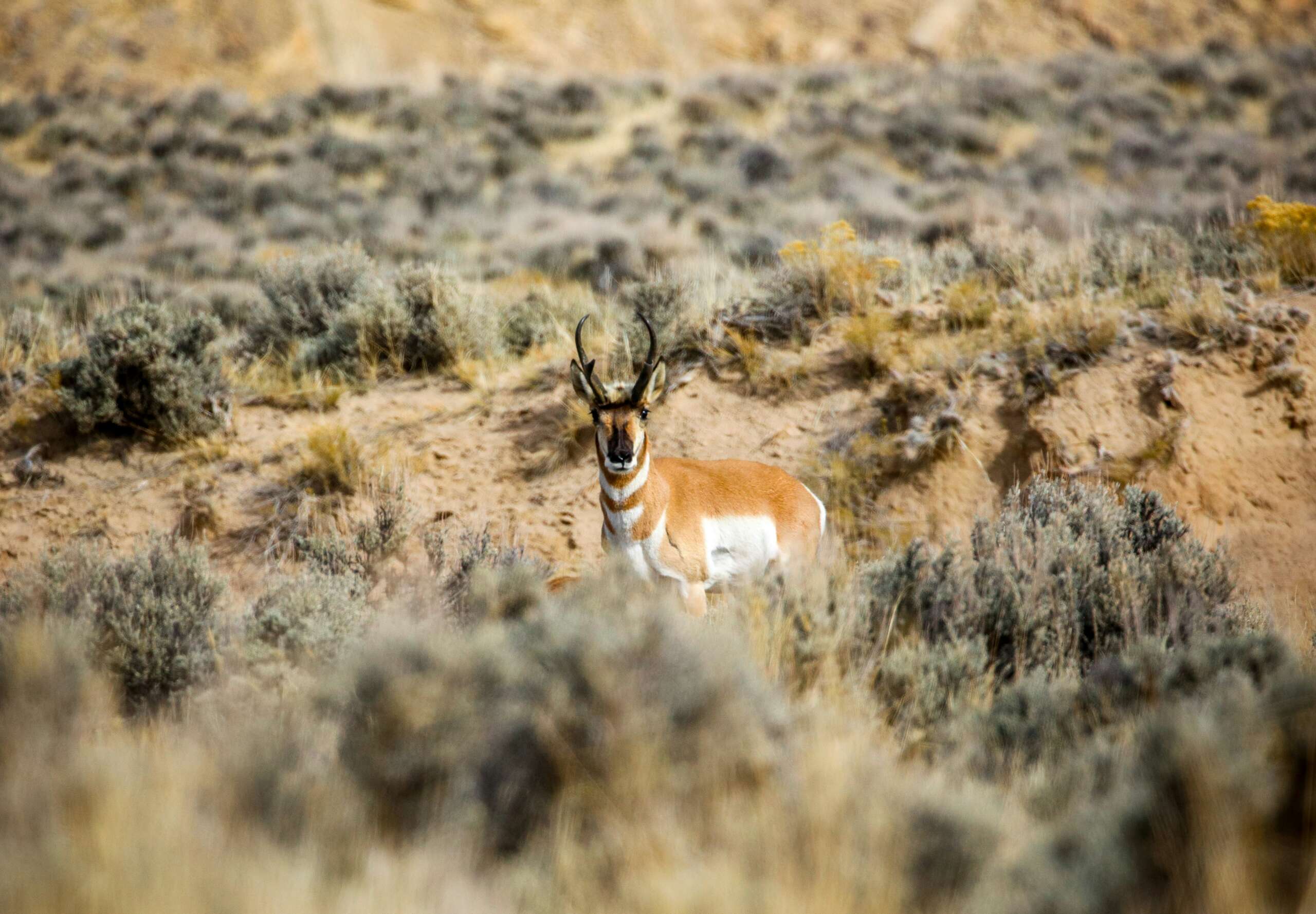
I watch Vin ride his windrower slowly through the green hayfield in the early evening. Three pronghorn stand in the long grass, chewing the harvest, but Vin doesn’t seem to mind.
The animals, with their tan and white coats and inward-curved horns, belong to an ancient species and look like they’d be more at home on the Serengeti.
Mammatus clouds bubble above, promise rain by the smell of it.
The scene is idyllic: Vin’s lush field surrounded on all sides by Nevadan high desert scrub brush; a razor-straight, seldom traveled two-lane highway between his property and mine; and my single-wide perched on a dry hill overlooking the quiet place. This land lowers the volume on the din in my mind.
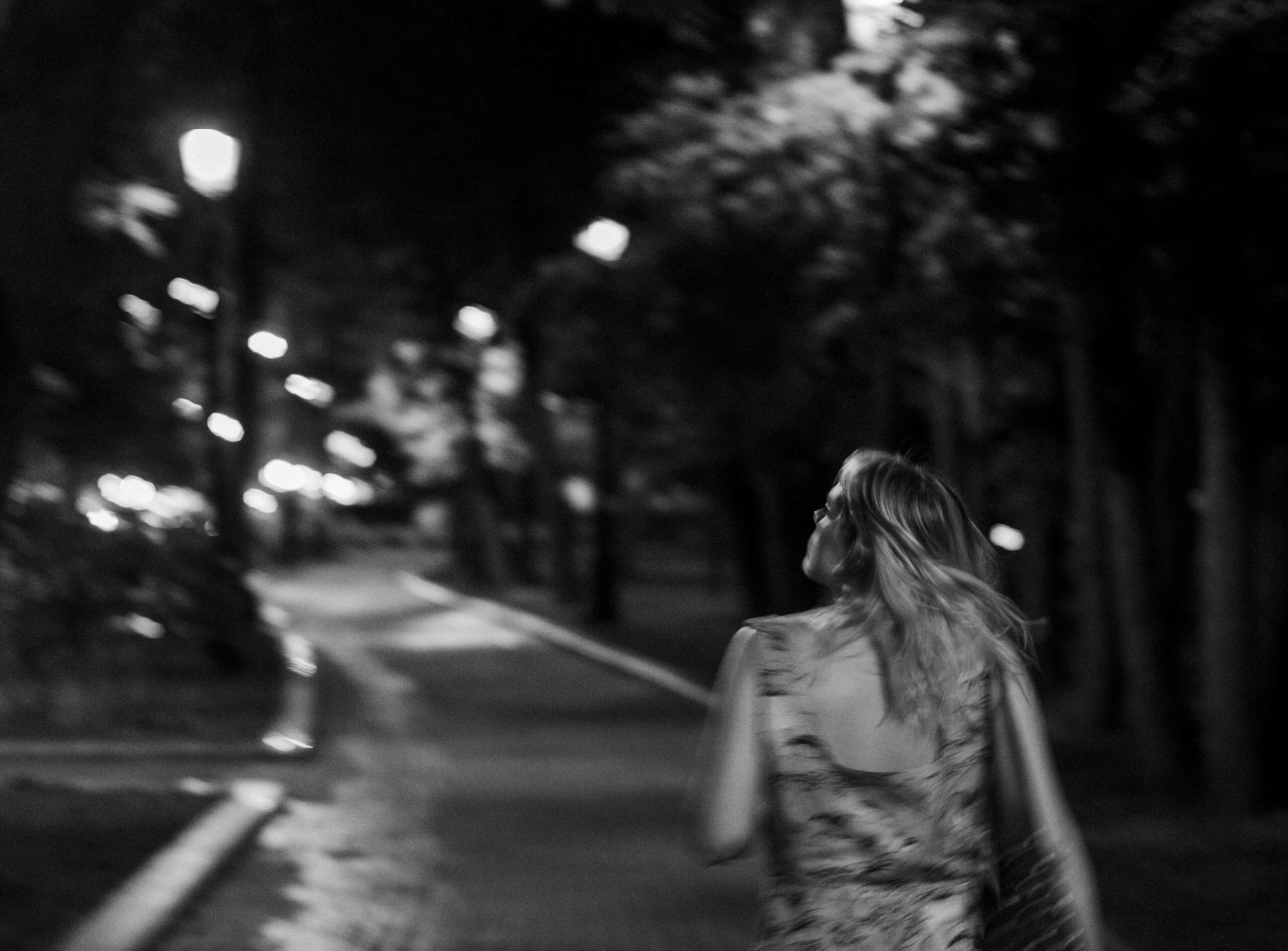
Rhonda wore a strange jumpsuit the first time I met her. It billowed out like a parachute around her thighs and shouldn’t have been flattering but was. Big, swinging earrings; flat, slappy sandals. A basket with three bottles of wine and probably a dozen cans of tuna. I stood in line behind her at the grocery store and made a crack about feeding cats with all that fish. She turned around and gazed up at me, seemed to consider whether I was worth her time. I looked her polar opposite—dusty, cowboy hatted and booted, belt-buckled.
“It’s all for me, honey. Every last flake.”
She was one of those sweetie and honey women. She’d touch your arm casually and it would run through your body like an electric current if you hadn’t been touched in a while. I guessed we were a similar age—both of us with silver running through our hair, skin under our eyes going crepey. But she was lean as jerky while my belly had softened. I asked her to lunch and, to my confoundment, she accepted. Rhonda liked to drink and could hold her liquor pretty well. Margaritas at lunch turned into wine at her place. We made fumbling, thrilling love, and drank martinis in bed, nude and steaming.
I wave a white shirt in the air like I’m signaling surrender, but this is all for the pronghorn’s benefit. There’s one out there watching me, standing stock still in the sagebrush a few hundred yards out. I chuckle—cheap thrills. I clip the shirt to the clothesline, where the wind will keep it flapping, and I go back into the house. It doesn’t take long. Though they’re skittish of predators, pronghorn are known for their curious nature, and this one doesn’t disappoint. It flattens itself low to the ground to scoot beneath the barbed wire fencing (pronghorn won’t jump fences, though they easily could, Vin tells me) and canters warily toward the shirt. It gazes at the material with one large, glimmering black eye, gives it an inquisitive sniff. I’m getting a real show here, some Animal Planet stuff. It’s a male, rump puffy with white fur, pronged horns bending toward each other, a dark line running from muzzle to crown. I know he’ll spook soon, will slide back under the wire fence and shoot off into the desert at an astonishing speed. He’s faster than any other mammal on this continent. I know he’ll run.
My older brother Davey wheels himself out to the atrium, and I follow. We set up out there among the dying ferns and begonias. I dust off a seldom-used plastic chair. We light our cigarettes and catch up on what’s new among the living and dying. Davey knows all about the dying—he’s in assisted living, shares a room with a nonverbal ninety-four-year-old who doesn’t seem to have any visitors. I might be Davey’s only regular visitor.
“Been long enough,” Davey says of the time between my last visit and this one. I knew he’d be pissed off at me.
“I moved,” I say. I watch him as I pull on the cigarette and blow the smoke toward a browning spider plant.
“Moved where?” he asks.
“‘Bout an hour out. Up Old Phillips Road. Got a little piece of land.”
Davey’s mouth hangs open a little and his cigarette dangles in one limp hand.
“Why in ever-loving fuck would you do a thing like that?” he asks.
I grin. “It’s peaceful out there.”
Davey shakes his head like I must be the biggest fool this side of the Sierras.
“Bunch of sex perverts out there,” he says. Leans back and draws hard on his cigarette, aims his black marble eyes at me.
My heart has started to hammer a little, but I’m not gonna let him get to me.
“The fuck you talking about?” I ask.
Davey taps one finger on his temple. “Ever notice any kids out on Old Phillips?”
I haven’t.
Davey’s face is veiled in smoke. “Good place to live if you’re a felon.”
My throat is being squeezed in a vise. I mash my cigarette under my boot. “You’re talking out of your ass,” I say.
“How in the actual hell do you not know this already? We from the same place, man? Sheezus.” Davey is shaking his head and laughing. The corners of my vision are going dotty and I’m having trouble filling my lungs with air. I manage to leave, to stumble back to my truck. Davey’s yelling, “The hell?!” But I can’t breathe.
He isn’t right. He doesn’t know—he doesn’t know anything. He thinks he knows it all, but he doesn’t.
The softness of Rhonda’s pale upper arms. The way one front tooth slightly overlapped the other. Her rawboned ankles. Her wild hair that spread around us in her bed when she set it loose. Rhonda floated around her house, soundless on the Spanish tile under her bare feet. She charged her crystals in the backyard when the moon was full and kept a black cat, sleek as an eel. She subsisted on small scoops of tuna salad when she remembered to eat. She painted—landscapes, women, the moon, and abstract works that made my stomach clench unhappily. Rhonda was exceptional to me, supernatural.
I revered her and her body, touched every part of her with my hands, my mouth. I kissed my way down to her navel one evening and observed, as I had before, a basket weave of faint, threaded scars on her lower abdomen. Stretch marks, I realized stupidly. How many times had I seen these and never realized? I looked up at her.
“Are you a mother?” I asked her.
Rhonda seemed to stop breathing. She waited so long that I wondered if she hadn’t heard me. Finally, she swung her legs over the side of the bed, wrapped herself in a robe, and, on her way out the bedroom door said, “No. I’m not a mother.”
I could hear her making a drink in the kitchen. I didn’t know what I’d done wrong.
If it lives and breathes, men will hunt it. Antelope hunting, they’ll call it, though the pronghorn isn’t an antelope, isn’t even related to antelopes. Its closest relative is the giraffe. Why men want to kill everything that lives, I won’t ever know. It’s not enough to buy hamburger meat wrapped up in tidy plastic squares. They want to murder these fascinating creatures and consume their bodies, their flesh. Remove their heads and display them as trophies. What a strange species we are.
I watch the pronghorn move through Vin’s field. Maybe they feel safe there, and likely they should. Vin sits on his porch and seems to watch them, too. He’s not a hunter and doesn’t own a weapon, as far as I know. I begin to wonder if Vin doesn’t own a weapon because he is legally prohibited from owning one. Is Vin a felon? Old Vin, slow moving, grandfatherly. Doesn’t seem possible. He lives alone, like so many of us out here. Old bachelors. Naturally, now I’m realizing almost everyone who lives out here is an old bachelor, excepting the rare, graying married couples. Seems like something I should have noticed earlier, like Rhonda’s stretch marks. Right in front of my face the whole time. My stomach contracts. Surely it’s just a mess of ornery old men looking for some peace and quiet.
Eventually it came out. Rhonda’s cousin had raped her too many times to count over her childhood. Her and her sisters. She was the only one to tell and her mother had slapped her face for lying. Told her that was a ridiculous, damaging thing to say about her cousin. Finally, she’d gotten pregnant by him and was forced to carry the pregnancy. Rhonda shook as she told me, like it had just happened, though the news was old by then. It still hurt her as though it wasn’t.
She’d left home soon after she gave the baby up, cut ties with her family. Did her schooling and worked as a teacher and established a small life in a small town in Nevada. It consisted of a handful of trusted friends, the occasional man who wandered through, and a lot of alcohol. Always the alcohol.
She’d decided men were not quite worth it, so the fact that I was sitting in front of her at all, being told this story, was quite a thing.
She couldn’t and wouldn’t stop drinking. She did not want to make love sober—the one time we tried ended in Rhonda crying uncontrollably. It was too close to what she didn’t want to feel.
Finally, she told me I had to go, but I didn’t want to. She said I couldn’t be with her the way she was and that she wouldn’t change, not even for me, even though she loved me. So she ran, bounded off.
It crushed me, turned me mute, filled me with a scorching rage. Made me unfit to be in the everyday world around regular folks, all of them so blithe and ignorant.
I found the tranquil spot on Old Phillips Road. Noiseless and vast, just land and sky and animals—a reprieve.
Old Phillips Road takes about an hour to drive from one end to the other, and about midway through is the only place to stop if you want to piss in a toilet or buy a bottle of soda. It’s a dusty dirt parking lot next to a tiny convenience mart and an even tinier bar with no name, just a paper sign in the window that says “BAR.” I’m buying Vin beers tonight, one after the next, and he’s in good spirits. Talk is of the weather, the hayfield, the pronghorn, and our few neighbors. Vin seems pretty loose, so I say, “I hear some of the folks around here have been in the slammer.” Vin half-laughs and gives me a pitying side-eye, as though I’d been the last to hear it.
“You could say that,” he says.
“Felons?” I ask.
Vin blows air through his teeth: “Pssshhh. Some of ‘em.”
He takes three long gulps of Bud.
“Pedophiles?” I ask. I have to know.
Vin sighs, won’t look at me.
“Vin,” I say.
“So the cops say,” he finally answers.
“Vin.”
He finally turns to me, eyes creased in thought. “Sometimes things are not what they seem to be,” he says.
I pause a beat. “Sometimes they are,” I say.
We sit in silence for a moment.
“Not you?” Again, I have to know.
He waits long enough that I think he’s decided to ignore me. I tear at the paper label on my sweating bottle of beer.
“It was a long, long time ago, and it wasn’t what they said it was,” he finally says.
“What was it then?” I ask, though I know there’s no longer any answer that would satisfy me.
Vin shakes his head, looks toward the window that’s black with night, nothing to see but his own reflection.
“It wasn’t what they said it was,” he says.
In the spring out on Old Phillips, the sagebrush is dusty blue, and the Russian thistle and creosote grow in bright green orbs. Globe mallow and desert marigold appear in copper and lemon. There are flowers in white, lavender, fuchsia. It’s only for the briefest blip of time. Spring doesn’t exist out here in any appreciable way, it’s just a fleeting transition between winter’s freeze and summer’s baking oven. In the Nevadan spring, you blink and the flowers are fried. It all fades to the color of straw and the treeless landscape is blanketed in a crunchy, dry vegetation that smells like it could combust at any moment. In that kind of weather, Nevadans are encouraged to prevent wildfires by not doing a whole host of things: smoking outdoors, off-roading, using gas-powered chainsaws and the like. One spark and the whole damn deal would burn almost as quick as a pronghorn can sprint.
I’m smoking outdoors, carefully. Watching Vin’s place as dusk darkens and turns to night. He’s there in his single-wide, perched on his small hill. Dry scrub brush coats the hill under his home. The wind blows away from my place, toward his. I rise and make my way down the long gravel driveway, slow. Cross the black line of road and stand before Vin’s little hill. Take a long drag on my cigarette and then consider it in my hand for a moment. Small torch. I think of Rhonda, shaking in her bed. Rhonda mixing an oversized martini. Rhonda telling me to leave. Hollowness echoes in my body, a finger of numbness spreads across my mind. I flick the cigarette into the brush and stand there to wait. If it goes out, it goes out. If it lights, it will race up the hillside to Vin’s home.
Branches of tumbleweed ignite and white smoke pours out as the twigs blacken. Then in a flash, the bush ignites like a blowtorch, flames shooting upward, catching surrounding bushes afire, and before I know it, the hillside is aflame. The heat of it is overwhelming, savage on my skin. My eyes burn and I founder backward, captivated by my handiwork.
The house may burn.
The whole damn road might burn.
The pronghorn will run, the thing they are best at.
Erin Mayes’ work has been published in Stonecrop Magazine and Windmill: The Hofstra Journal of Literature and Art. A former Steinbeck fellow in the MFA program at San Jose State University, Erin has worked as a journalist, and a senior editor at Reed Magazine. She lives in San Jose, Calif., and is writing her first novel.