
By Taj R. Harvey
Musical legend Gregory Tate once said, “Being Black in America is a science fiction experience.” For some, stories like the X-Men, Hunger Games, Fahrenheit 451, and The Handmaid’s Tale feel recent, relevant, and scary, but for African Americans who have lived in the United States for over 400 years, those stories have been a consistent reality from day one. Horror and dystopian science fiction are fantastical art forms for those not already living through it. People who experience the horrors of racism and xenophobia on a daily basis understand the genre as simply truth-telling. For this reason, the Afrohorror genre is a precious resource for the Black community.
Afrohorror is a subgenre of folk/cultural horror that taps into themes and narratives around Black experiences in America and beyond. The genre is commonly laced with socio-political commentary based on lived realities of the Black diaspora. It aims to examine and speak truth to those experiences through a lens of terror, disquietude, and agitation of status quo. Afrohorror pushes to subvert and directly challenge negative impressions of African Americans—internally and externally—instead of reinforcing harmful stereotypes.
By showcasing Black people as full human beings with an endless range of emotionality, we reclaim our agency in cinema and forge transcendent, multicultural stories. The following films, spanning decades, are examples of Afrohorror that successfully leverage this nuance.
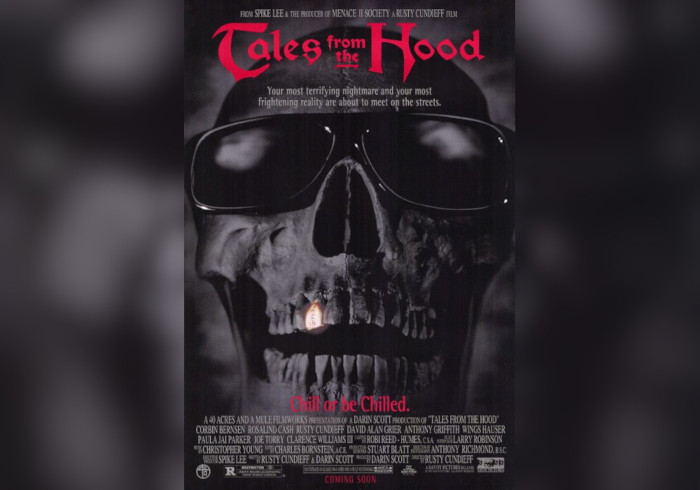
Tales from the Hood (1995)
An eccentric mortician traps three drug dealers inside his morgue and torments them into giving up criminality via increasingly unsettling tales. Each story broadly represents the horrors of Black incarceration experimentation, unequal policing, medical racism, the demonization of voodoo culture, and the depth of Black trauma manifesting on the astral plane. The movie serves as a reminder of the insidiousness of systemic racism, especially in cases where it has been internalized.
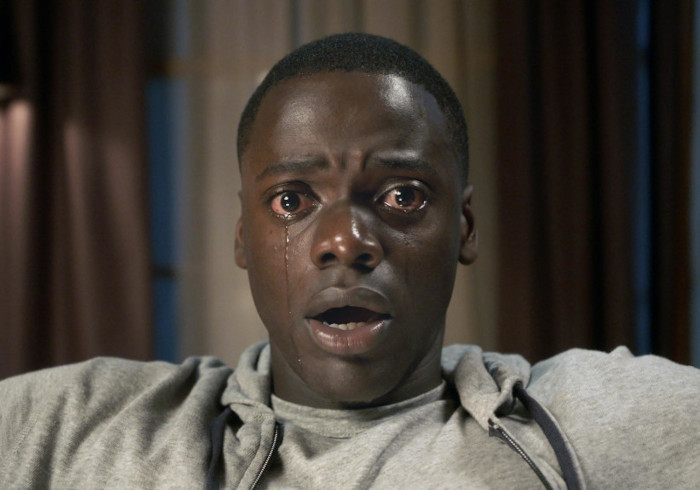
Get Out (2017)
Chris Washington meets the family of his white girlfriend, Rose, for the first time, only to discover that they want to control his mind through hypnosis, trapping his spirit in a realm called the “Sunken Place.” Writer/director Jordan Peele uses this premise to explore ideas of neo-racism, in which white supremacy takes possession of Black minds and spirits, rather than just our physical bodies. The scariest thing about Get Out is not the plot, but the realities of internalized racism. Facing proponents of revisionist history and anti-black rhetoric even within our own community, some of us have fallen so deep inside the Sunken Place, we cannot even recognize we’re trapped.
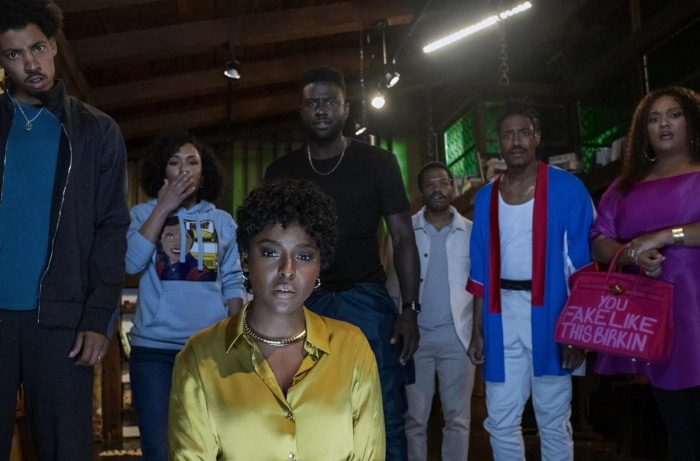
The Blackening (2023)
Seven friends come together for a weekend getaway at a cabin in the woods. However, the friends become trapped in the cabin with a raging serial killer who has a personal vendetta against each of them. The film is particularly notable for its observations of how the African American community responds to Black isolationism: Is Black American culture a monolith, or are we allowed to embrace the rich tapestry of a Black diaspora? One character, Clifton, sees his encyclopedic knowledge of Black pop culture as proof of his Blackness. But his reaction to any rejection of him or his political views, regardless of the harm they may cause, conveys the message that the poison of racism threatens Black communities from both within and without.
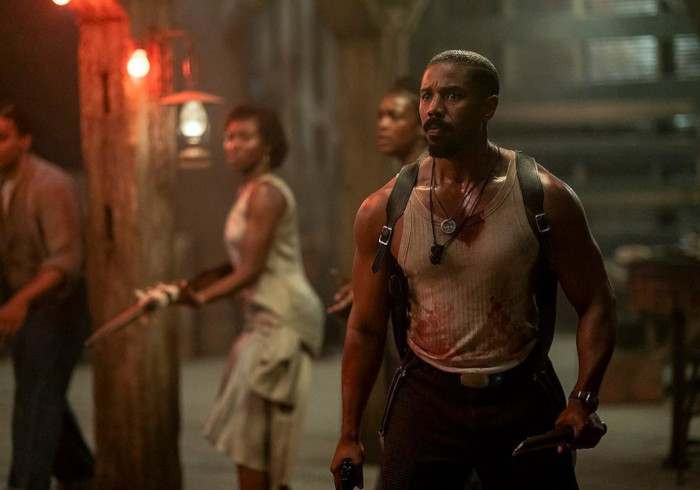
Sinners (2025)
Twin brothers Smoke and Stack buy an old warehouse in their 1932 Mississippi Delta hometown and turn it into a music club where locals dance, drink, and celebrate together. On opening night, the beauty of their cousin Sammy’s music attracts powerful spirits of good and evil. With Sinners, Ryan Coogler maintains the consistent depth of his previous films by exploring what our greatest desires cost us. Sammy desperately wants to become a musician, but the power of his music literally attracts evil. Stack wants power, but in return sacrifices his humanity. Each character loses something in order to achieve their deepest desires. African Americans have a long history of pursuing “Black excellence.” We buy into capitalism in order to uplift ourselves, but at what cost? The inherent “sin” of Black America lies in believing that our value is tied to an American system that’s been designed to work against us.
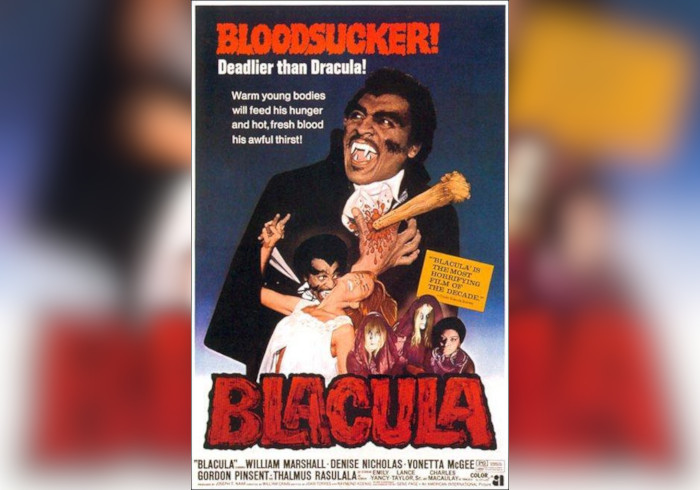
Blacula (1972)
Set in the late 1800s, this wild ride of a film focuses on African Prince Mamuwalde, who seeks the council of Count Dracula in support of the abolition of slavery, only to be transformed into a creature of the night. Centuries later, Dracula releases Mamuwalde from his slumber onto the streets of 1970s LA with the moniker “Blacula,” where the prince terrorizes Los Angeles with insatiable nightly feedings that pull him further and further away from his humanity. Blacula is a reminder that Black humanity cannot be bargained for via an appeal to White supremacy. Only by changing laws can we create the justice we seek, as appeals to humanity have fallen on deaf ears for centuries. Black and Brown people cannot ask for our humanity to be acknowledged; we must demand it.
Afrohorror feels so healing because it so effectively harnesses the horror genre to make a dramatic case for Black humanity. Afrohorror films (like Afrofuturism, Afrofantasy, and Afropunk) are stories designed by Black people for Black people. Black characters in Afrohorror are often depicted with a level of resilience, authenticity, and vulnerability that sustains them through the most tumultuous situations imaginable. These Black characters are truly alive! They are ordinary, extraordinary, villainous, heroic, simple and complicated. In Afrohorror, Black people are free to be flawed without those flaws diminishing their humanity or turning them into caricatures. Certainly, other genres have attempted the same, but the missing ingredient is an emic perspective from Black people.
Each film has something bold to say about Black culture—Black love, Black hate, Black dreams, Black fears, Black crime, and Black success. The films portray the full range of Black stories and exhibit deep care and respect for the people who inhabit each world. More effective, specific, and resonant than simple portrayals of good and evil, the Afrohorror genre manages to remind us that what’s scariest aren’t the stories presented, but the real world they’re based on.
 Taj Harvey is an actor, screenwriter, and filmmaker with a talent for crafting heartfelt, character-driven worlds destined to explode out of the pages. His distinctive voice and specialization in Black speculative cinema create trailblazing stories fueled by boundless creativity. Based just outside of Washington, D.C., Taj’s work brings a nuanced flavor of culture and identity unique to the cinematic landscape. With an MFA in Screenwriting from the University of California, Riverside, Taj combines his theatrical performance training with uncommon storytelling to bring groundbreaking films to a modern audience.