Reviewed by Sydney Abraham
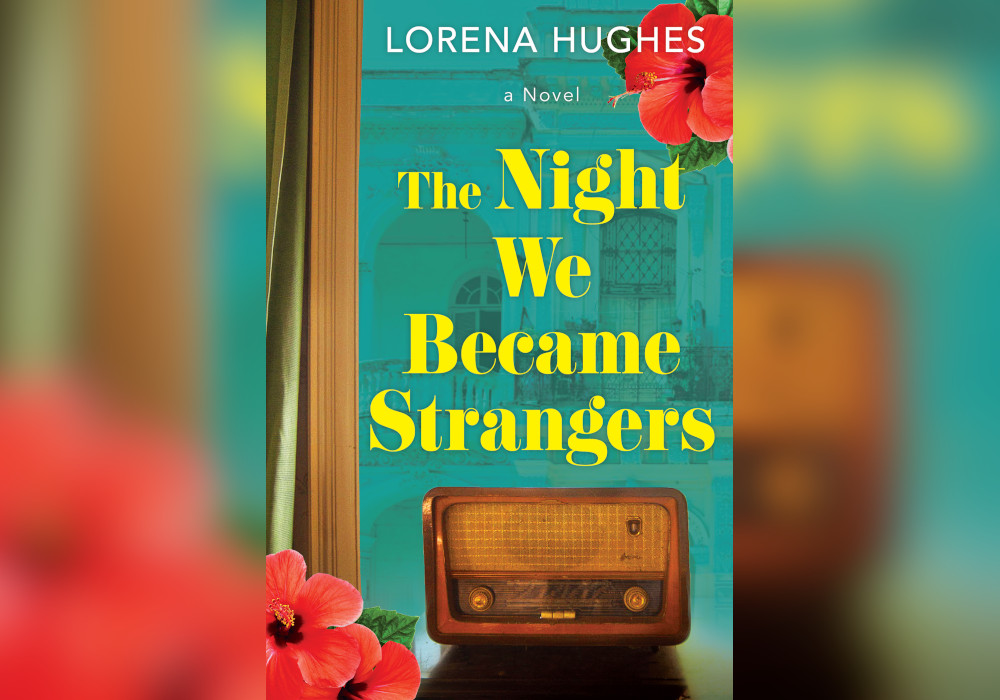
Lorena Hughes’s historical novel The Night We Became Strangers covers many themes, including grief, remorse, romance, and pursuit. The book is a fictionalized account of the catastrophic 1949 Ecuador adaptation of the War of the Worlds radio broadcast, during which listeners were never informed that the broadcast of Martians invading the Earth was fiction and thus believed the announcements to be true current events. Even more so than Orson Welles’s 1938 original, the broadcast from a station in Quito led to widespread panic and horrific consequences, including deaths and a mob torching the radio station.
Despite the tragic historical context, The Night We Became Strangers is designed to be a quick and cozy read. At just over 300 pages, the book is broken into short chapters, each one ending in a cliffhanger. Notably, the description of the story on the book jacket varies greatly from the novel itself. The jacket mentions only the characters Valeria and Matias, but the book spans four decades and is divided into four parts with four points of view: there’s Valeria and Matias, but also Alicia and Marisa. These two sets of characters are inherently linked to the events of the broadcast, the aftermath, and the setting of Quito.
Hughes expertly incorporates a rich sense of tradition and setting in the novel, making it accessible but not overexplained to readers who are unfamiliar with Quito’s culture, which emerges through detailed descriptions of food, architecture, clothing, music, and social customs of the time. The evocativeness is apparent in the second chapter, when Valeria describes returning to her hometown: “There was noise all around: vendors announcing to the world that they had plenty of oranges and tangerines at cheap prices, cars honking, the breaks of an old bus behind us, construction workers whistling at an attractive woman sauntering down the street, a crowd laughing. Quito was alive. And I felt invigorated by it.” Valeria is wholly inspired by her hometown, and by the opportunities she assumes she will have upon returning.
Hughes also explores the intersection of class, culture, and identity between each pair of characters. Alicia comes from a place of financial privilege and a supporting family, while Marisa must financially support and hide her broken family as she follows her career dreams. Valeria and Matias’s identities parallel the story of Alicia and Marisa, in that Matias grew up in the same home with his mother, whereas Valeria was sent to a boarding school by her uncle, only to return to Quito at eighteen and be received as a burden by everyone. Valeria’s uncle, who already has a large family and a struggling business, quickly arranges a marriage for Valeria, despite her interest in Matias.
Here again, the book jacket strays from the actual story. The jacket indicates that in Valeria and Matias’s relationship, “trusting each other is as dangerous as the attraction they can’t resist.” Yet the romantic relationships in the novel are minimally depicted, with only occasional, minor kissing scenes. This is notable, because it’s rare to find recent historical romance books that provide a multi-layered narrative without the inclusion of explicit content. The only “dangerous” aspect seems to be Valeria’s impulsive, inconsiderate actions when it comes to making romantic decisions, such as agreeing to the arranged marriage for reasons that seem immature. She says, “[Matias hadn’t] shown any interest in me. Felix, on the other hand, was so kind and sweet. He wasn’t ugly, either… Not to mention that he’d given me an expensive, brand-new camera, and brought me a serenade. Plus, he was turning into a decent dancer.” Valeria continues to participate in the marriage preparations for so long, her character starts to seem selfish, although it’s unclear if this choice is intentional.
For most of the novel, the shifting narration from Marisa, to Alicia, Matias, and Valeria utilizes young-adult points of view that primarily focus on the actions and experiences of the characters, making their language, actions, and emotions simple to follow. Where the jacket copy does finally match the book is in its last line, which states, “exposing the real story [behind the broadcast] will…ignite revelations no one saw coming.” Unfortunately, the unpredictable revelations create constant twists that mirror the melodramatic novellas the radio station also broadcasts. These events signal a major tonal shift taking the novel from plausible to far-fetched. Hughes does not effectively distinguish whether these sudden twists are merely for entertainment purposes or if their appearance is deeper and more symbolic, given that all four main characters’ lives are deeply connected to radio novellas. Without clear intentions for these soap opera twists, the ending feels rushed, comical, and dissatisfying, especially after Hughes’s work of crafting a strong setting and culture.
Because of the abruptness at the end of the story, The Night We Became Strangers is a novel where, from the first to the last page, the characters’ choices will elicit varying reactions. But due to its short, cliffhanger chapters, constant twists and reveals, easily accessible narration, and a chapter of discussion questions at the end of the book, The Night We Became Strangers certainly is full of things to spark conversation, especially among readers who want to learn about Quinto’s culture and history in an entertaining way.
 Sydney Abraham has a passion for writing and experience in fiction, journalism, content writing, and essays. She is currently pursuing an MFA at U.C. Riverside’s Palm Desert Low-Residency Creative Writing Program.