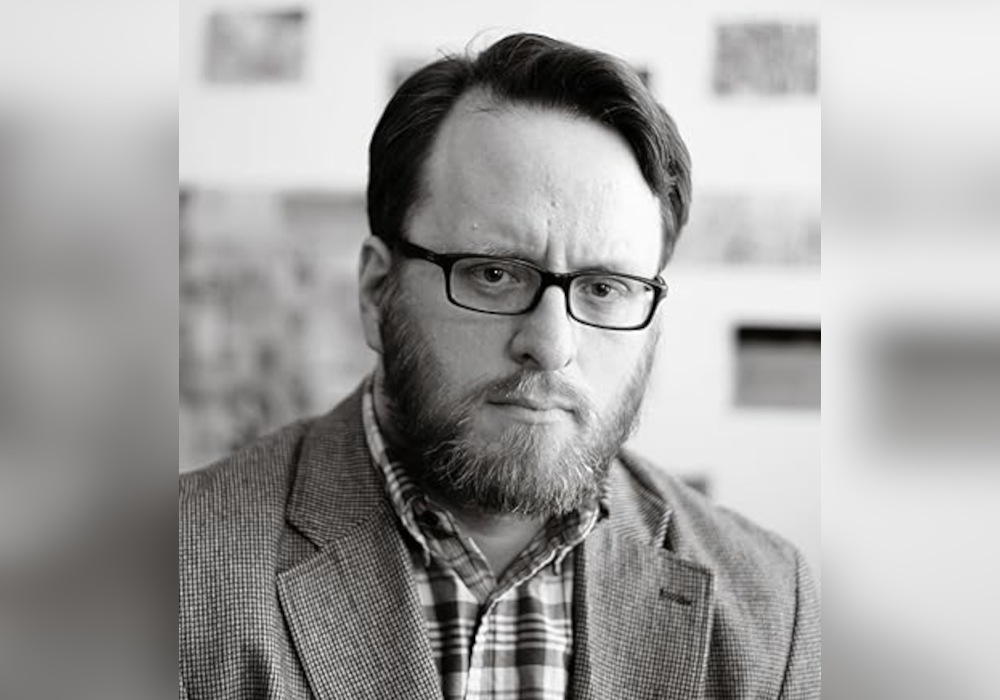
Interviewed by Julie Colbrese
With previous novels, award-winning author Jake Hinkson found success exploring the dark side of his home state of Arkansas—a far cry from the seedy Los Angeles depicted in the Raymond Chandler books he read in his youth. But with his eighth book, You Will Never See Me, Hinkson takes readers on another twisted tale of crime noir, this time set against the dark angles of Chicago. Alice Hardy leaves her lover’s apartment, disoriented after a fight, and takes a wrong turn into a seemingly deserted alley. What happens next sets into motion a series of bad decisions and unintended consequences for Alice, unsavory pals Erik and Ronnie, and the detective who happens to witness the attack.
The Coachella Review spoke to Hinkson about his introduction to noir, the difference between French and American readers, and where to get the best coffee in Chicago.
The Coachella Review: When we met in Chicago earlier this year, we were both re-reading The Long Goodbye by Raymond Chandler. Obviously, a classic noir novel. What was your take on it this time around?
Jake Hinkson: I loved it. I had loved it the first time I read it as a teenager. I think I liked it even more the second time. One of the reasons I wanted to revisit it was I just read The Little Sister for the first time, which I think was the only Chandler novel I hadn’t read, and I was shocked by how much I didn’t like that one. I thought it was pretty awful, actually. I just hated Marlowe in it. He’s just surly and unlikable, and the plot is pretty haphazard. The Long Goodbye, by contrast, is a real epic—a nice, big fat novel with different things going on. It’s not as tight as something like The Big Sleep, but I found it fun. I really liked it.
TCR: Your newest novel, You Will Never See Me, is described as noir or, as the back of the book says, noir-ish. It certainly fits my definition of noir. Do you consider yourself a noir writer?
JH: I don’t know the difference between noir and noir-ish. What constitutes noir is always a debatable thing. The debate is embedded in the genre itself, because noir was a term retroactively applied. It was the French critics who discovered the films coming out of America after the war who then imposed the term. One of the distinctive elements of noir is that it usually ends in tragedy. There is not necessarily a happy ending in a noir story. Without giving too much away, my book doesn’t have a happy ending—not exactly. The characters literally debate at the end whether it’s a happy ending. As for a definition of the genre, I always say noir is the literature of bad decisions. Someone makes a mistake and then the consequences start coming down on them.
TCR: That certainly fits in your novel. How important is it for an author to be aligned with a particular genre?
JH: It has its pros and cons. From a marketing standpoint, it makes you more marketable. But it can be somewhat restrictive in terms of who I am as a writer and what I actually do. The writer who had the most influence on me was Flannery O’Connor, who was not a crime writer. O’Connor had a profound influence on me because she wrote about religion in the South, and I had been raised in the South, in church, and very, very religious. So, when I started reading Chandler and [Dashiell] Hammett as a kid, I thought they were great. I thought they were awesome. Still do. But they don’t really have anything to do with where I live. Chandler’s Los Angeles might as well have been on another planet from where I was growing up in Arkansas, in this rural community, in a family of preachers. It wasn’t until I read O’Connor that I was like, Oh, I didn’t know you could actually write about this sort of thing.
TCR: It sounds like that early exposure to noir writers gave you permission, in a way, to write about the world the way you were seeing it.
JH: Yes, that’s right. The other important influence for me was Jim Thompson, maybe the greatest noir writer. When I discovered him, I was like, Oh, that’s what I want to do. Hammett and Chandler, the detective thing, was never quite how I saw things. I always loved it, but it never occurred to me that I would do that sort of thing exactly. Maybe because… we’re getting back into definitions here, but Hammett and Chandler are really mystery writers more so than noir. Mystery writers tend to write about the good guy uncovering the killer and bringing them to justice. Noir is about the perpetrator. Mystery and detective fiction are about toughness; noir is really about weakness. It’s about the weak side of human nature. That’s more where I come from in my writing.
TCR: Noir, to me, [suggests] it could be any of us on our worst day, making that one bad decision that sets the whole trajectory of life into that dark, downward spiral.
JH: Absolutely. You take Jim Thompson, with his very dark view of the world. He’s writing about psychos and serial killers and sociopaths. You take Flannery O’Connor, who’s only writing about the anti-hero. She only wrote about people on the run from God. You put those together. That’s me. They would be my literary parents.
TCR: You would be their literary love child. That’s a great parlor game.
JH: Yes. If Flannery O’Connor and Jim Thompson could have a kid, I’d be that kid.
TCR: I read a review of Blind Alley, your collection of film noir essays, that said, in part, “Jake Hinkson is the Roger Ebert of film noir.” What is the relationship between your love and appreciation of noir film and your writing?
JH: I first got into film noir earlier, when I was a teenager. I can trace the actual moment. I was at Walmart, and there was a bargain bin of VHS tapes. This was the mid-’80s, and there was a $4 VHS tape of a movie called D.O.A., from 1950. It’s an Edmond O’Brien movie. He plays a guy who has been poisoned and he’s going to die in 24 hours. So, he only has 24 hours to find out who killed him. It’s a great hook. I read the description, and I was like, Okay, I’m buying this. It was something that caught my imagination, and that movie opened the door to the whole genre of film noir for me. It was fatalistic, right? In the movie, he’s not searching for the cure. He’s going to die in 24 hours, no matter what. He’s in this existential predicament and the only thing he can do is search for the person responsible, for justice or revenge or whatever. Fast forward to years later, somewhere around 2008 or 2009. I just got it in my head that I wanted to write a book about film noir. It’s a book I ultimately never wrote, but, in trying to write it, I basically made myself an expert on film noir. I watched hundreds of these movies and read lots of books. Then I started writing for Noir City and working with the Film Noir Foundation. But I’ve been slowing down on the nonfiction lately—movie stuff and articles. Now, writing novels and fiction has really taken over.
TCR: You Will Never See Me is your eighth novel. Your novels have been translated into German, Italian, and French. You’ve received the two most prestigious awards for literary crime fiction in France. What is it about your work that makes it particularly attractive to French readers?
JH: Not bad for a country boy. I’ve given this a lot of thought. I think it has something to do with French readers. The French have always been good at observing what Americans are doing and then developing theories about it, whereas Americans are much more narcissistic, solipsistic. We’re just not that interested in other places. The French have always been very good observers of Americans, and they have always been open to discovering writers and artists who were not necessarily the big mainstream thing. If you look at publishing in America, it is overwhelmingly dominated by books about New York and LA, east coast and west coast, with relatively little published about the rest of the country. The French seem to be more interested in the rest of America. My first books were about Arkansas. When I went to France on my first book tour, readers were like, “So, where is Arkansas?” They were fascinated. It was like I was describing another planet. I write about aspects of American culture they don’t know. In my first books, I wrote about religion and the dark side of that in this small southern town setting, and that got me a lot more attention there than it got me here. My new book actually came out first in France, last year. I have a great publisher there who discovered me ten years ago, and he told me, “Oh, French readers are going to love this,” and you know what? I guess they did.
TCR: This novel is set in Chicago where you currently live and where I’m from. There are so many great references and observations that I particularly enjoyed. You have a line: “Chicago will break your heart before breakfast.” I want that on a t-shirt. Is this an example of “write what you know,” or is there something about Chicago that makes it a great setting for a crime novel?
JH: You know, write what you know, that advice has always been pretty spotty. Chandler was never a detective. Thompson, as far as I know, was never a serial killer. When they wrote Star Trek, they weren’t writing what they knew. They were just writing something they thought was cool. But Chicago is certainly a great place for crime. Real and imagined. It wasn’t even about the crime, though; it was more just wanting to write about Chicago as a place. It’s just a great city, and it’s a fascinating place. Whatever day you want to have, you can have it in Chicago. I definitely wanted Chicago to be one of the characters.
TCR: It provides the perfect backdrop for that noir-ish contrast of darkness and light and the shadows in between.
JH: One thing about noir is that it is about moving between communities and classes. It has always been about the way in which high and low intersect. In my book, Alice Hardy is just living her life. Then, she has this horrible thing happen that plunges her into this other world, this other state of mind. Then you have Owen Pall, the private detective, and he’s in the darkness, watching.
TCR: I found myself rooting for Owen Pall even though he does some very bad things in the book. How do you get readers to identify with a protagonist who is arguably the bad guy? Or at least one of the bad guys?
JH: Yeah, I loved Owen. I loved writing that character. You know, he’s from Arkansas, so I threw a little Arkansas in there. Snuck it in the back door. To me, he’s the most tragic character in the book. You know, he may be the least bad. He’s someone who decides, maybe a little too late, that he wants to find some kind of redemption. Hopefully, that’s something people will see in him. I mean, he doesn’t need to be likable, but as soon as I knew I was dealing with a detective, I tried consciously to not make him a standard issue detective. In some ways, he’s almost a parody of a detective.
TCR: You know he’s better than his circumstances. He’s lost his way, but you’re rooting for him to do the right thing.
JH: Everybody in the book has sort of lost their way, right? Alice has lost her way and has to find her way back. Owen has lost his way and has to find his way back. Erik and Ronnie have definitely lost their way and don’t want to find their way back. So it was definitely about that, you know: What do you do when you discover you’re definitely lost here, and how do you get back to where you want to be?
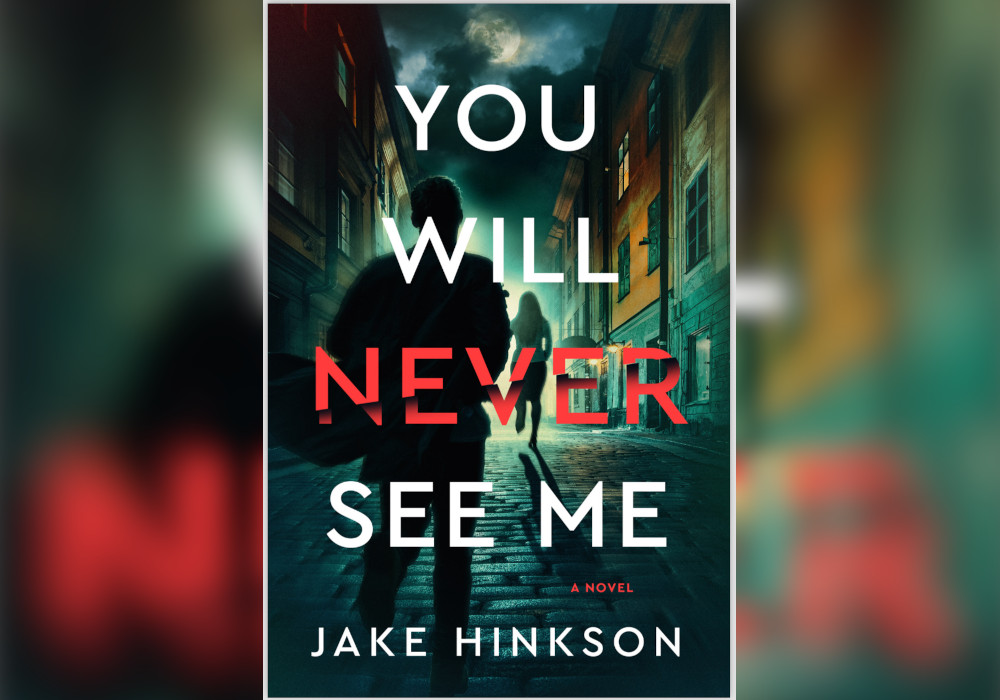
TCR: One of the themes in the novel that is voiced by Erik is, We’re all either “predator or prey.” I had to close the book and think deeply about that. Is this a belief you share? Or how did this make its way into your writing?
JH: Well, no, it’s not a personal belief of mine. But it’s definitely something that the character—without giving too much away, the worst character in the book—believes. I really wanted to write the worst character ever. I thought about rampant, toxic misogyny and all that kind of stuff. I thought, What would that be like? What is that idea taken to its most psychopathic end? That seems to be part of the makeup of that kind of mind. There must be a thought process that leads to that. What is that thought process?
TCR: Erik and Ronnie have this very dysfunctional relationship. Can it even be called a relationship? It’s so believable, though. You can see how they would be drawn to each other and just feed off each other’s pathologies.
JH: I’m glad to hear you say that. Their relationship was one of the trickier elements of the book. I did a lot of research to figure out how to motivate that relationship between these two characters, the evil mastermind and his henchman. Serial killers tend to be loners, but I wanted this to be about these two characters. Ultimately, what I based it on was the two kids who shot up Columbine High School. You had a kid who had essentially this suicidal impulse and a kid who was more of the narcissistic sociopath with rage against the world. But then together it turns it into this, ‘We’re going to take everybody out with us’ kind of thing. When I wrote Erik and Ronnie, that’s what I was thinking. These two guys fit together like puzzle pieces.
TCR: Your novel is so relatable because it underlines the very human reality that we’re all just one bad decision or one wrong turn away from things going very badly, of running into our own version of Erik and Ronnie.
JH: It’s a reccurring story trope of film noir: You meant to go left. Instead, you go right, which is literally what Alice does. She’s upset because she just had a fight with her boyfriend. So, she starts walking and realizes she’s walking in the wrong direction. And because you went left instead of right, you’re going to run into the worst person in the world. But then she has to make a decision of what to do next, and that’s where it really gets messy.
TCR: This is where our human weakness comes in.
JH: This is one of the most interesting things to write in characters. How can I motivate this person to do the wrong thing? What’s believable? What’s going to make people go, Yeah, well, I might do the same thing. You take them along on that journey. It’s not just making it believable that they would choose the wrong thing to do, ethically or morally, but also just the wrong thing in terms of, This is probably a bad idea. Writing about choosing the wrong decision in such a way that makes everybody say Yeah, I would probably make the same wrong decision.
TCR: Yes! From the very beginning with Alice in that alley, I was like, “No, no, no.” And, at the same time, I would have probably made the same bad decision. The seemingly least bad of the bad choices in that moment.
JH: I hope what’s relatable is that, on some level, the thing Alice is most scared of is being embarrassed. If, in that moment, she could just bring herself to say, Look, if people find out about this, I’m going to have a horrible day, week, month, next year, whatever. I’m going to be humiliated, but I can survive that. Then she would be okay. But she can’t bring herself to do that. When you hear about someone doing the wrong thing, it’s so often motivated by an insane desire not to have our worst or weakest qualities revealed.
TCR: That’s so true. We fear embarrassment over death.
JH: One of my favorite movies is the western High Noon, which is about everybody in town abandoning Gary Cooper, the sheriff. As the bad guy rides into town, everybody refuses to help the sheriff. One of the people says to him, “It’s all happening too fast!” People have to be able to talk themselves into doing the right thing. Sometimes, the difference between people doing the right thing and the wrong thing is an extra ten minutes.
TCR: You talked about being raised in a religious home. One of your characters in this book is a professor of religious studies. I’m wondering if you use your books as an opportunity to write about your personal interests.
JH: Yes, of course. Why write a book if you’re not going to make it interesting for yourself? On the religious front, it’s funny, because my first five novels are much more about religion. Hell on Church Street is about a predatory youth minister. The Posthumous Man is about a suicidal preacher. And Dry County is about a preacher being blackmailed by a member of his congregation. There [are] evil preachers in The Big Ugly and No Tomorrow. There was a while where I was the evil preacher guy. I only wrote about preachers breaking bad. That was kind of my thing. In a way, this book is a departure for me. It’s in Chicago, and all my previous books have been set in Arkansas. This is the first one that’s not about a preacher. Making Alice a professor of religious studies… there are a couple reasons for that. Originally, it was another preacher idea. She was going to be a preacher’s wife. So, the whole thing of her not wanting to be discovered was at the crux of that. But I had done the preacher thing pretty thoroughly and was ready to move on. Plus, I’ve been teaching now for more than 20 years. I’ve spent nearly as much time in the world of academics and scholars as I did in the church. So, I was more interested in writing about a professor. I teach at Loyola University Chicago. Alice teaches at a university that is a pretty thinly veiled stand in for Loyola. I made her the religious studies professor who thinks about God and morality and ethics in this scholarly way. Her husband is a math teacher, so he has a very mathematical view of things.
TCR: As a writer and professor, I imagine you have some good discipline around writing. What are some of your writing rituals?
JH: I’m lucky in that I’m a self-starter. You know, I’m not like that old quote that’s sometimes attributed to Dorothy Parker, “I hate to write, but I love having written.” That’s not me at all. Writing is the only thing I like to do. I would sit alone in a room writing by myself for the rest of my life if I could. I’m not someone with a tight writing schedule. It’s more just, I’m always working on something. I’m usually working on more than one thing. Something that’s always helped me is writing nonfiction on the side. I’ll be working on a novel, and I’ll be into it, and plugging away at it, and I start to go a little bit batty. So, I push that aside and work on this essay about some old Humphrey Bogart movie. You’re still working the writing muscles, but you’re not losing your mind over the book, and then you go back to the book refreshed.
TCR: It’s cross-training—literary cross-training.
JH: Okay, absolutely, yes, excellent. I’m going to use that for now on. As for other rituals, I’m a coffee shop writer. I was at a coffee shop just this morning.
TCR: We have to talk Chicago coffee shops. What are some of your favorites?
JH: Probably Percolator in Portage Park, which is a really good one. They have the best breakfast burrito in town, too. I moved to another neighborhood a couple of years ago, so lately I’ve been going to Jackalope in Bridgeport. I’ll go to Prequel in Ukrainian Village and the Sipping Turtle in Logan Square…
TCR: Shout out to Chicago coffee shops. I miss good coffee shops.
JH: I’m not one of those people who has to have absolute silence. I can sit in the middle of a coffee shop and zero in on what I’m doing. Kind of helps me to do it.
TCR: Is it too soon to ask what’s next?
JH: It’s another Chicago crime book. I just sent the first draft to my agent.
TCR: Does that mean the hard part is over?
JH: That depends. I think it’s in a good place. I really like it. I’m not somebody that shows my work to anybody while I’m doing it. So, once I give it to the agent, that’s when the process of feedback begins. He’ll give me feedback, and then he has a team, and they’ll read it, and they’ll give me feedback. Depending on how that goes, it can either be a relatively quick turnaround, or it could be not a quick turnaround.
TCR: Well, I hear you’re big in France.
JH: Yeah, this one might have a shot at doing okay there.
Julie Colbrese is a writer and writing coach. She holds an MS degree in Forensic Psychology and is currently pursuing an MFA from UC Riverside. She lives in Palm Springs, California where bad things can happen even when the sun is shining.