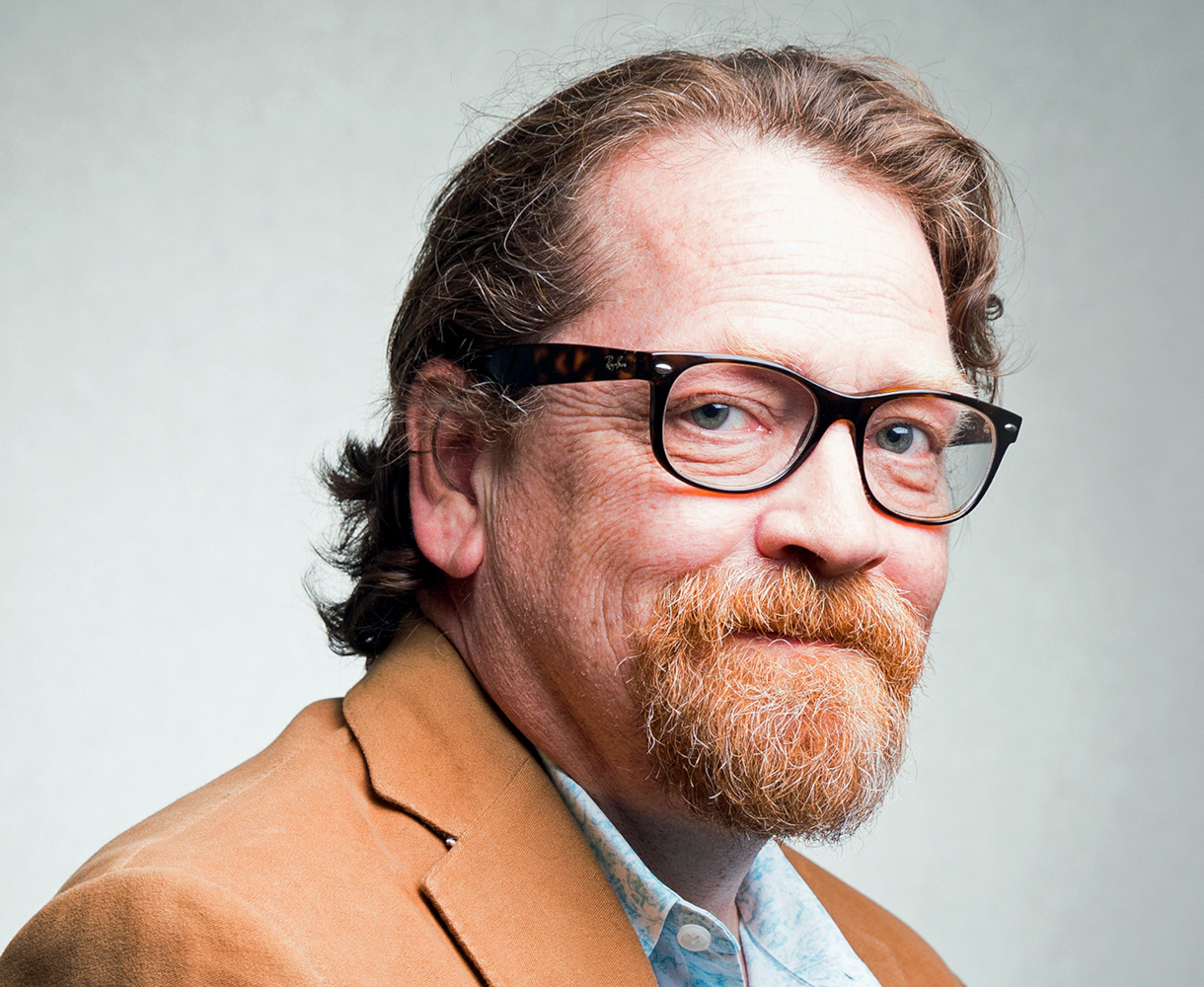
By Sophie Ann Hinkson
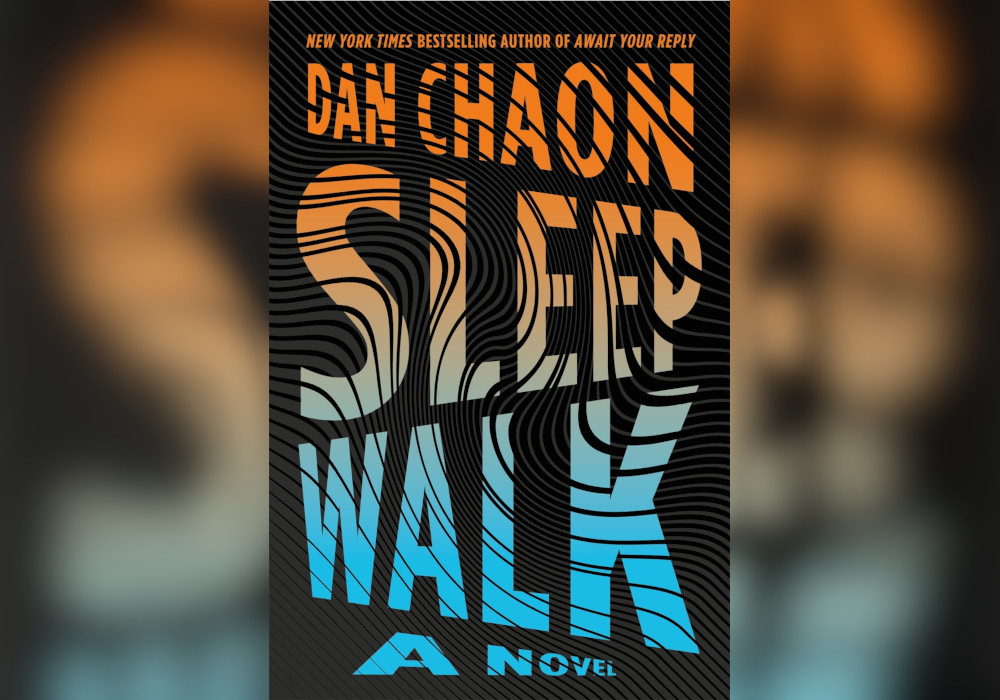
According to Dan Chaon, we’re all in conversation with the authors we love. His work has been feeding my inspiration for a while, whether through the originality and diabolical construction of Ill Will or his ability to bring horror to mundane settings, as demonstrated in his short story collection, Stay Awake. While Dan Chaon is, without contest, a master of psychological horror; his latest creations successfully explore different universes. Indeed, after Sleepwalk took us on a road trip through an alternate America, his latest book summons the mysterious world of carnivals.
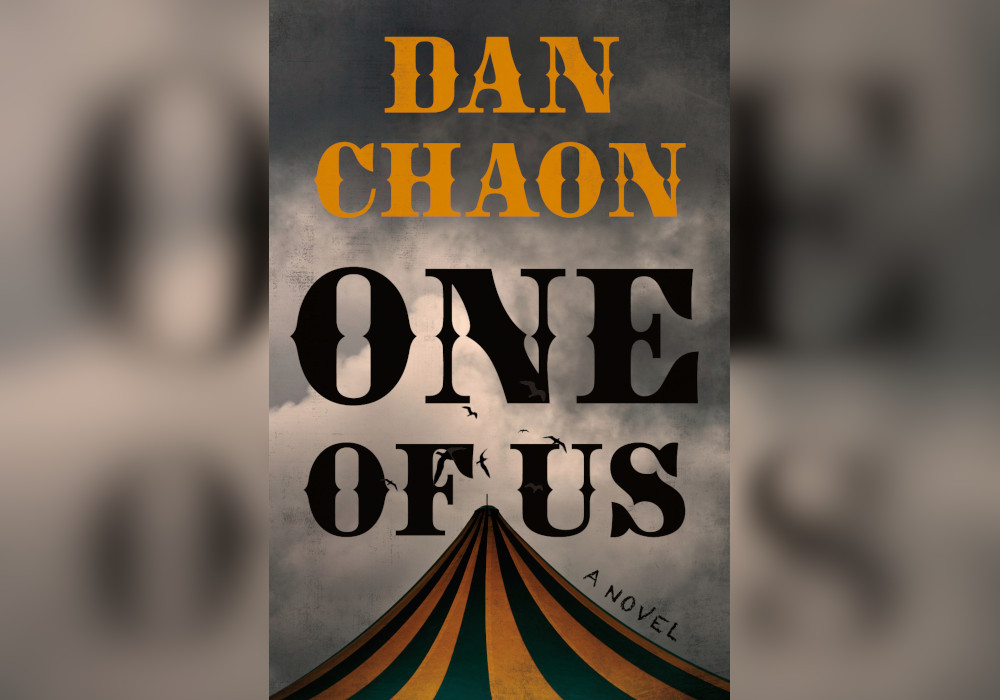
Set in 1915, One of Us follows two orphaned twins, Eleanor and Bolt, chased by a cold-blooded killer pretending to be their uncle, Charlie. This is the starting point of numerous adventures in the company of the residents of the Emporium of Wonders, like Herculea, the Muscle Lady; Dr. Chui, taller than seven feet; or Rosalie, an infant with two heads that Chaon’s readers previously encountered in Stay Awake. Many genres are present in this story, which also resurrects the spirit of 1915 through its tunes, books, and people. The conversation I’ve had with Chaon in my head became literal thanks to the most séance-like tool at our disposal in the summer of 2025—Zoom.
The Coachella Review: Let’s start with something simple and direct: What was the first idea behind this novel?
Dan Chaon: I wanted to write an adventure story that took place in the Old West because I’m interested in playing around with genre. By the time I started writing, it had already gotten out of the era of the actual Western. When 1915 rolled around, I knew I wanted to have some aspect of traveling and the circus. I’m particularly thinking of some of the famous early twentieth-century American novels, and also Toby Tyler, by James Otis, a very influential children’s book from the 1870s, and The Circus of Dr Lao, by Charles Finney. Obviously, Bradbury’s circus novel, Something Wicked This Way Comes, inspired my work with its chiaroscuro poetry in its evocation of the carnival and the dark and yearning moods of late childhood. I was also thinking about movies, like Todd Browning’s movie Freaks, from which the book takes its title, or Charles Laughton’s famous 1950 movie, Night of the Hunter. There was something about the look of those films and how they evoked both a real setting and a kind of dream, like a children’s fantasy setting, that I really wanted to tap into.
TCR: In the Author’s Note, you say you were “in conversation” with these works? What do you mean exactly?
DC: We’re all in conversation with the books we love. Even though we don’t talk to the authors, we still reach out to them. At the very early stages of becoming a writer, that often takes the form of imitation. Even as you develop as a professional, you’re still talking to the works that you love. Once you’ve absorbed this material, it becomes part of your world, as well. One of the great things about creating is that you are, in some ways, trying to evoke those things that you love. You’re not working in a vacuum.
TCR: What about Tom Tryon’s psychological horror book, The Other? I have to ask you because you mention it in the Author’s Note, and because your heroes, Eleanor and Bolt, reminded me of Holland and Niles, the twins of The Other. Indeed, they’re complete opposites. When they get adopted by Mr. Jengling, Bolt wants to meet his new family, [while] Eleanor is very suspicious of everything and everybody and wants to stay on her own. Beyond this, what’s the connection between The Other and One of Us?
DC: I don’t really know. Something about this novel deeply affected me when I read it as a young person. Part of it has to do with the wonderfully rich mood of the book, but I think it’s about this deep connection that I longed for when I was thirteen. And I also found it very fearsome, because to be manipulated by someone that you’re that close to is a terrifying thing. There were those two poles that were both an attraction and a repulsion at the same time. That’s what great horror does.
TCR: I was very happy to see that one of the characters of your short stories collection, Stay Awake, comes back: Rosalie! Can you tell us who she is?
DC: She is a child who was born with a partial second head growing out of the back of her head. She has some degree of psychic powers that may be attributed to that second head. She seems to be in communication with it, although it’s really just a small protrusion in the back of her skull. She has been basically treated as a chattel her whole life, as she’s been bought and sold as this special person who can do amazing tricks. She has only one foot in the real world and one foot in the astral plane.
TCR: She’s very different from the Rosalie in Stay Awake. Why did you bring her back?
DC: She was only an infant in the short story; she never had any kind of volition. I found her a compelling and interesting character, and I wanted to come back to her. I don’t feel bad about exploring again things I’m obsessed with. She was a character that I really wanted to go back to and play around with again, to see what I could do in a different sort of world.
TCR: It seems to me you had a lot of fun with the entire cast of characters, and I love that they’re equally developed. Most of the members of the Emporium of Wonders have dedicated chapters telling their background story. I’d like to pause on somebody who’s not part of the carnival: Charlie. He’s the one who brings the horror and the tragedy, since he’s a murderer. He introduces suspense, too, because he’s going to run after the twins for most of the book. I absolutely love the way he speaks. He says “decapastate” for decapitate, he talks about “having the woofits” (an old expression to say to be upset, to be drunk). How did you write him?
DC: He was a very fun character—childlike in some ways. He thinks of himself as a wonderful person, and he’s a monster. There was just something about that combination that was really fun to play around with, just because of his own lack of self. I also did a lot of research on language. It was a time when fiction writers tended to use a lot of vernacular. We’re familiar with Twain, but there were plenty of other writers from that period who would really put a lot of slang words [into their work]. I used people like Ring Lardner and Sherwood Anderson as templates. I also had this amazing three-volume set, Green’s Encyclopedia of Slang, that was very useful.
TCR: I want to discuss what makes your characters “special.” At first, it was hard for me to see if we had gifted characters or if they were all crooks. For quite a while, I didn’t know if Bolt and Eleanor could really use telepathy to talk to each other. Did you keep this ambiguity on purpose?
DC: Yes, I really wanted it. That was one of the reasons why I kept trying to undercut. I didn’t want it to be like a superhero book. People in circuses were gifted in one way or another: either they had learned skills, or they had particularities—such as some aspect of their genetics, whether it was being able to do shadow puppets because they had fourteen fingers, or being able to stretch themselves out like a contortionist. For the characters with supernatural powers, I wanted to be a little obscure about it, to let the readers have their doubts at first, and as the book goes along, come to accept that as part of the world. Spiritualism and theosophy were widely held. I didn’t have to deal with characters feeling that these things were fantastical. People were going to seances all the time. It was about finding a way to respect those beliefs and let them emerge naturally in the text.
TCR: As a person very interested in genre blending, I was trying to see the genre of One of Us. Your previous books clearly belonged to psychological horror. This new novel seems slightly different.
DC: I would say it’s a mix of the adventure tale, the Western, supernatural horror, and the circus novel. They’re all in there. The thing I like about genre is that it gives you a kind of template for a plot. If you’re working in a genre, you know certain things have to happen, and that’s helpful to me, because plot doesn’t necessarily come naturally to me. I tend to write a lot about image and character, and then I find myself lost in a novel that’s going nowhere.
TCR: Did you talk about genres with your publisher?
DC: I did have to talk about the genres. To some extent, in the beginning, you’re doing a sales pitch, you’re doing an elevator pitch, with a summary that is going to make people interested. That’s not at the forefront of my mind. I love writing a scene that feels like it has a soul to it. That’s the thing I’m most excited about, with trying to put all those scenes together into something that resembles a whole.
TCR: I saw a subtle change in your two last novels, Sleepwalk and One of Us. I feel like your characters are less doomed, and you explore different themes and stories. Am I right?
DC: I feel it, too. These past two are still very dark, but there’s something more playful about them and slightly more hopeful. I try to get away from the darkness of the contemporary world. With One of Us, I was like, I’m going to set this far away from 2025 because I just don’t want to live in 2025 all the time. It turns out that a lot of the elements of that time period have echoes.
TCR: You tend to tell your story using different forms, and One of Us is no exception. We have article excerpts, free verses. A lot of words are in bold, too! Is it a type of experiment you’re doing with the text? What does this bring you?
DC: There are certain things that I’m jealous of. I love the unit of the line in poetry and the way breaks work. They have such music to them, and I want that for myself! I also love what you can do in comic books and graphic novels with the actual graphical use of words, and the way that they can become their own illustration. Sometimes, I just get too silly, and my editor will say, “No, you can’t do that.” With Ill Will, I was trying to do all kinds of crazy things. There was one place where there were lines that were right-side up, and then followed by lines that were upside down. I loved the way it looked and that it was so disorienting to read. But my editor was like, “Absolutely not. You’re gonna break everybody’s Kindle.”
TCR: I also saw a lot of direct references to other books. Eleanor is reading a Gertude Stein book, and later on, she tries to model her reactions on the character of Pollyanna in the eponymous 1913 book. Did that come up naturally? Is it a type of literary homage?
DC: What we forget is that, just as we are today, people in the past were immersed in culture, and the culture was influencing them. I wanted these books like Pollyanna and Tarzan to be there, as are all of the crazy music from that time period mentioned in the book. I don’t know how familiar people are going to be with it, but at least they have a general idea of what the music sounded like. When I was getting my MFA, using specific references like that was discouraged, because it would be limiting, or that it would date your work, but I don’t think so. You can use it in a way that enhances your work.
TCR: Speaking about music, I know you did it for Ill Will and Sleepwalk, so, let me ask you: Do you have a playlist for this book? Maybe “Man of Constant Sorrow” would be in it since it’s the title of one of your chapters?
DC: I’m going to put a playlist together of all the songs that get mentioned in the book, so you can actually hear what some of these old songs from 1915 sound like. I don’t know whether there are any songs on there you would really recognize. And then, I’m going to make a playlist of songs that I listened to when writing.
TCR: Let’s talk about the end without talking about it. Why did you feel the need to have a chapter set in 2015?
DC: I liked the idea of creating a frame. Because you know that time exists, I could do that kind of fast-forward. We could watch people’s lives recede. It also went along with that trope of Rosalie being able to predict people’s deaths. I was able to do all this and get a chance to look back at this world that we’ve just been so immersed in, from this very distant and great height. I found that sad. There was someone in 1915 who was the same age as us, and now they’re just dust. It’s a very ordinary thought, but there’s something also very cosmic about it. As readers, we’re in communication with these ghosts.
TCR: Another question about the end: I wanted to discuss something that one of your characters says about justice: “We’re not assassins at heart […] But neither can we call on a U.S. Marshall to bring this man to justice, nor ask a judge to bring him to account for his crimes […] What help would a lawman be to the likes of us? What satisfaction could be expected in a court of law?” I found it interesting that this reality of the “freaks” being apart from the rest of society comes at the end. I had honestly forgotten this since I was immersed in their life in the Emporium…
DC: It was something that was very much on my mind as I was writing. There are two elements to the circus as a metaphor in American life. On one hand, you can run away to join the circus, and it’s a fantasy of escape from the quotidian. You have this dream of glamor and adventure, and the crowds are cheering you because you’re special. But if someone says you should run away to the circus, it’s not a compliment. It means that you’re not normal and that you’ll never be accepted in the world of everyday. Non-conformity has always been looked askance at by American culture. I think it’s not a friendly place for people who are different, and that remains true today. I mention a number of elements that would have prevented people from being able to even live a normal life in a small town. There’s a point where Dr Chui talks about the Chinese immigration Act. Being Chinese, even being able to move around the country was illegal.
TCR: This reminds me of something we discussed in a workshop at UC Riverside: the difficulty of writing the experience of somebody who doesn’t have the same ethnicity or background as us. I must admit that I still struggle to feel confident enough to do it entirely.
DC: It would be worse if I left their stories out. I feel like that would be more of a disservice, and so I just tried, as best I could, to do a lot of research, to be as respectful of these experiences as I could be, and to find the emotional connections in my own life. I couldn’t relate to some of the oppressive stuff, but I could certainly relate to what Dr. Chui was like as a young boy and to his experience being bullied. We have to be careful not to limit ourselves to our own experience. That’s not why we write fiction. I’ve never been a woman, but I feel like I can write from a woman’s perspective. If only someone who has had an experience is allowed to write about it, it’s just a small step from there to saying, Only the people who have had an experience can read about it. You read to learn, and you write to learn. You write to learn about yourself, and you write to learn about the world.
TCR: Speaking about writing, what’s next?
DC: I’ve just started a new book—no idea when I’ll finish—and all I can say is that it has a lot of high fantasy elements that I’m playing with. I hope I can mess with every fictional genre before I die.
 Sophie Ann Hinkson spent much of her life in France, where she worked as a bookseller and literary journalist for both magazines and radio. Now based in Chicago, she teaches French and ESL at various colleges and is currently pursuing a Low-Residency MFA in Creative Writing at UC Riverside. Her stories will appear in the upcoming fall issues of Midwest Weird and Shadow Dog Press. At home, she shares her life with her husband, a black cat, and six pet rats.