
By Breen Nolan
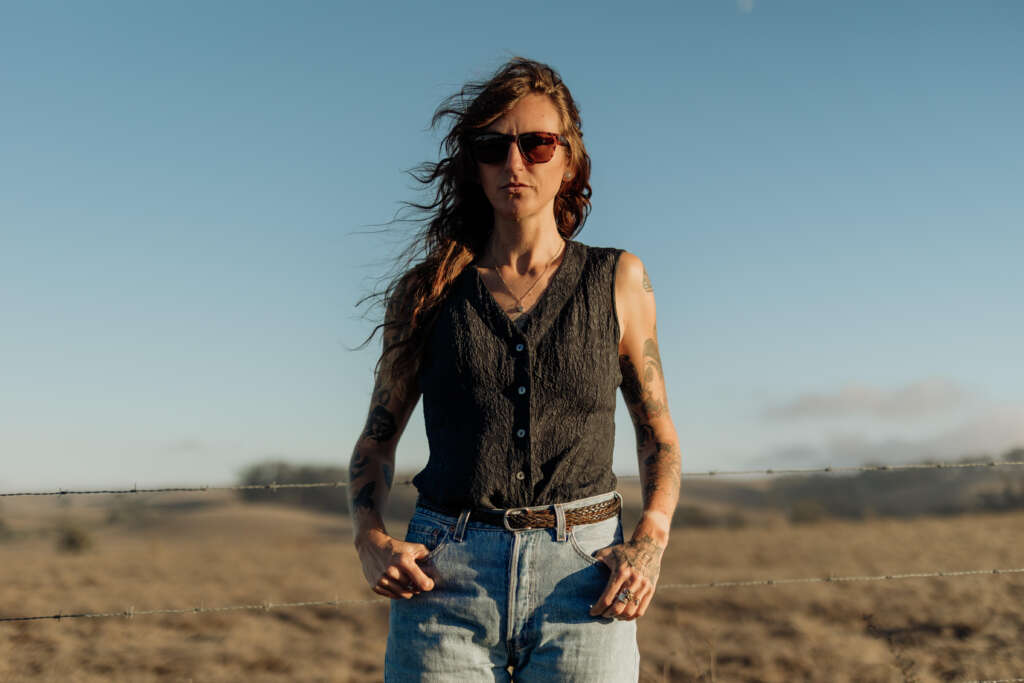
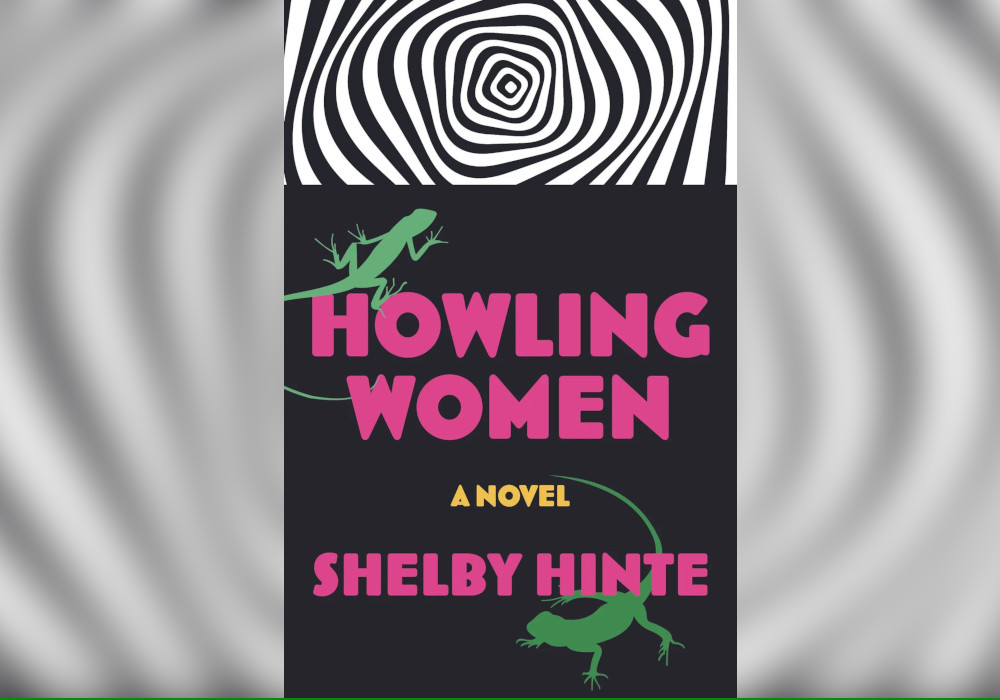
Howling Women, the debut novel of Write or Die magazine senior editor Shelby Hinte, is a fierce story about friendship, revenge and the emotional scars that never fade. It’s also a book about violence, addiction and female rage. Sabine Haegan, Howling Women’s protagonist, is a woman on the run. She abandoned her crumbling life and marriage in California for the New Mexican desert in the hopes of finding redemption. Instead, she meets the mystical and motherly Howling Woman, and her life changes forever.
The Coachella Review spoke to Hinte about her journey writing Howling Women and the many iterations the book went through, her noteworthy approach to editing and revision, and the importance of acceptance when it comes to the process of creation.
The Coachella Review: I would love to know about your writing journey. When did you first know you wanted to write?
Shelby Hinte: No one’s ever asked me that question. It’s a good one. I don’t know when it became a conscious thought, but for a long time [in high school] I thought I wanted to be an actress and I was in theater. But I have terrible stage fright and don’t actually enjoy it. The idea of wanting to be an artist was really important to me, and in high school I was constantly writing, mostly poetry. I would skip school to go smoke pot in my car and write poems, which feels really nerdy in retrospect. I was thinking back, because of a conversation I had with my mom, when I was growing up. We had limited resources—she was a single mom—but the one thing she always said she would be willing to spend money on was books. I was an avid reader as a kid, and I remember when I was in elementary school, at the end of every grade, I would write and illustrate a book for my teacher and gift them that. And then later, I thought I wanted to be a songwriter. So, I guess I’ve been writing since elementary school.
TCR: Do you remember a book or poetry collection that sparked your interest to be in the arts?
SH: I think there’s a couple things. One was that I was in an AP English class, which is not very sexy and not very creative sounding. I was obsessed with my English teacher, she was so cool and wore cargo shorts, button downs, Crocs before they were cool, and had a shaved head. She sat cross-legged on her desk and I thought she was the smartest person I’d ever met. She was always quoting books. Up until I took her class, I was reading stuff like, oh God, one of the first things I stole—I probably need to make an amends for this—was a copy of Gossip Girl from a Barnes and Noble. That was probably in middle school or something. So, when I arrived in her class, I had read a lot but not anything that you would want to admit out loud to other people. She made books, reading, and writing seem like the sexiest thing on the planet. I wanted what she had, I wanted to be able to read books and quote them, and that continued in college.
My favorite thing was hearing professors talk about books like it was the most normal thing in the world. And I always felt—and I guess I still feel like this—that books have the answers to all my problems whenever something emerges in my life. Even when I got sober, I [didn’t] want to talk to people about it like, Oh shit, I think I’m an addict, so I read books about other people’s experiences. That helped me come to terms with my own experience. Any secret or embarrassment or feeling I didn’t understand, I went to a book before I went to another human being to try and figure out what I was feeling or thinking.
TCR: Can you talk with me about what inspired Howling Women?
SH: It was a couple things. I was just moving and found the earlier pages of [the book], which made me realize I started the book even earlier than I thought I had. But it was a totally different book. It was set in an apartment complex in the middle of Arizona.
I first became obsessed with the idea of two women coming together, wasting summer days away and, as they got to know each other better, revealing dark parts of themselves that would lead them to take revenge on a man who had hurt one of them.
I’ve been interested in this female friendship revenge narrative of sorts. And that was kind of in the back of my mind. Then I was on a trip to New Mexico, which is where I’m from, and working at this coffee shop, looking at this mountain where I’d grown up. And I just started writing about Howling Woman. Her name came instantly. That was one of the first things that came to me, and it remained the same throughout the book.
I think from there, I’d been taking all these notes for however many weeks about two women becoming friends, and so part of it was probably subconscious obsessions that I was carrying. Then I found a vehicle to lay these questions around. Like, What do you do [when] a man [has] harmed you and [you’re] presented with the opportunity to hurt him back? There were a lot of different iterations of that.
Then, Howling Woman herself, she seems a little bit like a caricature to some people, but to me, especially [living] in the Bay Area and hanging out with older women, there are so many people who are a bit like caricatures, and they fascinate me to no end. So, I wondered what would it be like to have her in the story, moving this younger woman to make life choices.
TCR: I saw a post [of yours] on Instagram a while back of all these composition notebooks. It’s so cool that you wrote all these iterations of the book longhand. Did you know where the story was going when you were writing in the notebooks? Or was it more that the story organically came to be?
SH: I think there was a point of curiosity, because there are two very distinct iterations that never found endings. There’s one that I completely forgot I even started until recently, of these women living in an apartment complex in a totally different state, having come together in a totally different way. And that was mostly notes and a couple fragments of chapters. And then there was this other iteration where [Sabine] is still with her husband, and has a kid, and that’s obviously not the book, and that also never saw an ending. I was just trying to get to know [Sabine] and to understand how she would get into this position of being in a relationship with this woman.
I knew that I wanted to write towards a chaotic, violent confrontation. And I didn’t know exactly what that looked like, but I knew that’s where it was going. Every chapter I was working on was trying to get closer to how she gets to this confrontation.
TCR: Can you explain what it looked like in the beginning with your notes and writing towards the towards the idea that you were trying to get to?
SH: At first it was just a lot of character sketches. I read this book once; I think it was a Publisher Weekly anthology from years ago that I got from the library. In the book, I read about this writing exercise called, Putting Your Characters in the Sandbox. I can’t quote whoever came up with that, but that’s how I wrote the initial pages. I put characters and scenes out there to get to know them. Then I tried to write chapters and do my best to write them in order. For instance, in those composition notebooks, maybe the whole first notebook is half chapters and random scenes and notes, but eventually I began writing the book—to the best of my ability—as linearly as possible. Linearly in the sense that this chapter follows this chapter, not necessarily chronologically in time.
TCR: That brings me to my next questions about the flashbacks and present time, which I thought read so seamlessly. Can you explain how you navigated those flashbacks in a way that wasn’t chaotic or confusing? Or did it organically evolve?
SH: It was not organic at all. That was the challenge of the book. A lot of early drafts were somewhere between 120,000 to 140,000 words. The book now is like 72,000 words. So, it’s literally half the size of what it initially was. Previously there were these huge, long flashbacks.
That was the number one thing that came up when I sent it to agents or shared it with friends. They said, Oh, this is so interesting [to] the story, but it slows down the pacing. Or, I had someone say, The past has to be alive in the present, which really stuck with me. As I kept rewriting, I was trying to whittle down the flashbacks to what was absolutely necessary to move the present forward. How that came into play was that most of those flashback chapters became woven in as small pieces of memory. Which meant I had to cut dozens and dozens of pages which is really painful with your first [book]. It’s a lot easier for me to do now. And so, it was not organic and was completely outside of my comfort zone. Every time I rewrote a chapter, or every time I rewrote the book, I was trying to make it more concise.
TCR: Were there any tricks that got you to push past the discomfort of needing to whittle the pages down to make it more concise? And second question to that: Did you save all that stuff that you cut?
SH: I’m not very organized. It’s chaotically saved, completely disorganized. But the one thing that I do every time I rewrite a draft is I start a new Word document and start retyping the whole thing. So every draft does exist on my desktop. That makes it easier to cut things because I know if I need to go back, it’s there somewhere. But there wasn’t any copying and pasting. I maybe tried to do that at the beginning to save time and drop in two-thousand words, but then it was always kind of garbage, or suddenly the tone was totally different. Every time I tried to cut corners, it read like a different book. The real effective way to do it is simply to rewrite it.
TCR: Did you print it out and retype it?
SH: Yes. I print all the pages out after every draft. This is the same process with an essay, too. I write it by hand, then I type it, then I print out whatever I typed. Then reread it with a pencil and a red pen, and I have a legal pad. I look for anything repeating, any plot holes, any notes for future scenes, or if a scene comes to me, I free write on the legal pad. This is a good trick for getting over writer’s block.
I’ve read a couple interviews with artists about this. You kind of mesmerize yourself into the physical act of writing by just retyping what you have and acknowledging on the new document the notes you’ve made or the annotations you’ve made. I find that once I’m physically in the act of retyping, pretty much after a couple sentences, I’m no longer looking at the pages and I’m just rewriting. Then I’ll refer back to them. I always think I’m going to retype most of what’s on the pages. I think this was true for Howling Women, and it’s definitely true for the project I’m working on now. I’ll start with the page, and then for days and days I won’t ever get to it and by the end I’ve taken a tiny chunk from the old pages and that’s all that really exists in the new pages. But I think thematically and plot wise, it’s all still there. It’s just the language is different.
TCR: That’s so cool. What great advice.
SH: I’m just copying other writers. Bud Smith is a writer I know who has done it. Lauren Groff has famously shared that as soon as she writes something, she throws it away and rewrites it. That’s sort of what I’m doing.
Every time I go back to something, I feel so different from the person that first wrote it. I think that’s why it changes so much. It becomes this thing I’m carrying in my head, but the words and how it’s unfolding is almost 100% different than what originally existed.
TCR: Do you go into your revisions with an intention? Or do you go in like, Whatever happens, happens?
SH: The first revision [is] easy and exciting. The second time is a little bit harder. When I get to the stage that I’m at now, when I think the book is almost done and I go to rewrite it and realize it’s not done or there’s this huge change I want to make, I panic and procrastinate. That’s my process. I get terrified that I might make it worse by making a huge change. I procrastinate for weeks. Barely writing anything until I force myself to accept the reality that it’s just going to take as long as it will take and I have to be back in it.
For instance, I’ve been working on this chapter for weeks, and I feel I’ve made almost no dent. And I’m writing seven hundred words a day, but I’m still in the same chapter. That does not feel very fast for me, but it does feel necessary. I think if I can reach the moment of acceptance that this is just what it looks like, then I can be in the work. I think the procrastination and overwhelm comes from wanting it to be done. But it doesn’t exist yet because I haven’t made it. Once I accept that I just need to be in the work, it’s so fun, but I avoid it for a long time.
TCR: Can you talk about what your writing schedule looks like? How do you approach each day or each week?
SH: I’ve tried a lot of things. I hate that I’ve had to adopt the routine I’ve adopted, because it’s not super fun, and it’s kind of the same thing you hear from most writers.
I recently separated from my husband, and I thought, Oh, I love writing at night; I’m going to be a night writer. In the past, I did a residency and took a couple trips where I did makeshift residencies, and I wrote in the evening. But that was only because I wasn’t going to work and doing normal stuff. I found that even though I would love to have this romantic writing into the middle of the night, I’m fucking tired at the end of the day. My brain does not work at all. Ninety-nine percent of the time, I do not feel creative. So unfortunately, what that means is I try to wake up between five-thirty and six am. I keep a writing log, also in a composition notebook, and I pretty much keep that Monday through Friday schedule. Then, as the project starts getting bigger, I’ll throw in some longer days where it’s maybe a two-to-five-hour day where I need a lot of time to probably stare at the wall, I assume, because I’m looking at the word count from some of those five-hour days, and they’re not that impressive.
I think there’s something to be said for just unplugging your Wi-Fi, turning your phone off, and getting bored enough or uncomfortable enough that finally you’re typing and your brain’s just wandering. Chloe Caldwell said [in an interview] how important it is to just have these moments and spaces in time where you’re just doing nothing. That’s when creative ideas spark, but it’s not very sexy.
I get up every morning and walk my dogs, drink my coffee, write in my diary, and then I open up my laptop. My phone is off and my Wi-Fi is unplugged—because I cannot be trusted with them—and I try and write. My aspirational self is ninety minutes, but that only happens if I actually didn’t hit snooze and my dogs were on their best behavior and all the stars aligned.
TCR: That sounds like a great ritual. Is your diary more about getting you going with thinking or getting stuff out of your head and onto the page?
SH: I think of it in two ways. One is it’s kind of like transcribing words from the old draft; it’s mesmerizing yourself into writing and thinking, Oh it’s not so scary.
This is so woo-woo and embarrassing, but I always begin with a gratitude list because I wake up completely ungrateful. I’m not one of those people that wakes up like Cinderella with the birds chirping. I think the first thought that comes to my mind every morning when I wake up is, Oh, fuck. I know that I cannot do anything useful, and I certainly cannot make art from that mindset. And so as woo-woo, goofy and hashtag gratitude as it is, I begin each day with a gratitude list. Which leads into a journal entry. I also find that I end up brain dumping my thoughts so they’re out of my head and I can start focusing on something creative. Occasionally, I’m writing about what I’m reading, or I’m writing ideas. My diaries are pretty boring, but that’s what generates a lot of material for me, too.
I used to not be as avid of a diarist, but I found that it helps me have creative realizations.
TCR: Can you share how it feels to have put so much into something and then have it be out in the world?
SH: Because of a huge change—I moved out of my house that I was living in with my husband two days before the book published—I don’t think I’ve had the opportunity to feel the magnitude of like, Oh, this thing I’ve worked so hard on exists in the world. I don’t even think it’s hit me that some people are reading it.
Nothing really changes in your life when the book comes out other than that strangers reach out to you and share their experience. Which is a huge gift to get emails and DMs from, normally women, who I haven’t heard from in ten or twenty years. Or people I don’t know who might want to share their experiences.
I thought publishing a book would make me finally feel like, Oh, I’m a writer for real now. But I started having anxiety instantly that I was never going to finish this other book. What it did do for me was give me the confidence to say it’s not a silly thing that I work so hard to get up early in the morning and sit down and write in these composition books.
I think for a grown adult, if you were in someone’s house for a day watching them try to be an artist, it’s kind of embarrassing. It’s like, Grow up kid, get a real job. And so, I think it gave me the confidence to know that this is important to me and I get value from this. All I want is to live a life where I am able to have the privilege to write.
TCR: Can you share your experiences teaching writing to people? When you went into it, were you like, I can do this! Or were you like, This is scary and hard?
SH: My day is split because I write for a nonprofit during normal hours, and then I teach in the evenings. I’ve been teaching for about a decade, and it is easier now. I feel a confidence in the classroom.
In the beginning, I was trying to be perfect and felt a lot of insecurity. When I first [started] teaching high school, I was in my twenties teaching in a men’s county jail, and all of my students called me Taylor Swift. A couple of them would always say, What, so you just graduated high school to start teaching high school? I was so much younger than most of my students, and I always felt completely insecure. Even though I had taken the teacher exams, studied English in undergrad, was getting an MFA, then had an MFA and had a teaching credential, I felt like, Oh my gosh, I need to know all the answers. I still feel sick to my stomach before every single class that starts, which I think is in some ways a good thing because it means that I care—that I want to show up and do good by my students. Once I’m actually in the classroom and working with my students, that feeling normally goes away, and I feel wonderful. The biggest shift for teaching came when I realized I’m just giving the information I have right now, not giving God’s word.
It’s different teaching high school versus now teaching creative writing, which feels a little strange. Like, How do you do that? But how you do it is to share stories and tools that maybe writers are unfamiliar with and then give them the opportunity to make their own opinions, develop their own tastes, and be pointed towards things they might not know to find themselves or wouldn’t go looking for.
TCR: I love that—so beautifully said. I can’t wait to see what you do next. Can you share where you’re at with the new project?
SH: It is not a brand-new project; I started it about four years ago. I’ve been calling it Modern Marriage, Love and Other Drugs for years. It’s about marriage and addiction, and kind of in Howling Women fashion centers around a chaotic, somewhat violent event that thrusts people [towards looking] at themselves in different ways. I intended to start this novel wanting to manifest a certain kind of marriage. Then I separated from my husband, which is maybe why the rewrite is changing so much. I’m trying to follow it wherever it goes instead of clinging to what I thought it was going to be. I think it’s terrifying—because it means I have more work ahead of me than I thought—but it’s also really exciting. So, I’m in this stage of, Am I going to totally destroy this book? Or am I going to make a better book? It’s too soon to tell. We’ll see what happens.
 Breen Nolan is a writer from Rochester, New York. She has an MFA from the University of California, Riverside-Palm Desert, where she was awarded the 2023 Founder’s Award and was the inaugural winner of the Lizi Gilad Silver Memorial Scholarship. She is the former Managing Editor for The Coachella Review. Her poetry chapbook is forthcoming from Cooper Dillon Books (spring 2026). Breen spent over a decade working in advertising and media. She lives in Portland, Oregon with her family.