By Breen Nolan
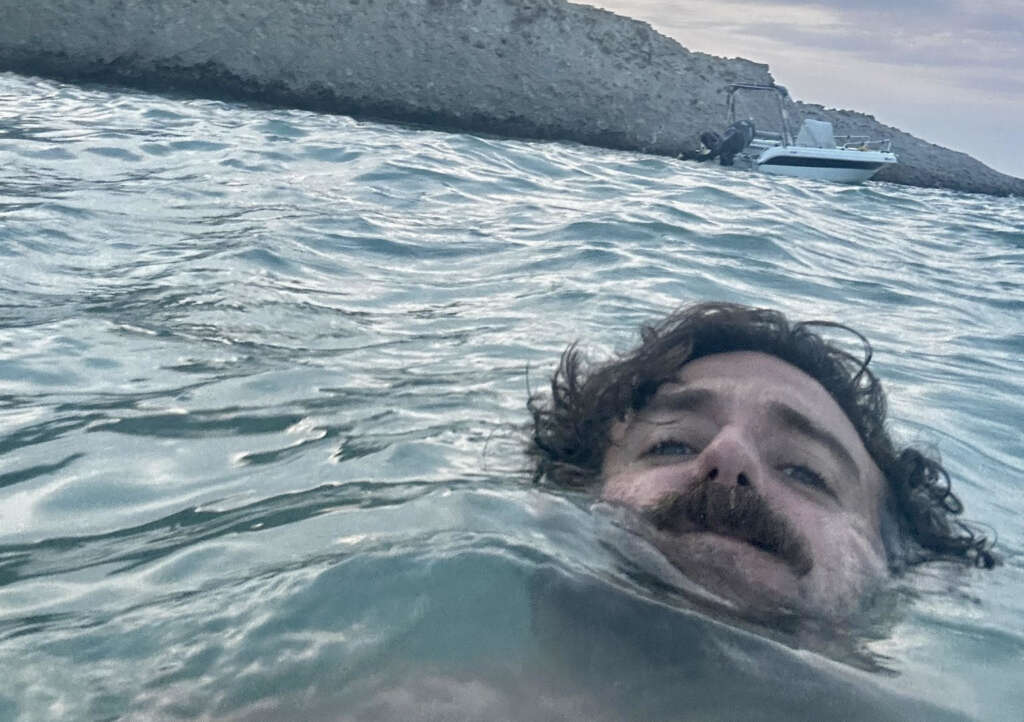
The characters in Kyle Seibel’s debut short story collection Hey You Assholes (CLASH, 2025) are the freaks and weirdos of the world. They’re the everyday people struggling to figure it out. They’re doing the best they can. Whether Seibel’s writing about a someone experiencing an existential crisis inside of a Taco Bell kitchen, a dying father’s pursuit of pork sandwiches for his family, or a crumbling marriage and the rollercoaster house that could have saved it, the stories in this collection go beyond the biting humor that is Seibel’s signature style on social media to break hearts. It’s because of Seibel’s unique voice, his attention to detail, and his skill for wringing out the emotion of even the most mundane moments, that this collection sings.
The Coachella Review sat down with Seibel to discuss his earliest influences, how his advertising career influenced his writing, and why sometimes an ending comes down to a just feeling.
The Coachella Review: I’d love to hear how the stories in Hey You Assholes first came to be. When did you start writing them?
Kyle Seibel: I started writing fiction probably six years ago. I left the military and started working at an advertising agency and felt pretty creatively fulfilled at that job for a while. That kind of satisfaction runs out in that industry pretty fast. I found myself with all this extra creative energy at the end of the day and needing an outlet. I was always a big reader of short stories—even at moments in my life when I didn’t feel particularly creative, that was a big part of my reading diet. So, when I sat down to write, what came out was short stories. It was a rediscovering of some of the things that drew me to literature in the first place: Raymond Carver, John Cheever, and John Updike. When I started to write, I found inspiration in those voices.
TCR: I’m surprised to hear you started writing six years ago. That’s insane to me, it’s so fast!
KS: Yeah [laughs]. I think I had a good idea about what I wanted to do when I started out. I didn’t do an MFA; I didn’t think I would be suited for that kind of a workshop-type environment; I am not that kind of person. But there’s another kind of trial by fire that happens when you’re a creative at an ad agency. You’re required to produce a huge volume of stuff. You can’t be that precious about it. And through that kind of boot camp of writing, you start to understand instinctively what works and what doesn’t. You might not understand why, but you end up arriving at the point faster. There’s a pity-the-audience type mentality for copywriters; you want to disappear into a voice. That’s also a useful fiction skill. [With my influences,] I was able to synthesize those insights and apply them to my own work.
TCR: Can we talk about the nuance in these stories—the strangeness, the humor, the heartbreak. What can you say about it?
KS: One of the questions that I have tried to always ask myself is, Why is this person telling this story? Why is this person taking up my time to tell me this? That can unlock some interesting things for me. Some of the premises in the book are comic or absurd, but I try to push past some of the surface-level silliness of an idea. I think the challenge for me is what’s beyond that. Can I take something like this and wring the pathos out?
TCR: In the story, “As Planned, We Stopped for Sandwiches,” the title is also the first line of the story and it is one of my favorites in the collection. What’s your technique or approach for coming up with titles?
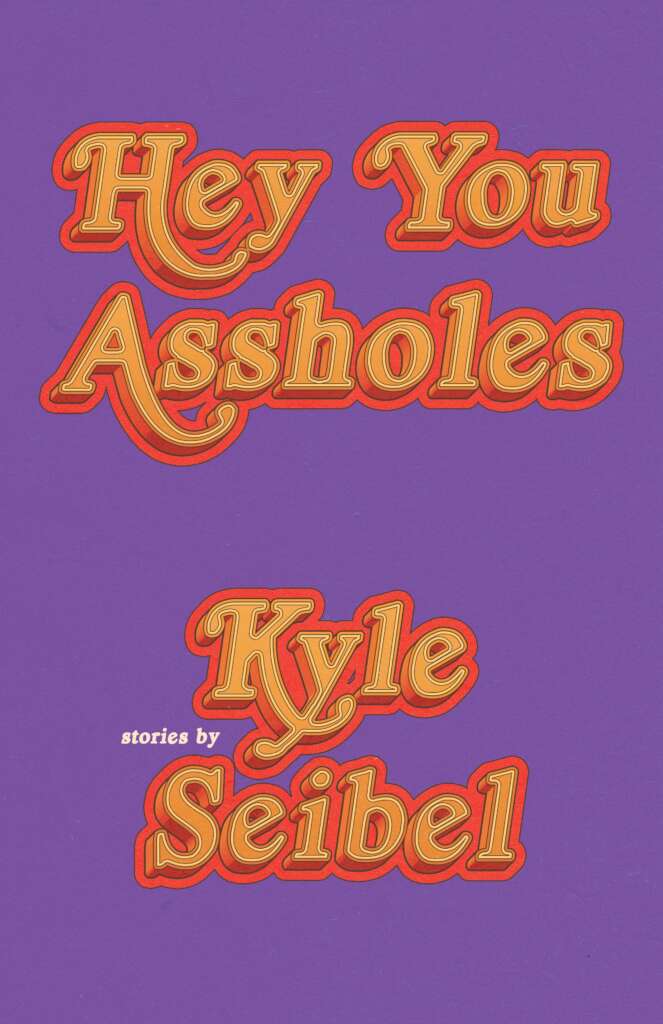
KS: It’s definitely a feel thing for me, and I’ll always take a good suggestion on a title, too. Some of the best contributions people have made are the titles they’ve suggested. A big example of that is my friend Todd, who read the collection in manuscript form and came up with the title, Hey You Assholes. After he suggested it, I couldn’t see the book without that title. And it really drove the emotion and energy of the project in this great way.
There’s another one that I consider to be the sister story to that one. It’s “At This Week’s Meeting of the Young Mountain Movers,” which does the same thing: the title is taken from the opening line of the story. And there’s a secret in both stories about the condition of one of the characters; that’s why I see them as being linked together.
TCR: Can you talk to me about the sections in this book and how you decided where to put each piece?
KS: I worked with an independent editor named Kirsten Reneau on a previous iteration of this book [that] was coming out on a different press a couple years ago. She was the individual who suggested [organizing it into] sections, and I jumped at that idea. The book has been through many, many changes since, but the main thing that remains from the initial version are the sections.
TCR: These stories are experimental in some ways; for example, the story “On Drugs” is three sentences, whereas some of the other stories go on for twenty-plus pages. How do you know when something’s done? Is that more like a feeling, or maybe it’s more like, This is done for now.
KS: Yeah, “done for now” feels like more of the categorization I would put on the pieces. I also think “done for now” means I have to stop thinking about it for a couple months, or however long, until I have a eureka moment.
I think the hardest discipline in writing for me is the fallow period that every piece must take as I think about it and interrogate it in my own mind. I’m trying to be more disciplined about doing this. I ask myself, What am I saying with this piece? What am I trying to say? What am I actually saying? And then, trying to be honest about those answers.
TCR: I love that line of questioning. Is there anything you do outside of the creative process, where you find yourself able to perform that deep interrogation?
KS: I think shifting gears to a whole different kind of project can be healthy. If I’m working on a short story, maybe I’ll work on a poem—not that I’m a poet, but you know what I mean. Another thing is drawing, just doodling. That kind of absence of consciousness is a place where I can open to whatever pops in my head. That can be very generative.
TCR: What does your writing schedule look like?
KS: I tend to write in sprints. So, I’ll have a period of hyper productivity where I’m producing a lot of text. I don’t know how much of it is worthwhile until I return to it with more of an editorial lens. I don’t put pressure on myself to write every day. I think I’d probably go crazy if I had to. For me, it’s about finding time in the day just to do some kind of work. So, whether I spend time with a book or a story or another piece of writing, I consider that just as important to my writing life, maybe even more so than sitting in front of the computer. Actually, some of my best ideas come when I’m reading something that’s really good or really bad.
TCR: What were you reading while writing this book?
KS: Rock Springs by Richard Ford is a story collection I fell in love with. I think it’s coming back in vogue with a certain kind of writer. It has a sad, romantic quality that I like. There’s another writer from Portland; his name is Arthur Bradford. He wrote two books of short stories. One’s called Dog Walker and the other’s called Turtleface and Beyond. They were both so educational for me. The freedom that he writes with is invigorating. I love writers that feel like you can tell they’re having fun when they’re writing. That makes a difference to me.
TCR: I can tell you’re having fun with your stories. And, it should be fun! Do you have a writing group or any first readers?
KS: I have a couple people that I go to initially that will give me a thumbs up, thumbs down on a particular piece. They call me out when I’m not making any sense [or am] taking the easy way out. I remember I was really pumped up on a story that I was working on last summer. I sent it to a couple of people, and they’re like, You don’t have it. And I was so bummed until I went back and reread the story through their feedback. And they were absolutely right.
One of my favorite dudes that I’ve met through writing is a guy who lives in San Diego named Kevin Kearney—his novel Freelance is coming out on Rejection Letters [press]. We were swapping manuscripts back and forth, helping each other out. And we knew there was feedback to give, but sometimes you just need to hear that it’s good. So, we would open every email with, Good news, it’s perfect! And then from there, we’d talk about real shit. I think the approach should be fun, and not taken so personally, because everything can be better.
TCR: Agreed. It can be hard to not be too precious. I’m wondering if you have a preferred emotional state to be in while writing.
KS: I love writing early in the morning. I think there’s a sense of isolation and seclusion happening in a vacuum. I also think anger has a certain kind of verve to it on the page. If you can write with anger, it definitely produces some kind of authenticity. But rewriting is the harder state to achieve. Discernment. You almost want to be empty of emotion when you’re in a state of rewriting or editing. You want to remove some of that emotionality so you can see objectively.
TCR: Tell me what you’re working on now. Or are you taking time to just fuck around and have fun?
KS: First of all, I’m always fucking around and having fun, that’s always the game.
I don’t have anything right now that I’m hot on the trail of. I have a couple of short pieces that I’d like to finish over the summer, but if they end up being harder, or taking longer, I’m okay with that.
I have two novel manuscripts that have [previously] been on submission and are not currently. I want to do something with them. I’ve been entertaining the idea that I could rewrite one from memory and see what comes out. So maybe I’ll do something like that, an exercise-type project.
 Breen Nolan is a writer from Rochester, New York. She is a current MFA candidate in the University of California, Riverside-Palm Desert low-residency program in Creative Writing & Writing for the Performing Arts and is the managing editor at The Coachella Review. She lives in Portland, Oregon with her family.