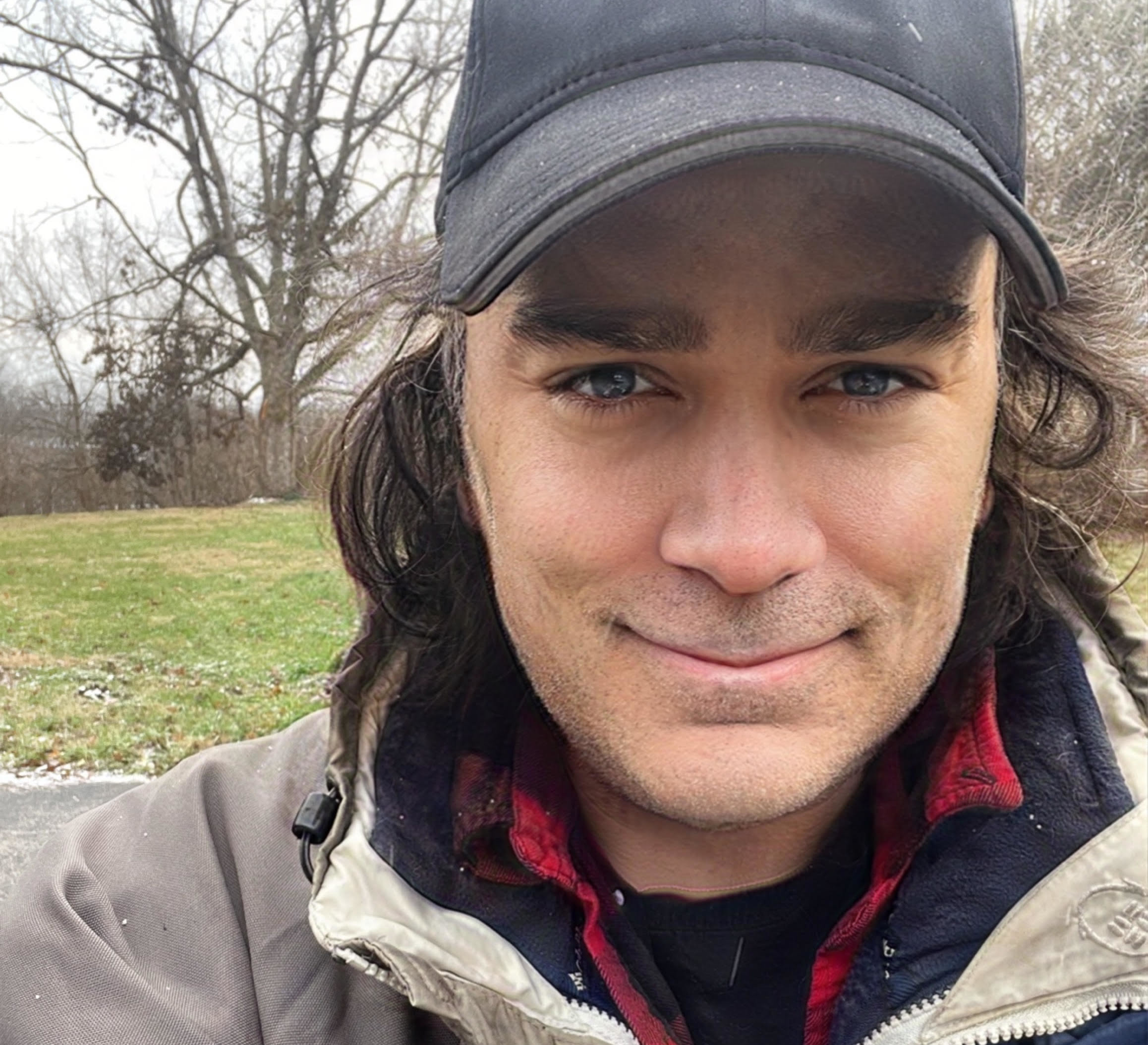
Interview by T.J. Tranchell
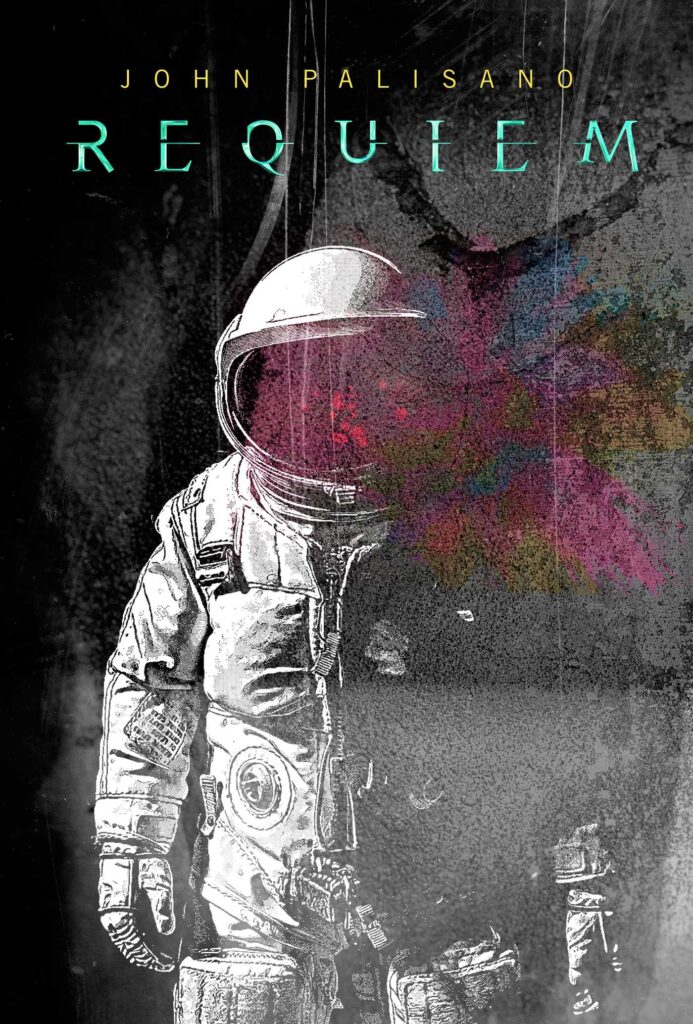
Author John Palisano has worn many hats, among them musician, filmmaker, teacher, president of a writers’ organization, and fan of horror and sci-fi. His latest novel, Requiem, is a gothic-in-space following a crew as they visit an artificial moon, the Eden, designed to serve as a sort of cemetery. Grief, music, and the ever-present threat of artificial intelligence loom large in the novel.
The Coachella Review caught up with Palisano to discuss his range of influences, the future of AI, and the importance of having a writing community.
The Coachella Review: Because this book has been described as gothic, I want to start by asking you how you moved the premise of Requiem from the old school ideas of ghosts and castles into space.
JP: Requiem started with a nightmare I had where I was actually one of the interred in the Eden. I didn’t know it was named that at the time, but I imagined myself in this clear coffin floating on a satellite, looking down at Earth, and I was suspended in this light blue fluid. And it freaked me out. Of course, being a writer, I said, Ooh, I could use this for something someday. I drew a picture of it, and that’s where it started.
At the time, I was teaching a history of gothic fiction class at the Last Bookstore downtown [in Los Angeles]. I thought, You know what, we have so many haunted house stories that are all on Earth. How cool would it be to have one in space? We’ve had them before. We’ve had Event Horizon, and we’ve had Alien, of course. But we haven’t had much in the literary world. I thought this [idea] would be really fun to explore with the classic gothic tropes. One thing Alien and Event Horizon didn’t have is the unrequited love of most of gothic fiction. So I wanted to get into that and the spirituality that a lot of gothic fiction explores but use a different kind of platform.
TCR: So Ava and Rowan [two characters in Requiem] really are your Wuthering Heights gothic characters then?
JP: Yeah, in a lot of ways. I mean, it’s like Jane Austen in space in a lot of ways. I love Jane Austen. So I thought, she’s [Ava] definitely the hero of the story, which is really cool. And yeah, definitely Wuthering Heights.
TCR: So how much of that fiction did you go back and read again? Or did it just sort of already live in your head?
JP: It was in my head from osmosis. I mean, every month [my class was] covering another title. We did all the Jane Austens. We went way back to The Monk with Matthew Lewis. We started there and did some modern gothics, like Flannery O’Connor. So all those expectations of gothic [literature] were heavy in my brain.
It’s funny because my first draft of Requiem was way [longer]. I wrote about 75,000 words, and the ship was totally filled. It had thousands of people on there with levels, and I was doing so much world building. And I realized, what am I doing? This is like this Lord of the Rings epic kind of thing. There’s just too much. And I said, What if I go after that, but nobody’s there except for the skeleton crew? That’d be a lot scarier—this huge, empty, cavernous satellite where people are supposed to be and they’re not. There is an arena where people can go if they have a famous person and have a big show. There’s a transportation system, a small train system that goes through it to bring them to the different sections that go through these cavernous areas.
I thought, how scary is that? If you’ve ever ridden a subway through those dark tunnels in New York and nobody else is on the subway, it’s terrifying because there isn’t anybody there. You’re like, Oh god, anything could happen, you know? So I thought that would be a lot scarier and I thought it definitely amped up the fear.
TCR: Do you think that came out of a lot of that other gothic stuff? Being afraid of things that aren’t there versus things that are?
JP: Yeah, absolutely. Being afraid of things that aren’t there is scary, but also things that are living in your head. [Like,] is it a ghost? One of the neat things I loved about some gothic fiction is it isn’t always clear if it’s supernatural or is it in somebody’s head. Have they just gone mad? Like [in Charlotte Perkins Gilman’s short story] “The Yellow Wallpaper,” is she really seeing things or is she hallucinating from the chemicals in the wallpaper?
I thought that would be something interesting to play with. Ava and the crew—are they experiencing these things? What other factors are they actually hallucinating? Is the ship coming to life around them? There are some great notable moments where they think the actual ship’s parts are transforming into creatures and things, and it’s never really clear if that’s really happening or if they’re just having a total meltdown.
TCR: When you have this grand question of death, we really don’t know the answer, but also in the book there is the question of artificial intelligence. How alive are those beings? Were these things that just sort of developed on their own for you or were they ideas going into it? How alive is Midori, as you call her, the Humani [the name for AI in the novel]?
JP: The Humani, yeah. I think that goes back to like Ray Kurzweil and a lot of the early theorists in the ’70s who came up with [the idea of] “What is consciousness inside of a computer”? And if we replicate human thought, is it then therefore human again? These really great existential questions.
And I’m not quite sure. That’s a really hard thing because… how could you know? It really makes you think about your own thought processes, and you get kind of deep and [wonder,] What are we? We ascribe human elements onto so many things: onto animals and onto our toys, like in Toy Story. We really think that these things become [alive] to us. We name our cars, we name our guitars, so they do become things and objects, do have energies, right? All cells are moving. We think things aren’t moving, but when you look at it on a molecular level, these things do have life in them somehow.
What’s the big philosophical answer to that? I don’t have a perfect answer. That’s one of the things we explore in Requiem: What does that mean? I think Midori is a really fascinating character because she does have a consciousness and an empathy and a caring [aspect] to her. And you wonder, is that programmed, or is it self-learning? There’s a brief history of the Humani in [the book about] when they first gained their own purpose with the publication of the Humani’s poem, which I thought was a profound moment for them.
When the first draft was [completed] over five years ago AI wasn’t really a mainstream thing. Now, in the last year it has taken over. So I’m like, wow, thank god this book came out now because we’re right on the wave of this. A couple of years ago, it was still kind of science fiction—this kind of like theoretical question—but now, it’s really becoming everyday normal, which is bizarre.
TCR: Do you think that that’s part of the beauty of science fiction—that sometimes the good stuff might actually happen along with the fear that some of the bad stuff might also actually happen?
JP: Yeah, absolutely. I think that, for me, the best science fiction is the kind that explores that knife-blade balance between those two. Star Trek’s a great example [showing] certain technologies can be bent either way and used for good. And you kind of hope that they are used for advancement. But it’s an interesting dilemma.
Throughout history, whenever big technology has come, where do we go? Just thinking of the writing world, when typewriters came out, that was considered cheating. I remember when I was in college, I couldn’t use a computer to type my papers, which boggles my mind now because they thought that the spell check in Microsoft Word was considered cheating. And they were dead serious on that. If you use spell check and not a dictionary, you are cheating. And I just think of that now, when people are saying that about ChatGPT and stuff.
My feeling, though, is that with artificial intelligence, it’s going to push us further. I think it’s going to make humanity jump even further ahead of what it can’t do. Because I think that’s what technology has done all along. When we got typewriters and we got ways to work faster, we were able to produce more work and do it faster and quicker and evolve our work. And I think we’re going to try to outrun ChatGPT. And I have faith that humans will be able to get ahead of it and harness it, like a wild lion in a chariot. But I guess we’ll see.
TCR: Even in the book, you have all that and then there’s still the horror element. I love the word that you used, “dread,” because that goes really well with the gothic. Requiem is still terrifying. I thought it was great. How conscious—because I think the consciousness and awareness is a big part of this—how conscious are you of instilling that dread while you’re writing?
JP: I’m not, which is wild. I actually thought this was going to be more of a straight science fiction book. And it was weird as I was writing it: the horror was creeping in naturally, and I started spooking myself out. I thought there’d be some tense scenes and some kind of creepy things in the same way some moments of Tron are. But nothing like, Oh god, this is really freaking me out. But then it started. And I just went with it. I said, Well, that’s what [the story] wants.
TCR: So without spoiling anything, what scared you the most? If you found those moments when you scared yourself, what was that like?
JP: There was one scene in particular that, while I was writing the book, it became very real to me in three dimensions, four dimensions. I had another dream of a very big scene with Ava. I woke up in a cold sweat because it was so real; if that happened to me, I don’t know what I would do. And it was really, really intimidating. And of course, I had to write it down. But that was definitely one that was conscious. And the big stuff at the end, too… I don’t want to give away the big ending, but when she confronts the source and gets to know what the source is. That stuff actually really freaked me out. Because it really made me think about life on a bigger scale.
I think the grief for me was the hardest thing to really embrace—like the loss. Everybody on board is grieving something, whether or not it’s on the surface. I think that was a really tough thing to access and be real with because… there’s vulnerability to that. You have to let your guard down and your tough guy image… and you have to be able to weep and to embrace those moments. That for me was really a challenge at points.
TCR: I think the character that you do that best with in this book is Tessa. I mean, Ava is all about the grief, but I think your best embodiment of that is Tessa, the composer, the musician. And you’ve been a musician. Were you maybe tapping into some grief you hadn’t dealt with yourself or just imagining those situations again? Because it’s fiction—that’s what we’re doing is imagining things—but tapping into maybe some of that “I should have been a famous musician” kind of stuff.
JP: Absolutely. I think that as a writer or a creator in general, you have to access those really deep things. Usually, for me, it’s not a one-to-one ratio of my personal experience with the characters. But what it is, is trying to get that emotional truth—that feeling that they’re feeling. So sometimes I’ll take another thing I’ve lost. We’ve all lost people and loved ones and pets. If you go into something like that, you can transfer those feelings to somebody else and bring them into the story that way. You know how it feels. You know how the physicality of that feels. You know how your mental state feels. Trying to capture that, it’s like method acting. You have to go back to that place and go, Okay, what was it like? Those disappointments, those losses. How did it feel? How did you navigate those periods of your life?
I think that’s what Tess is going through. Even though she’s successful, she’s carrying a lot with her on top of it. She’s trying to escape. She literally wants to go to space and get away from it all and try to do something different and contend with things. And she does not have a good time of it. Poor thing. That’s for sure.
TCR: So did this title, Requiem, come with that character, or was it there before?
JP: The title came very quickly because I knew that there was something with music. I knew that the sound was going to do something to trigger things. And I think the idea of a requiem has always creeped me out. They actually compose something for when people die specifically. That’s really unnerving.
And it’s also inspired by when my grandfather and my uncle died. They were Navy, and [the Navy] did “Taps” and all the music at the gravesite. I thought that was so scary. You feel a particular way at that moment. You feel this weird melancholy because it’s beautiful, it’s really respectful, but it’s also so final. I wanted to definitely access that feeling in the requiem [that Tessa composes].
Music is so powerful. It transcends life. We listen to Beethoven or something now, and it’s as alive now as it was then, which is wild. If you listen to the Doors from the ’60s, you hear those live recordings, it feels like they’re right there, but they’re long gone. So music has this power to transcend time. And I thought if we can access that, there’s something there that can travel through those notes and those sounds, like an unwanted hitchhiker or a virus, even in the music. And I think that’s kind of what the requiem is. She tunes her creative radio to this channel and receives this infected melody. And I thought, What a cool idea. And I think we’ve all heard the opposite: we hear songs and we go, I can’t stand that song. You turn it off because there’s something about it that bugs you, right? I don’t want to name names, but we all have those, right?
TCR: You listen to music while you write? What do you listen to?
JP: All kinds of stuff. Very widely, mostly instrumental because if there’s singing, like most people, the words start tripping me up. But mostly instrumental, like soundtracks, classical, jazz. I listen to an awful lot of jazz while I write, and I usually don’t listen to jazz otherwise. But it’s peppy enough. Sometimes [with] the classical stuff, I’m trying to stay awake and keep going… But jazz is nice because it’s fast, it’s instrumental, and it kind of fits well with the typing speed.
TCR: I was going to ask that. Do you find yourself typing along with beats?
JP: Yeah, with the speed.
TCR: Do you ever feel like a story or a section of the novel is matching that song? Like you could read something back and go, I was listening to Charlie Parker when I wrote that.
JP: Definitely. I know it because I can tell the rhythm. I remember. But I don’t know if anybody else would pick up something so deep. I definitely know, like… I had Metallica going during this chase scene or something. I remember I had Master of Puppets going or something.
TCR: With all that sense of grief and loss, there are real-life things that we lose that aren’t necessarily people. Talk to me about your relationship, if you can, with the now physically closed Dark Delicacies bookstore.
JP: Oh, wow. I’ve been going to Dark Delicacies since I got to L.A. in 1998, and this store has meant such a great deal to me on so many levels and at so many key moments in my life. I was in town a week when I discovered Dark Delicacies, and when I drove by, I said, What is this? I pulled over, and this is when they were on their first location way back on Magnolia [Boulevard in Burbank]… and none other than Richard Matheson was signing a book. I couldn’t believe it because here I was off the bus from Boston, had never met any writers of that note. I did a class with David Mamet. That was about it. But I was like, Oh my, this was somebody that I looked up to. I couldn’t believe it, and I was like, Oh, my god, holy crap, Richard Matheson, I love your work. We started talking, and he said, “Come sit down. Sit down and talk to me for a few minutes.” I had a camera with me, which was wild at the time. So my friend took a picture of us sitting there, which I’m so grateful for. Could that happen anywhere else?
I’ve become very close to Del and Sue [Howison, owners of Dark Delicacies] over the years, and they’ve been there for me in a lot of ways. I did my first real book signing there, which was amazing, and I had my baby shower there for my son, which I know is wild, right? We had such a great time doing stuff like that. We’d be talking, and [I’d say], We’re having our baby shower, and [the Howisons would say], Do it here. You could walk in and never know who you’d run into, and you could brainstorm things or commiserate. It was just a really cool place. I’m glad they’re going to still be online and do pop-ups, and I understand they need to retire. I do wish somebody else would have taken it over, but it’s an amazing period, the last 30 years with them—unbelievable period.
TCR: Where do you think newer writers now can go for that same sense of community, or do you think that’s something that’s not going to happen for some of us ever again?
JP: I think it is going to happen. I think there are other horror bookstores and horror stores that are cropping up around the country. I don’t know if there’s going to be one in L.A. anytime soon, but I know that there are other places where they’re doing similar things, and similar communities are developing around them, which is amazing. Like I know Butcher Cabin Books in Louisville is starting to get that kind of reputation. Mysterious Galaxy down in San Diego has that to a degree. I think [the latter are] a little bit broader than just horror, but they definitely have a community down there.
But again, Dark Delicacies was horror, very specific, and it was at the epicenter of Burbank, which I think was a really important thing because all the directors and writers and actors are right here within a close drive. I think that makes a big difference versus San Diego, [which is] a couple hours away. I think the other thing is the gentrification of [Burbank] has gotten so expensive and out of control. It’s very difficult for anything but a Starbucks to make it down there now, which is a shame. We had Monster Row for a while [with] Dark Delicacies and several other shops like Creature Features, but it’s just gotten very pricey for retail all around the country.
TCR: Which do you think happened first for you: a love of the books or a love of the movies? Or did they sort of just come about simultaneously?
JP: Definitely the movies came first. Film was my entry point as a little kid. And the books came later, when I wanted to get more into it. My first was the drive-in seeing a double feature of Demon Seed, which was kind of boring until the end. But Alien came on after that. It scared the hell out of me, but I also loved the craft and the art. And the fact that Ripley looked like my mom was really cool. I was like, my mom’s fighting an alien. That’s what I was thinking the whole movie: She looks like my mom and she’s beating up the alien. This is so cool. So that really planted the seed.
Before that, it was all Grease and Star Wars for me. That’s everything we had. As I got a little older, my parents knew I loved to read. And they actually gave me Stephen King’s books. I think my first ones were Carrie and The Shining. And of course, I was hooked—like, the Stephen King generation, right? From there, they gave me Interview with a Vampire, and I just loved it. I couldn’t get enough of those books. I’d carry them around. I was like 12 or 13 years old. And this was before Stephen King was cool to read. The kids thought I was weird. They weren’t very nice about it. I’ll just put it like that.
So that really related to [King’s book] Christine and [the novel’s character,] Arnie Cunningham. I was like, this is how the kids are. They’re like, Ew, you’re reading Stephen King. And now those same guys and gals are reading it [saying,] Look, I got the new Stephen King. He’s my favorite author. I’m like, oh, really? Is he? Not when we were 13, he wasn’t.
TCR: Do you feel vindicated by that a little bit? Like, I told you I was right.
JP: To a degree. But also, I kind of want Stephen King back for myself. Like the whole indie band thing. I’m like, hey, wait. Big Steve was ours, man. I don’t want all these bullies reading them and liking them. That’s no fun. But it’s fine. I think the more the merrier. And the more people that are reading and buying books, the better. And we all evolve over time. We’re not who we were when we were kids. Yeah, there is definitely some vindication going, hey, I was ahead of the curve on that one. But I think it prepped me nicely for my position now. So that’s the good part, too.
TCR: You’ve also gone through some of the comings and goings of independent small presses. How did you deal with that? You get your stuff out there, and then suddenly that place is gone.
JP: With the short stories, it’s not as bad, like if a place that puts out an anthology comes and goes, because those [story collections] are more celebrated in the moment and then they usually don’t have a life after that. What was harder was when Samhain [Publishing] went under. That was really brutal on me because I had done Dust of the Dead with them, and Ghost Heart came out literally a week after they announced they were closing shop. I couldn’t get any traction on that book. I couldn’t get interviews. I couldn’t get reviews. It just sunk. And it was heartbreaking.
I wanted to do a third book with them like we were talking about, called Night of a Thousand Beasts, which I put out independently. But it broke my heart that Ghost Heart just kind of came out and vanished. And I thought it was a better book than Dust of the Dead. It was really tough to recover from that, you know, emotionally and psychologically because it was like, man, I’ve got to start all over. That was tough. But I have. And I’m glad to be working with Don [D’Auria, former Samhain editor] again at FlameTree with Requiem.
I think [author] Tim Waggoner actually talked me off the ledge there. I’m sure he won’t mind me telling everybody. I wrote to Tim… because he was in the stable with us there. And he was just like, “John, it’s okay. Just keep writing. Just write the next book and don’t think about this stuff. Go back to what you do, and do what you do best and write.” The second part of that was he said, “Just have faith that it will find an audience when you’re done.” And that was the best advice. I said, okay, well, Tim Waggoner is telling me that… I’m going to listen. And I did. I just said, okay, I’m going to write. I’m going to write and have faith.
I thought that was the sagest advice. And he had been through it. He sent me a list of all the publishers he’d worked with that had gone under. I thought it was really funny. I said, “Tim, wow, you have this at the ready.” He was like, “Yeah, I have it at the ready because you’re not the first person.” It made me feel so much better. If anybody reading this hears that and they’re going through it, let’s listen to Tim. He’s got it down.
TCR: How much did guidance like that help you in your role while you were president of the Horror Writers Association?
JP: Oh, god. A tremendous amount. I can safely say that even though I was a president, there were so many people that I was gaining wisdom from and running things through that it was definitely not an autocracy. I didn’t feel like it should have been. I think I owe Linda Addison about 7,000 drinks and meals. Linda is pure wisdom and amazingness. [She] and Megan Arcuri, they were just always in. Jim Chambers and the whole crew that I was with were unbelievable; it was a team. I always felt like I was the captain of a big cruise liner. And yeah, I had the wheel… but without all the other people running the other parts, we’d have sunk. All I did at the wheel was check with everybody. That’s it. And once in a while, I had to make an announcement that invariably came from one of the other departments… So yeah, without a doubt, that kept my sanity almost intact.
TCR: How valuable do you think organizations like that are, not just in horror, but for any writer, whether they’re up and coming or it’s old hat?
JP: I think the biggest value is the people. If you connect with good people in the organization, then they’re priceless. I think if you go, I’m paying $100 a year and I want XYZ benefits, you’re probably going to be disappointed because those kinds of things—like ten percent off Final Draft or a free button or an 8×10 of Clive Barker or whatever the heck—those [perks] don’t add up to the money. I think what you’re really paying for is the access to that group. And it’s very much what you put in, you get out. A lot of people come to the organizations with their arms crossed and say, okay, show me. I want the connections, I want to mentor right now. And, you know, making friendships takes a little bit of time. It takes work. It’s a give and take. If you come in with energy, like, how can I help? I want to help, but I’m also aspiring, then I think that’s really a great way to go about it. It’s always been about getting that real-life connection with human beings who are on the same trajectory as you. That’s where I think the writing organizations excel.
And that’s also their downfall. Let’s be honest. Because if you have some rough people in there, then it’s a turnoff. If the people involved aren’t open to newcomers, then it’s hard. Or if they get behind something that is unpopular, then it’s hard. I think one of the things… I tried to do is remember that we’re here to help one another at all levels, not just at expert to newbie kind of a thing. Again, it’s really up to people. The members make it or break it. It’s the same thing if you go to a retail store or a restaurant. We’ve all been to those restaurants where all the help are miserable. And vice versa, where the help are happy. You walk in there and you’re like, oh, this place is great. You feel that energy. Everyone’s being taken care of. Everybody’s kind of laughing and joking and jovial.
I’m still not sure how I ended up being president. I have no freaking idea, when I look back, how that happened. I’ve never been a politician. I was always the guy with the long hair hiding in the back, antisocial. Like, I ain’t the man, I ain’t going to work for the man. And there I was. They have definitely given the prisoners the keys to the freaking jail. But you do what you can, right? I did the best I could to help as many writers as I could for as long as I could. That’s what you do in life.
TCR: Awesome. Well, is there anything else you’d like to say to the Coachella Review readers that we haven’t touched on?
JP: I think that the most important thing that I would tell anybody is if you love fiction and you love writing, you love books, continue to support it. I think that is the most important thing we can do as we’re all under attack from many levels, from just apathy to other things, which we won’t get into. The dollar is still the mightiest weapon. So purchase the books, purchase the seminars, go to the readings, go to the signings. I think that is still important. And I think that’s vital to our culture.
 T.J. Tranchell was born on Halloween and grew up in Utah. He has published six books, including The Blackhawk Cycle, a hardcover omnibus. In October 2020, The New York Times called his book Cry Down Dark the scariest book set in Utah. He holds a master’s degree in literature from Central Washington University and is pursuing an MFA through the UCR-Palm Desert Low Residency program. Tranchell has also published work in Fangoria. He lives in Washington State with his wife and son and teaches at a community college.